
Navigating busy expressways and urban streets requires a reliable way to keep your smartphone secure and powered. Whether you are managing a daily commute or embarking on a longer journey, a magnetic car phone holder is an indispensable accessory. However, drivers face a critical choice: should you opt for a holder that relies on a direct USB/Type-C wired connection, or should you embrace the cable-free convenience of wireless charging?
The ideal choice hinges on whether you prioritize rapid, uninterrupted power delivery or seamless, cable-free convenience. Wired magnetic setups generally suit drivers who prioritize maximum charging speed, run intensive navigation apps for extended periods, or prefer heavy-duty protective cases. Conversely, wireless magnetic mounts offer unmatched convenience for short commutes, frequent stops, and users with compatible slim or magnetic-ring cases. By evaluating your driving habits, device specifications, and vehicle layout, you can select the charging method that seamlessly integrates into your daily drive.
Core Differences in Charging Speed and Efficiency
Wired connections via USB/Type-C utilize direct copper-to-copper contact, which minimizes electrical resistance and energy loss. This physical connection allows for highly stable, high-wattage power transfer directly to your phone’s battery. Because the energy path is direct, wired charging remains the most efficient method to quickly replenish your device’s battery while on the road.
Products mentioned in this guide
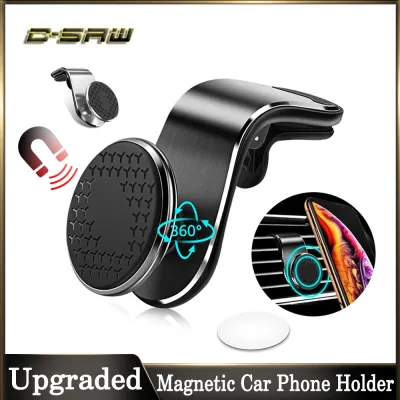

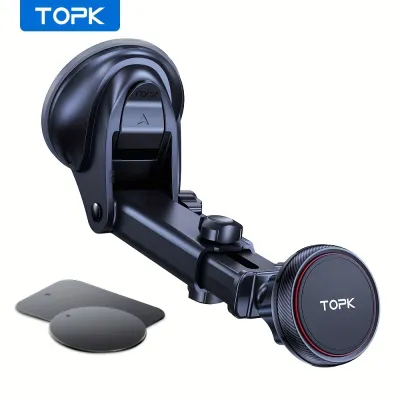
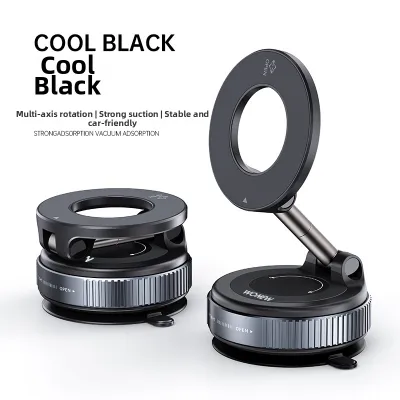
![🇸🇬[Ready Stock] New 360 Rotation Vacuum Suction Cup Phone Holder Foldable Magnetic Magsafe Car Phone Mount for Gym/Mirror/Smooth Surface](https://img.lazcdn.com/g/p/8209a6499e644df04a911de525ca3b30.jpg_400x400q80.jpg_.webp)

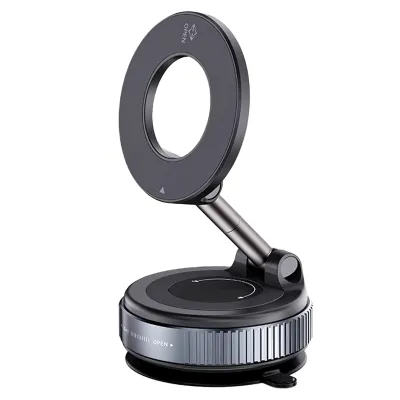
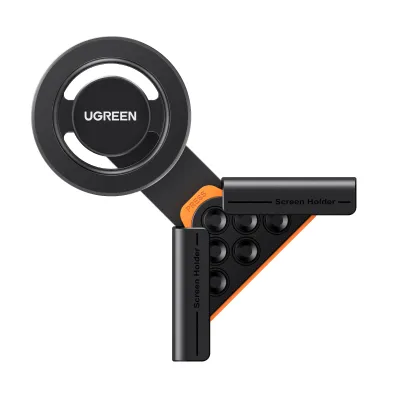
Prices are valid at publication and may change. Please refer to the product page for the latest price.
Wireless charging, on the other hand, relies on electromagnetic induction. An transmitter coil inside the magnetic mount creates an alternating electromagnetic field, which a receiver coil in your phone converts back into electrical energy. This process is inherently less efficient than a physical cable, with a notable portion of the energy lost as heat during the transfer.
In warm tropical climates, thermal management is a critical consideration for in-car electronics. When a smartphone is mounted on the dashboard, it is often exposed to direct sunlight through the windshield. Running a GPS navigation app while simultaneously charging wirelessly generates significant internal heat. To protect the lithium-ion battery from degradation, modern smartphones employ thermal throttling, which automatically reduces the charging speed or halts charging entirely when internal temperatures rise.
To ensure optimal performance, drivers must verify the charging protocols supported by both their phone and the mount. Many modern devices require specific fast-charging standards, such as USB Power Delivery (PD) or Quick Charge (QC), to achieve their maximum charging rates. Checking the manufacturer specifications for both devices will help you avoid compatibility bottlenecks and ensure your mount can deliver the power your phone expects.
Convenience and Cable Management in the Car
The primary appeal of a wireless magnetic car mount is its effortless “drop-and-go” functionality. When you enter your vehicle, you simply place the phone against the mount. The integrated magnets automatically align the charging coils, and power delivery begins instantly. This seamless interaction is incredibly convenient for short trips, quick stops, or for drivers who frequently step in and out of their vehicles throughout the day.

Wired magnetic mounts, while still utilizing magnets to hold the phone securely in place, require an extra physical step. Every time you mount the phone, you must manually locate and plug the USB/Type-C cable into the device’s port. When exiting the vehicle, you must unplug it. While this takes only a few seconds, it introduces a repetitive physical action that can become tedious over time.
Furthermore, wired setups introduce the challenge of cable routing. A loose cable hanging from the dashboard down to the center console can create visual clutter and physically interfere with vehicle controls, such as the gear shifter or climate dials. Drivers often have to invest in cable clips or routing channels to keep the cabin tidy. Additionally, constant plugging and unplugging subjects the phone’s physical charging port to continuous wear and tear, which could eventually lead to loose connections.
Device Compatibility and Case Interference
The effectiveness of a magnetic mount—both for holding the phone and charging it—depends heavily on your phone case. Thick, rugged, or wallet-style cases present a significant obstacle for wireless charging. Inductive charging requires close proximity between the transmitter and receiver coils, typically within a range of 3 to 5 millimeters. A thick case can exceed this limit, preventing the charge from initiating or causing it to drop out repeatedly.
Magnetic strength is also compromised by case thickness. Standard magnets may not be strong enough to penetrate a thick plastic or leather case, risking the phone falling off the mount when navigating speed bumps, sharp turns, or uneven road surfaces. To counter this, many drivers use cases with built-in magnetic rings designed to align perfectly with magnetic mounts.
Wired magnetic mounts offer much greater flexibility regarding cases. Because the charging power is delivered via a physical cable, the case’s thickness and material have no impact on charging speed. To secure the phone, you only need to adhere a thin metal plate to the back of the case or slide it inside. This plate provides a strong magnetic hold without needing to align with internal charging coils.
When choosing a setup, it is vital to check the labels and specifications provided by your case manufacturer. Look for explicit indications of compatibility with magnetic mounting systems and wireless charging standards to avoid purchasing a mount that cannot function through your preferred protective cover.
Power Source and Vehicle Electrical Considerations
A common mistake is plugging a high-performance magnetic mount directly into the vehicle’s built-in USB ports. In many cars, these integrated ports are designed primarily for low-power data transfer or audio playback, often outputting a meager 5 watts. This is insufficient to power a fast wireless charging mount, which typically requires a higher input wattage to function effectively.
To achieve optimal charging speeds, you will generally need to use a high-quality 12V accessory socket adapter. These adapters plug into your vehicle’s utility socket and convert the car’s electrical output into the specific voltage and amperage required by your mount. Look for adapters that support modern fast-charging standards and carry recognized safety certifications to ensure stable power delivery.
For a completely integrated look, some drivers choose to hardwire their charging mounts into the vehicle’s fuse box. While this eliminates visible cables and frees up the 12V socket, it constitutes an electrical modification. It is crucial to consult your vehicle’s owner’s manual to understand the electrical limits of your car’s circuits. Incorrect installation can lead to blown fuses or electrical interference with other vehicle systems. If you are not experienced with automotive electrical work, seeking professional installation is highly recommended to ensure safety and preserve your vehicle’s warranty.
Decision Framework: Which Charging Method Fits Your Drive?
To help you decide which magnetic car phone holder suits your daily drive, consider this practical framework based on your driving habits and equipment.
Choose USB/Type-C wired if:
- You frequently embark on long road trips or spend hours navigating busy expressways.
- You prioritize the absolute fastest charging speeds and want to avoid thermal throttling.
- You prefer using thick, rugged, or wallet-style protective cases that block wireless signals.
- You want to minimize wear on your vehicle's battery by using a highly efficient direct connection.
Choose Wireless if:
- Your daily drive consists of short commutes, school runs, or frequent quick stops.
- You value a clean, cable-free dashboard aesthetic and want to avoid cable clutter.
- You use a phone and case that are explicitly designed with integrated magnetic alignment rings.
- You want to eliminate the daily wear and tear on your phone's physical charging port.
Verify first if:
- You are unsure whether your vehicle's built-in USB ports provide sufficient wattage for a wireless mount.
- Your phone case manufacturer guarantees compatibility with both magnetic mounts and inductive charging.
- Your phone tends to run hot when executing navigation apps, which could trigger thermal slowdowns during wireless charging.
Frequently Asked Questions (FAQ)
Does the magnetic field affect my phone's battery or internal components?
Modern smartphones are designed with solid-state components that are highly resistant to everyday magnetic fields. The magnets used in car mounts will not damage your phone’s battery, flash storage, or screen. However, exceptionally strong magnetic fields can temporarily interfere with the phone’s internal digital compass (magnetometer). This might briefly affect the orientation of your map during navigation, but the sensor will return to normal operation once the phone is removed from the magnetic field.
Can I use a wireless magnetic holder if my car only has standard USB-A ports?
Yes, but you should avoid plugging the wireless mount directly into the car’s built-in USB-A ports, as they rarely provide enough power. Instead, purchase a certified 12V accessory socket adapter that plugs into your car’s cigarette lighter. This adapter can convert the vehicle’s power into the high-wattage output required by your wireless mount, ensuring your phone charges efficiently without overloading the built-in USB ports.
Community discussion
Share your experience or ask a question. Comments are reviewed before publication.