
Quick Answer: How Do They Compare?
When comparing Lynlex motor oil to established industry giants like Shell and Castrol, the primary factor determining engine protection is not the brand name itself, but how closely the oil’s certified specifications match your vehicle’s requirements. Shell and Castrol provide extensive, globally validated viscosity ranges and carry numerous official Original Equipment Manufacturer (OEM) approvals from major automotive brands. Lynlex, as an alternative brand, can offer comparable engine protection only if its specific SAE viscosity grades and API or ACEA certifications align precisely with your vehicle manufacturer’s mandates.
Baseline engine protection is determined by standardized industry specifications rather than marketing claims or brand prestige. Before purchasing any motor oil, you must first check the applied product’s label and the treated item’s manufacturer instructions. If instructions conflict, the item is unidentified, or the use is not covered, stop and consult the manufacturer or a qualified professional. Your vehicle owner’s manual remains the ultimate authority for selecting the correct fluid.
Brand Positioning and Market Availability in Singapore
In Singapore’s highly competitive automotive aftermarket, Shell and Castrol serve as the dominant mainstream benchmarks. Shell enjoys a massive local footprint, supported by its extensive network of petrol stations and its widely recognized Helix product line. Castrol is equally ubiquitous, with its Edge, Magnatec, and GTX lines stocked across major independent workshops in industrial hubs like Kaki Bukit, Sin Ming, Toh Guan, and Ubi. Both brands maintain deep relationships with vehicle manufacturers and local authorized distributors, ensuring a steady supply of authentic, fresh stock.
Products mentioned in this guide
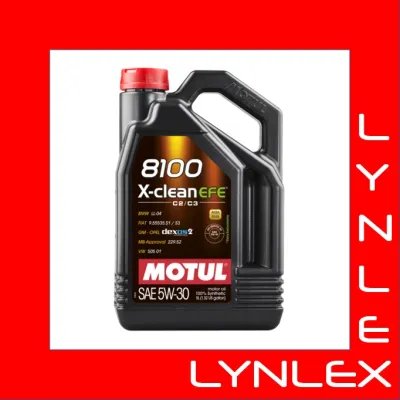
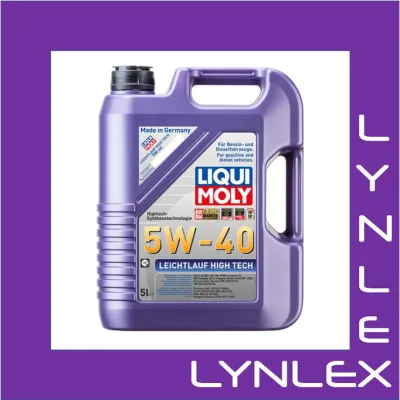
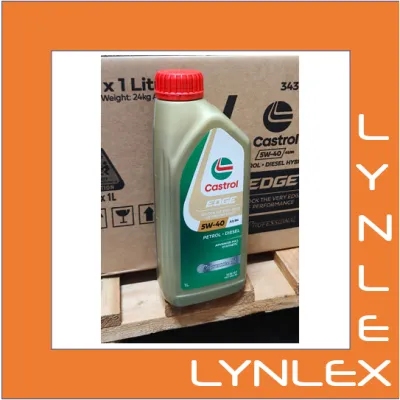
Prices are valid at publication and may change. Please refer to the product page for the latest price.

Lynlex is positioned as an alternative or regional market option, which typically appeals to budget-conscious drivers or workshops looking for cost-effective maintenance solutions. Because alternative brands do not always share the same vast retail distribution networks as global majors, you must exercise diligence when sourcing these products. Verify that you are purchasing from authorized local distributors or reputable automotive workshops in Singapore to ensure product authenticity.
Buying motor oil from unverified online marketplaces or unauthorized parallel importers carries a significant risk of encountering counterfeit products. Counterfeit oils often use low-quality base stocks and lack critical additive packages, which can lead to rapid thermal breakdown, accelerated engine wear, and catastrophic component failure. Always inspect the physical packaging for intact tamper-evident seals, clear batch numbers, and legible manufacturing dates before accepting or using any motor oil.
Viscosity Grades: Matching SAE Ratings to Your Engine
Available Viscosity Ranges
Viscosity is the measure of an oil’s resistance to flow, and it is standardized globally by the Society of Automotive Engineers (SAE) under the SAE J300 classification system. Mainstream brands like Shell and Castrol offer a comprehensive spectrum of viscosity grades designed to meet the needs of virtually every passenger vehicle on the road. Their portfolios span from ultra-low viscosity fuel-economy grades like 0W-16 and 0W-20 to mid-range options like 5W-30 and 5W-40, up to heavier high-mileage or performance grades like 10W-40 and 20W-50.
For Lynlex motor oil, you must carefully inspect the product label or the manufacturer’s technical data sheets to verify which specific SAE grades are available in the local market. The alphanumeric code on the bottle (for example, 5W-40) tells a specific story about how the oil behaves under different temperature conditions. The number preceding the “W” (which stands for Winter) indicates the oil’s low-temperature flow characteristics and its resistance to pumping at cold start-up.
In Singapore’s consistently warm tropical climate, where ambient temperatures typically range between 24°C and 32°C year-round, sub-zero cold-start performance is not a primary concern. However, the low-temperature rating still matters because a lower winter rating (like 0W or 5W) allows the oil to circulate rapidly through the engine block during the initial start-up phase, minimizing dry-friction wear before the engine reaches its normal operating temperature. The second number (such as 30 or 40) represents the oil’s kinematic viscosity at 100°C, which is critical for maintaining a stable protective film under high thermal loads.
Verifying Viscosity for Local Driving Conditions
Singapore’s driving environment presents unique challenges for engine lubrication, characterized by high ambient humidity, elevated temperatures, and prolonged stop-and-go city traffic. Driving on major expressways like the PIE, CTE, or KPE during peak hours involves frequent idling and short bursts of acceleration, which can cause heat to build up rapidly in the engine bay. Under these conditions, the motor oil must resist thinning out excessively to prevent metal-on-metal contact within the cylinders, bearings, and valve train.
Despite the hot local climate, you should avoid the common automotive myth of arbitrarily switching to a thicker oil (such as using a 10W-40 or 20W-50 in place of a recommended 0W-20) under the assumption that it provides better protection. Modern engines are engineered with extremely tight internal clearances and utilize advanced variable valve timing (VVT) systems that rely on precise oil pressure to operate correctly. Using an oil that is thicker than specified can restrict oil flow through narrow passages, increase internal drag, elevate operating temperatures, and severely degrade fuel efficiency.
To ensure optimal protection, always cross-reference your vehicle owner’s manual with the viscosity options offered by Lynlex, Shell, or Castrol. The manufacturer’s manual will specify the acceptable SAE viscosity grades based on ambient temperature ranges. In almost all cases, modern vehicles registered in Singapore are optimized for multi-grade synthetic oils that balance rapid flow at start-up with robust film strength at high operating temperatures.
Engine Protection: Decoding Performance Specifications
API and ACEA Service Classifications
To evaluate the true protective capabilities of a motor oil, you must look past the branding and decode the industry performance standards printed on the label. The two most prominent international standards are established by the American Petroleum Institute (API) and the European Automobile Manufacturers’ Association (ACEA). These classifications represent rigorous laboratory and engine tests that evaluate an oil’s resistance to oxidation, wear protection, sludge control, and high-temperature deposit formation.
For gasoline engines, the API service categories use a two-letter code starting with “S” (Service). The current highest standard is API SP, which was introduced to provide enhanced protection against Low-Speed Pre-Ignition (LSPI)—a destructive combustion phenomenon common in modern turbocharged direct-injection (TGDI) engines. If you are comparing Lynlex to Shell Helix or Castrol Edge, check if the Lynlex bottle carries the official API SP licensing mark. If it does, the oil has met the same strict performance thresholds for chain wear protection and deposit control as its mainstream competitors.
European vehicles often require oils that meet specific ACEA standards, which are categorized by letters and numbers. The ACEA A/B classes (such as A3/B4 or A5/B5) apply to petrol and light-duty diesel engines, while the ACEA C classes (such as C2, C3, or C5) designate catalyst-compatible oils with lower levels of sulfated ash, phosphorus, and sulfur (low-SAPS). These low-SAPS oils are mandatory for modern diesel vehicles equipped with Diesel Particulate Filters (DPFs) and gasoline vehicles with Gasoline Particulate Filters (GPFs). Always verify that the oil’s ACEA rating matches your vehicle’s requirements to prevent premature clogging of expensive emissions control systems.
Be cautious of labels that feature ambiguous phrasing such as “formulated to meet,” “meets the requirements of,” or “recommended for” without displaying actual, verified licensing credentials. Trusted brands like Shell and Castrol invest heavily in obtaining official API and ACEA certifications. When evaluating an alternative brand like Lynlex, look for official licensing logos or check the API and ACEA registry databases to confirm that the oil’s performance claims are fully verified by these governing bodies.
OEM Approvals and Additive Technologies
While API and ACEA standards establish a solid baseline for engine protection, many vehicle manufacturers—particularly European brands like Mercedes-Benz, BMW, Volkswagen, and Porsche—require oils to pass their own proprietary testing regimens. These manufacturer-specific standards are known as OEM approvals (for example, MB-Approval 229.51, VW 504.00/507.00, or BMW Longlife-04). These tests subject the oil to extended drain intervals, severe shear stress, and compatibility evaluations with specific engine seals and elastomer materials.
Premium product lines from Shell (such as Shell Helix Ultra) and Castrol (such as Castrol Edge) carry a wide array of official, licensed OEM approvals printed clearly on their back labels. These approvals mean the vehicle manufacturer has formally tested and certified that specific oil formulation for use in their engines. If your vehicle is still under its factory warranty, using an oil that lacks the explicit OEM approval code required by your manufacturer can provide grounds for the manufacturer to deny warranty coverage in the event of an engine failure.
If you are considering Lynlex for a vehicle under warranty, you must verify whether the specific product displays the official OEM approval codes required by your car’s manufacturer. If the oil only claims general compliance without official certification codes, it is safer to stick with an officially approved Shell or Castrol product.
Proprietary additive technologies are another area where brands attempt to differentiate themselves. Shell highlights its PurePlus Technology, which produces a crystal-clear base oil from natural gas (gas-to-liquid, or GTL) that is virtually free of the impurities found in crude oil. Castrol promotes its Fluid Titanium Technology, which physically transforms its structure under extreme pressure to reduce friction and prevent metal-on-metal contact. While these proprietary chemical formulations offer genuine engineering benefits, they should always be viewed as secondary to the official, verifiable API, ACEA, and OEM certifications required by your vehicle.
Specification Comparison Checklist
When choosing between these brands, a side-by-side technical evaluation is the most reliable way to make an informed decision. Use the following checklist to compare the specific oil you intend to buy against your vehicle’s requirements:
| Specification Dimension | Shell (Mainstream Offerings) | Castrol (Mainstream Offerings) | Lynlex (Verification Steps) |
|---|---|---|---|
| Typical SAE Viscosity Grades | 0W-16, 0W-20, 5W-30, 5W-40, 10W-40, 20W-50 | 0W-20, 5W-30, 5W-40, 10W-40, 20W-50 | Check Product Label for exact grade matching your manual |
| API Classifications | API SP, SN Plus, SN (Licensed) | API SP, SN Plus, SN (Licensed) | Verify API Starburst/Donut on the back of the bottle |
| ACEA Specifications | A3/B4, A5/B5, C2, C3, C5 (Certified) | A3/B4, A5/B5, C2, C3, C5 (Certified) | Check for exact ACEA code matching engine requirements |
| OEM Approvals | Extensive (MB, VW, BMW, Porsche, etc.) | Extensive (MB, VW, BMW, Porsche, Jaguar, etc.) | Verify official approval codes if vehicle is under warranty |
| Base Oil Type | GTL Synthetic, Fully Synthetic, Semi-Synthetic | Fully Synthetic, Semi-Synthetic, Mineral | Confirm base oil type (Fully Synthetic preferred for modern cars) |
Before you pour any motor oil into your engine, perform these three physical checks on the bottle:
- Manufacturing Date and Batch Number: Look for a laser-printed date and batch code on the bottle shoulder or base. Avoid using oils that have been sitting on shelves for more than five years, as additives can settle or degrade over extended periods.
- Foil Seal Integrity: Unscrew the plastic cap and verify that the inner foil seal is completely intact, unpunctured, and firmly adhered to the bottle neck. Never use oil from a bottle with a broken or missing seal.
- Bottle Condition: Ensure the plastic bottle is not deformed, bloated, or leaking, which could indicate exposure to extreme heat or contamination during storage.
Decision Framework: Which Motor Oil Should You Choose?
To determine the best motor oil for your specific vehicle and driving habits in Singapore, apply the following condition-based decision framework:
Choose Shell or Castrol if:
- Your vehicle is under factory warranty: If you drive a newer European or Asian vehicle that requires strict adherence to manufacturer guidelines, choosing an officially OEM-approved oil from Shell or Castrol ensures your warranty remains fully protected.
- You drive a modern hybrid or downsized turbocharged vehicle: These highly efficient engines operate under extreme thermal stress and require specialized, ultra-low viscosity oils (like 0W-16 or 0W-20) with advanced LSPI protection, which are widely available and thoroughly tested in the Shell Helix and Castrol Edge ranges.
- You prefer a proven, long-term track record: If you want peace of mind backed by decades of global research, development, and extensive real-world testing, the mainstream premium lines from Shell and Castrol are the safest choices.
- You value purchasing convenience: If you want the ease of buying oil at any major petrol station or reputable local workshop without worrying about regional supply fluctuations.
Choose Lynlex if:
- The specifications match your manual exactly: If the specific Lynlex product carries the exact SAE viscosity grade and the certified API or ACEA ratings mandated by your vehicle manufacturer.
- Your vehicle is out of warranty: For older or out-of-warranty vehicles where strict OEM approval codes are no longer a legal or financial necessity, but standard API/ACEA wear protection is still required.
- You are sourcing from an authorized distributor: If you can purchase the oil directly from a verified, authorized distributor or workshop in Singapore, ensuring that the product is 100% authentic.
- It offers a clear economic advantage: If the price point fits your maintenance budget more comfortably than premium mainstream brands, allowing you to maintain regular oil change intervals without financial strain.
Verify first if:
- Your vehicle has a diesel particulate filter (DPF): You must verify that the oil is certified as a low-SAPS formulation (such as ACEA C3) to prevent permanent damage to your exhaust aftertreatment system.
- The label lacks clear licensing marks: If the bottle relies on vague marketing claims rather than displaying official API, ACEA, or OEM approval codes, halt your purchase and verify the technical data sheet or consult a qualified professional.
Frequently Asked Questions (FAQ)
Can I mix Lynlex motor oil with Shell or Castrol?
While mixing motor oils of the same SAE viscosity grade and API/ACEA specification will not cause immediate, catastrophic engine failure in an emergency, it is generally discouraged for routine maintenance. Different lubricant manufacturers formulate their oils using unique, proprietary additive packages (containing specific balances of detergents, dispersants, anti-wear agents, and friction modifiers). Mixing different brands can disrupt this delicate chemical balance, potentially reducing the overall effectiveness of the additives and shortening the oil’s useful operating life. When transitioning between brands, it is highly recommended to perform a complete oil drain, replace the oil filter, and refill the engine entirely with a single brand and product line.
Does using an alternative brand void my car's warranty?
Using an alternative brand of motor oil does not automatically void your vehicle’s warranty under consumer protection guidelines, provided the oil meets the exact viscosity grade and performance specifications (such as API, ACEA, or specific OEM approval codes) outlined in your owner’s manual. However, if an engine-related failure occurs during the warranty period and the vehicle manufacturer suspects the lubricant as the cause, the burden of proof falls on you. You must be able to present clear, documented service records, purchase receipts, and technical proof that the alternative oil used met all required manufacturer specifications at the time of service. If the alternative oil lacks the official OEM approval codes required by the manufacturer, verifying and defending a warranty claim can become significantly more difficult.
Community discussion
Share your experience or ask a question. Comments are reviewed before publication.