
To find the correct lug wrench socket size for your car’s wheels, you must match the exact millimeter or fractional-inch measurement of your vehicle’s lug nuts. While many modern passenger vehicles use standard metric sizes like 17mm, 19mm, or 21mm, there is no single universal size that fits every car. Using a socket that is even slightly too large or too small can damage your vehicle, strip the nuts, or leave you stranded during an emergency roadside tire change.
Before purchasing new lug wrenches, you should verify your vehicle’s specific requirements. This guide will walk you through how to identify your exact lug nut size, understand critical tool specifications, and choose the right equipment to keep your wheels safely secured on Singapore’s roads.
Why the Exact Socket Size Matters for Wheel Safety
Using an incorrect socket size poses immediate safety and mechanical risks to your vehicle’s wheel assembly. When a socket does not fit snugly over a lug nut, the high torque required to loosen or tighten it is distributed unevenly. This concentration of force on the corners of the nut causes rounding, stripping, or cracking. Once a lug nut’s hex head is rounded off, standard tools can no longer grip it, turning a routine tire rotation or a simple flat tire repair into an expensive, frustrating ordeal that requires professional extraction.
Products mentioned in this guide
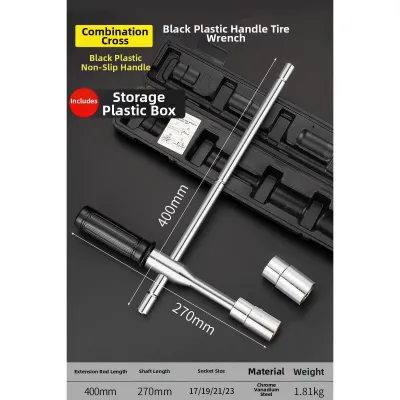
Prices are valid at publication and may change. Please refer to the product page for the latest price.
Beyond damaging the nut, a mismatched socket prevents you from applying the correct amount of torque. If you cannot tighten the nuts to the manufacturer’s exact specifications, the wheel studs can experience excessive stress, potentially leading to loose wheels or catastrophic component failure while driving. Ensuring a precise fit is a critical safety boundary that protects the integrity of your braking and suspension systems.
Key Lug Wrench Specifications Decoded
Selecting the right tool involves more than just picking a random wrench off a store shelf. To make an informed purchase, you must understand the key dimensions and engineering specifications that dictate how a lug wrench interacts with your vehicle’s hardware. Evaluating these parameters ensures that your new tool is both highly functional and compatible with your specific wheel design.

Socket Size (Metric vs. Imperial)
Lug nut measurements are strictly divided into metric (measured in millimeters) and imperial (measured in fractional inches) systems. Most modern vehicles, especially Japanese, continental European, and Korean models common in Singapore, utilize metric fasteners. For example, 17mm, 19mm, and 21mm are highly common metric sizes, while older or American-designed vehicles might use imperial sizes like 3/4-inch or 13/16-inch.
Never attempt to force a metric socket onto an imperial lug nut, or vice versa, even if they seem close in size. A 19mm socket is roughly equivalent to 0.748 inches, which is extremely close to a 3/4-inch (0.750 inches) socket. However, that tiny fraction of a millimeter of play is enough to slip under heavy load, instantly rounding off the edges of the nut. Always match the measurement system of your tool directly to the design specification of your fasteners.
Drive Size and Tool Type
If you are purchasing individual sockets to use with a breaker bar or a torque wrench, you must match the drive size of the tool. The drive size refers to the square connection point where the socket attaches to the wrench handle. For automotive wheel applications, a 1/2-inch drive is the industry standard. It provides the structural strength necessary to handle the high torque levels (often exceeding 100 Nm) required for passenger vehicles without snapping or slipping.
When shopping for lug wrenches, you will encounter several common tool configurations:
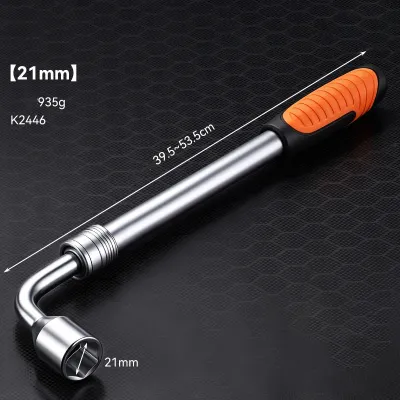
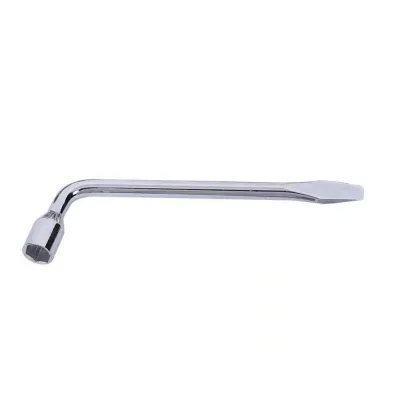
- L-Shaped Wrenches: These single-ended tools offer a compact design that easily fits into your trunk's spare tire compartment, though they provide limited leverage.
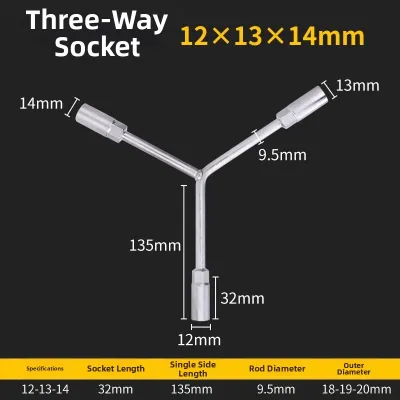
- Cross-Wrenches (4-Way): Featuring four different socket sizes, these tools allow you to use both hands to apply balanced leverage, making them highly versatile for households with multiple cars.
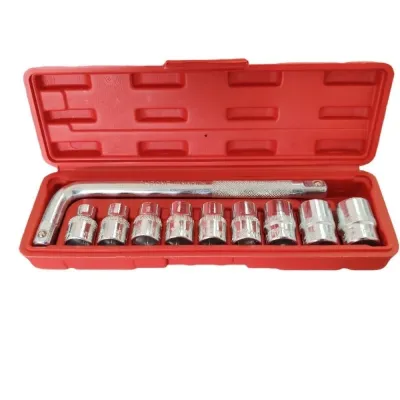
- Socket Sets with Breaker Bars: A dedicated 1/2-inch drive breaker bar paired with individual, high-quality impact sockets offers the best combination of leverage, precise fitment, and compact storage.
Lug Nut Shape and Seat Type
The physical shape of your lug nuts also dictates the type of socket you need. Standard hex nuts are hexagonal and easily accessed, but many modern alloy wheels feature deeply recessed lug holes. For these designs, a standard thick-walled socket will not fit inside the wheel opening. You will need a specialized thin-wall socket, which is wrapped in a protective plastic sleeve to prevent scratching your expensive rims.
Additionally, aftermarket wheels often use spline-drive or tuner-style lug nuts to fit narrow openings or act as a mild theft deterrent. These fasteners do not have a standard hexagonal shape and require a specific matching key adapter that slides over the nut before you can apply your lug wrench. Always check the clearance and shape of your lug nuts before finalizing your tool purchase.
How to Find Your Vehicle's Exact Socket Size
Determining your exact socket size does not require guesswork. By following a few systematic steps, you can confidently identify the correct tool size for your specific car.
- Check the Owner's Manual: Your first step should always be to consult your vehicle's owner's manual. Look in the index under "Tire Change," "Wheels and Tires," or "Specifications." The manual typically lists the factory lug nut size along with the recommended torque specifications. Keep in mind that these specifications only apply if your car is still fitted with its original factory wheels and lug nuts.
- Inspect the Factory Tool: If you do not have the manual, locate the emergency roadside tool kit in your trunk, usually stored near the spare tire or under the boot floor. Inspect the factory-issued L-wrench. Manufacturers almost always stamp the socket size (such as "19" or "21") directly onto the metal body of the wrench. This is a highly reliable way to identify the factory size.
- Measure the Lug Nuts: If you suspect your vehicle has aftermarket wheels or replacement lug nuts, physical measurement is the safest approach. Use a digital caliper to measure the distance between two opposing flat sides of the lug nut. Ensure the caliper is held straight and flat against the metal. Take measurements on two or three different nuts to confirm consistency across all wheels.
- Consult a Professional: If you encounter locking wheel nuts without a key, highly customized aftermarket rims, or if you are unsure of your measurements, do not guess. Drive your vehicle to a qualified tire shop or your brand's authorized service center in Singapore. A professional technician can quickly identify the correct socket size, check for compatibility issues, and ensure your wheels are safely torqued to spec.
Common Socket Sizes and Verification Rules
While there are exceptions across different vehicle classes, a small group of metric sizes covers the vast majority of modern passenger cars, hatchbacks, sedans, and compact SUVs on the road today. The most common sizes you will encounter are 17mm, 19mm, and 21mm. Some larger vehicles, such as commercial vans, rugged pickup trucks, or larger continental SUVs, may require larger sizes like 22mm or 15/16-inch.
However, you must never assume your car uses a specific size based solely on its brand or vehicle category. Manufacturers frequently change fastener specifications between model years, trim levels, and even assembly plants. Furthermore, if a previous owner upgraded the factory wheels to aftermarket alloy rims, they almost certainly changed the lug nuts to match the new wheel’s seat profile and clearance limits. Always perform physical verification or check the wheel manufacturer’s technical documentation before buying new lug wrenches.
Frequently Asked Questions (FAQ)
Can I use a universal lug wrench for my car?
While universal or adjustable wrenches can be useful as emergency backups, they are not recommended for regular wheel maintenance. Universal tools often have moving parts or loose tolerances that fail to distribute torque evenly across the flat surfaces of the lug nut. Under the high force required to break loose a stubborn, seized nut, these tools are highly prone to slipping, which can round off the nut and damage your wheel finish. For safe and effective maintenance, always use a dedicated, exact-fit socket.
Do I need a special socket for locking wheel nuts?
Yes, locking wheel nuts—which feature a unique, non-hexagonal outer pattern designed to prevent wheel theft—cannot be removed with a standard hex socket. They require a specific matching key adapter that is supplied with the vehicle or the lock set. This key acts as an adapter, featuring the unique pattern on one end and a standard hex head on the other. Always store this key in a secure, easily accessible location inside your glove box or spare tire well so it is available during emergencies or servicing.
Community discussion
Share your experience or ask a question. Comments are reviewed before publication.