
Choosing between Liqui Moly Leichtlauf and Molygen engine oil lines for frequent stop-and-go driving in Singapore does not have a single universal winner. The correct choice depends entirely on your vehicle manufacturer’s specifications, the required viscosity grade, and your specific engine load. While the Leichtlauf series generally focuses on low-friction formulations and fuel economy, the Molygen series emphasizes friction modifiers and enhanced wear protection. Both can protect your engine in heavy traffic, provided the specific product variant matches the exact OEM approvals and viscosity requirements listed in your owner’s manual.
Singapore’s urban landscape presents unique challenges for passenger vehicle engines. Daily commutes often involve prolonged idling at traffic lights, slow-moving queues on major expressways, and rapid acceleration when gaps open up. These conditions prevent the engine from operating at its most efficient, steady-state temperatures for extended periods, placing a premium on the protective qualities of your motor oil.
To make an informed decision, you must look beyond marketing buzzwords and understand how these two product lines function under the hood. Both lines are engineered by the same manufacturer, but they target different mechanical priorities. By examining their core designs, comparing their specifications against your vehicle’s manual, and understanding the demands of tropical stop-and-go traffic, you can select the formulation that best preserves your engine’s longevity.
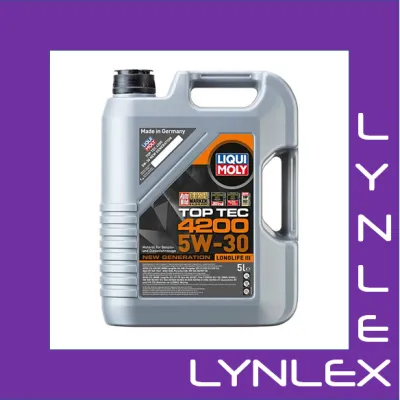
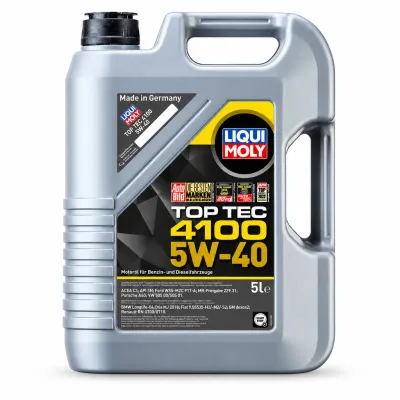
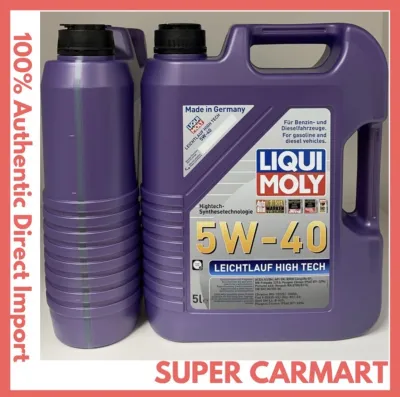
Products mentioned in this guide
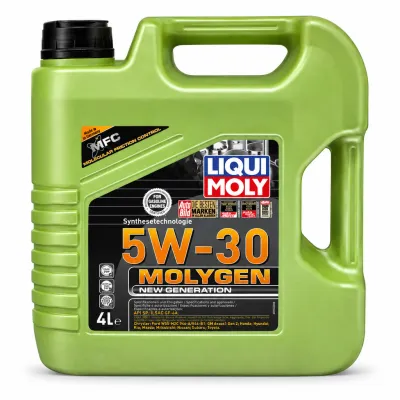
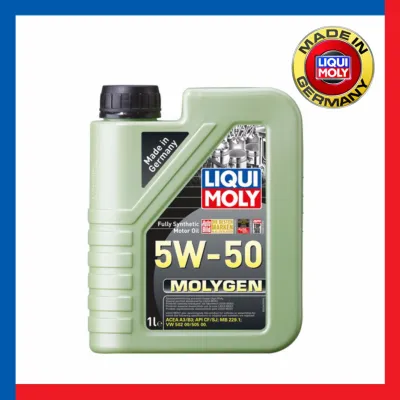
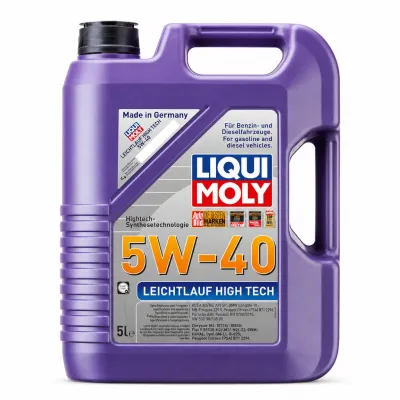
3 Lazada user ratings
There is value for money with stock graded engine oil.And I hope that it works well for my car.
Awesome thanks fast Delivery thanks. 💰Price:Awesome 🏷️Brand:Good 🛢️Viscosity:Good
value for money
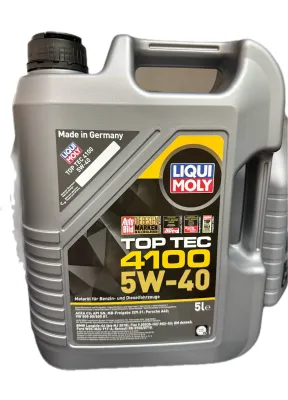
2 Lazada user ratings
thank you seller, goods well received and delivered with care.l, and buy again soon. 💐💪🙏
13 Lazada user ratings
Item received in good condition. The packaging was nice and neat. Will be repurchase soon. Thank you Seller, Lazada and deliveryman 👍👍👏👏
Trusted brand, Improves engine performance, I use this all the time for my car.
Item received in good condition. The packaging was nice and neat. Thank you 👍👍👏👏
Authentic products, fast delivery. Highly recommended
So far so good.
Prices are valid at publication and may change. Please refer to the product page for the latest price.
Understanding the Core Design of Leichtlauf and Molygen
The Leichtlauf line, which translates from German as “easy running” or “low friction,” is designed primarily to minimize internal engine resistance. By reducing friction, these oils aim to optimize fuel economy and lower emissions, making them highly suitable for modern daily drivers. They are formulated to meet standard original equipment manufacturer (OEM) specifications, ensuring broad compatibility with a wide range of European, Asian, and American passenger vehicles.
Within the Leichtlauf family, you will find several sub-variants, such as Leichtlauf High Tech and Leichtlauf Special. These sub-variants are not identical; they utilize different base oil technologies and additive packages tailored to specific manufacturer standards. For instance, some are designed for modern turbocharged gasoline direct injection (TGDI) engines to prevent low-speed pre-ignition (LSPI), while others focus on older multi-valve designs.
The Molygen series, easily recognized by its distinctive green hue, takes a different approach to engine protection. This line incorporates specialized friction modifiers designed to form a resilient chemical protective layer on metal surfaces inside the engine. This technology is engineered to reduce wear under high-load or high-temperature conditions, making it a popular choice for drivers who subject their vehicles to demanding operating environments.
Like the Leichtlauf line, Molygen is available in multiple viscosity grades and formulations, such as Molygen New Generation. It is crucial to recognize that the base oils and additive chemistry can vary significantly between a Molygen 5W-30 and a Molygen 5W-40. Consequently, you cannot assume that all Molygen products behave the same way or carry the same manufacturer approvals.
Engine Oil Demands for Stop-and-Go Traffic in Singapore
Stop-and-go driving is one of the most mechanically taxing scenarios an engine can face. When a vehicle idles or crawls at low speeds, the airflow through the radiator is significantly reduced compared to highway cruising. This lack of natural cooling forces the cooling system and the engine oil to work harder to dissipate heat, leading to localized thermal stress within the engine components.

Furthermore, constant acceleration from a complete stop requires the engine to produce high torque at low rotational speeds. Under these conditions, the oil film between moving parts, such as the bearings and piston rings, is subjected to extreme pressure. If the oil’s viscosity or additive package cannot maintain a sufficient barrier, metal-to-metal contact can occur, accelerating component wear over time.
In Singapore, these mechanical challenges are compounded by a tropical, high-humidity climate. High ambient temperatures mean the engine starts its operating cycle much warmer than it would in temperate regions, and the cooling system has a narrower temperature differential to work with. In automotive engineering, this combination of frequent idling, short trips, and high ambient humidity classifies typical Singapore commuting as “severe driving conditions.”
Under severe driving conditions, engine oil degrades faster due to increased oxidation, fuel dilution from incomplete combustion during idling, and moisture accumulation. To protect your engine, you must identify whether your daily route falls into this category. Consulting your vehicle’s owner’s manual will provide clear guidelines on how to adjust your maintenance perspective when operating under these demanding local conditions.
How to Compare Specifications and Product Labels
When deciding between Leichtlauf and Molygen, your first and most critical step is to look at the product labels and compare them directly to your vehicle’s owner’s manual. The viscosity grade, such as 5W-30 or 5W-40, is a non-negotiable baseline. Using an oil that is too thick can reduce fuel efficiency and slow down oil circulation during startup, while an oil that is too thin may fail to provide adequate film strength under high thermal loads.
Beyond viscosity, you must verify the industry standards and specific OEM approvals printed on the back of the bottle. Industry standards like the American Petroleum Institute (API) and the European Automobile Manufacturers’ Association (ACEA) define the minimum performance criteria for engine oils. For example, an API SP rating indicates superior protection against low-speed pre-ignition and timing chain wear compared to older API SN ratings.
OEM approvals are even more stringent, as vehicle manufacturers design their own testing protocols to ensure compatibility with specific engine materials, seals, and emissions systems. If your manual specifies a standard like BMW Longlife-01, VW 502 00, or Mercedes-Benz MB-Approval 229.5, you must ensure the specific oil bottle explicitly lists that approval. Never assume that because an oil is premium, it automatically covers all manufacturer standards.
For a deeper analysis, you can consult the manufacturer’s Product Data Sheet (PDS), which is typically available online. The PDS provides technical metrics such as the High-Temperature High-Shear (HTHS) viscosity and the kinematic viscosity at operating temperatures. These values indicate how well the oil maintains its protective film under extreme stress, helping you verify if the formulation is compatible with modern start-stop systems that demand rapid oil flow.
Decision Framework: Choosing the Right Line for Your Vehicle
To simplify your choice, you can use a conditional decision framework based on your vehicle’s profile, age, and manufacturer requirements. The Leichtlauf series is generally the appropriate choice if your vehicle prioritizes fuel efficiency and requires highly specific, low-viscosity OEM approvals. Because the Leichtlauf line is designed to meet a wide array of official manufacturer standards, it is often the safer choice for maintaining compliance with modern European vehicle specifications.
Conversely, the Molygen series is worth considering if your vehicle operates under higher thermal loads, such as frequent heavy-load driving, and the specific Molygen variant holds the exact OEM approval your manual demands. The friction modifiers in Molygen can provide an extra layer of boundary lubrication during the frequent boundary-lubrication phases of stop-and-go driving, provided the viscosity and basic specifications align with your engine’s design.
Before making a final purchase, always check if your vehicle is under an active manufacturer warranty. Using an oil that lacks the explicit OEM approval required by your warranty terms can jeopardize your coverage, regardless of how advanced the oil’s additive package claims to be. Additionally, modern vehicles equipped with specialized exhaust aftertreatment systems, such as Diesel Particulate Filters (DPF) or Gasoline Particulate Filters (GPF), require low-SAPS or mid-SAPS (Sulfated Ash, Phosphorus, and Sulfur) oils to prevent filter clogging. You must verify that the oil’s chemical composition matches these emissions requirements.
Adjusting Maintenance Intervals for Heavy Traffic
Operating a vehicle in Singapore’s stop-and-go traffic means your engine accumulates more operating hours relative to the actual distance driven. A commute that takes an hour to cover fifteen kilometers subjects the oil to far more thermal cycles and chemical degradation than an hour of highway driving covering eighty kilometers. For this reason, relying solely on odometer readings to schedule oil changes can be misleading.
Most vehicle manufacturers outline a “severe service” maintenance schedule in the owner’s manual, which typically recommends reducing the oil change interval by half compared to the standard schedule. For example, if the standard interval is 15,000 kilometers, the severe schedule might mandate a change every 7,500 kilometers or six months, whichever comes first. Adhering to these shorter intervals is crucial for preventing sludge buildup and maintaining engine cleanliness in urban environments.
Many modern vehicles are equipped with electronic oil life monitoring systems that calculate oil degradation based on driving patterns, engine temperatures, and idling time. While these systems are highly useful, they are algorithms and cannot physically test the chemical state of the oil. In extremely dense traffic and high ambient temperatures, it is often safer to treat these monitors as a maximum limit rather than a target, opting for proactive oil changes.
Ultimately, the most reliable way to establish an optimal maintenance routine is to consult a qualified automotive professional or your vehicle manufacturer. They can evaluate your specific daily commute, vehicle age, and driving style to recommend a personalized interval that ensures your engine remains fully protected against the unique demands of local stop-and-go traffic.
Frequently Asked Questions (FAQ)
Can I mix Leichtlauf and Molygen engine oils?
While most modern engine oils are chemically compatible and will not cause catastrophic failure if mixed in an emergency, doing so is generally not recommended. Mixing Leichtlauf and Molygen blends different additive packages and base oil formulations, which can dilute the specific performance benefits of both lines. Furthermore, mixing different viscosities or additive chemistries can alter the final viscosity of the mixture and potentially compromise specific OEM approvals, which could affect your vehicle’s warranty coverage. For optimal protection, it is always best to perform a complete drain and fill when switching between these distinct product lines.
Does Molygen's green color indicate better protection?
No, the distinctive fluorescent green color of Molygen engine oil is not an indicator of its protective capabilities. The green hue is a specialized dye added by the manufacturer primarily to assist in leak detection under ultraviolet (UV) light and to serve as a unique product identifier. The actual level of wear protection, thermal stability, and engine cleanliness provided by the oil is determined entirely by its API/ACEA ratings, specific OEM approvals, and viscosity grade printed on the label, not by its visual appearance.
Community discussion
Share your experience or ask a question. Comments are reviewed before publication.