
When selecting a light motorcycle raincoat, you must look beyond basic waterproofing. True riding safety requires high-visibility features (such as 360-degree retroreflective placement and high-contrast colors), durable fabric weaves to resist high-speed wind tear, and a precise fit that accommodates protective armor without flapping. Balancing these features ensures you remain dry, visible, and fully in control of your motorcycle during sudden tropical downpours.
Why Waterproofing Alone Is Not Enough for Riding Safety
A common mistake among riders is treating a raincoat as a simple pedestrian accessory. Standard rain ponchos or cheap plastic coats are designed for walking speeds; when subjected to riding speeds, they balloon, trap air, and flap violently. This loose fabric can easily hook onto handlebars, catch in the rear wheel chain, or block your mirrors, creating severe safety hazards on the road.
A dedicated light motorcycle raincoat is engineered specifically for the aerodynamics and physical demands of riding. It must balance packability with structural integrity. While daily commuters value gear that folds down small enough to fit under a scooter seat or in a small backpack, sacrificing material strength can lead to rapid degradation under wind pressure.
Products mentioned in this guide
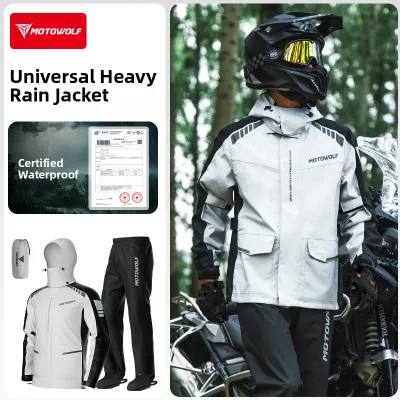
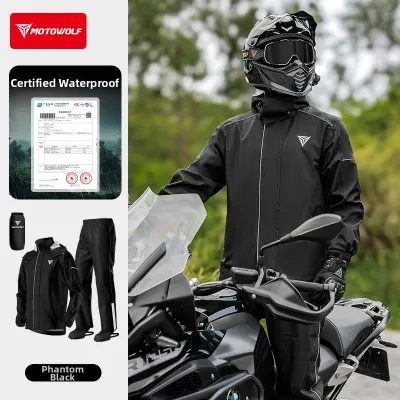
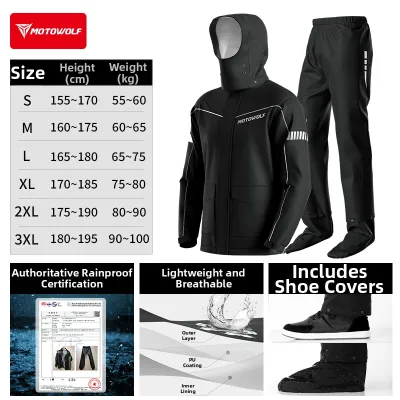
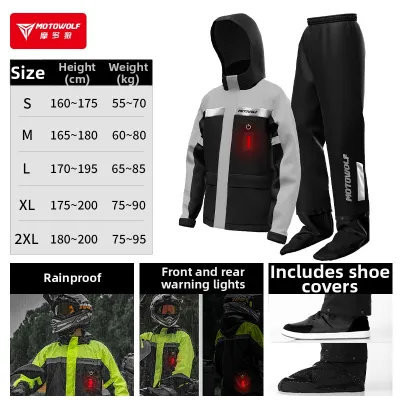
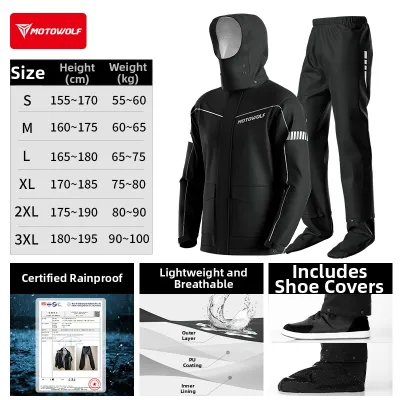
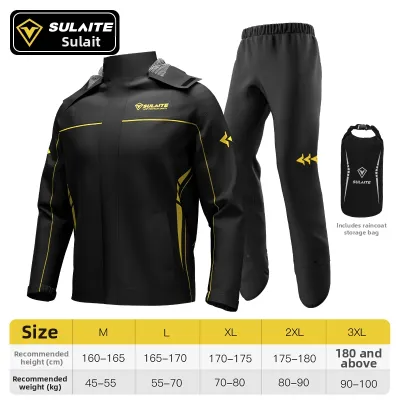
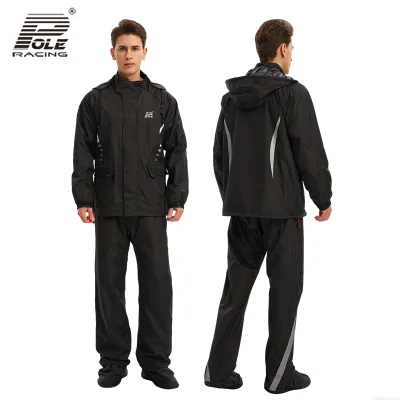
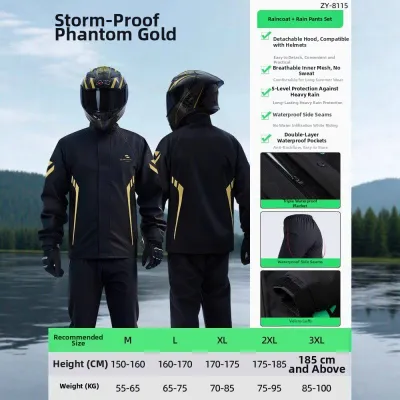
Prices are valid at publication and may change. Please refer to the product page for the latest price.
Riding in wet weather introduces unique hazards that a simple water barrier cannot solve. Torrential downpours significantly reduce visibility for all motorists, while road spray from larger vehicles creates a constant mist. Additionally, high-speed wind combined with wet clothes causes rapid wind chill, which dulls rider reflexes and impairs physical control over the handlebars and brake levers.
Visibility Specs for a Light Motorcycle Raincoat: Reflective Placement and Color Contrast
Visibility is your primary line of defense when riding through heavy rain or during nighttime storms. Reflective taping is critical, but its placement is far more important than the sheer quantity of material used. High-quality motorcycle raincoats feature reflective strips positioned strategically to create a 360-degree silhouette of the rider from all angles.

Placing reflective elements on moving parts, such as the upper arms, cuffs, and lower legs, is particularly effective. As you move or adjust your posture, these active reflective points catch the headlights of surrounding vehicles, immediately signaling to other drivers that a motorcyclist is ahead. Static reflective patches on the back are helpful but can easily be obscured by a backpack or passenger.
The base color of the raincoat plays an equally vital role during daylight downpours. While black or dark navy gear might look sleek, it renders a rider virtually invisible against wet asphalt and grey skies. Bright fluorescent colors like neon yellow, high-visibility orange, or vibrant red contrast sharply with the dark, rainy environment, giving other drivers precious extra seconds to react in low-visibility conditions.
When evaluating visibility claims, look for terms like “retroreflective” on the product label. Retroreflective materials are designed to bounce light directly back to its source (the driver’s headlights) rather than scattering it. You can perform a quick diagnostic test at home: turn off the lights, hold a smartphone camera at eye level, and take a photo of the raincoat with the flash turned on to verify how intensely the strips reflect.
Abrasion Resistance: Decoding Fabric Weight and Reinforcements
While lightweight rain gear prioritizes compact storage, it must still possess enough structural strength to withstand high-speed winds and minor abrasions. Fabric weight is measured in denier (D), which indicates the linear mass density of the fibers. A higher denier rating generally translates to stronger, more tear-resistant fabric.
For a light motorcycle raincoat, look for materials constructed with a ripstop weave. Ripstop fabric uses a special reinforcing technique where stronger threads are interwoven at regular intervals in a crosshatch pattern. This design ensures that if a small puncture or tear occurs from road debris, the damage is contained within a tiny square and will not unzip or shred under wind pressure at highway speeds.
Even in lightweight designs, high-wear zones require targeted reinforcement. The shoulders, elbows, knees, and seat area are subjected to the highest wind friction and mechanical stress. Premium lightweight raincoats feature double-layered fabric or heavier-denier panels in these specific zones to prevent premature wear and water seepage caused by friction against the motorcycle’s seat or controls.
It is critical to establish a clear safety boundary: lightweight raincoats are primarily weather shields and do not replace dedicated, abrasion-resistant motorcycle riding jackets. Unless the raincoat is explicitly certified as a protective riding garment with built-in armor, it should always be worn over your standard protective gear. Treating a thin nylon layer as your sole slide protection in a fall is a dangerous mistake.
Fit and Armor Compatibility: Balancing Aerodynamics and Protection
A poorly fitting raincoat is more than an inconvenience; it is a safety hazard. Proper fit ensures the garment remains aerodynamic, prevents water from pooling or seeping through openings, and allows the rider to maintain full range of motion.
Anti-Flap Adjustments for Wet Conditions
At highway speeds, loose fabric acts like a sail, catching the wind and creating severe drag. This constant flapping causes rapid rider fatigue, vibrates the helmet, and can physically pull at the shoulders, making precise steering difficult.
To combat this, look for raincoats equipped with multi-point anti-flap adjusters. These typically include hook-and-loop straps or snap buttons on the upper arms, forearms, and waist. Tightening these adjusters streamlines the silhouette, reduces wind resistance, and ensures that storm flaps remain securely positioned over the main zippers to block high-pressure water ingress.
Sizing for Armor Pockets and Base Layers
If you plan to use the raincoat as a standalone outer layer that provides both weather and impact protection, verify whether it includes internal pockets designed to hold CE-rated elbow, shoulder, and back protectors. Without these secure pockets, inserting armor pads is impossible, leaving you vulnerable to impact forces.
Alternatively, if you intend to wear the raincoat over your existing mesh or leather riding jacket, you must size the garment appropriately. A raincoat that is too tight will compress your underlying armor, restrict your breathing, and limit your ability to turn your head or reach the handlebars. Ensure the sleeves are long enough so that when your arms are fully extended in a riding posture, the cuffs still cover your wrists and seal over your gloves.
How to Verify Safety Claims and Inspect the Gear
Do not rely on vague marketing buzzwords like “shatterproof,” “heavy-duty,” or “crash-proof.” Instead, look for legitimate safety certifications on the product tags. For protective gear, look for CE markings indicating compliance with standard EN 17092 (which rates protective garments from Class C up to AAA) or EN 1621 for the impact protectors themselves.
Inspect the internal seam construction closely before purchasing or using new gear. Water under wind pressure will easily find its way through needle holes. High-quality raincoats utilize fully taped or heat-welded seams on the inside. Run your fingers along these seams to ensure the sealing tape is flat, smooth, and free of bubbles or lifting edges, which indicate poor manufacturing and imminent leakage.
Always perform a riding posture test before taking the gear out on the road. Put on your full riding kit, including your helmet, gloves, and boots, and wear the raincoat over them. Sit on your motorcycle (or mimic the exact posture) and move your controls through their full range. Check that the collar does not pinch your neck or push against the bottom of your helmet, and verify that the lower back of the jacket remains long enough to cover your waist without riding up.
Frequently Asked Questions (FAQ)
Can a lightweight raincoat protect me in a crash?
No, a standard lightweight raincoat is designed solely to block wind and water; it will not protect you from road rash or impact injuries during a crash. Unless the garment carries an official CE certification rating for abrasion resistance (such as EN 17092), it lacks the structural strength to survive a slide on asphalt. For proper safety, always wear your lightweight raincoat over a dedicated, armored motorcycle riding jacket.
Does a darker raincoat absorb more heat in Singapore's weather?
Yes, dark colors like black or deep navy absorb more solar radiation and can feel noticeably warmer when riding under direct sunlight in Singapore’s tropical climate. However, the primary drawback of dark rainwear is the severe lack of visibility in heavy downpours. To manage heat without compromising your safety, look for high-visibility raincoats that feature dedicated ventilation systems, such as mesh-lined back vents or underarm zippers, which allow heat to escape while keeping water out.
Community discussion
Share your experience or ask a question. Comments are reviewed before publication.