
Choosing between LED and halogen motorcycle lights for daily commuting depends on your motorcycle’s existing electrical system, your budget, and your willingness to navigate local regulatory standards. For most daily commuters, LED upgrades offer excellent longevity and lower power consumption, but they require careful compatibility checks with your headlight housing and electrical system. Halogen bulbs remain the most straightforward, legally compliant, and cost-effective direct replacements for older or budget-conscious setups.
Navigating busy urban expressways and sudden tropical downpours requires reliable, glare-free illumination. Your choice of lighting directly impacts your visibility to other motorists and your ability to spot road hazards early. Understanding the technical and practical differences between these two technologies will help you make an informed decision for your daily ride.
Understanding the Core Technologies
Halogen motorcycle lights operate on a well-established incandescent principle. Inside a quartz envelope filled with halogen gas, a tungsten filament heats up to extreme temperatures when electrical current passes through it. This intense heat causes the filament to glow, emitting a warm, yellowish light. While this technology is simple and inexpensive to manufacture, it is highly inefficient, as a significant portion of the electrical energy is lost as heat rather than converted into visible light.
Products mentioned in this guide
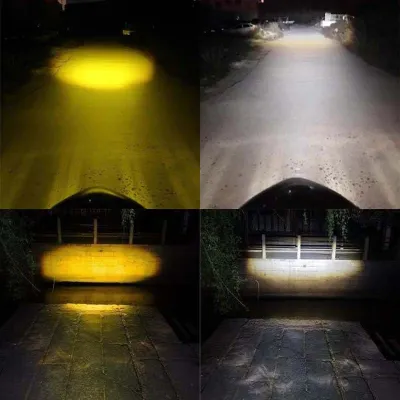
2 Lazada user ratings
Great motorcycle lights, very powerful and bright.
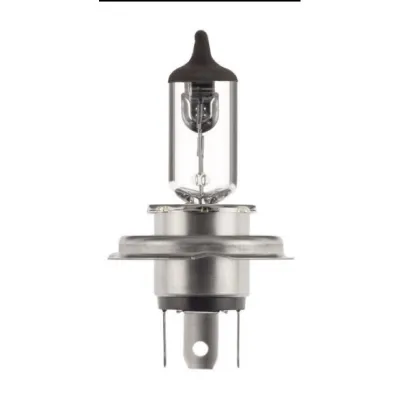
11 Lazada user ratings
The light quality is good and looks like high end product with the price I purchased
🔧Durability:Good 👍 💡Brightness:perfect 🔋Energy Efficiency:less
very good value buy good quality fast delivery
Just received. Not yet try. Check 👍
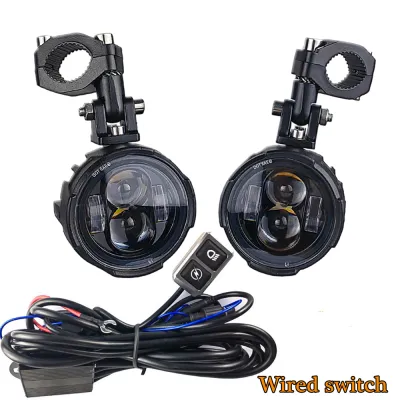
73 Lazada user ratings
Increases road safety, good quality material, complete equipment, looks luxury, looks expensive.
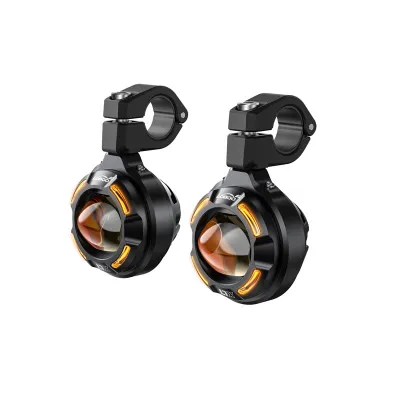
🔄Compatibility: High-quality materials used, 💡Brightness: Dual color flasher adds style,
Convenient switch design, enhanced visibility while driving, suitable for night riding
so far item looks so good.. but yet to install it.. hopefully it willnworks superb
外观很好看,产品不错,亮度很亮有白色和黄色灯. 也容易安装 还可以选择闪亮 很值得买下次会再订多几个 一级棒
Prices are valid at publication and may change. Please refer to the product page for the latest price.
Light Emitting Diodes (LEDs) utilize solid-state semiconductor technology to generate illumination. When an electrical current flows through the diode, electrons recombine with electron holes, releasing energy in the form of photons. This process is highly efficient and produces very little heat at the light-emitting surface. Unlike halogens, which emit light in a 360-degree pattern, LEDs are naturally directional, projecting light in a specific, focused angle.
These fundamental differences directly affect how each light type interacts with your motorcycle’s electrical system. Halogen bulbs require constant high current to keep the filament glowing, placing a continuous load on your stator. LEDs require much less current to produce equivalent light output, but they generate heat at the base of the diode (junction heat), which must be managed using specialized cooling components to prevent premature failure.
Comparing Key Performance Metrics for Urban Riding
When evaluating replacement bulbs, commuters should look closely at the lumen ratings and color temperature specified on product packaging. Lumens measure the total amount of visible light emitted by a source. While LEDs generally offer higher lumen ratings for less power, the color temperature—measured in Kelvin (K)—is equally important for daily riding. Halogen bulbs typically sit between 2,700K and 3,200K, producing a warm yellow light that offers excellent contrast in wet weather. LEDs often range from 5,000K to 6,500K, producing a crisp white light that mimics daylight but can sometimes scatter and reduce visibility during heavy rain if the color temperature is too high.

Beam pattern and glare are critical safety factors that depend heavily on housing design. Halogen housings are engineered with precise reflectors and lenses designed to focus light from a tiny, centrally located filament. Because LED chips are flat and positioned on the sides of a bulb stem, dropping an LED bulb into a standard halogen reflector can disrupt the focal point. This mismatch often results in a scattered beam pattern, creating dark spots on the road for you and dangerous glare for oncoming motorists. Always verify that any aftermarket LED bulb is specifically designed to mimic the filament position of the halogen bulb it replaces.
Power consumption is another metric where the two technologies diverge. A standard halogen headlight bulb typically draws 35 to 55 watts of power. An equivalent LED bulb may draw only 15 to 25 watts while producing similar or greater light output. For small-capacity commuter motorcycles and scooters with limited stator output, this reduced power draw frees up electrical capacity for other essential accessories, such as dashcams, GPS units, or phone chargers, without draining the battery.
Lifespan, Durability, and Everyday Maintenance
For daily commuters, reliability is paramount. Halogen bulbs have a relatively short operational lifespan, typically ranging from 500 to 1,000 hours under normal riding conditions. This means a daily rider may need to replace a halogen bulb every one to two years. Furthermore, halogen filaments are highly sensitive to the constant high-frequency vibrations generated by motorcycle engines and uneven road surfaces. A hard impact from a pothole can easily snap a hot, fragile filament, leaving you without a headlight during a night commute.
LEDs are solid-state devices with no delicate filaments or moving parts, making them exceptionally resistant to mechanical shocks and road vibrations. Manufacturers often rate LED bulbs to last between 20,000 and 50,000 hours. Under typical commuting conditions, a high-quality LED bulb can easily outlast the operational life of the motorcycle itself, virtually eliminating the need for regular bulb replacements.
However, LEDs are highly sensitive to heat buildup at the semiconductor junction. To maintain their long lifespan, high-output LED bulbs require robust thermal management. This is usually achieved through passive aluminum heat sinks or active cooling fans integrated into the base of the bulb. Commuters must check the physical clearance behind their motorcycle’s headlight assembly before purchasing, as these cooling elements require extra space and adequate airflow to function correctly. If the rubber dust boot on your headlight housing cannot be reinstalled over the LED base, moisture and road grime may enter the housing, leading to damage.
Cost, Installation, and Legal Compliance in Singapore
From a financial perspective, halogen bulbs offer a very low entry barrier. A standard replacement halogen bulb is highly affordable, often costing between S$10 and S$20, making it an easy choice for budget-conscious riders. LED upgrades carry a higher upfront cost, with quality kits ranging from S$40 to over S$100. While LEDs represent a larger initial investment, their long-term value is realized through their extended lifespan and reduced strain on the motorcycle’s charging system.
Installation complexity varies significantly between the two options. Halogen replacements are strictly plug-and-play, requiring no modifications to your motorcycle’s wiring or housing. LED installations can be more complex. Some motorcycles, particularly older models or those with alternating current (AC) lighting circuits, cannot run LEDs directly without installing a direct current (DC) converter or a dedicated relay harness. Additionally, modern motorcycles equipped with CANbus wiring systems may detect the lower power draw of an LED as a burnt-out bulb, triggering error codes on the dashboard or causing turn signals to flash rapidly.
Before performing any electrical work, always disconnect the motorcycle battery to prevent short circuits. Refer to your vehicle’s official service manual for specific wiring diagrams and specifications. If the installation requires splicing wires, modifying the headlight housing, or adding complex relays, it is highly recommended to seek qualified professional installation at a registered workshop to ensure safety and prevent damage to your electrical system.
In Singapore, legal compliance is a critical consideration for any lighting modification. The Land Transport Authority (LTA) maintains strict regulations regarding vehicle lighting to ensure road safety. Headlights must emit white or amber light, and any aftermarket modification must not cause glare to other road users. Retrofitting LED bulbs into housings designed exclusively for halogen bulbs often fails inspection because the scattered beam pattern violates glare limits. To remain fully compliant, any replacement lighting assembly must match original equipment manufacturer (OEM) specifications or be an LTA-approved aftermarket unit. Vehicles must pass periodic inspections at authorized centers, such as VICOM or STA, to remain road-legal.
Decision Framework: Which Motorcycle Light Should You Choose?
To finalize your decision, evaluate your riding habits, budget, and motorcycle specifications against this practical framework:
Choose LED if:
- You frequently ride on unlit roads or expressways at night and require maximum visibility.
- Your motorcycle has a low-capacity stator, and you want to reduce electrical load to run accessories.
- You want a highly durable, vibration-resistant light that does not require frequent replacement.
- You are willing to invest in a fully compatible, LTA-compliant LED housing assembly or certified bulb and, if necessary, pay for professional installation.
Choose Halogen if:
- You want a simple, low-cost, direct replacement that is guaranteed to fit your existing reflector housing.
- You prefer to avoid any modifications to your motorcycle's original wiring harness or electrical system.
- You want to ensure hassle-free compliance with local road regulations and periodic vehicle inspections without extra certification paperwork.
Verify first if:
- Your motorcycle uses an AC electrical system, which requires a converter to run DC-powered LEDs.
- Your headlight housing has limited physical clearance behind the bulb socket, which may block LED heat sinks or cooling fans.
- Your motorcycle utilizes a CANbus system, which will require specialized decoders or resistors to prevent dashboard errors.
Frequently Asked Questions (FAQ)
Can I mix LED and halogen bulbs on the same motorcycle?
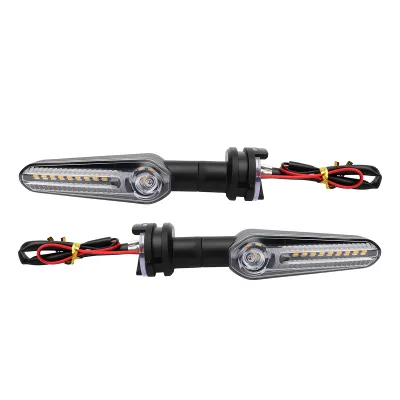
While it is physically possible to mix lighting technologies—such as using a halogen headlight alongside LED turn signals—it requires careful electrical planning. Mixing bulbs can create uneven color temperatures, which may affect your depth perception and aesthetic appeal. More importantly, turn signals rely on specific electrical resistance to flash at a legally mandated rate. Replacing halogen turn signals with LEDs without adjusting the system will often cause hyper-flashing, which requires installing an electronic flasher relay or load resistors to correct.
Do LED motorcycle lights require a special relay or resistor?
Whether you need a special relay or resistor depends on your motorcycle’s electrical architecture. Because LEDs draw significantly less current than halogen bulbs, motorcycles with CANbus systems or traditional thermal flasher relays may interpret the low power draw as a broken bulb. This can result in dashboard error warnings or rapid flashing of the turn signals. To resolve these issues, you must install inline load resistors to simulate the power draw of a halogen bulb, or replace your stock flasher relay with an electronic flasher relay designed specifically for LED compatibility.
Community discussion
Share your experience or ask a question. Comments are reviewed before publication.