
Selecting the right LED bike tail light requires looking past raw lumen numbers to evaluate how a light distributes its output, manages its battery, and mounts to your frame. The ideal specification profile depends entirely on your riding environment—whether you navigate well-lit city streets, shared park connectors, or dark, high-speed roads. By understanding how technical specifications translate to real-world performance, you can choose a tail light that keeps you visible and operating safely in all conditions.
Rather than relying on vague marketing terms, cyclists should focus on standardized metrics such as lumens, candela, runtime curves, and Ingress Protection (IP) ratings. A light that performs exceptionally well on a slow-paced urban commute might fall short on a high-speed rural ride, and vice versa. Evaluating these specifications systematically ensures your safety gear matches your cycling habits.
Understanding Brightness: Lumens, Candela, and Visibility
When evaluating a bike tail light, brightness is often the first specification buyers consider, but raw power is only part of the equation. Lumens measure the total amount of light emitted by the LED source in all directions. While a high lumen rating indicates a powerful light source, it does not tell you how far down the road that light will travel or how visible it will be to a driver approaching from behind.
Products mentioned in this guide
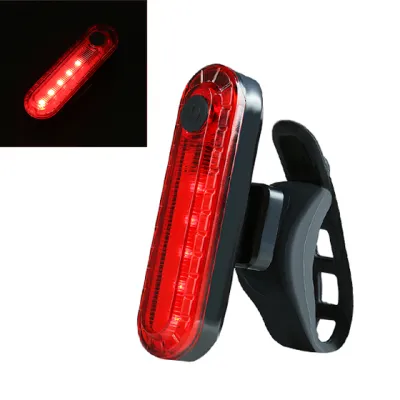
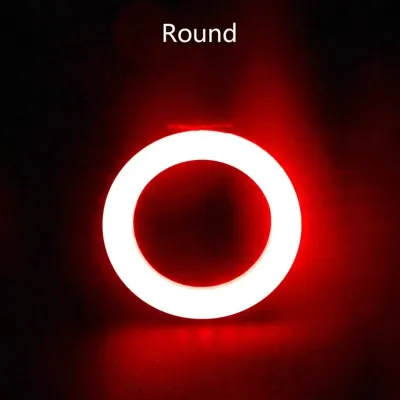
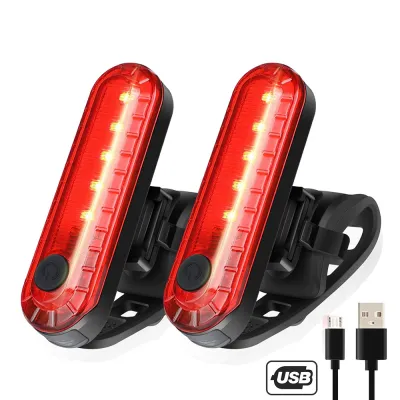
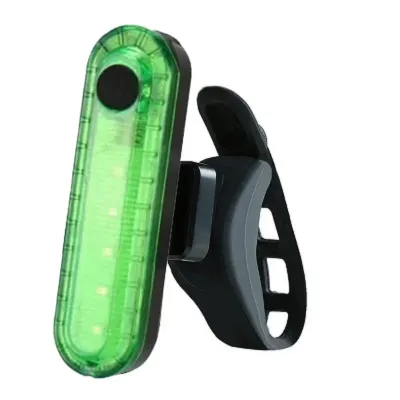
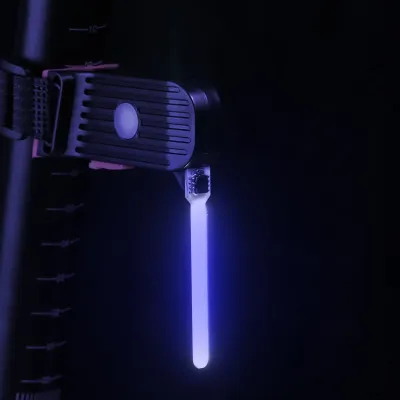
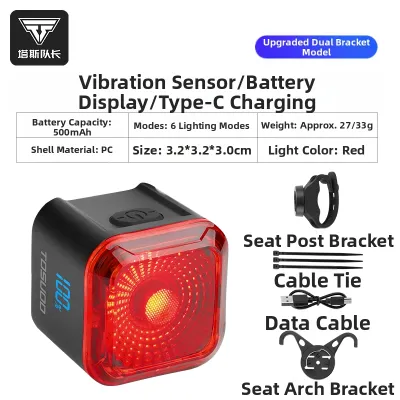
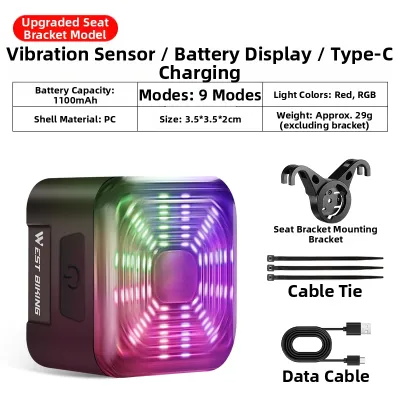
Prices are valid at publication and may change. Please refer to the product page for the latest price.
To understand actual beam intensity, you must look at candela. Candela measures the luminous intensity in a specific direction. A tail light with high lumens but low candela distributes its light widely, which is excellent for side-visibility but poor for long-distance warning. Conversely, a high-candela light focuses its beam into a tight path, projecting visibility much further down the road. For daylight riding or high-speed roads where drivers need early warning, a high-candela focused beam is essential.
Lens design and internal reflectors play a critical role in shaping this output. Advanced optics, such as collimating or Fresnel lenses, bend and direct the raw LED light to maximize both long-range focus and wide-angle dispersion. When comparing specifications, look for manufacturer visibility distance claims, which are often calculated based on optimal optical focus rather than raw lumen output alone.
Evaluating Battery Life and Power Delivery
Battery capacity and power management specifications determine whether your tail light will remain active throughout your entire ride. Battery capacity is typically measured in milliampere-hours (mAh), but a larger capacity does not automatically guarantee a longer runtime. The actual operating life depends heavily on the power draw of your selected light mode and environmental factors like operating temperature.

Cyclists must choose between built-in rechargeable lithium-polymer batteries and replaceable standard alkaline or lithium cells. Built-in rechargeable systems, usually powered via USB-C, offer lower weight, compact designs, and lower long-term operating costs. Replaceable standard cells (such as AAA batteries) are heavier and generate more waste, but they allow you to swap in fresh power instantly during long-distance touring where charging outlets are unavailable.
To prevent unexpected power failure, always check the manufacturer’s detailed runtime matrix. Reliable brands specify the expected battery life for each individual mode, such as steady high, steady low, and various flashing patterns. A light that lasts only two hours on a high steady mode might run for over twenty hours on an eco-flash setting, making it crucial to match the battery specifications to your typical ride duration.
Decoding Light Modes and Beam Patterns
Modern bike tail lights offer a variety of light modes and beam patterns designed for different traffic scenarios. Interruptive flash patterns, often labeled as day-flash or hyper-glide modes, use irregular, high-intensity pulses to disrupt the visual background. These rapid changes in light intensity are highly effective at catching the attention of distracted drivers, especially in bright daylight or visually cluttered urban environments.
Beam angle specifications dictate how well you are seen from the sides. While a narrow beam angle (around 10 to 20 degrees) projects light far behind you, it leaves you virtually invisible at intersections and roundabouts. To combat this, many tail lights feature wide-angle optics (up to 270 degrees) or dedicated side-light windows that allow light to escape laterally, significantly improving safety when crossing perpendicular traffic.
While having multiple light modes provides excellent flexibility, an overly complex user interface can be frustrating to operate while riding. Look for physical button designs that are easy to press with gloved hands and systems that feature a mode memory function. Mode memory ensures the light turns on in the last used setting, saving you from cycling through half a dozen flashing patterns every time you start a ride.
Assessing Weather Resistance and Mounting Hardware
Your tail light must be able to withstand the physical demands of the road, including wet weather and constant vibration. To verify water and dust resistance, look for the official Ingress Protection (IP) rating on the product packaging. An IPX4 rating indicates protection against splashing water from any angle, which is sufficient for light drizzle. For heavy tropical downpours, look for an IPX5 or IPX6 rating, which protects against high-pressure water streams.
Mounting hardware is another critical specification that is often overlooked. Common mounting mechanisms include flexible silicone straps, rigid plastic brackets, and bolt-on mounts. Silicone straps offer tool-free installation and make it easy to swap the light between different bikes, but they can degrade over time when exposed to UV rays. Rigid brackets and bolt-on mounts provide a more permanent, secure connection to your seat post, saddle rails, or rear luggage rack.
Regardless of the mounting style, vibration resistance is vital. A mount that slips or rotates under the vibration of rough roads will cause the tail light to point downward toward the pavement, rendering its focused beam useless to approaching traffic. Ensure the mounting hardware features textured rubber backing or secure locking teeth to keep the light aligned correctly throughout your journey.
Matching Specifications to Your Riding Conditions
To find the right tail light, you should prioritize specifications based on your primary riding environment. Commuters and long-distance riders have vastly different safety and operational needs, meaning there is no single best light for everyone.
For urban commuters navigating well-lit streets and shared paths, side-visibility and convenient charging are the top priorities. Look for a light with a wide beam angle (at least 180 degrees), moderate lumen output (around 20 to 50 lumens to avoid blinding other cyclists on shared paths), and a USB-C rechargeable battery for easy daily top-ups at your desk.
For rural, highway, or high-speed riders, long-distance visibility and secure mounting are paramount. Prioritize high-candela output, a focused narrow-to-medium beam angle, a large battery capacity that supports long runtimes on high-intensity modes, and a rigid, bolt-on or heavy-duty bracket mount that will not slip on rough road shoulders.
Finally, always cross-reference your shortlisted lights with local transport authority regulations. Many regions have specific legal requirements regarding bicycle lighting, such as mandatory reflector integration, minimum visibility distances, or restrictions on flashing frequencies. Ensuring your chosen light complies with these standards keeps you both safe and legally compliant on the road.
Frequently Asked Questions (FAQ)
Does a higher lumen count always mean a better bike tail light?
No, a higher lumen count does not guarantee a safer or more effective tail light. Lumens only measure total light output, not how that light is directed. Without a well-designed lens or reflector to focus the beam, high lumens can scatter uselessly into the sky or blind cyclists and drivers directly behind you. A lower-lumen light with high candela and a focused beam pattern is often much more visible at a distance.
How do I know if a tail light is truly waterproof?
To determine if a tail light is waterproof, check its official Ingress Protection (IP) rating rather than relying on marketing claims. The second digit in the IP code represents water resistance. A rating of IPX4 is splash-resistant, while IPX5 and IPX6 can withstand heavy rain and wet road spray. If you frequently ride in severe wet weather, look for at least an IPX5 rating to ensure water does not penetrate the housing.
Are smart tail lights with brake sensors worth the extra specs?
Smart tail lights with built-in accelerometers can enhance safety by automatically brightening when you decelerate, alerting traffic behind you to a sudden stop. However, these sensors add weight, increase power consumption, and can be falsely triggered by rough road surfaces or speed bumps. If you choose a brake-sensing light, ensure it is mounted in precise alignment according to the manufacturer’s instructions to minimize false readings.
Community discussion
Share your experience or ask a question. Comments are reviewed before publication.