
Quick Answer: Which Material Actually Keeps You Cool?
When you step into a car parked under the intense tropical sun, cabin temperatures can quickly climb past 50 degrees Celsius. Finding the right cooling back cushion or seat cover is essential to prevent a sweat-soaked back during your daily commute.
To answer the core question directly: breathable mesh is the undisputed champion for passive cooling, while woven fabric serves as a moderate middle ground, and leather (both genuine and synthetic) acts as a heat trap.
The reason for this stark difference lies in how these materials handle heat transfer. Passive cooling relies entirely on material breathability, structural airflow, and moisture evaporation. In a hot and highly humid climate, your body cools itself primarily through the evaporation of sweat. A material’s ability to let moisture evaporate is just as critical as its initial surface temperature. While leather and heavy fabrics restrict air circulation and trap sweat against your skin, open-weave mesh allows continuous ventilation, helping you stay dry and comfortable without relying solely on high-blast air conditioning.
Products mentioned in this guide
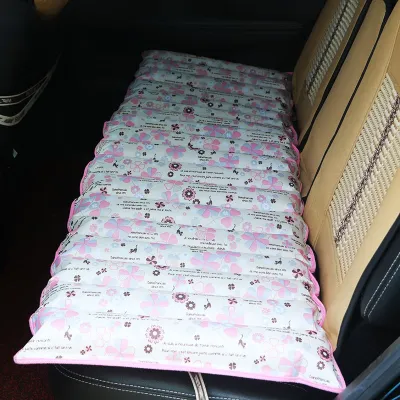
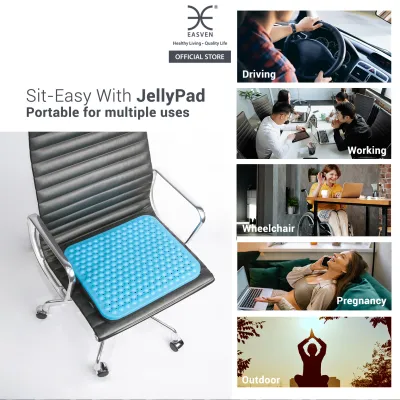
Prices are valid at publication and may change. Please refer to the product page for the latest price.
Heat and Moisture: How Each Material Performs in Humid Climates
To understand why these materials behave so differently, we must look at their physical properties. The interaction between body heat, sweat, and ambient humidity determines whether a seat cover keeps you refreshed or leaves you feeling sticky and overheated.

Breathable Mesh: The Airflow Champion
Breathable mesh is engineered specifically to maximize ventilation. Most high-quality mesh seat covers and cushions feature an open-weave or 3D honeycomb structure. This design acts like a suspension bridge, physically elevating your back slightly off the dense foam of the car seat. By creating this physical gap, mesh allows ambient cabin air to circulate freely behind you, facilitating continuous convective cooling.
In high-humidity environments, mesh excels at moisture management. Because air flows freely through the material, sweat evaporates rapidly rather than pooling on your clothes. This rapid evaporation prevents the clammy, sticky sensation common during long drives.
However, mesh does come with practical trade-offs. Because it prioritizes airflow, it generally offers less plush, sink-in padding than thick fabric or leather cushions. Additionally, the open gaps in the honeycomb structure can act as a trap for dust, hair, crumbs, and small debris over time, requiring more frequent vacuuming to keep clean.
Fabric (Cloth): The Balanced Middle Ground
Standard woven fabrics offer a familiar, soft texture and decent passive cooling properties. Natural fibers and synthetic polyester blends are inherently porous, allowing a moderate amount of air to pass through the weave. This makes fabric seats feel significantly cooler to the touch than leather when a vehicle has been parked in the sun.
Fabric cools through capillary action, absorbing moisture away from your skin. During short trips, this absorption provides a brief cooling sensation as the fabric pulls sweat away from your body.
Nonetheless, fabric has a distinct saturation point. On longer drives, absorbed sweat accumulates within the fibers. Because woven fabrics are backed by dense polyurethane seat foam, airflow is restricted, slowing down evaporation. Once the fabric becomes damp, it traps heat, leaving you with a heavy, warm, and sticky backrest. The actual cooling performance of a fabric cover depends heavily on its weave density; loose, textured weaves breathe much better than tightly woven, heavy-duty canvas materials.
Leather and Synthetic Leather: The Heat Traps
Whether you have genuine animal hide or synthetic alternatives like polyurethane (PU) leather, these materials are highly efficient thermal insulators. Leather lacks a porous structure, meaning it cannot facilitate airflow. When you sit on a leather seat, your body heat is transferred directly to the material, which holds onto the thermal energy and reflects it back to you.
Because leather is non-porous, it acts as a vapor barrier. Sweat has nowhere to escape, causing moisture to pool on the surface and press against your skin. This creates a hot, humid microclimate between your body and the seat backrest, leading to discomfort within minutes of driving.
Despite these cooling limitations, leather remains popular for its premium aesthetic, durability, and ease of maintenance. It is highly resistant to spills, does not absorb odors, and can be wiped clean in seconds. If you prefer leather, you must accept that passive cooling is virtually non-existent; you will need to rely heavily on pre-cooling your cabin with air conditioning or investing in active seat ventilation systems.
Beyond the Fabric: How a Cooling Back Cushion Interacts with Vehicle Interiors
Selecting the right material is only the first step. Several underlying physical and environmental factors influence how much heat is trapped against your back during a drive.
- Active Ventilation Compatibility: If you decide to purchase an active cooling back cushion equipped with built-in 12V fans, the cover material is critical. Active fans function by pulling cabin air and blowing it through the cushion's surface. If the outer cover is made of solid leather or thick, non-porous synthetic material, the airflow is completely blocked. Active systems must be paired with highly breathable mesh surfaces to allow the forced air to reach your body.
- Color and Solar Radiation: The color of your seat cover or cushion directly affects how much heat it absorbs when parked. Dark colors like black, deep charcoal, and navy absorb up to 90% of the sun's radiant energy, converting it into heat that stays trapped in the seat material. Lighter colors, such as grey, beige, or silver, reflect a significant portion of this solar radiation, keeping the initial temperature of the seat lower before you even sit down.
- Cushion Thickness and Base Density: Many aftermarket cushions rely on thick memory foam cores for lumbar support. While comfortable, high-density memory foam acts as an excellent insulator, absorbing and retaining body heat. Even if the outer cover is made of mesh, a thick foam base can still cause heat buildup. For optimal cooling, look for cushions that utilize open-cell foam, rubberized spring structures, or 3D polyester fibers that maintain structural support without blocking air passages.
Making the Choice: Matching Material to Your Commute
To make the right purchase, you should balance your personal comfort preferences, daily driving habits, and maintenance expectations.
- Choose Mesh if you experience heavy back sweat, drive long distances regularly, or want the maximum possible airflow. Mesh is highly effective for drivers who frequently park in open-air lots and need immediate relief from heat buildup. High-quality mesh cushions typically range from S$20 to S$60 in local automotive accessory shops.
- Choose Fabric if you prioritize a soft, plush seating surface, take mostly short commutes, and prefer a traditional look. Fabric is ideal for drivers who do not mind performing regular interior vacuuming and want a balance between moderate cooling and cushioned comfort.
- Choose Leather only if your vehicle has exceptionally strong air conditioning, or if your primary concerns are spill resistance, luxury styling, and effortless cleaning. Leather is best suited for families with young children or pet owners who need to wipe away messes quickly.
Important Safety and Compatibility Check: Before installing any full-wrap seat cover or aftermarket cushion, check your vehicle’s owner’s manual regarding side-impact airbags. Many modern vehicles house safety airbags inside the outer bolsters of the front seats. Installing an incompatible or poorly designed seat cover can restrict or completely block these airbags from deploying during a collision. Always verify that any cover you purchase is explicitly labeled as airbag-compatible, and ensure that mounting straps do not interfere with safety restraint systems.
Frequently Asked Questions (FAQ)
Can I use a cooling gel cushion instead of a mesh cover?
Cooling gel cushions contain phase-change materials or thermal gels that feel cold to the touch initially because they quickly draw heat away from your body. However, gel has a limited thermal capacity. Once the gel absorbs enough heat to match your body temperature, it acts as a solid insulator, trapping heat and sweat. A breathable mesh cover, by contrast, provides continuous, long-term cooling because it relies on constant airflow rather than temporary heat absorption.
Do cooling seat covers with built-in fans work on leather seats?
Yes, but only if the fan-assisted cushion itself is designed with a raised, porous mesh structure. The cushion must create an elevated physical barrier that allows the air blown by the fans to escape sideways and upwards toward your body. If you place a flat, low-quality fan cover tightly against a solid leather seat, the intake or exhaust paths may become blocked, significantly reducing the fan’s cooling performance.
How do I prevent a mesh back cushion from collecting dust?
To keep a mesh cushion clean, vacuum it weekly using a soft brush attachment to lift dust, lint, and crumbs out of the honeycomb weave. Before washing, always check the manufacturer’s care label. Many mesh cushions feature a zippered outer cover that can be removed and hand-washed in warm soapy water or placed in a washing machine on a gentle cycle. Always allow the mesh cover to air dry completely before reinstalling it to prevent mold growth.
Community discussion
Share your experience or ask a question. Comments are reviewed before publication.