
Choosing the right car seat protector material depends entirely on your specific driving environment, passenger profile, and maintenance preferences. While leather offers easy wipe-downs for spills, fabric provides temperature-neutral comfort, and breathable mesh excels in air circulation for long commutes. This guide compares the protective qualities, durability, and comfort levels of these three materials to help you match the right seat cover to your vehicle’s daily demands.
In regions with tropical climates, where high humidity and intense sunlight are daily realities, the choice of material directly impacts your driving comfort. A protector that shields your original upholstery from wear but leaves you drenched in sweat is not a practical solution. Conversely, a highly breathable option that lets every spilled drink soak directly into your seat foam fails its primary protective purpose. Balancing these factors requires a clear understanding of how each material performs under real-world conditions.
How to Evaluate Car Seat Protector Materials for Your Needs
To find the right car seat protector, you must first establish your primary protection goals rather than searching for a single universal option. Start by identifying the main threats to your vehicle’s interior. If you frequently transport young children, pets, or damp sports gear, your primary need is robust liquid spill resistance and physical barrier protection. For those who use their vehicles for cargo transport or have pets with sharp claws, scratch prevention and puncture resistance become the top priorities.
Products mentioned in this guide
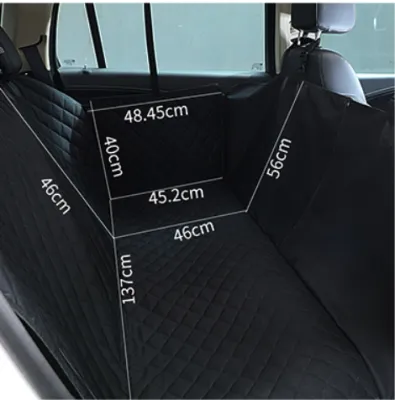
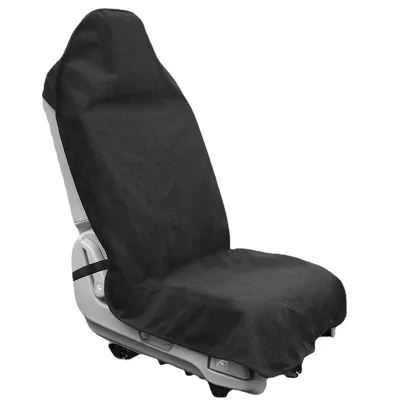
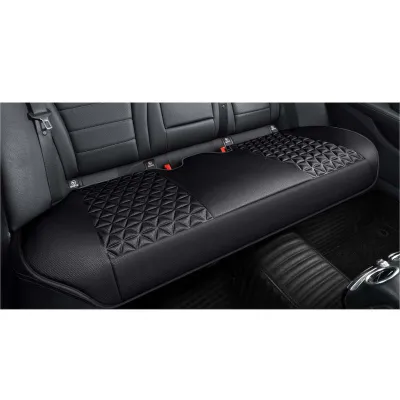
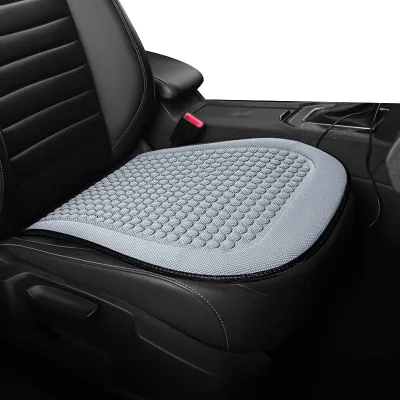
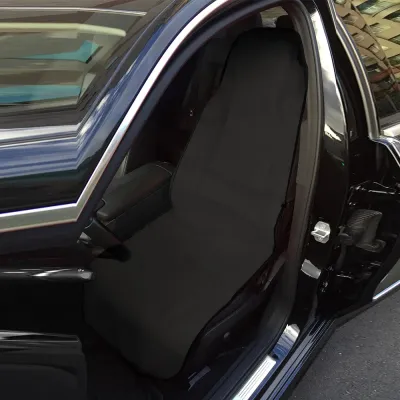
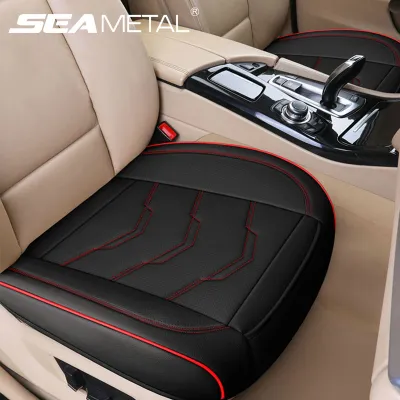
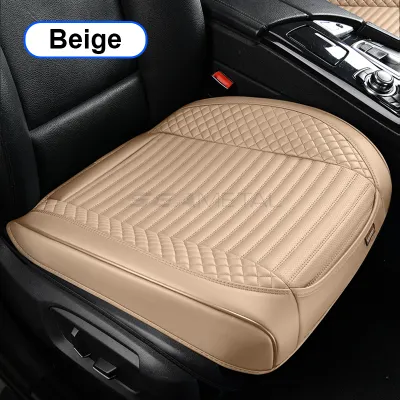
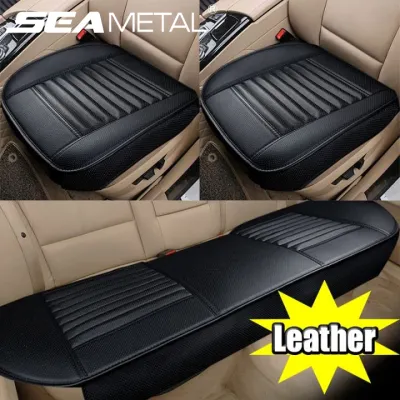
Prices are valid at publication and may change. Please refer to the product page for the latest price.
Comfort factors are equally critical, especially during extended drives. You must assess how a material handles heat retention, breathability, and tactile feel. A material that feels pleasant in an air-conditioned showroom might become uncomfortably hot after your car sits in an open-air parking lot for several hours. Additionally, consider the maintenance commitment you are willing to make. Some materials require only a quick wipe with a damp cloth, while others demand regular vacuuming, spot-treating, or complete removal for machine washing.
Leather and Synthetic Leather Seat Protectors
Leather and synthetic leather (often labeled as PU, PVC, or leatherette) seat protectors are highly valued for their premium appearance and exceptional liquid defense. Because these materials feature a non-porous surface, they act as an immediate barrier against spilled coffee, water, and muddy footprints. Instead of soaking into the seat cushion, liquids pool on the surface, allowing you to wipe them away quickly with a microfiber cloth. This makes them an excellent choice for families with toddlers or rideshare drivers who need to clean the cabin rapidly between trips.

However, these non-porous properties present distinct trade-offs in warm and humid climates. Leather and synthetic alternatives possess high thermal retention and lack natural breathability. When a vehicle is parked under direct sunlight, these covers absorb heat rapidly and can become uncomfortably hot to the touch. During long drives, the lack of airflow often leads to heat buildup and back sweat, reducing overall ride comfort.
To ensure long-term durability, you must verify the product specifications before purchasing. Look for labels indicating UV-resistant treatments, which prevent the material from fading, drying out, or cracking under intense sun exposure. Additionally, check for anti-crack formulations in synthetic options, as cheaper PVC materials tend to stiffen and split along high-stress seams over time.
Fabric Seat Protectors
Fabric seat protectors, typically made from woven polyester, canvas, or neoprene, offer a highly comfortable and temperature-neutral alternative. Unlike leather, fabric does not absorb and retain extreme heat when exposed to sunlight, meaning the seats remain comfortable to sit on even after hours of parking outdoors. The tactile feel is generally soft and familiar, making it a popular choice for daily commuting and general family use.
The primary limitation of fabric is its natural vulnerability to liquid penetration and staining. Unprotected woven fibers act like a sponge, quickly absorbing spilled drinks, sweat, and oils from skin or hair. Once a liquid penetrates the fabric, it can reach the original seat upholstery underneath and lead to persistent odors or mold growth.
To mitigate these risks, you should carefully evaluate the fabric’s weave density and check for specialized manufacturer coatings. Look for heavy-duty fabrics with a high denier rating, which indicates a thicker, more durable weave that resists tearing and abrasion. Verify if the product features a water-repellent or hydrophobic coating that causes liquids to bead on the surface temporarily. Finally, check the product care label to ensure the cover is fully machine-washable, allowing for straightforward maintenance when deep cleaning becomes necessary.
Breathable Mesh Seat Protectors
Breathable mesh seat protectors are engineered specifically to maximize airflow and enhance driver comfort. Constructed with an open-weave, porous pattern—often utilizing 3D spacer mesh technology—these protectors create a physical gap between your body and the seat back. This design allows air from the vehicle’s climate control system to circulate freely, significantly reducing back sweat and heat buildup during long commutes or warm-weather driving.
While mesh excels at temperature regulation, it offers very limited protection against physical contaminants. Because of its open-weave structure, mesh cannot block liquid spills; any liquid dropped on the protector will pass directly through to the original seat upholstery. Furthermore, the porous design easily traps small debris, such as sand, dirt, and pet hair, which can be difficult to extract. Sharp objects, keys, or pet claws can also easily snag and tear the delicate mesh loops, compromising the protector’s structural integrity.
When selecting a mesh protector, you must inspect the build quality and structural reinforcements. Check the weight-bearing capacity of the 3D mesh to ensure it will not flatten completely under your body weight, which would defeat its airflow purpose. Look for heavy-duty edge reinforcement and robust double-stitching along the borders to prevent fraying. Additionally, examine the strap anchoring systems; because mesh is highly flexible, it requires secure, non-slip straps to prevent the protector from shifting out of alignment as you enter and exit the vehicle.
Material Comparison and Decision Matrix
To simplify your selection process, compare how these three materials perform across key operational dimensions:
- Liquid Defense: Leather offers high protection by blocking liquids entirely. Fabric provides moderate defense only if treated with water-repellent coatings, while untreated fabric and mesh offer low to no liquid protection.
- Scratch Resistance: Leather provides moderate to high resistance against minor scratches, though sharp claws can leave permanent marks. Fabric offers moderate resistance, while mesh is highly vulnerable to snagging and tearing.
- Thermal Comfort: Mesh delivers the highest level of airflow and cooling. Fabric remains temperature-neutral and comfortable, whereas leather retains heat and can cause sweating in warm conditions.
- Cleaning Effort: Leather requires low effort, needing only a quick wipe-down. Fabric requires moderate effort, often needing vacuuming or machine washing. Mesh requires moderate to high effort to vacuum out trapped debris and dust.
- Installation Snugness: Leather and fabric covers generally conform well to seat contours, providing a snug fit. Mesh protectors, especially those with rigid 3D structures, may sit flatter against the seat and offer a less contoured fit.
Use this conditional decision framework to guide your purchase:
- Choose Leather or Synthetic Leather if your primary daily challenges are liquid spills, food crumbs, or muddy gear, and you prioritize a surface that can be wiped clean instantly.
- Choose Fabric if you want a balanced, durable cover that remains cool in the sun, provides a soft feel, and can be easily removed for machine washing.
- Choose Breathable Mesh if your main goal is to eliminate back sweat and maximize airflow during long drives, and you do not frequently carry liquids, pets, or messy cargo.
Verify first if: Your vehicle features integrated seat heating or cooling systems. Thick, non-porous leather protectors can insulate the seat, significantly delaying heat transfer or completely blocking ventilated airflow. In these cases, look for specialized, perforated materials designed to work with active seat climate controls.
Neither may fit if: Your vehicle is equipped with highly contoured sports seats, integrated headrests, or unique seatbelt routing systems built directly into the seat shoulder. Standard slip-on protectors often fail to fit these configurations securely, creating loose folds or blocking safety mechanisms. For these specialized designs, custom-tailored upholstery covers or professional interior modifications are required.
Installation, Fitment, and Safety Checks
Before purchasing or installing any car seat protector, you must verify its compatibility with your specific vehicle model, year, and seat configuration. Never assume a protector will fit safely based on generic category terms like “universal fit.” Refer to your vehicle’s owner’s manual and the protector’s product documentation to confirm proper mounting positions and dimensions.
Safety is the most critical factor during installation. Many modern vehicles feature side-impact airbags embedded within the outer bolsters of the front seats. If you install a seat protector that covers these areas, it can delay or completely block airbag deployment during a collision. You must verify that the protector is explicitly certified as side-airbag compatible, featuring open-sided designs or specialized breakaway stitching designed to tear open instantly under airbag pressure.
During the physical installation, carefully route all straps, hooks, and anchoring systems. Ensure that under-seat straps do not pinch or pull on electrical wiring harnesses, seat adjustment motors, or airbag sensors located beneath the seat cushion. The protector must not obstruct the movement of seat adjustment rails or block access to seatbelt buckles. If the protector slips out of position, bunches up under your knees, or interferes with any safety restraint system, stop the installation immediately, remove the product, and consult the manufacturer or a qualified automotive professional.
Frequently Asked Questions (FAQ)
Can I use a leather seat protector on heated or ventilated seats?
Yes, but you must select the correct specification. Thick, solid synthetic leather covers act as thermal insulators, which will slow down the warming effect of heated seats and completely block the airflow from ventilated seats. If your vehicle has active seat climate controls, verify that the protector features a perforated design specifically labeled as compatible with heated and ventilated systems. Always consult both your vehicle’s owner’s manual and the protector’s packaging to ensure safe and effective operation.
How do I clean and maintain fabric seat protectors to prevent odors?
To prevent odors and maintain hygiene, vacuum your fabric seat protector weekly to remove organic debris, dust, and pet dander. When spills occur, spot-clean them immediately using a mild, label-authorized fabric cleaner, ensuring you do not saturate the material. For deep cleaning, follow the manufacturer’s specific washing instructions; many fabric covers are machine-washable on a gentle cycle, but you must avoid harsh chemicals or high dryer heat which can degrade water-repellent coatings. If deep-set odors, mildew, or mold persist after washing, the material has degraded, and you should replace the protector to protect your cabin’s air quality.
Community discussion
Share your experience or ask a question. Comments are reviewed before publication.