
Choosing the right full car seat cover set requires balancing your daily driving habits, the local climate, and how much time you want to spend on interior maintenance. A full seat cover set serves as a protective barrier for your vehicle’s original upholstery, helping to preserve its condition and resale value. However, because different materials perform uniquely under heat, humidity, and physical wear, selecting the wrong type can lead to discomfort or even compromise safety features like side-impact airbags.
To make an informed decision, you must evaluate the three primary material categories available on the market: leather (including synthetic alternatives), fabric cloth, and breathable mesh. Each material offers distinct advantages regarding spill resistance, tactile comfort, and thermal regulation. By understanding how these materials interact with your specific cabin environment, you can select a full seat cover set that enhances your driving experience while standing up to daily wear.
Identifying Your Cabin Environment and Usage Needs
Before browsing material swatches or online listings, take a close look at your typical driving patterns and cabin conditions. If your daily commute involves long stretches of driving under direct sunlight, the temperature inside your parked vehicle can rise rapidly. In tropical regions like Singapore, where high humidity and intense solar heat are constant, a car parked in an open-air lot can become exceptionally hot, directly affecting how comfortable a seat cover material feels when you first sit down.
Products mentioned in this guide
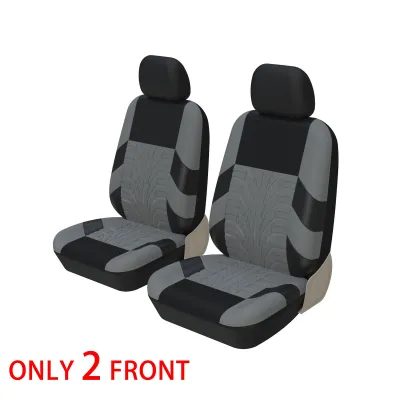
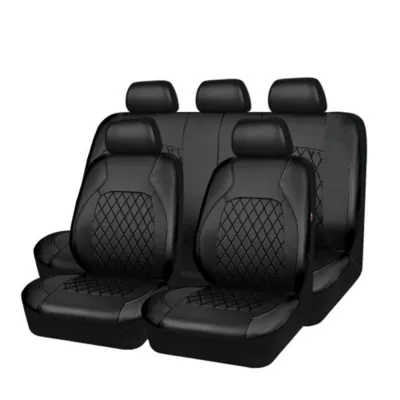
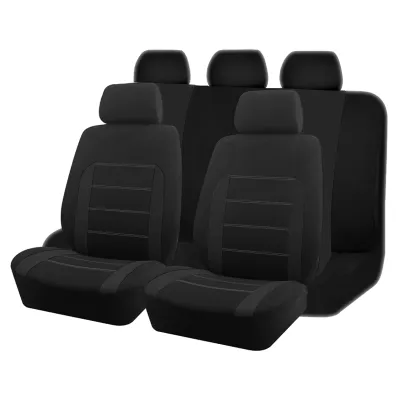
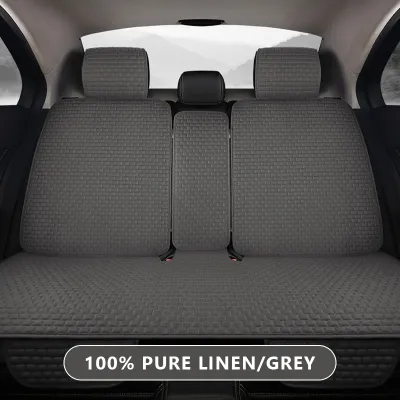
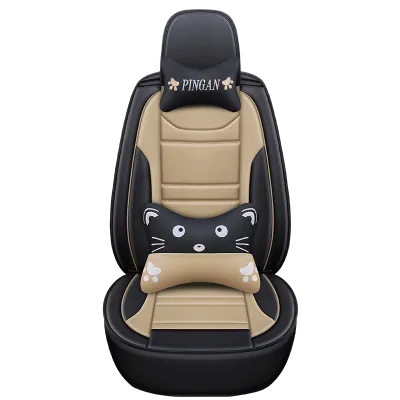
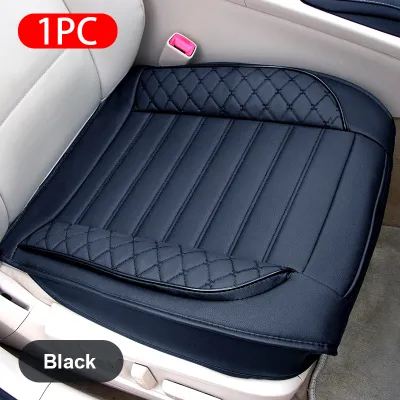
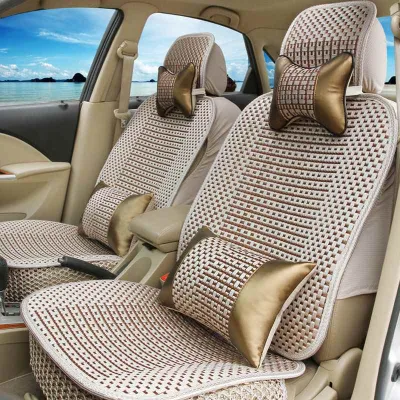
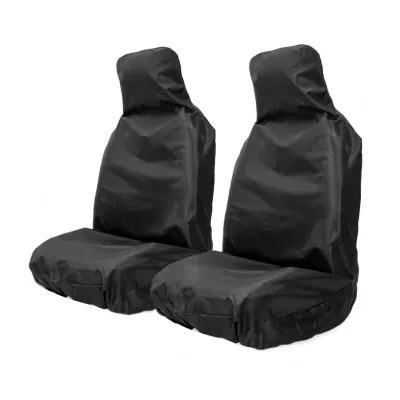
Prices are valid at publication and may change. Please refer to the product page for the latest price.
Passenger habits also play a decisive role in your material choice. If you frequently transport young children, pets, or outdoor sports equipment, your seats are highly vulnerable to spills, muddy prints, and physical abrasions. A material that is easy to wipe clean might be your top priority in these scenarios. Conversely, if you primarily use your vehicle for solo commutes or professional ridesharing, your focus might lean toward long-term passenger comfort and a premium aesthetic.
Finally, consider how your vehicle’s air conditioning system distributes cool air. Some cabins cool down rapidly, while others require more time to reach a comfortable temperature, especially in the rear seats. If your car lacks rear air conditioning vents, choosing a highly breathable seat cover material can significantly improve the comfort of your passengers during warm afternoon trips.
Leather and Synthetic Leather: Maintenance and Longevity
Leather and synthetic leather (such as polyurethane or PVC alternatives) are popular choices for drivers seeking a sleek, premium appearance that is highly resistant to liquid spills. When evaluating these options, always review the manufacturer’s care labels to understand the specific cleaning agents and conditioning routines required. Genuine leather typically demands periodic conditioning with specialized leather oils to prevent drying and cracking, whereas synthetic leather often requires only a simple wipe-down with a damp cloth and mild soap.

It is essential to observe the surface texture and verify the exact material composition on the product tags before purchasing. Synthetic leather covers vary widely in quality; some offer a supple, realistic texture that mimics genuine hide, while lower-grade options may feel stiff or plasticky. Additionally, synthetic materials are generally non-porous, meaning they do not absorb liquids, making them highly practical for families dealing with frequent juice or coffee spills.
However, the primary drawback of solid leather and synthetic covers is their heat retention. When a vehicle is parked in direct sunlight, solid synthetic surfaces absorb and hold thermal energy, making them uncomfortably hot to the touch. To mitigate this issue, look for product specifications that feature perforated panels. Perforations are small, engineered holes in the seating surface that allow air to circulate, reducing heat buildup and helping the material cool down more quickly once the cabin’s air conditioning is active.
Fabric and Cloth: Comfort and Spill Management
Fabric and cloth seat covers offer a soft, familiar texture that remains relatively temperature-neutral, even after hours of exposure to direct sunlight. When examining fabric options, pay close attention to the weave density and surface texture. A tight, dense weave generally indicates better resistance to friction and wear, preventing the fabric from thinning or pilling over years of daily use.
Maintenance for fabric covers differs significantly from leather. While some fabric covers are designed to be fully machine washable, others are restricted to spot-cleaning only. You must verify the care instructions on the product packaging to ensure the cleaning process aligns with your lifestyle. If you choose a non-washable fabric, keeping a dedicated fabric cleaner on hand is necessary to address stains before they set into the fibers.
Spill management on fabric relies heavily on specialized surface treatments. Some manufacturers apply liquid-repellent coatings to their fabric covers, causing liquids to bead up on the surface temporarily so they can be blotted away. Always evaluate these liquid-repellency claims based on explicit product specifications rather than assuming all cloth materials behave the same way. Without a protective treatment, untreated fabric will quickly absorb liquids, leading to deep-set stains and potential odors in a humid climate.
Another factor to consider is dust and allergen accumulation. Fabric fibers naturally trap dust, pet dander, and hair over time. If you or your passengers suffer from respiratory sensitivities, fabric covers will require regular vacuuming with a brush attachment to maintain a clean, allergen-free cabin environment.
Breathable Mesh: Airflow and Temperature Regulation
Breathable mesh seat covers are engineered specifically to maximize airflow and regulate temperature in warm climates. These covers typically feature an open-weave design that allows air to pass freely between your body and the seat structure. By minimizing the contact area and promoting continuous ventilation, mesh covers help prevent perspiration and keep you cool during extended drives, even before the cabin air conditioning has fully cooled the interior.
While mesh excels at temperature control, you must carefully assess its structural durability. The open-weave pattern can be susceptible to snagging if it comes into contact with sharp objects, such as keys, pocket rivets, or pet claws. If you frequently travel with pets, a fine-gauge mesh or a hybrid cover that combines mesh center panels with durable fabric borders may be more suitable than a fully open-mesh design.
Comfort on long drives also depends on the padding thickness beneath the mesh layer. Because mesh itself is thin and flexible, high-quality mesh covers incorporate a supportive foam or 3D-spacer fabric backing. This underlying layer provides the necessary cushioning to support your posture during long commutes while maintaining enough open space to allow air to flow through the assembly.
Additionally, check the fitment flexibility of the mesh cover over your vehicle’s specific seat contours. Mesh materials often have limited elasticity compared to synthetic fabrics. Ensure the product specifications indicate compatibility with your seat’s bolsters and headrest configurations to prevent the material from stretching too tightly or sagging over time.
Comparison Matrix and Decision Framework
To help you synthesize these material characteristics, use the comparison matrix below to evaluate how each option aligns with your daily driving priorities.
| Material Type | Maintenance Effort | Spill Resistance | Airflow & Cooling | Durability Checks |
|---|---|---|---|---|
| Leather / Synthetic | Low (Wipe clean) | High (Non-porous) | Low to Moderate (Better if perforated) | Check for cracking and seam strength |
| Fabric / Cloth | Moderate to High (Vacuum/Wash) | Low to Moderate (Requires treatment) | Moderate (Temperature-neutral) | Check weave density and pilling resistance |
| Breathable Mesh | Moderate (Vacuum/Spot clean) | Low (Liquids pass through) | High (Open-weave design) | Check for snagging risks and backing foam |
To finalize your choice, apply these conditional decision rules based on your primary automotive needs:
- Choose Leather or Synthetic Leather if your priority is effortless cleanup, a premium aesthetic, and maximum protection against liquid spills, and you are willing to use sunshades or park in shaded areas to manage surface heat.
- Choose Fabric or Cloth if you prefer a soft, slip-resistant seating surface that remains comfortable in all temperatures, and you do not mind regular vacuuming or occasional spot-cleaning.
- Choose Breathable Mesh if you drive frequently in hot, humid conditions, prioritize immediate cooling and airflow, and do not typically carry pets or sharp cargo that could snag the open-weave material.
Verify First if you have a mixed-use scenario. For example, if you want the spill resistance of synthetic leather but dread the heat, look for hybrid seat covers that feature synthetic leather on the high-wear outer bolsters and breathable mesh or perforated fabric in the center seating zones.
Safety, Fitment, and Installation Checks
Before purchasing any full seat cover set, you must address critical safety and physical compatibility requirements. The most vital safety consideration is side-airbag compatibility. Many modern vehicles feature side airbags integrated directly into the outer bolsters of the front seats. Installing a non-compatible seat cover can obstruct or delay the deployment of these airbags during a collision, leading to severe safety risks. Always locate and verify side-airbag compatibility labels or designated tear-away seams on the cover packaging before attempting installation.
Next, consult your vehicle owner’s manual to identify any integrated components within your seats. This includes built-in seat belts, seat heating elements, cooling ventilation systems, and passenger occupancy sensors. A full seat cover must not block seat belt buckles, anchor points, or sensor arrays. If your seats feature integrated heating or cooling, ensure the cover material is rated to transfer heat safely without melting or blocking the built-in ventilation paths.
Physical fitment requires checking headrest adjustability and anchor point clearance. Verify whether your vehicle has removable or active headrests, as this determines how the top portion of the cover must be secured. Ensure there is sufficient clearance beneath the seat frame to route and fasten the installation straps, hooks, or chucks securely without interfering with power seat adjustment motors or wiring harnesses.
If at any point during the installation process you find that the seat cover obstructs a safety mechanism, restricts seat belt access, or interferes with electrical wiring, stop immediately. Consult the seat cover manufacturer’s support line or seek assistance from a qualified automotive accessory installation professional to ensure your cabin remains safe and fully functional.
Frequently Asked Questions (FAQ)
Will full seat covers interfere with side airbags?
Yes, standard seat covers that wrap tightly around the entire seat back can prevent side airbags from deploying correctly. To ensure your safety, you must only purchase covers explicitly labeled as airbag-compatible. These covers feature specialized, low-tension stitching or open side panels designed to tear open instantly when the airbag deploys. Always verify this compatibility on the product packaging and cross-reference your vehicle owner’s manual before completing the installation.
How do I manage liquid spills on different materials?
Your response to a spill depends entirely on the material’s care instructions. For synthetic leather, you can quickly wipe away liquids using a clean, damp microfiber cloth, followed by a dry towel to prevent moisture from seeping into the seams. For fabric and mesh covers, blot the spill immediately with an absorbent cloth without rubbing, which can push the liquid deeper into the fibers. Always refer to the manufacturer’s specific cleaning guidelines, as some fabrics may require specialized spot-cleaners or complete removal for machine washing.

Community discussion
Share your experience or ask a question. Comments are reviewed before publication.