
Finding the right car neck support is essential for maintaining comfort during daily commutes and long drives. The ideal material depends entirely on your personal priorities, whether you value a seamless aesthetic match, a soft texture, or maximum airflow to combat heat. Leather, fabric, and mesh each offer distinct advantages and trade-offs in terms of comfort, maintenance, and durability. By understanding how these materials perform under different cabin conditions, you can make an informed decision that enhances your driving experience.
Identifying Your Primary Comfort and Interior Requirements
Before purchasing any aftermarket accessory, define your baseline comfort needs and evaluate your typical driving environment. If you spend hours in your vehicle daily, minor discomforts can quickly escalate into physical strain. Consider the duration of your average commute and how quickly your car’s cabin cools down after being parked in the sun. In tropical climates, a material that traps heat can lead to discomfort, making breathability your primary requirement. Conversely, if you rely heavily on air conditioning and prefer a cozy, insulated feel, a softer, non-porous material might be more suitable.
Your existing car interior plays a significant role in determining which neck support will look and feel integrated. Matching the texture and color of your neck support to your upholstery creates a cohesive, factory-installed appearance. For instance, if your vehicle features premium leather seats, adding a fabric or mesh cushion might disrupt the visual flow of the cabin.
Products mentioned in this guide
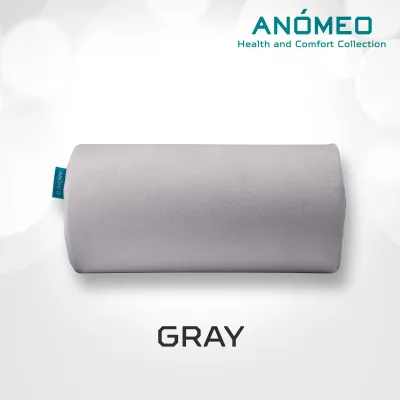
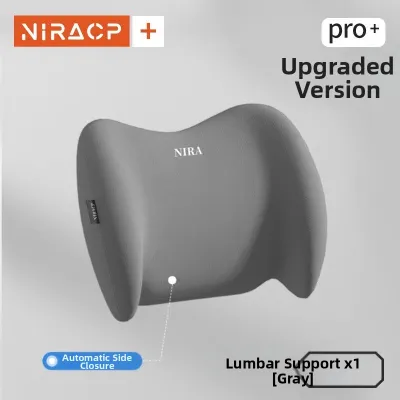
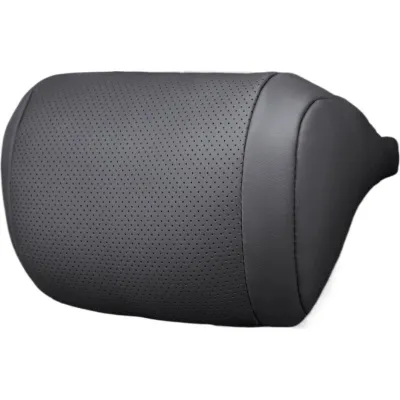
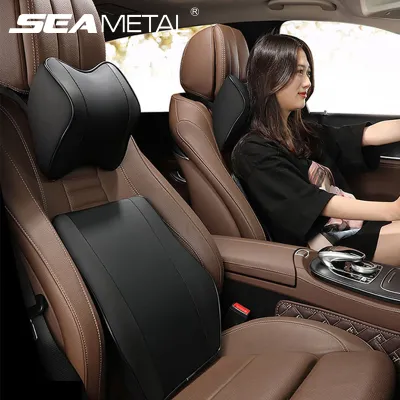
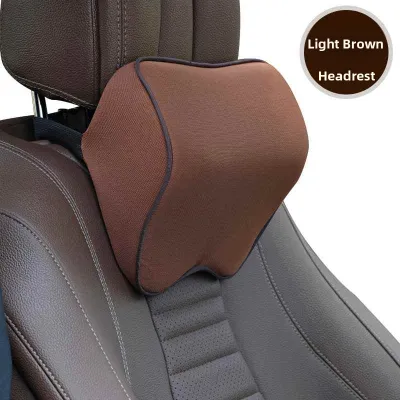
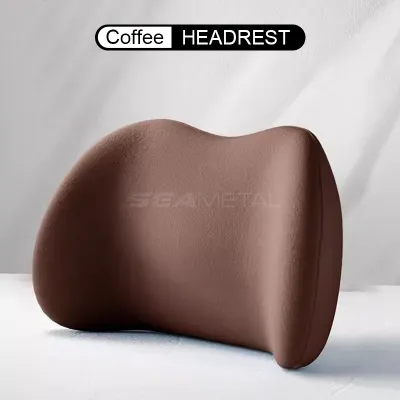
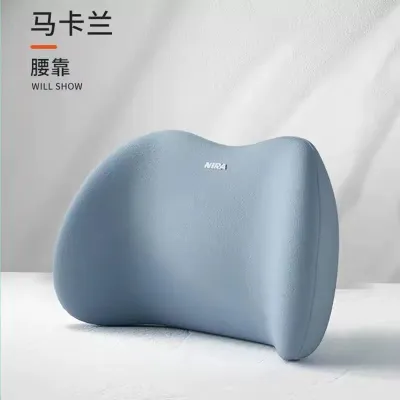

Prices are valid at publication and may change. Please refer to the product page for the latest price.
Personal sensitivities and skin reactions are also vital considerations. The neck support will make direct contact with your skin, especially during warmer months. If you have sensitive skin or allergies, evaluate the texture of the material. Some synthetic fabrics or rough mesh weaves can cause irritation over time, whereas hypoallergenic cotton or smooth, high-quality leather might offer a gentler touch.
Evaluating Leather Neck Supports: Aesthetics and Care
Leather neck supports are highly favored for their premium appearance and ability to elevate a car’s interior design. When shopping, check the product labels to distinguish between genuine leather and synthetic alternatives like polyurethane (PU) or polyvinyl chloride (PVC). Genuine leather offers natural durability but requires specialized care to prevent cracking. Synthetic leather options are often more affordable and easier to wipe clean, but they may not offer the same longevity or breathability.

The surface finish and stitching quality of a leather neck support are key indicators of its overall craftsmanship. Inspect the seams to ensure they are tight and even, as loose threads can quickly unravel under daily use. Because leather is naturally non-porous, it can feel exceptionally hot or cold depending on the weather. To mitigate this, look for products that feature perforated patterns, which allow for a small amount of airflow and reduce heat retention against your skin.
Maintaining a leather neck support requires adherence to specific manufacturer guidelines to avoid premature wear. Harsh household cleaners or alcohol-based wipes can strip the protective coating from both genuine and synthetic leather, leading to peeling or discoloration. Instead, use a soft, damp microfiber cloth for routine dusting, and apply a dedicated leather cleaner and conditioner as recommended by the manufacturer.
Evaluating Fabric Neck Supports: Texture and Daily Use
Fabric neck supports are celebrated for their immediate softness and cozy, inviting texture. Unlike leather, which can feel stiff initially, fabric options like velvet, cotton, or microfiber conform gently to your neck from the moment you lean back. This makes them highly comfortable for drivers who prioritize a plush, cushioned feel. When selecting a fabric support, run your hand over the material to assess its texture and ensure it does not feel scratchy or overly synthetic against your skin.
One of the greatest advantages of fabric is its ease of maintenance, but this depends heavily on the product’s design. Always check the care label before purchasing to verify if the fabric cover is removable and machine washable. A zippered cover allows you to easily slide the fabric off and toss it into the washing machine, keeping your cabin smelling fresh. If the cover is not removable, you will have to rely on spot cleaning, which can be more tedious and may leave water rings or soap residue on the material.
While fabric offers excellent comfort, it is naturally more susceptible to stains and spills than leather or mesh. If you frequently drink coffee or eat in your vehicle, look for fabric supports that feature protective coatings or stain-resistant treatments. Additionally, fabric weaves can easily trap dust, pollen, and pet hair, requiring regular vacuuming or lint rolling to keep the surface clean.
Evaluating Mesh Neck Supports: Airflow and Temperature
Mesh neck supports are specifically engineered to maximize ventilation and prevent heat buildup, making them an excellent choice for warm and humid climates. The open-weave design of mesh allows air to circulate freely between your neck and the headrest, reducing the likelihood of sweating during long drives. When evaluating mesh options, examine the density of the weave. A very loose weave offers excellent airflow but may feel rougher against the skin, while a tighter, double-layered mesh provides a smoother texture while still maintaining excellent breathability.
It is important to remember that mesh is merely the outer cover of the neck support; the internal filling material dictates the actual level of physical support you receive. Many high-quality mesh supports utilize memory foam, molded polyurethane, or microbeads as their core. Memory foam provides excellent pressure relief and contours to your cervical spine, while microbeads offer a more fluid, shifting support. Always verify the internal specifications of the product to ensure the core matches your ergonomic needs, as a breathable cover cannot compensate for a flat or unsupportive interior.
Durability can sometimes be a concern with mesh materials, especially if they lack proper structural reinforcement. Look for mesh neck supports that feature reinforced edges or a semi-rigid internal frame. Without these features, the mesh can easily snag on clothing zippers, fray at the seams, or lose its shape over time, leading to a saggy and unsupportive cushion.
Decision Framework: Which Material Should You Choose?
To make the final decision easier, you can apply a simple conditional framework based on your primary driving habits and cabin conditions. If your vehicle has a premium leather interior, and you are willing to perform regular material conditioning to maintain a sleek, cohesive look, leather is your ideal choice. If you prioritize immediate, plush comfort, prefer a material that is easy to remove and machine wash, and do not mind regular vacuuming to remove dust, fabric is the most suitable option. If you drive in a hot, humid climate, experience frequent sweating, and require maximum ventilation to stay cool, mesh is the clear winner.
The following comparison table summarizes the key decision factors for each material type to help you visualize the most suitable option for your vehicle:
| Material Type | Primary Benefit | Maintenance Routine | Interior Match | Ideal Cabin Condition |
|---|---|---|---|---|
| Leather | Premium aesthetics and easy wipe-clean surface | Wipe with damp cloth; apply leather conditioner | Suits leather or synthetic leather seats | Air-conditioned cabins with moderate temperatures |
| Fabric | Exceptional softness and cozy, plush texture | Machine wash removable cover; regular vacuuming | Suits cloth seats or casual interiors | Cool or moderate climates; dust-free environments |
| Mesh | Maximum airflow and effective heat dissipation | Spot clean or wash removable cover; gentle dusting | Fits sporty, modern, or utility-focused cabins | Hot, humid climates; vehicles parked in direct sun |
By aligning these factors with your daily routine, you can select a neck support that not only enhances your physical comfort but also complements your vehicle’s interior design seamlessly.
Verifying Fit, Safety, and Installation Limits
Before finalizing your purchase of any car neck support, you must verify its compatibility with your specific vehicle model and ensure it does not compromise your safety. Start by measuring your vehicle’s headrest posts, including the distance between them and the overall width of the headrest. Some neck supports utilize elastic straps that slip over the entire headrest, while others use adjustable buckle straps that wrap around the metal posts. Ensuring a secure fit prevents the cushion from sliding down or shifting during turns, which can distract you while driving.
Safety must always be your top priority when adding aftermarket accessories to your car’s seating system. Read the manufacturer’s safety warnings carefully, particularly regarding airbag deployment zones. Many modern vehicles are equipped with side-curtain airbags or active head restraint systems designed to protect your neck during a collision. Ensure that the neck support’s straps or bulk do not obstruct these safety mechanisms or interfere with the seat’s built-in whiplash protection. If the accessory requires you to modify the headrest or force a strap into a tight seam, it may not be safe for your specific vehicle.
Finally, pay close attention to how the neck support affects your natural driving posture. The cushion should fill the natural curve of your cervical spine without pushing your head forward or forcing your chin down. An improper posture can strain your neck muscles and reduce your peripheral or rearview visibility. If you install the neck support and find that it alters your driving position uncomfortably, stop using the accessory immediately and consult your vehicle’s manual.
Frequently Asked Questions (FAQ)
Can I use a leather neck support on fabric car seats?
Yes, you can use a leather neck support on fabric seats, but you should monitor the contact points regularly. The friction between the leather backing of the support and the fabric of your seat can sometimes cause minor wear or pilling on the seat upholstery over time. Ensure that dyed leather or synthetic leather does not transfer color onto lighter-colored fabric seats when exposed to heat and pressure.
How do I clean a mesh neck support without damaging the inner foam?
To clean a mesh neck support, first check the product label to see if the outer cover is removable. If the cover can be zipped off, wash it according to the manufacturer’s instructions, usually on a gentle cycle with mild detergent. If the cover is non-removable, do not submerge the entire cushion in water, as soaking can ruin the inner memory foam or polyurethane core. Instead, spot clean the mesh surface using a damp microfiber cloth and a small amount of mild soap, then allow it to air dry completely in a well-ventilated area.
Will a thick neck support affect my driving posture or safety?
Yes, an excessively thick neck support can negatively affect both your driving posture and your safety. If the cushion is too thick, it will push your head forward, misaligning your spine and potentially reducing your reaction time or field of vision. Furthermore, it can interfere with your seat’s active headrest system, which is designed to move forward and cradle your head during a rear-end collision to prevent whiplash. Always choose a support that fills the natural gap without altering your neutral driving posture.
Community discussion
Share your experience or ask a question. Comments are reviewed before publication.