
Quick Answer: Which Koch Chemie Product Do You Need?
Choosing the right paint care product can be confusing, especially when terms like polishing, waxing, and coating are used interchangeably. To make the best decision for your vehicle, you must first understand that the choice is not a three-way tie. Polish is a corrective step designed to repair paint defects, whereas wax and ceramic coatings are actual protective layers designed to shield the paint from environmental damage.
If your vehicle’s paint has lost its luster, is covered in fine swirl marks, or has noticeable oxidation, you need a Koch Chemie polish to physically level the clear coat and restore a smooth, high-gloss surface. Once the paint is corrected, or if your paint is already in pristine condition, you must then choose a protectant. Choose a Koch Chemie wax if you prefer a classic, warm, deep shine and enjoy the hands-on detailing process every few weeks. Choose a Koch Chemie ceramic coating if you want long-term durability, extreme water-beading performance, and significantly easier daily maintenance.
The right choice for your vehicle depends on its current paint condition, your available detailing time, and the local environment. In tropical regions with intense sunlight, high humidity, and frequent heavy downpours, environmental factors play a major role in how paint protectants perform and degrade over time.
Products mentioned in this guide
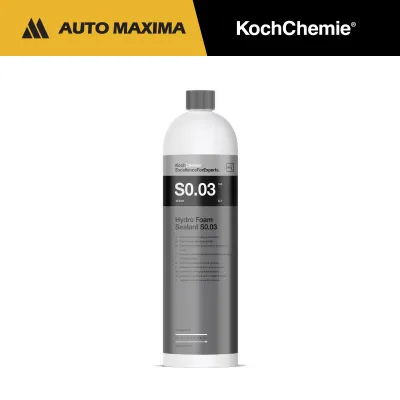
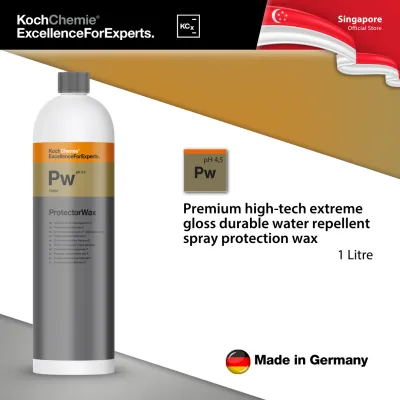
Prices are valid at publication and may change. Please refer to the product page for the latest price.
The Crucial First Step: Why Polish Is Not a Protectant
A common misconception among car owners is that polishing a vehicle provides protection against the elements. In reality, polishing and protecting are opposite steps in the detailing workflow. Polishes contain engineered abrasives designed to mechanically level the clear coat, removing microscopic imperfections, light scratches, swirl marks, and oxidation. When you polish a car, you are physically removing a microscopic layer of the clear coat to reveal a perfectly flat, highly reflective surface.

Because polishing is an abrasive, subtractive process, it actually strips away any existing waxes, sealants, or coatings, leaving the paint completely bare and vulnerable. Polishing does not deposit a protective barrier on the paint. If you polish your vehicle and fail to follow up with a wax or ceramic coating, the bare clear coat will quickly oxidize and degrade under UV exposure and environmental fallout.
This mechanical action introduces a critical safety boundary. Modern factory clear coats are extremely thin, often measuring only 35 to 50 microns. Because polishing removes a small portion of this layer, it must only be performed when necessary to correct visible defects. It should never be treated as a routine weekly or monthly maintenance step. Over-polishing can prematurely thin the clear coat, leading to irreversible clear coat failure that can only be resolved by a costly professional respray.
Before undertaking any polishing work, always check your vehicle manufacturer’s paint care guidelines and verify if the paint is original or has been aftermarket resprayed, as aftermarket paint may have different hardness levels and thickness tolerances. Ultimately, polish serves as the mandatory preparation step. By leveling the paint first, you ensure that your chosen protectant—whether wax or ceramic coating—can form a proper, uniform bond with a clean, smooth surface, maximizing both visual gloss and durability.
Koch Chemie Wax: Deep Gloss and Accessible Application
For decades, carnauba and synthetic waxes have been the standard for automotive paint protection. In the Koch Chemie portfolio, high-quality waxes are formulated to deliver a warm, deep, and rich gloss that enhances the natural color depth of your vehicle’s paintwork, making it particularly popular for dark-colored vehicles and show cars.
Waxes work by filling in the microscopic pores and minor imperfections remaining in the clear coat, creating a smooth surface that reflects light evenly. The application process for wax is highly forgiving and accessible to detailers of all skill levels. Waxes can be applied easily by hand using a soft foam applicator pad or with a dual-action polishing machine at low speeds. The product is applied in thin, even layers, allowed to haze according to the specific product instructions, and then buffed off effortlessly with a clean, high-quality microfiber towel.
However, the primary trade-off of traditional wax is its limited durability. Waxes are sacrificial barriers that sit on top of the paint surface rather than bonding chemically with it. Under standard conditions, a high-quality wax typically lasts from a few weeks to a few months. In tropical climates characterized by intense UV radiation, high ambient temperatures, and frequent heavy rain, wax degrades much faster. High heat can soften the wax layer, making it easier for road grime, industrial fallout, and acidic contaminants to penetrate the barrier and bond to the paint.
Maintaining a waxed vehicle requires careful attention to washing practices. To avoid stripping the wax prematurely, you must use pH-neutral car shampoos and avoid harsh alkaline cleaners often found in automatic commercial car washes. Before applying any wax, always read the specific product label for exact curing times, environmental requirements, and application instructions. Keep in mind that a wax’s performance relies heavily on proper application on a completely clean, dry surface.
Koch Chemie Ceramic Coating: Maximum Durability and Hydrophobics
Ceramic coatings represent a significant technological advancement in paint protection. Unlike waxes that sit loosely on the paint, ceramic coatings utilize silicon dioxide (SiO2) or silicon-carbon chemistry to establish a semi-permanent, hard covalent bond directly with the factory clear coat. This chemical bond essentially creates an ultra-thin, glass-like protective layer over your vehicle’s paintwork.
The primary benefit of a ceramic coating is its extreme hydrophobic effect. This high surface tension causes water to bead tightly and sheet off the vehicle rapidly, carrying away loose dirt, dust, and road grime in the process. This self-cleaning property means the vehicle stays cleaner for longer and is significantly easier to wash. Additionally, ceramic coatings provide robust resistance against harsh chemical contaminants, such as acidic bird droppings, alkaline cleaners, and tree sap, while offering superior UV protection to prevent paint oxidation and fading.
In terms of longevity, ceramic coatings are designed to last for years rather than months, making them a highly durable option for daily-driven vehicles. However, this exceptional performance comes with a much higher demand for preparation, application effort, and safety precautions. Because a ceramic coating cures into a hard, transparent barrier, any paint defects, swirl marks, or dust particles left on the paint will be locked beneath the coating.
Consequently, meticulous surface preparation is mandatory. This process involves a thorough wash, chemical and mechanical decontamination (claying), complete paint correction (polishing), and a final panel wipe using an alcohol-based cleaner to remove all polishing oils and residues. Applying a ceramic coating requires a controlled environment free from dust, direct sunlight, and moisture.
Because these coatings cure quickly, uneven application can result in “high spots”—cloudy or dark patches that can only be corrected by physically polishing the cured coating off and reapplying it. For this reason, professional application or strict adherence to the manufacturer’s environmental, safety, and curing guidelines is highly recommended. Always wear appropriate personal protective equipment, such as nitrile gloves and proper ventilation masks, when working with chemical coatings.
Head-to-Head Comparison: Wax vs. Ceramic Coating
To help you decide between the two primary paint protectants, the table below outlines the key differences across critical decision dimensions.
| Feature | Koch Chemie Wax | Koch Chemie Ceramic Coating |
|---|---|---|
| Durability | Weeks to months (typically 1 to 3 months) | Years (typically 1 to 3+ years depending on product) |
| Gloss Type | Warm, deep, organic "wet look" | Glassy, highly reflective, mirror-like shine |
| Hydrophobic Effect | Moderate water beading | Extreme water beading and rapid water sheeting |
| Application Difficulty | Low; highly forgiving; easy to apply and buff | High; requires meticulous prep and controlled environment |
| Maintenance Effort | High; requires frequent reapplication and pH-neutral washes | Low; easy "wash and go" maintenance; highly chemical resistant |
| Upfront Cost (SGD) | Budget-friendly (typically S$30 to S$80 per container) | Higher investment (typically S$100+ for DIY kits; S$500+ professional) |
Understanding these trade-offs is essential for selecting the right product. Wax trades away long-term durability in exchange for ease of application, a lower upfront cost, and a classic warm visual aesthetic. On the other hand, ceramic coatings require a significant upfront investment of time, labor, and cost, but reward you with years of robust protection, exceptional chemical resistance, and effortless maintenance washing. Always verify the specific product specifications and instructions on the official Koch Chemie labels before purchase, as individual product formulations and performance metrics can vary.
Decision Framework: Which Protection Matches Your Lifestyle?
To finalize your choice, evaluate how your detailing habits, vehicle usage, and storage conditions align with each product type.
Choose Koch Chemie Wax if:
- You find the hands-on process of washing, detailing, and waxing your vehicle on weekends therapeutic and enjoyable.
- You prefer the traditional, deep, organic "wet" look of carnauba wax, especially on dark-colored or classic cars.
- Your vehicle is primarily kept in a garage or sheltered parking structure, protecting it from constant exposure to harsh UV rays and heavy rain.
- You want a budget-friendly entry into paint protection with minimal specialized tools or preparation requirements.
Choose Koch Chemie Ceramic Coating if:
- You want a low-maintenance "wash and go" routine where dirt releases easily and drying the vehicle takes minimal effort.
- Your vehicle is parked outdoors daily, exposing it to relentless tropical sun, heavy rain, industrial fallout, and acidic tree sap.
- You view paint protection as a long-term investment and are willing to dedicate the necessary time, effort, or budget upfront for years of worry-free durability.
- You prefer a highly reflective, glassy, mirror-like finish on your paintwork.
Verify First if:
- Your paint has visible defects, heavy swirl marks, deep scratches, or oxidation. If these conditions exist, you must perform paint correction using a Koch Chemie compound or polish before applying either wax or ceramic coating. Applying a protectant over damaged paint will lock in the defects and yield poor visual results.
- You are unsure of the paint's history or thickness. If the paint is exceptionally thin or shows signs of clear coat failure (such as peeling or white patches), do not polish or coat the vehicle. Instead, consult a qualified automotive refinishing professional.
Remember, neither wax nor ceramic coating is designed to hide existing paint defects. The ultimate quality, gloss, and longevity of your paint protection will always depend on the thoroughness of the preparation work completed beforehand.
Frequently Asked Questions (FAQ)
Can I apply Koch Chemie ceramic coating over an existing wax?
No, you cannot apply a ceramic coating over an existing wax or sealant. Ceramic coatings must form a direct covalent bond with the bare, clean clear coat of your vehicle. Wax acts as a physical barrier on top of the paint, which will prevent the ceramic coating from bonding properly.
If you attempt to apply a coating over a waxed surface, the coating will fail to adhere, resulting in uneven curing, poor durability, and immediate failure of the protective layer. Before applying a ceramic coating, you must thoroughly strip away all old waxes and sealants using a dedicated wax remover, an alkaline strip wash, or a polishing step, followed by a thorough panel wipe with an alcohol-based preparation spray.
How often should I polish my car before waxing or coating?
Polishing should only be performed when it is necessary to correct visible paint defects, such as swirl marks, fine scratches, or oxidation. Because polishing is an abrasive process that physically removes a microscopic layer of your clear coat, doing it too frequently will thin the paint and lead to premature clear coat failure.
For a well-maintained daily driver that is washed carefully using safe wash methods, a light polish once or twice a year before reapplying your chosen paint protection is typically sufficient. Always assess the paint’s condition visually under good lighting and by touch (using a clean plastic sandwich bag over your hand to feel for bonded contaminants) before deciding to polish. If the paint is smooth and free of defects, you can skip the polishing step and proceed directly to applying your wax or sealant after a thorough decontamination wash.
Community discussion
Share your experience or ask a question. Comments are reviewed before publication.