
Motorcycle riding in heavy rain requires specialized rain pants designed to withstand high-speed water impact, maintain rider safety, and offer a secure fit over standard riding gear. Unlike standard rainwear, motorcycle-specific rain pants must feature robust waterproof ratings, sealed or welded seams, abrasion-resistant panels, and high-visibility elements to handle the harsh conditions of a tropical downpour. Selecting the right pair involves verifying manufacturer specifications, checking for boot compatibility, and ensuring the design does not compromise your control of the motorcycle.
Core Waterproofing and Seam Construction
When riding a motorcycle in heavy rain, water is driven into the fabric by wind at highway speeds. This dynamic pressure means standard water-resistant materials quickly fail. Check the manufacturer’s specifications for the waterproof rating, measured in millimeters (hydrostatic head). For heavy downpours and highway speeds, look for ratings of at least 10,000 mm, though 20,000 mm or higher offers much better protection against wind-driven rain.
The fabric itself is only part of the equation; seams are common failure points. Every needle puncture during sewing creates a tiny hole where water can seep. High-quality motorcycle rain pants address this with taped or welded seams. Taped seams feature waterproof tape applied under heat and pressure over the stitched lines inside the garment. Welded seams use heat or radio frequency waves to fuse fabric panels without stitching, creating a solid barrier.
Products mentioned in this guide
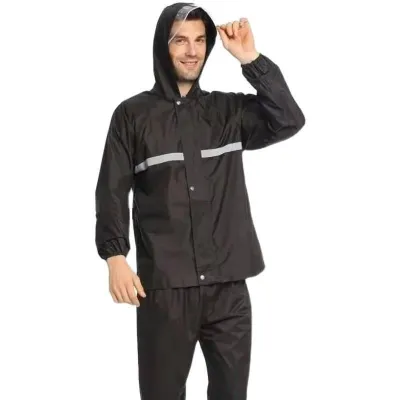
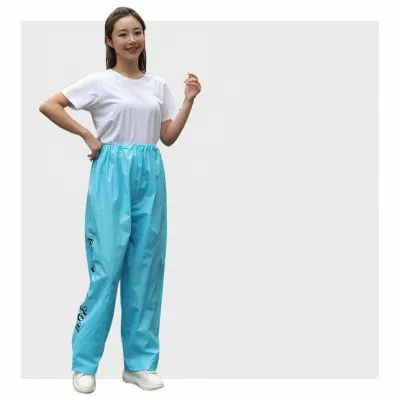
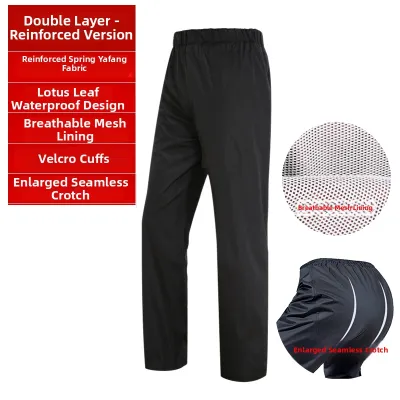
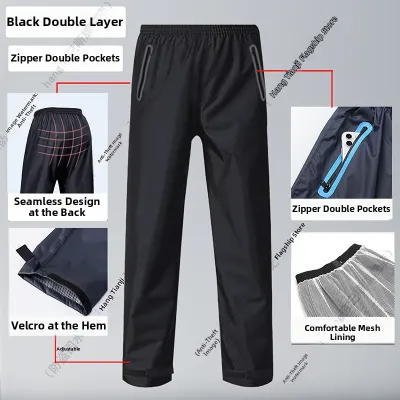
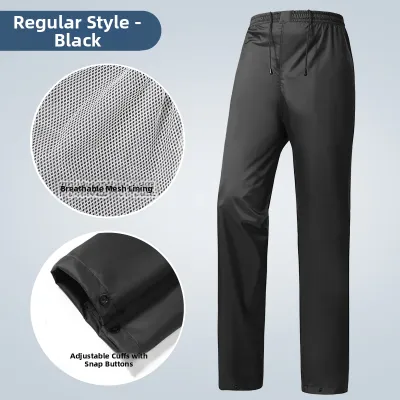
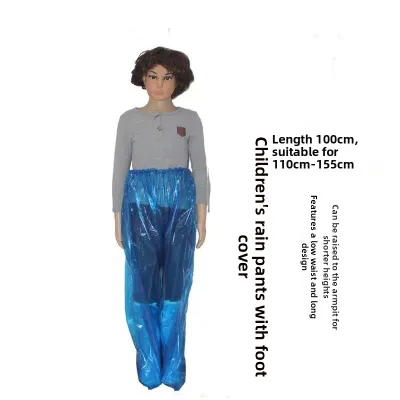
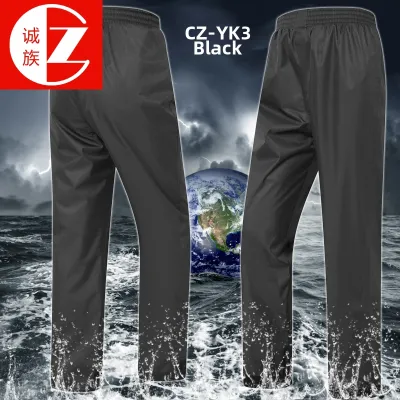
Prices are valid at publication and may change. Please refer to the product page for the latest price.
Beyond base construction, evaluate the outer shell material and its durable water repellent (DWR) treatment. The outer shell, typically high-density nylon or polyester, acts as the first line of defense. A DWR coating makes water bead up and roll off, preventing the fabric from becoming saturated or “wetting out.” When fabric wets out, it loses breathability and feels cold and heavy. Check product specifications to confirm the outer material and whether it features a factory-applied DWR finish.
Safety and Visibility Enhancements
Riding in heavy downpours severely reduces visibility. Spray from tires, fogged windows, and dark storm clouds make it difficult for drivers to spot a motorcyclist. Therefore, your rain pants must feature high-quality reflective elements. Look for retroreflective strips or piping placed along the sides of the legs and near the ankles. These elements reflect light back to its source, such as headlights, making your silhouette visible from a distance in low-light storm conditions.

In addition to visibility, safety gear must protect you in a slide. Standard rain pants made of thin PVC or lightweight nylon will instantly melt or tear upon contact with asphalt. Motorcycle-specific rain pants should feature abrasion-resistant panels in high-impact zones like the knees and seat. Manufacturers often use high-denier fabrics, such as Cordura or reinforced polyester, in these areas to provide protection against friction and heat if you lose traction on wet roads.
Finally, rain pants must work harmoniously with existing protective gear. They should fit comfortably over standard riding pants and knee armor without compressing the armor or shifting it out of place. If rain pants are too tight, they restrict your range of motion, making it difficult to react quickly or reach foot controls. Ensure the cut allows you to operate the gear shifter and rear brake pedal naturally, without excess fabric catching on the footpegs.
Fit, Mobility, and Boot Compatibility
To avoid struggling on the side of the road when a sudden storm hits, look for rain pants with excellent boot compatibility. The pants should feature long leg zippers, wide gussets, or snap closures extending at least to the calf or thigh. These features allow you to slide the pants over bulky, armored motorcycle boots without taking your boots off, keeping your feet dry and saving valuable time.
The fit of the pants while in the active riding position is vastly different from standing. When sitting on a motorcycle, your knees bend and hips flex, which naturally pulls the pant legs upward. To counter this, look for rain pants with articulated knees and a generous cut in the seat. Articulated knees are pre-curved to match the riding stance, preventing fabric from binding behind the knees or pulling the cuffs up above your boot tops.
Adjustability is another critical factor for comfort and security at speed. Loose, flapping fabric is distracting and can fatigue you over long distances due to wind resistance. Look for adjustable waistbands with elastic, hook-and-loop straps, or drawcords to customize the fit over different layers. Adjustable ankle cuffs and calf straps are also essential to cinch the fabric tight against your boots, preventing wind from ballooning the pants and keeping water from splashing upward.
Practical Features for On-the-Road Use
Even waterproof pants can become uncomfortable if they lack practical features. Pocket design is a prime example; if you need to carry toll cards, keys, or a phone, you need pockets that are easily accessible yet dry. Look for pockets with waterproof zippers, covered by deep storm flaps that secure with hook-and-loop fasteners. This dual-layer protection ensures water running down your jacket does not find its way into your pockets.
Managing internal moisture is crucial in humid tropical climates. When riding in warm, wet conditions, your body generates heat and sweat, which can condense on the inside of waterproof pants, leaving you feeling damp. To prevent this, look for rain pants with ventilation options. Some designs feature under-flap vents or zippered vents with mesh backings that allow airflow without letting rain enter, while others utilize breathable waterproof membranes that let sweat vapor escape.
Another common entry point for water is the gap between your jacket and pants. When you lean forward to reach the handlebars, your jacket can ride up, exposing your waist. To solve this, look for rain pants with a high-rise waist or a built-in connection zipper that attaches directly to a matching motorcycle rain jacket. Alternatively, integrated suspenders or heavy-duty belt loops help keep the pants securely in place, ensuring a continuous waterproof seal.
How to Verify Gear Specifications Before Buying
Before purchasing, verify that the rain pants meet your specific riding requirements and safety standards. Start by reading the manufacturer’s product labels and care instructions. These documents provide crucial information on how to wash and maintain the garment to preserve its waterproof properties. Some high-performance membranes require specific detergents or heat treatments to reactivate their water-repellent coatings, and failing to follow these instructions can permanently damage the gear.
Next, cross-reference the specifications of the rain pants with your existing riding gear. Check the sizing charts provided by the manufacturer, keeping in mind that motorcycle rain pants are designed to be worn as an outer shell over your regular riding jeans, leather pants, or armored gear. If you wear bulky knee sliders or hip protectors, you may need to size up to ensure a comfortable fit. Additionally, verify that the ankle closures can accommodate the circumference of your specific riding boots to guarantee a tight, waterproof seal.
If you encounter conflicting information, unclear specifications, or a lack of explicit statements regarding motorcycle use, do not guess. Standard outdoor rain pants are not built to withstand the wind pressures, heat, and abrasion associated with motorcycling. If the product description does not clearly state that the pants are rated for motorcycle riding, stop and consult the manufacturer or a qualified gear specialist. Ensuring your gear is certified and designed for its intended use is the best way to stay safe and dry on the road.
Frequently Asked Questions (FAQ)
How should I clean and maintain the waterproof coating on my rain pants?
To maintain the waterproof performance of your rain pants, always follow the specific washing and drying instructions on the garment’s care label. Generally, you should wash them using a technical liquid detergent designed for waterproof fabrics, avoiding standard household detergents, fabric softeners, or bleach, which can clog breathable membranes or strip away the durable water repellent (DWR) coating. Over time, you can identify when the DWR finish needs reapplication by observing how water behaves on the fabric; if water stops beading and instead begins to soak into the outer shell, it is time to apply a spray-on or wash-in DWR treatment.
Can I wear standard rain pants instead of motorcycle-specific ones?
Standard rain pants designed for hiking or general outdoor use are not recommended for motorcycle riding because they lack the structural integrity and safety features required for high-speed travel. Generic rainwear typically lacks abrasion-resistant panels, meaning it will offer zero protection in a slide and can easily melt if it contacts hot engine parts or exhaust pipes. Furthermore, standard rain pants are not cut for the active riding position, leading to restricted movement, and they rarely feature the heavy-duty zippers, wind-resistant closures, and high-visibility reflective elements essential for safe riding in heavy rain. Always check the manufacturer’s intended-use statements to ensure your gear is rated for motorcycle speeds and conditions.

Community discussion
Share your experience or ask a question. Comments are reviewed before publication.