
Selecting the right interior accessories is essential for preserving your vehicle’s cabin, especially when navigating the unique environmental challenges of Singapore. If you are considering a custom-fit upgrade, evaluating how a kamatto car mat compares to alternative full-surround options is a critical first step. Kamatto has established a distinct presence in the local market by offering high-coverage, multi-layered synthetic leather mats designed to protect the original factory carpet from edge to edge. However, determining whether this brand is the optimal choice for your vehicle depends heavily on your specific aesthetic preferences, your vehicle’s floor pan design, and how much effort you want to dedicate to routine maintenance.
While Kamatto mats provide comprehensive coverage that appeals to drivers seeking a premium, fully carpeted look, other options on the market—such as molded thermoplastic elastomer (TPE) liners—offer different functional advantages. The ideal choice is rarely universal; it varies based on your vehicle’s model year, drivetrain configuration, and your daily usage patterns. Before committing to any purchase, you must verify exact model-year compatibility and ensure that the mats will not interfere with your vehicle’s pedals or floor-mounted safety sensors.
Core Dimensions for Comparing Full-Surround Car Mats
To make an informed decision, you must look past marketing terminology and evaluate full-surround floor mats based on objective, physical criteria. Because these mats cover a significantly larger surface area than traditional flat rubber or coil mats, their design, construction, and safety features require closer scrutiny.
Products mentioned in this guide
![[PRE-ORDER] ENZO Car Mat - Toyota bZ4X 1st Gen Model EA10 (2026-Present) [Ship Out Within 14 days)](https://img.lazcdn.com/g/p/215e345eb75f3bca7f48a87e43c100ae.jpg_400x400q80.jpg_.webp)
Prices are valid at publication and may change. Please refer to the product page for the latest price.
Coverage and Edge Height
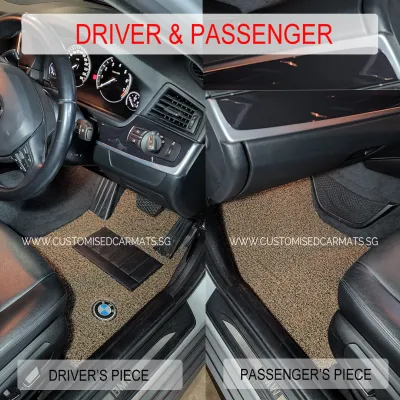
The primary appeal of a full-surround car mat is its ability to shield the vertical walls of the footwell, not just the flat floor pan. When comparing brands, pay close attention to the lip height and how the edges are finished. High-walled, molded edges act as a protective basin, containing liquid spills, mud, and loose dirt. This is particularly important during Singapore’s intense monsoon seasons, when wet shoes and dripping umbrellas can easily introduce moisture into the cabin.
You should also evaluate how well the mats cover the dead pedal—the raised footrest on the driver’s left side—and how seamlessly the rear mat integrates over the center transmission hump. Some brands utilize a modular, multi-piece design that can leave small gaps where dirt can accumulate, while others employ a single-piece rear construction that offers unbroken coverage but can be more cumbersome to remove for cleaning. Stitched synthetic leather mats typically rely on vertical walls that tuck under the plastic trim of your car’s center console, whereas molded TPE mats rely on rigid, self-supporting vertical lips that hold their shape independently.
Fitment and Anti-Slip Mechanisms
Because full-surround mats cover the entire footwell, physical stability is a critical safety consideration. High-quality brands utilize 3D laser-scanning technology to map the exact contours of specific vehicle models. This precision ensures that the mat sits flush against every curve of the floor pan, minimizing the risk of shifting over time. A poorly fitted mat can slide forward, bunch up, or warp, which can lead to dangerous interference with the accelerator, brake, or clutch pedals.
When evaluating any brand, verify how the mats secure themselves to the vehicle floor. Look for compatibility with your car’s original factory retention clips or floor pegs. Additionally, examine the backing material of the mat. Some mats feature a high-friction, fiber-textured backing (often referred to as a maxpider-style or hook-and-loop backing) that grips the factory carpet fibers without causing damage. Others rely on rubberized nibs or adhesive Velcro tabs. The fastening system must be robust enough to prevent any forward movement when you apply heavy pressure to the heel pad area during driving.
Material Quality and Climate Suitability
Singapore’s tropical climate—characterized by high relative humidity and intense cabin heat when parked outdoors—places severe stress on automotive interior materials. Full-surround mats are typically constructed from one of several material families, including Thermoplastic Elastomers (TPE), Cross-linked Polyethylene (XPE) foam, Ethylene-Vinyl Acetate (EVA), or polyurethane (PU) synthetic leather. Each material responds differently to heat, moisture, and wear.
Synthetic leather mats offer a cushioned, luxury feel due to their multi-layered construction, which often includes a top PU layer, a middle XPE foam layer for sound dampening, and a non-slip bottom backing. However, the stitched seams of these mats can potentially absorb moisture if subjected to heavy spills, requiring thorough drying to prevent mold, mildew, and unpleasant odors. Conversely, solid TPE mats are completely non-porous and waterproof, making them exceptionally easy to wash and dry quickly, though they lack the soft, padded texture of synthetic leather. You should always check the manufacturer’s material safety data sheets or product labels to ensure the materials are UV-stable and free from harmful volatile organic compounds (VOCs) that can off-gas in a hot cabin.
Comparing the Kamatto Car Mat to Alternative Protection Systems
Applying these core dimensions allows you to compare a kamatto car mat directly against alternative options available in Singapore. By analyzing your specific driving habits and vehicle requirements, you can determine which design philosophy aligns best with your daily needs.

Choose Kamatto If…
You should consider Kamatto if your primary goal is to achieve a highly tailored, luxurious aesthetic that covers almost all of your vehicle’s original floor carpeting. Kamatto’s design philosophy focuses heavily on maximum visual coverage, using multi-layered synthetic leather—often finished with custom stitching patterns—to elevate the cabin’s appearance. This style is particularly well-suited for executive sedans, family SUVs, or private hire vehicles where maintaining a pristine, upscale interior presentation is a priority.
This option is ideal if you have confirmed that the manufacturer has a verified, precise pattern for your exact right-hand drive (RHD) vehicle model and year. Because these mats extend high up into the footwells and along the sides of the center console, they are highly effective at preventing dust, sand, and dry debris from slipping behind or underneath the mat. If your daily driving consists primarily of urban commuting between covered car parks, the plush feel and comprehensive coverage of this style will provide a comfortable and visually cohesive cabin environment.
Choose Alternative Brands If…
Alternative brands may be more suitable if your lifestyle demands a highly utilitarian, low-maintenance floor protection system. If you frequently engage in outdoor activities, visit construction sites, transport pets, or have young children who are prone to spilling liquids, a modular or tray-style TPE all-weather liner might serve you better. Brands specializing in injection-molded TPE provide mats that are entirely waterproof, have no stitched seams to trap moisture, and can be easily removed, hosed down, and dried in a matter of minutes.
Additionally, if you prefer a minimalist, factory-original look rather than a fully covered synthetic leather aesthetic, standard-height 3D molded mats offer a more understated profile. These alternatives are also preferable if your vehicle features unique or complex floor shapes where a rigid, self-supporting material is required to maintain its shape over years of heavy foot traffic without sagging or warping along the vertical edges.
Verify First If…
Special care must be taken if you drive a hybrid vehicle, an electric vehicle (EV), or a model equipped with advanced floor-mounted electronics. Hybrid and electric vehicles often have distinct floor pan configurations compared to their petrol-only counterparts. For example, EVs frequently feature shallow footwells due to under-floor battery packs, and their floor shapes can change significantly between minor facelift years. Furthermore, some hybrid models feature high-voltage battery cooling vents located near the base of the rear seats or along the floor pan.
Installing a high-walled full-surround mat that accidentally covers or restricts airflow to these ventilation grilles can cause critical hybrid battery components to overheat. You must also verify that the mats do not interfere with floor-mounted seat adjustment rails, under-seat heater ducts, or advanced driver-assistance system (ADAS) sensors that may be positioned in the lower cabin area. If your vehicle falls into any of these categories, or if the manufacturer’s fitment guide is ambiguous, stop and consult your vehicle dealer or a professional installer before proceeding with the purchase.
Comparison Matrix Structure
Use the following checklist matrix to compare Kamatto mats against typical TPE all-weather competitors during your research. This framework will help you verify the specific attributes of each option before making a decision.
| Comparison Dimension | Kamatto Full-Surround Style | TPE All-Weather Competitor | Your Verification Checklist |
|---|---|---|---|
| Primary Material | Multi-layer synthetic leather / XPE foam | Thermoplastic Elastomer (TPE) | Check product label for material composition and UV stability. |
| Edge Design | Stitched, high-coverage vertical walls | Molded, self-supporting rigid lips | Verify if the edge height interferes with plastic trim or seat rails. |
| Fastening System | Side clips and textured backing | Factory retention grommets and nibs | Ensure compatibility with your vehicle's original floor pegs. |
| Maintenance Method | Wipe down with damp cloth; air dry | Hose off with water; quick dry | Confirm if the mat requires specialized leather cleaners. |
| Visual Aesthetic | Luxury, cushioned, diamond-stitched | Industrial, clean, minimalist | Choose based on your desired cabin styling direction. |
Safety and Fitment Verification Before Installation
Because floor mats interact directly with your vehicle’s primary control pedals, improper installation or poor fitment can pose severe safety risks. You must follow a systematic verification process to ensure your new mats are installed safely and securely.
- Pedal Interference Check: Before driving the vehicle, perform a complete pedal clearance test with the engine switched off and the parking brake firmly engaged. Sit in the driver's seat and slowly depress the accelerator pedal to its absolute limit (the wide-open throttle position). Verify that there is a clear physical gap between the pedal arm, the pedal pad, and the edge of the mat. Release the pedal and ensure it snaps back to its resting position instantly without any catching or friction. Repeat this full-stroke test for the brake pedal, pressing down with maximum force to simulate an emergency stop. If the mat deforms, bunches up, or comes within close proximity of the pedal's path of travel, do not drive the vehicle. Adjust or remove the mat immediately.
- Retention System Verification: Never layer custom-fit or full-surround mats on top of existing fabric or rubber floor mats. Always remove all original factory mats before installing your new set. Ensure that the built-in mounting holes or grommets on the driver's side mat align perfectly with the factory floor pegs or twist-locks, and lock them securely into place. Firmly push your heel forward against the mat to simulate the motion of driving; the mat must remain completely stationary. If the mat utilizes side clips that tuck under the plastic trim of your center console or door sills, verify that these clips do not pinch any hidden electrical wiring harnesses or obstruct the manual or electronic movement of the front seats.
- Material and Odor Inspection: Unbox your new mats in a well-ventilated space. Because Singapore's high cabin temperatures can accelerate the off-gassing of chemical compounds, check for any strong, pungent odors. If a strong chemical smell is present, allow the mats to air out in a shaded, well-ventilated outdoor area for 24 to 48 hours before installing them in your car's enclosed cabin. Additionally, spray a small amount of water onto the driver's heel pad area and test the grip with your typical driving shoes. The heel pad must provide adequate traction when wet to prevent your foot from slipping off the pedals during sudden maneuvers.
Frequently Asked Questions (FAQ)
Do full-surround mats affect seat movement or airbag deployment?
Properly fitted full-surround mats are designed to sit flush against the floor pan and lower plastic trim, meaning they should not obstruct the horizontal or vertical movement of your seats along their adjustment tracks. Floor mats do not interfere with side-curtain or seat-mounted airbags, as these safety systems deploy from the roof pillars, door panels, or the upper sides of the seat backrests. However, you must verify that the high vertical walls of the mats do not cover or pinch any electrical wiring harnesses located underneath the seats, as these cables control critical systems such as seatbelt tensioners, occupancy sensors, and side airbag deployment modules.
How should I clean and maintain full-surround mats in Singapore's climate?
To maintain full-surround mats in Singapore’s humid climate, you must tailor your cleaning method to the mat’s materials. For synthetic leather mats, vacuum dry debris regularly and wipe down the surface with a damp microfiber cloth; avoid saturated wet washing, as moisture can seep into the stitched seams and lead to mold growth underneath. If the mats do get wet, remove them from the vehicle and allow them to dry completely in a shaded, well-ventilated area before reinstallation. For molded TPE mats, you can hose them down with clean water, use a mild, pH-neutral detergent if necessary, and wipe them dry immediately. Never apply silicone-based tire shines or glossy protectants to the mats, as these products can make the surface dangerously slippery.

Community discussion
Share your experience or ask a question. Comments are reviewed before publication.