
To check if a Jimove MC battery is compatible with your motorcycle, you must verify that its voltage, physical dimensions, terminal layout, and chemistry match your motorcycle’s original equipment manufacturer (OEM) specifications. Never rely solely on the battery brand or model name. Because motorcycle electrical systems are highly sensitive, installing an incompatible battery can lead to blown fuses, damage to the electronic control unit (ECU), or physical mounting failures. Always consult your motorcycle’s owner’s manual and inspect your current battery before making a purchase. For complex electrical systems or modifications, seeking professional installation from a qualified mechanic is highly recommended.
Locate Your Motorcycle's Original Battery Specifications
Before looking at any replacement battery like the Jimove MC, you must establish a clear baseline of what your motorcycle requires. Your primary source of truth is the motorcycle owner’s manual. This document outlines the exact original equipment manufacturer (OEM) part number, electrical specifications, and recommended battery group size.
If the manual is unavailable, inspect the battery currently installed in your motorcycle. Carefully read the label on the casing. You need to note down the nominal voltage (typically 12V for modern motorcycles), the capacity rated in Ampere-hours (Ah), and the Cold Cranking Amps (CCA) rating.
Products mentioned in this guide
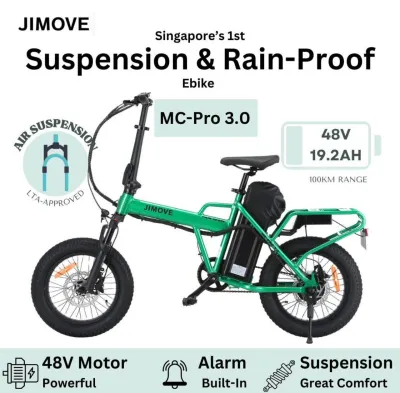
Prices are valid at publication and may change. Please refer to the product page for the latest price.
In cases where the installed battery is an unmarked aftermarket unit or is too degraded to read, do not guess. Use your motorcycle’s exact make, model, and production year to look up the official OEM specifications. Online manufacturer databases or a quick consultation with an authorized local dealer can provide the exact battery code required for your specific model year.
Compare Voltage, Capacity, and Chemistry
Once you have your motorcycle’s electrical requirements, compare them directly against the specifications of the Jimove MC battery. The nominal voltage must match your motorcycle’s system exactly. Most modern motorcycles operate on a 12-volt system. Attempting to install a battery with mismatched voltage will cause immediate and severe damage to your motorcycle’s starter motor, lights, and electronic components.

Next, evaluate the capacity, measured in Ampere-hours (Ah). The Ah rating indicates how much electrical energy the battery can store and deliver over time. Your replacement battery should have an Ah rating that meets or slightly exceeds the OEM specification to ensure your bike’s electronics, security systems, and accessories run reliably without draining the battery prematurely.
Cold Cranking Amps (CCA) is another critical metric, representing the battery’s ability to start the engine in cold conditions or under high resistance. Ensure the Jimove MC battery provides at least the minimum CCA required by your motorcycle’s engine size to guarantee reliable ignition.
Finally, verify the battery chemistry. Motorcycles are designed with specific charging systems (including the stator and regulator/rectifier) calibrated for particular battery types, such as Absorbent Glass Mat (AGM), Gel, or Lithium-ion. If the Jimove MC battery uses a different chemistry than your original battery, verify in your motorcycle’s documentation or with a professional mechanic whether your charging system can support its specific charging profile without overheating or undercharging.
Verify Physical Dimensions and Mounting
A battery that is electrically perfect is useless if it does not physically fit into your motorcycle’s designated battery compartment. Use a tape measure to record the precise length, width, and height of your existing battery or the empty battery tray. Even a few millimeters of difference can prevent the battery cover from closing or cause the battery to sit loosely.
Compare these measurements against the physical dimensions listed on the Jimove MC battery’s packaging or official product specification sheet. Pay close attention to how the battery sits in the tray. There must be adequate clearance from surrounding metal frames, hot engine components, wiring harnesses, and the underside of the seat or side covers.
A loose battery is highly susceptible to vibration damage, which can crack the internal plates or loosen terminal connections over time. Ensure that your motorcycle’s factory hold-down bracket, rubber strap, or mounting hardware can securely clamp the Jimove MC battery in place. If the new battery is slightly smaller than the original, you may need to use manufacturer-approved spacers or high-density foam pads to prevent any movement within the tray.
Inspect Terminal Layout and Polarity
Before finalizing your purchase, inspect the terminal configuration of both your motorcycle’s wiring harness and the Jimove MC battery. Start by identifying the terminal type and size, such as top-mount posts, side-mount terminals, or specific screw thread sizes. The battery terminals must accommodate your motorcycle’s cable connectors cleanly without requiring forced adaptation.
Next, verify the polarity layout. Position your old battery and the Jimove MC battery in the same orientation and locate the positive (+) and negative (-) symbols. The positive and negative terminals must be on the exact same sides as your original battery. If the terminals are reversed, your motorcycle’s cables may not reach, or worse, you might accidentally connect the battery backward.
Check that your motorcycle’s battery cables have sufficient slack to connect to the new terminals comfortably. Cables should never be stretched, bent at extreme angles, or pulled tight, as engine vibrations can cause them to fray or snap.
Never attempt to force a connection, splice extension wires, or cross the cables to reach reversed terminals. Reversing the polarity—even for a split second—can instantly blow the main fuses, destroy the electronic control unit (ECU), or trigger an electrical fire. If the terminal layout does not match your motorcycle’s wiring configuration perfectly, do not attempt installation; instead, select a battery model with the correct terminal orientation.
Frequently Asked Questions (FAQ)
Can I use a higher CCA battery than my motorcycle originally specified?
Yes, using a battery with a higher Cold Cranking Amps (CCA) rating than your motorcycle’s original specification is generally safe and can even improve starting reliability. The starter motor only draws the electrical current it needs to turn over the engine; it will not be overloaded by a battery with a higher CCA capacity. However, you must ensure that the battery’s physical dimensions, nominal voltage, and terminal configuration still match your motorcycle’s OEM specifications exactly.
What should I do if the battery terminals are reversed compared to my old battery?
If you discover that the positive and negative terminals on the Jimove MC battery are reversed compared to your original battery, do not attempt to install it. Strictly avoid crossing the cables, stretching the wiring harness, or modifying the electrical connections to force a fit. Doing so risks reversing the polarity, which can cause catastrophic damage to your motorcycle’s ECU, blow critical fuses, or cause an electrical short. Return the battery and exchange it for a model that features the correct terminal layout for your motorcycle.
Community discussion
Share your experience or ask a question. Comments are reviewed before publication.