
The YTZ5S is a highly popular 12V motorcycle battery, but its compatibility with your specific motorcycle is not guaranteed. Whether this battery will work for your bike depends entirely on three critical factors: physical dimensions, terminal layout, and electrical requirements. Before purchasing a replacement, you must verify these specifications against your owner’s manual or the existing battery installed in your vehicle to ensure a safe and reliable fit.
Choosing the wrong battery can lead to installation issues, electrical system damage, or starting failures. Taking a few minutes to measure your battery tray and check your motorcycle’s electrical demands will save you time and prevent costly mistakes.
How to Verify Physical Fitment and Voltage
To ensure the YTZ5S battery fits your motorcycle, start by locating the original equipment manufacturer (OEM) battery specifications. You can find these details in your motorcycle’s owner’s manual, usually under the maintenance or electrical specifications section. If you do not have the manual, look at the label of the battery currently installed in your motorcycle’s battery compartment to find its model number and dimensions.
Products mentioned in this guide
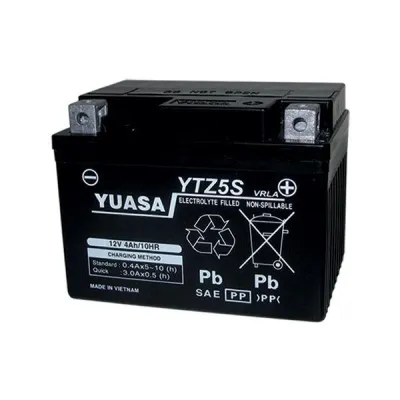
Prices are valid at publication and may change. Please refer to the product page for the latest price.
Next, measure the physical dimensions of your motorcycle’s battery tray. Use a precise measuring tape or caliper to record the maximum length, width, and height of the compartment. Compare these measurements directly with the standard dimensions of a YTZ5S battery, which typically measures approximately 113 mm in length, 70 mm in width, and 85 mm in height. Ensure there is enough clearance for the battery cover to close securely without pinching any wires.
Finally, confirm that your motorcycle operates on a standard 12V electrical system. While almost all modern motorcycles and scooters use 12V systems, some vintage models or specialized small-displacement bikes might use 6V systems. Installing a 12V YTZ5S battery into a 6V system will cause immediate and severe damage to the electrical components.
Checking Terminal Layout and Polarity
Physical size is only half the battle; you must also verify the terminal layout and polarity. On a standard YTZ5S battery, the positive (+) terminal is typically located on the left side and the negative (-) terminal is on the right side when looking at the front face of the battery. Check the polarity markings molded into the battery casing to confirm this layout before attempting any installation.

Compare this configuration directly with your original battery before removing it from the motorcycle. The positive and negative battery cables in your motorcycle’s wiring harness are designed to reach specific sides of the battery tray. If the terminals are reversed, the cables may not reach, or worse, you might be tempted to stretch them, which can strain the connections and lead to electrical failure.
Never force a connection or cross the cables to make a battery fit. Connecting the positive cable to the negative terminal, or vice versa, causes reversed polarity. This mistake can instantly blow main fuses, destroy the engine control unit (ECU), damage the alternator or regulator-rectifier, and potentially cause an electrical fire. Always double-check the polarity markers on both the battery and the motorcycle cables before making contact.
Evaluating Capacity and Cranking Power Requirements
Beyond physical fit, the battery must deliver adequate electrical performance. Look at the label of the YTZ5S battery to identify its capacity, measured in Amp-hours (Ah), and its cold cranking amps (CCA) rating. The YTZ5S typically offers a capacity of around 3.5 Ah to 4 Ah and a CCA rating suitable for starting small to medium-displacement engines.
Compare these ratings against the minimum specifications outlined in your motorcycle’s service manual. If your motorcycle requires a higher CCA rating to turn over a larger engine, using a YTZ5S may result in sluggish starting or a complete failure to crank, especially in cooler weather or after the bike has been sitting.
Additionally, consider any aftermarket electrical accessories installed on your motorcycle. If you have added power-drawing accessories such as heated grips, auxiliary driving lights, or GPS charging mounts, your electrical system’s demands will increase. In such cases, a battery with higher capacity and cranking power than the standard YTZ5S may be necessary to prevent premature battery drainage and charging system strain.
Safe Installation and Handling Boundaries
Safety is paramount when working on your motorcycle’s electrical system. Always turn off the ignition and remove the key before starting. When disconnecting the old battery, always disconnect the negative (-) cable first, followed by the positive (+) cable. This sequence prevents accidental short circuits if your wrench touches the metal frame of the motorcycle while loosening the positive terminal. When installing the new YTZ5S, reverse this sequence: connect the positive (+) cable first, then the negative (-) cable.
Once the cables are connected, secure the battery firmly in the tray using the original hold-down bracket, strap, or clamp. A loose battery will vibrate excessively during rides, which can damage the internal lead plates, loosen the terminal connections, or cause the casing to crack. Ensure the terminal bolts are tightened to the manufacturer’s specified torque to maintain a stable electrical connection.
Know your limits and recognize when to stop the installation. If you notice damaged or frayed wiring harnesses, heavily corroded terminal connectors, or signs of acid leaks in the battery tray, do not proceed. Additionally, if your motorcycle’s charging system has shown signs of failure, such as dimming lights or a frequently dying battery, consult a qualified mechanic to diagnose the underlying issue before installing a new battery.
Frequently Asked Questions (FAQ)
Can I use a YTZ5S battery if my manual recommends a different model?
You can only use a YTZ5S as a substitute if it matches the exact physical dimensions, voltage, and terminal layout of the recommended model. Additionally, the YTZ5S must meet or exceed the original battery’s Amp-hour (Ah) capacity and Cold Cranking Amps (CCA) ratings. Never install a battery with lower performance ratings or a different terminal configuration, as this can compromise starting reliability and damage your motorcycle’s electrical system.
How do I know if my motorcycle's charging system is compatible?
To verify compatibility, use a digital multimeter to check the voltage across the battery terminals while the engine is running. At idle and at higher engine speeds, the charging voltage should typically read between 13.5V and 14.5V, depending on your motorcycle’s specifications. If the reading is below 13.0V, the system is undercharging, which will drain the battery. If it exceeds 15.0V, the system is overcharging, which can overheat and permanently damage the YTZ5S.
What should I do if the YTZ5S battery is slightly smaller than the battery tray?
If the YTZ5S is slightly smaller than your motorcycle’s battery tray, you must secure it to prevent movement and vibration damage. Use high-density, non-conductive foam pads or rubber spacers specifically designed for battery fitment to fill the empty space. Avoid using makeshift materials like cardboard, rags, or standard packaging foam, as these can absorb moisture, degrade quickly, shift during rides, or pose a fire hazard.
Community discussion
Share your experience or ask a question. Comments are reviewed before publication.