
Deciding whether the Jimove MC battery is a good choice for your motorcycle comes down to a systematic verification of compatibility and value. There is no single universal battery that fits every bike; a battery is only as reliable as its compatibility with your specific vehicle’s electrical and physical requirements. To make an informed decision, you must compare the battery’s physical dimensions, terminal configurations, and electrical ratings directly against your motorcycle manufacturer’s specifications.
Before spending any money, your first step should always be to consult your motorcycle’s owner’s manual or inspect the label of your currently installed battery. The Jimove MC battery can be an excellent, cost-effective replacement, but only if it matches the exact power demands and mounting constraints of your vehicle. Let’s look at how to verify these critical factors to ensure a safe and reliable upgrade.
How to Verify Physical and Electrical Compatibility
To ensure a hassle-free installation, you must systematically verify that the battery matches your motorcycle’s physical and electrical requirements. Never assume compatibility based on a generic category term or a broad compatibility list on an online marketplace.
Products mentioned in this guide
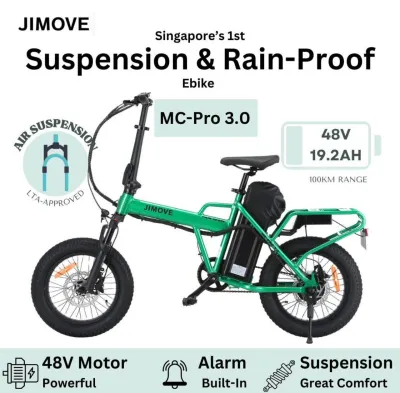
Prices are valid at publication and may change. Please refer to the product page for the latest price.
Physical Dimensions and Mounting Start by measuring the physical space inside your motorcycle’s battery compartment. Use a precise measuring tape or caliper to record the length, width, and height of your existing battery, as well as the maximum clearance inside the battery tray. The replacement battery must fit securely within this space without being forced. You must also check the hold-down bracket or strap clearance; a battery that is too tall or too short will prevent the bracket from securing it properly, leading to dangerous movement and vibration during rides.
Terminal Layout and Type Inspect the orientation of the positive (+) and negative (-) terminals on your current battery. Some motorcycles require the positive terminal on the left, while others require it on the right. If you purchase a battery with reversed terminals, your motorcycle’s power cables may not reach the posts, or worse, you might accidentally connect them backward, causing severe damage to your electrical system. Additionally, verify the terminal post type (such as flush, top, or side mount) to ensure your existing terminal bolts can secure the cables without stretching or bending them.
Electrical Specifications Compare the electrical ratings printed on the Jimove MC battery label with your motorcycle’s minimum requirements. The two most critical values are the Ampere-hour (Ah) rating, which measures capacity, and the Cold Cranking Amps (CCA), which measures starting power. Your replacement battery must meet or exceed the original equipment manufacturer (OEM) specifications for both values. Installing a battery with insufficient CCA can lead to sluggish starting, especially on cold mornings or after the bike has sat idle for several days.
Technology Type Motorcycles use different battery chemistries, including conventional flooded lead-acid, Absorbent Glass Mat (AGM), and gel. You must confirm what technology your motorcycle’s charging system is designed to support. For instance, if your bike requires an AGM battery, replacing it with a standard flooded battery may lead to premature failure because the charging system’s voltage output might not align with the battery’s chemistry. Check the product documentation of the Jimove MC battery to ensure its internal technology matches your motorcycle’s charging profile.
How to Assess Value and Reliability Expectations
Evaluating the value of a motorcycle battery requires looking beyond the initial purchase price. A low upfront cost can quickly turn into a poor investment if the battery fails prematurely or lacks proper warranty support.

Price-to-Specification Ratio When shopping in Singapore, compare the S$ price point of the Jimove MC battery against other options available in the local market. Ensure you are comparing apples to apples by looking at batteries with the exact same Ah and CCA ratings. If the price is significantly lower than comparable models, investigate whether this is due to a simpler manufacturing process or shorter warranty coverage.
Warranty Terms Always read the warranty card carefully before finalizing your purchase. Pay close attention to the coverage duration and the specific conditions required to make a claim. Some manufacturers or local distributors require proof of professional installation to validate the warranty, while others may void the warranty if the battery is used on a modified motorcycle. Understanding these terms beforehand prevents unexpected out-of-pocket expenses if a defect arises.
Date of Manufacture Batteries degrade over time, even when sitting unused on a retailer’s shelf. Locate the date code stamped or printed on the battery casing. This code typically indicates the month and year of manufacture. Avoid purchasing a battery that has been sitting in storage for more than six months without being charged, as internal self-discharge can lead to early sulfation and a permanently reduced lifespan.
User Feedback Signals When browsing local online marketplaces or enthusiast forums, look for verified buyer reviews that focus on long-term reliability. Ignore generic five-star reviews that only praise fast shipping or clean packaging. Instead, search for feedback regarding how well the battery handles engine vibrations, how long it lasts under daily commuting conditions, and whether users experienced any sudden voltage drops after a few months of use.
Diagnose Your Current Battery Before Replacing It
Before purchasing a replacement battery, it is wise to confirm that your current battery is actually the source of your starting issues. Many riders replace a perfectly functional battery only to find that their starting problems persist due to an underlying electrical fault.
Visual and Physical Checks Begin with a thorough visual inspection of your current battery. Look for any signs of physical damage, such as a swollen or bloated casing, which indicates severe overcharging or internal short circuits. Inspect the terminal connections for white or green powdery corrosion, which can restrict electrical flow. Clean any corrosion using a wire brush and a mixture of baking soda and water, and ensure the terminal bolts are securely tightened.
Voltage and Load Testing A simple multimeter test can provide valuable insights into your battery’s state of charge. Set your multimeter to DC voltage and measure the battery across the terminals while the motorcycle is turned off. A fully charged 12-volt battery should read approximately 12.6 volts or higher. Next, perform a cranking voltage test by watching the multimeter screen while starting the engine. If the voltage drops below 9.6 volts during cranking, the battery likely lacks the capacity to hold a charge and needs replacement.
Charging System Verification If your current battery died prematurely, a faulty charging system may be the culprit. A failing stator or voltage regulator/rectifier can either undercharge your battery, leaving you stranded, or overcharge it, boiling away the electrolyte and destroying the internal plates. To test this, run the engine at around 3,000 RPM and measure the voltage across the battery terminals. It should typically read between 13.5 and 14.5 volts. If the reading is outside this range, you must repair the charging system before installing a new battery.
Decision Matrix Use this simple framework to decide your next steps:
- Clean and Tighten: Do this if the resting voltage is above 12.4 volts but the bike struggles to start, and you observe loose or corroded terminals.
- Recharge: Do this if the resting voltage is between 12.0 and 12.4 volts, the casing is intact, and the battery has sat idle. Use a smart charger to restore it.
- Replace: Do this if the resting voltage is below 12.0 volts, the battery fails the cranking test, the casing is swollen, or the battery is more than three years old and fails to hold a charge after a full recovery cycle.
Frequently Asked Questions (FAQ)
Can I install the Jimove MC battery myself, or do I need a mechanic?
Yes, you can install the battery yourself if you have basic mechanical skills and the correct tools, but you must prioritize safety. Always wear protective eyewear and gloves, and ensure the motorcycle’s ignition is completely turned off. When removing the old battery, always disconnect the negative (-) cable first, followed by the positive (+) cable, to prevent accidental short circuits if your wrench touches the metal frame. When installing the new battery, reverse this process by connecting the positive cable first and the negative cable last. Ensure you follow the original-vehicle instructions for correct terminal torque specifications, as over-tightening can crack the battery terminals, while loose connections can cause intermittent electrical failures or damage your motorcycle’s electronic control units. If your motorcycle features complex electronic immobilizers, advanced rider aids, or integrated alarm systems, consult a qualified professional to avoid triggering system errors during the swap.
How should I maintain the Jimove MC battery if my motorcycle sits unused?
Proper maintenance during periods of inactivity is essential to prevent sulfation, which is the leading cause of premature battery failure. If your motorcycle will sit unused for more than a week, connect the battery to a smart trickle charger or battery tender that is specifically compatible with the battery’s exact chemistry. Unlike manual chargers, a smart charger monitors the battery’s voltage and automatically switches to a float mode once fully charged, preventing damaging overcharge. If you plan to store the motorcycle long-term, it is highly recommended to disconnect the negative terminal or remove the battery entirely. Modern motorcycles have constant parasitic drains from components like digital clocks, engine control units, and security systems, which can completely drain a connected battery within a few weeks. Store the removed battery in a cool, dry environment away from direct sunlight, concrete floors, and extreme temperature fluctuations to minimize natural self-discharge.
Community discussion
Share your experience or ask a question. Comments are reviewed before publication.