
Determining whether Armour All interior products are safe for your vehicle’s leather, vinyl, and fabric surfaces depends entirely on matching the specific formulation in your hand to the exact materials inside your cabin. There is no single, universal “Armour All” formula. The brand produces a wide range of distinct products, including multi-purpose cleaners, dedicated leather conditioners, and vinyl protectants. Using a product designed for hard vinyl on delicate, untreated leather can lead to permanent discoloration, while using an upholstery cleaner on sensitive electronic screens can cause moisture damage.
To keep your car’s interior looking pristine, you must understand how these different chemical formulations interact with various cabin materials. In tropical climates like Singapore, where parked cars routinely experience high cabin temperatures and intense humidity, chemical residues can react more aggressively with interior surfaces. Taking a systematic approach to identifying your cabin materials, reading product labels, and performing controlled spot tests is the most reliable way to prevent accidental damage and ensure a safe, effective clean.
Understanding Armour All Interior Product Formulations
Car care products are engineered with specific chemical properties tailored to distinct surfaces. Multi-purpose interior cleaners are generally formulated to lift dirt, grease, and dust from hard, non-porous surfaces. These formulas often rely on surfactants that lower the surface tension of water, allowing the cleaner to penetrate and dissolve grime. However, because they are designed to tackle tough dirt on resilient plastics, their pH levels may lean slightly alkaline. While alkaline cleaners are highly effective at cutting through oils on vinyl dashboards, they can strip the natural oils and protective topcoats from genuine leather surfaces over time.
Products mentioned in this guide
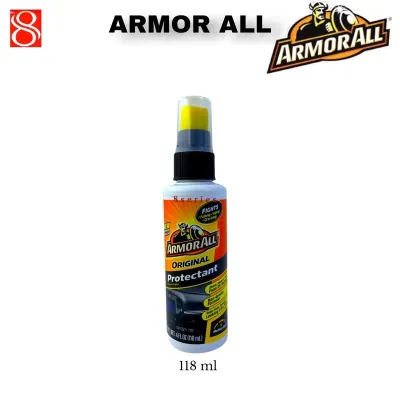
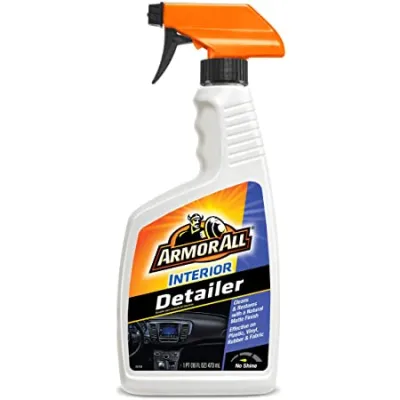
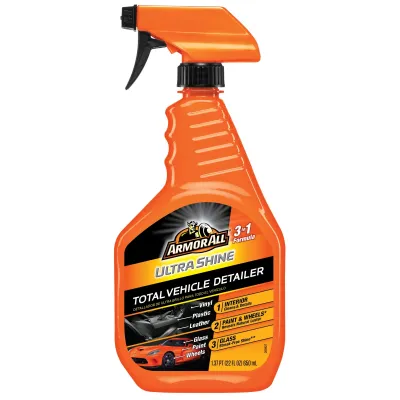
Prices are valid at publication and may change. Please refer to the product page for the latest price.
Dedicated leather care products, on the other hand, are formulated to clean and condition simultaneously. Leather is a natural, porous material that requires a balanced pH—typically slightly acidic to neutral—to maintain its structural integrity and soft texture. Leather cleaners often contain mild surfactants combined with moisturizing agents like oils or waxes to replenish the material’s natural moisture barrier. Applying a harsh, non-leather-specific cleaner to these surfaces can cause the leather to dry out, stiffen, and eventually crack under the heat of the sun.
Surface protectants represent another distinct category. These products are not primary cleaners; instead, they are designed to leave behind a protective barrier that shields vinyl, plastic, and rubber from ultraviolet (UV) radiation. Protectants often contain silicone emulsions or polymer barriers that impart a gloss or matte finish. Applying a heavy protectant to absorbent fabric seats or unsealed leather can result in greasy residues, staining, and a compromised texture. Always read the product label carefully to distinguish between a “cleaner,” which removes dirt, and a “protectant,” which seals the surface.
Evaluating Safety for Leather, Vinyl, and Fabric
Before applying any detailing product, you must identify the exact materials used in your vehicle’s cabin. Modern automotive interiors feature a complex mix of natural and synthetic materials, and what looks like leather may actually be vinyl or a synthetic composite.

For leather surfaces, it is crucial to determine whether you are dealing with coated (pigmented) leather, semi-aniline leather, or aniline leather. The vast majority of modern vehicles utilize coated leather, which features a thin protective polyurethane layer over the dyed hide. This coating provides a barrier against moisture and mild wear, making it more resilient to gentle cleaners. However, aniline leather is unsealed and highly porous, meaning it will rapidly absorb liquids, leading to dark stains if treated with standard liquid cleaners. Check your vehicle owner’s manual to confirm the leather type and verify if the product label explicitly approves use on automotive leather.
Vinyl and plastic trim require a different evaluation. While vinyl is highly durable and non-porous, it contains plasticizers—chemical additives that keep the material flexible. Harsh chemical solvents or highly alkaline cleaners can leach these plasticizers out of the vinyl, leading to premature aging, fading, and cracking. When selecting an interior cleaner for vinyl, look for formulas that explicitly state they are free from harsh solvents and designed to preserve plasticizers.
Fabric and upholstery present unique challenges due to their absorbent nature. Water-based cleaners can easily saturate fabric seats, penetrating deep into the underlying foam cushion. If the foam remains damp, it can lead to mold, mildew, and unpleasant odors, especially in humid environments. Furthermore, using the wrong chemical cleaner on fabric can dissolve existing stains and spread them, creating unsightly water rings or altering the fabric’s natural texture. Always cross-reference your vehicle owner’s manual for manufacturer-recommended cleaning agents and restricted chemicals before proceeding.
Safe Application and Spot Testing Procedures
To minimize the risk of irreversible chemical damage, always perform a controlled spot test before applying any cleaner to visible areas of your car’s interior. Select an inconspicuous, hidden location for the test, such as the underside of a seat, the lower portion of a door panel, or a section of the carpet hidden beneath a floor mat.
Apply a small, dime-sized amount of the cleaner to a clean, white microfiber towel rather than spraying it directly onto the surface. Gently wipe the test area and let it sit. Monitor the spot over a 24-hour period, checking for any visual or tactile changes. Look closely for signs of color transfer onto the white towel, fading, discoloration, or a change in the material’s texture, such as stiffening or stickiness. If the surface remains unchanged after 24 hours, you can proceed with the application.
When applying the product to the rest of the interior, follow the manufacturer’s instructions regarding dilution ratios. Some concentrated formulas require mixing with distilled water, while ready-to-use sprays must be applied sparingly. Avoid using stiff-bristled brushes on delicate leather or soft plastics, as they can scratch the surface or wear away protective coatings; instead, opt for high-quality, soft microfiber towels. Keep dwell times—the duration the cleaner sits on the surface—to a minimum. Wipe away all chemical residues promptly with a clean, damp microfiber cloth to prevent buildup that can attract dust and grime over time.
Warning Signs and When to Stop Using the Product
During the cleaning process, remain highly attentive to how the material reacts to the chemical solution. Immediate visual cues of damage include any color transfer from the upholstery onto your cleaning cloth. If you notice the dye of your leather or fabric bleeding onto the microfiber towel, stop applying the product immediately. Other visual warning signs include the sudden appearance of a white, hazy residue, localized fading, or peeling of the surface coating.
Tactile cues are equally important indicators of chemical incompatibility. If a surface feels unusually sticky, tacky, or greasy after wiping, the cleaner may be reacting with the material’s topcoat or plasticizers. Similarly, if leather or fabric feels stiff, dry, or rough to the touch once dry, the product has likely stripped away essential moisture or altered the fibers.
If you observe any of these adverse reactions, take immediate steps to neutralize and remove the product. Lightly mist the area with clean, distilled water and gently blot—do not scrub—the surface with a clean microfiber towel to lift as much chemical residue as possible. Repeat this process until the surface is free of the cleaner. If the damage persists or if you are unsure how to safely clean a delicate surface, stop all DIY efforts and consult a qualified professional automotive detailer to prevent further degradation.
Frequently Asked Questions (FAQ)
Can I use Armour All Multi-Purpose Cleaner on car seats?
Whether you can use a multi-purpose cleaner on your car seats depends entirely on the seat material and the specific product label instructions. If your seats are made of durable, synthetic fabrics or vinyl, a multi-purpose cleaner may be suitable, provided the label explicitly lists those materials as compatible. However, if your seats are upholstered in genuine leather or delicate, unsealed fabrics, you should avoid multi-purpose formulas. These cleaners can strip leather of its natural oils or saturate fabric cushions, leading to staining or mold. For these sensitive surfaces, always use dedicated leather or upholstery cleaners.
Does Armour All cause dashboard cracking over time?
There is a common misconception that protectants cause dashboards to crack, but cracking is primarily caused by prolonged exposure to ultraviolet (UV) radiation and extreme cabin heat, which dry out vinyl plasticizers. Modern protectants are formulated with UV inhibitors designed to shield vinyl and plastic from this damage. However, issues can arise if you apply protectants over layers of accumulated dirt, or if you use products with heavy silicone bases that attract dust and trap heat. To prevent damage, always clean the dashboard thoroughly with a mild, residue-free cleaner before applying a high-quality, UV-blocking protectant, and apply it sparingly according to the instructions.
Community discussion
Share your experience or ask a question. Comments are reviewed before publication.