
If you are looking to upgrade the exterior styling of your Hyundai i30, adding an aftermarket or OEM-style spoiler is one of the most effective ways to personalize your vehicle. However, before purchasing a new wing or lip, you must understand a critical design reality: spoilers designed for the Hyundai i30 hatchback will not fit the i30 wagon, and vice versa. These two body styles feature entirely distinct rear-end geometries, meaning that a spoiler manufactured for one cannot be adapted to the other without causing severe fitment issues, aesthetic imbalances, or physical damage to your car.
Selecting the right hyundai i30 spoiler requires a clear understanding of your vehicle’s specific chassis architecture, production year, and aerodynamic needs. While both the hatchback and wagon variants share the same front-end design and interior platform, their rooflines, tailgate contours, and glass angles diverge dramatically at the rear. This guide breaks down the physical differences between these body styles, explores the most compatible spoiler designs for each, and outlines the crucial fitment and installation checks you must perform to ensure a secure, road-legal, and visually seamless upgrade.
Why Hatchback and Wagon Spoilers Are Not Interchangeable
To understand why a single spoiler cannot span both body styles, one must examine the fundamental architectural differences between the Hyundai i30 Hatchback (5-door) and the i30 Wagon (often referred to as the Estate or Tourer). The hatchback is designed with a sportier, more compact rear profile. Its roofline slopes downward relatively early, meeting a steeply raked rear window and a short, curved tailgate. This curvature requires a spoiler with a highly contoured mounting base that matches the exact radius of the upper tailgate frame or the glass transition area.
Products mentioned in this guide

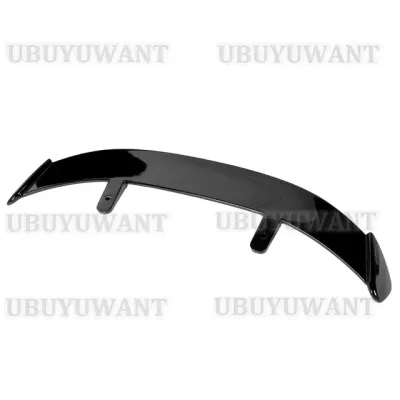
Prices are valid at publication and may change. Please refer to the product page for the latest price.
In contrast, the i30 Wagon is engineered with utility and maximum cargo space in mind. Its roofline remains flat and extended far past the rear passenger doors, terminating in a much more vertical rear tailgate. The rear glass of the wagon is nearly upright compared to the hatchback’s aggressive slope. Because the trailing edge of the wagon’s roof is flat and wide, any spoiler designed for it must have a straight, flat mounting interface. Attempting to place a hatchback roof spoiler onto a wagon will reveal immediate physical conflicts: the mounting feet will not align, the curvature of the spoiler base will leave massive gaps, and the mounting hardware or adhesive will fail to make proper contact.
Forcing an incompatible spoiler onto your vehicle carries significant practical risks. Beyond the obvious visual mismatch, an ill-fitting spoiler creates uneven aerodynamic drag and high-velocity wind pockets. At highway speeds, these forces exert immense leverage on the mounting points. If you rely on adhesive tape, the lack of continuous surface contact will almost certainly lead to adhesive failure, causing the spoiler to detach and become a hazardous projectile on the road. Furthermore, mismatched parts can pinch the tailgate seals, block the operation of the rear wiper, rub against the paintwork to cause rust-inducing scratches, or even put concentrated stress on the rear glass, leading to sudden shattering.
It is also worth noting that the Hyundai i30 lineup includes a third distinct body style: the i30 Fastback. Featuring an elegant, sloping coupe-like rear profile that flows into an integrated trunk lid, the Fastback has its own unique aerodynamic wake and tailgate geometry. Just like the wagon, the Fastback requires dedicated, model-specific spoilers. A standard hatchback spoiler will not align with the Fastback’s elongated, low-slung trailing edge, reinforcing the rule that you must purchase a spoiler designed exclusively for your exact body style.
Best Spoiler Styles for the i30 Hatchback
The Hyundai i30 hatchback is highly favored by enthusiasts for its hot-hatch potential, particularly when drawing inspiration from the high-performance i30 N and N-Line variants. Because of its sporty proportions and short rear overhang, the hatchback accommodates several distinct spoiler styles, each offering a different balance of visual aggression and aerodynamic behavior.

Roof Spoilers Roof spoilers are the most common and sought-after upgrades for the i30 hatchback. These designs mount directly to the top edge of the tailgate, extending the roofline outward. Many aftermarket options mimic the aggressive twin-post look of the i30 N spoiler, complete with a triangular center section. A well-designed roof spoiler enhances the hatchback’s sporty silhouette without obstructing your rearward visibility. However, when selecting a roof spoiler, you must verify that its underside contour provides adequate clearance for the rear windshield wiper blade at the top of its sweep, as well as the integrated washer fluid spray nozzle.
Lip Spoilers and Ducktails For drivers seeking a more understated, sophisticated aesthetic, lip spoilers and ducktail spoilers are excellent choices. These components mount lower on the tailgate, typically along the metal crease just below the rear window. Rather than standing proud of the vehicle’s body, a ducktail spoiler flows seamlessly from the tailgate’s natural lines, kicking upward slightly at the trailing edge. This style adds subtle muscle to the rear profile without altering the car’s overall dimensions. Because they sit lower, lip spoilers have virtually no impact on rear wiper operation and present minimal risk of creating blind spots.
High-Mount Wings Enthusiast-focused high-mount wings elevate the spoiler body several inches above the roofline using dedicated stanchions or risers. While these wings deliver a dramatic, track-inspired appearance, they introduce complex aerodynamic and structural variables. High-mount wings generate genuine downforce at higher speeds, which translates to significant physical downward and backward pressure on the tailgate sheet metal. Because of this mechanical load, high-mount wings cannot rely solely on double-sided adhesive tape; they almost always require permanent drilling through the tailgate panel. This introduces safety boundaries regarding structural integrity, rust prevention, and potential water leaks, making professional installation highly advisable.
Ultimately, the visual balance of the hatchback is highly sensitive to the size of the spoiler. Because the rear overhang is relatively short, an excessively large or heavy wing can make the car look back-heavy and disrupt its clean, compact proportions. Choosing a style that complements the existing lines of your specific trim—whether it is a standard model, an N-Line, or a full N—ensures a cohesive and factory-quality appearance.
Compatible Spoiler Options for the i30 Wagon
While the hatchback variant dominates the aftermarket styling scene, the Hyundai i30 Wagon offers a sleek canvas for exterior modifications. Because the wagon is designed with a long, flat roofline and a vertical rear end, the spoiler options are more specialized, focusing heavily on clean integration and practical airflow management.
Roof Extension Spoilers The primary and most effective spoiler style for the i30 wagon is the roof extension spoiler. This design acts as a physical continuation of the long roof panel, extending slightly past the rear glass. Rather than aiming for extreme vertical lift, a wagon roof extension spoiler is engineered to smooth out the air flowing over the top of the vehicle. By extending the roofline, it helps push the turbulent air separation point further back, which can marginally reduce aerodynamic drag.
Importantly, a roof extension spoiler offers a major practical benefit for wagon owners. The vertical rear glass of a wagon naturally creates a massive low-pressure zone directly behind the car as it moves. This low-pressure wake acts like a vacuum, sucking up road grime, fine dirt, and rainwater spray, which quickly coats the rear window and reduces visibility. A properly designed roof extension spoiler directs a clean sheet of high-velocity air downward across the rear glass, helping to disrupt this vacuum and keep the window significantly cleaner during wet drives.
Window Visors and Deflectors For wagon owners who prefer a minimalist touch, small window visors or side-glass deflectors can be installed along the upper and lateral edges of the rear windscreen. These subtle accents do not extend far from the body but help frame the rear glass, giving the wagon a slightly wider, more planted appearance. They are incredibly easy to install and do not interfere with any factory equipment.
In contrast to the hatchback, lower tailgate lip spoilers are virtually non-existent and aerodynamically useless on the i30 wagon. Because the wagon’s rear end is highly vertical, the airflow detaches completely at the top trailing edge of the roof. The area halfway down the tailgate sits entirely within a massive zone of dead, turbulent air. A spoiler mounted here would experience no clean airflow, rendering it non-functional, while visually disrupting the clean, utilitarian lines of the wagon’s tailgate. Wagon styling is at its best when it embraces its long-roof heritage, using sleek roof extensions to balance the vehicle’s practical, family-oriented nature with a touch of sporty sophistication.
Crucial Fitment Checks Before Buying an i30 Spoiler
Before purchasing a hyundai i30 spoiler, you must conduct several precise verification steps. The automotive aftermarket is filled with generic listings that claim broad compatibility, but installing an ill-fitting exterior component can lead to costly body damage or safety hazards on the road.
Generation and Chassis Verification The Hyundai i30 has spanned multiple generations, most notably the second-generation (GD, produced from 2011 to 2016) and the third-generation (PD, produced from 2017 to the present). Within these generations, Hyundai has released mid-cycle facelifts that introduced subtle updates to the tailgate sheet metal, taillight housings, and rear glass borders. A spoiler sculpted for a pre-facelift PD model may not seat perfectly on a facelifted version due to minor changes in the panel contours. Always verify your vehicle’s exact production year, chassis code, and trim level (such as standard, N-Line, or N) against the manufacturer’s fitment guide before ordering.
Mounting Method Evaluation You must decide between non-destructive adhesive mounting and permanent bolt-on installation. Adhesive mounting using high-grade, automotive-specific double-sided tape (such as 3M VHB) is highly popular because it requires no drilling and is fully reversible. However, you must consider Singapore’s intense tropical climate. The combination of high ambient heat, extreme humidity, and sudden heavy downpours can rapidly degrade low-quality adhesives. If you choose an adhesive mount, you must use premium, weather-resistant tapes and apply a dedicated automotive adhesion promoter to ensure a permanent bond that can withstand highway speeds. For larger, heavier spoilers or high-mount wings, permanent bolting is necessary to secure the component against aerodynamic lift, which requires drilling into the metal tailgate.
Material Selection The material of your spoiler dictates its weight, durability, and paint finish quality:
- ABS Plastic: This is the industry standard for OEM and high-quality aftermarket spoilers. ABS is highly durable, impact-resistant, lightweight, and holds paint exceptionally well. It is highly recommended for daily driven vehicles in Singapore.
- Fiberglass (FRP): Often used for custom or low-volume aftermarket designs, fiberglass is rigid and relatively inexpensive. However, it is brittle, prone to cracking under minor impacts or thermal expansion, and often requires extensive sanding and prep work before it can be painted.
- Carbon Fiber: Offering a premium, motorsport-inspired look, carbon fiber is incredibly lightweight and strong. If you select carbon fiber, ensure it features a high-quality, UV-resistant clear coat. Without proper UV protection, the intense Singapore sun will cause the resin to yellow, haze, or delaminate over time.
Paint and Finish Matching Aftermarket spoilers are typically sold in three finishes: raw primed (requiring painting), gloss black, or pre-painted to match factory colors. If you opt for a color-matched spoiler, do not rely on the color name alone (such as “white” or “grey”). You must locate your vehicle’s exact Hyundai paint code, which is typically found on the manufacturer’s identification plate inside the driver’s door jamb. Matching this specific code ensures that the spoiler blends seamlessly with your car’s factory paint, avoiding awkward shade variances under direct sunlight.
Installation Methods and Long-Term Maintenance
Installing a spoiler requires patience, precision, and strict adherence to safety boundaries. While a simple adhesive lip spoiler can be a rewarding DIY project, more complex installations demand professional intervention to protect your vehicle’s structural integrity and ensure road safety.
Professional vs. DIY Boundaries If your chosen hyundai i30 spoiler requires drilling into the tailgate, routing electrical wiring for an integrated third brake light, or removing internal tailgate trim panels, you should have the work completed by a qualified professional at a reputable automotive workshop. Drilling into sheet metal requires precise alignment, immediate rust-proofing of the raw metal edges, and the installation of watertight rubber grommets to prevent rainwater leaks into the cabin. Furthermore, tapping into the vehicle’s electrical system for a brake light must be done correctly to avoid short circuits or warning lights on your dashboard. DIY installation should be strictly limited to lightweight, non-destructive, adhesive-based spoilers.
Surface Preparation for Adhesive Mounts The success of an adhesive-mounted spoiler depends entirely on the preparation of the mounting surface. Any trace of wax, polish, road grime, or ceramic coating will prevent the adhesive tape from bonding securely to the paint.
- Wash the entire tailgate thoroughly with a wax-free car shampoo.
- Clean the precise mounting area using isopropyl alcohol (IPA) on a microfiber cloth to strip away residual oils and grease. Always perform a quick spot-test on an inconspicuous area first to verify your paint's compatibility.
- If supplied by the spoiler manufacturer, apply a thin layer of automotive adhesion promoter to the paint surface where the tape will rest.
- Apply the spoiler carefully, using alignment marks made with painter's tape beforehand. Apply firm, even pressure along the entire length of the spoiler for several minutes.
- Crucially, allow the adhesive to cure. Most automotive tapes require at least 24 to 48 hours in dry conditions to achieve full bonding strength. Do not drive at high speeds, expose the car to rain, or wash the vehicle during this curing window.
Warranty and Safety Checks Before making any modifications, consult your vehicle’s manual and review your warranty terms. While installing a non-destructive adhesive spoiler rarely impacts your overall vehicle warranty, drilling into the tailgate or modifying the factory wiring harness can void specific body corrosion or electrical system warranties. Additionally, ensure the spoiler does not obstruct the view of the factory high-mount stop lamp or interfere with the field of view of your rear-facing dashcam or backup camera. Ensure any modification complies with local road safety regulations (such as LTA guidelines in Singapore).
Maintenance Routines To preserve the finish and structural integrity of your spoiler, incorporate gentle cleaning habits into your car care routine. Avoid using harsh chemical solvents, abrasive polishes, or acid-based cleaners on or near the spoiler. When washing your car, do not direct high-pressure jet sprays closely at the edges of an adhesive-mounted spoiler, as the concentrated water pressure can lift the tape and compromise the bond. Regularly inspect the mounting points of both adhesive and bolted spoilers to ensure there is no play, lifting, or hardware loosening over time.
Frequently Asked Questions (FAQ)
Can I use a hatchback spoiler on an i30 Fastback?
No, you cannot use a hatchback spoiler on an i30 Fastback. The Fastback features a completely unique rear-end architecture characterized by a long, gently sloping rear window that flows into an integrated, uplifted trunk lid. The hatchback’s tailgate is much steeper and shorter. Consequently, a hatchback spoiler is molded with a completely different mounting angle and curvature. Attempting to install it on a Fastback will result in severe alignment issues, massive physical gaps, and an inability to secure the part safely. Always purchase a spoiler specifically labeled for the i30 Fastback chassis.
Will adding an aftermarket spoiler void my Hyundai warranty?
Generally, adding a non-destructive, adhesive-mounted aftermarket spoiler will not void your overall Hyundai vehicle warranty. Under consumer protection guidelines, a manufacturer cannot void a warranty unless the aftermarket part directly caused a failure. However, if you choose a spoiler that requires drilling into the tailgate, any subsequent rust, paint bubbling, or water leaks in that area will not be covered under your body warranty. Similarly, if you tap into the factory wiring to connect an integrated third brake light and cause an electrical fault, that specific repair will not be covered. It is always wise to consult with your authorized local dealer before performing permanent or electrical modifications.
Community discussion
Share your experience or ask a question. Comments are reviewed before publication.