
Verifying side skirt compatibility for your Honda Civic requires matching your vehicle’s exact chassis code, body style, and market specification with the manufacturer’s product labels. Skipping physical verification often leads to misaligned seams, improper mounting, or damaged body panels. Because the Honda Civic has spanned numerous distinct platforms over the decades, assuming a part fits simply because it is labeled for a “Civic” is a common and costly mistake. This guide outlines the systematic process to confirm fitment before committing to a permanent installation.
To ensure a seamless fit, you must cross-reference your vehicle’s specific chassis designation—such as FD, FN, FK, or FC—with the side skirt’s design specifications. Even within the same generation, differences in door configurations, wheelbase lengths, and factory trim packages will prevent parts from interchanging. Taking the time to identify your vehicle’s exact configuration and performing a physical dry-fit will save you from purchasing incompatible parts and protect your vehicle’s structural integrity.
Identify Your Exact Honda Civic Generation and Body Style
Locating your Civic’s chassis code is the foundational step in verifying part compatibility. This code is typically found on the vehicle identification number (VIN) plate, located on the driver’s side door jamb or at the base of the windshield. The chassis code explicitly dictates the vehicle’s platform, floor pan dimensions, and rocker panel length. For example, an eighth-generation Civic could be an FD sedan or an FN hatchback, and these two models share virtually no exterior body panels.
Products mentioned in this guide
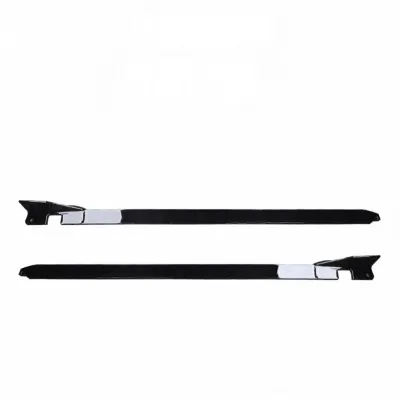
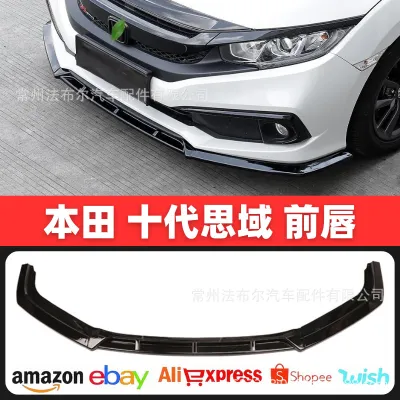
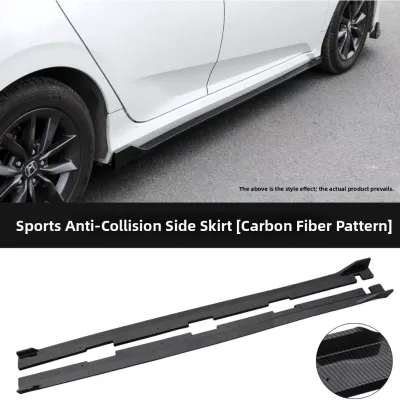
Prices are valid at publication and may change. Please refer to the product page for the latest price.
Mapping these chassis codes to their respective production years and regional variations is critical. The FD chassis represents the eighth-generation sedan (produced roughly from 2005 to 2011) popular in Asian and European markets. The FN chassis refers to the three-door and five-door hatchbacks of the same generation, which were designed primarily for the European market. The FC chassis designates the tenth-generation sedan and coupe (2016–2021), while the FK chassis covers the tenth-generation hatchback variants, including the high-performance Type R (FK8).
Body style variations introduce significant physical differences that directly affect side skirt fitment. Hatchbacks and sedans rarely share the same wheelbase or door lengths. A side skirt designed for an FC sedan will be too long for an FK hatchback, resulting in overhangs or interference with the wheel arches. Furthermore, high-performance variants like the Civic Type R (FD2R or FK8) feature wider factory fenders and integrated aerodynamic side sills. Standard Civic side skirts will not sit flush against these wider profiles without leaving massive gaps.
Facelift updates, often occurring mid-cycle in a generation’s lifespan, can also alter how side skirts align. Manufacturers frequently tweak the lower bumper shapes, rocker panel trim, or plastic wheel arch moldings during these refreshes. A side skirt designed for a pre-facelift FC Civic might not transition smoothly into the revised front fender liners of a post-facelift model. Always verify whether the aftermarket part is specified for pre-facelift or post-facelift models to avoid alignment issues at the outer edges.
Cross-Check Product Specifications and Labels
When shopping for a civic side skirt, you must critically evaluate the manufacturer’s product listings. Avoid listings that use generic descriptions like “Fits Honda Civic 2006–2020,” as this range spans three completely different generations and multiple body styles. Reliable manufacturers will explicitly list the compatible chassis codes, body styles (e.g., “4-door sedan only”), and specific trim levels. If a listing lacks this detailed compatibility matrix, treat it as a universal or highly speculative fitment.

Market-specific variations can also introduce unexpected fitment challenges. Vehicles sold in Singapore may feature dealer-installed aesthetic packages, such as Modulo or Mugen body kits, which alter the factory rocker panel profile. If your Civic has these factory-option side structures, standard aftermarket side skirts cannot be installed without first removing the existing dealer-installed trim. Additionally, parallel-import models from different regions might have unique underbody shielding or mudguard configurations that block aftermarket mounting points.
Reviewing the specified mounting method is essential before finalizing your purchase. Side skirts generally secure to the vehicle using heavy-duty double-sided automotive tape, OEM-style plastic clips, or self-tapping screws. Inspect your Civic’s existing rocker panel structure to see if the factory mounting holes are intact. If the aftermarket side skirt relies on OEM clip locations, but your vehicle’s factory clips are broken or missing, you will need to source replacement hardware before beginning the installation.
Verify the road legality and safety impact of the side skirt design before purchasing. In Singapore, aftermarket body modifications must comply with Land Transport Authority (LTA) guidelines. The side skirts must not have sharp protruding edges, must not extend beyond the physical width of the vehicle, and must be securely fastened to prevent detaching at high speeds. Choosing a kit that utilizes secure mechanical fasteners alongside automotive adhesive is highly recommended to meet these safety standards.
Perform a Physical Dry-Fit Before Final Installation
Before attempting any installation, establish a safe working environment. Park your Civic on a flat, level surface, engage the parking brake, and secure the wheels with chocks. If you need to raise the vehicle to access the underbody, always use properly rated jack stands to support the chassis. Never work under a vehicle supported only by a hydraulic floor jack, as this poses a severe safety risk.
Prepare the vehicle’s lower rocker panels by cleaning them thoroughly. Road grime, tar, grease, and old wax will prevent automotive adhesives from bonding and can scratch your paint during the test-fitting process. Wash the area with a dedicated automotive shampoo, followed by a wipe-down using an automotive-safe degreaser or a mild isopropyl alcohol solution. Cleaning the surface ensures that you can clearly see how the aftermarket part aligns with the metal body lines.
Perform a physical dry-fit using temporary masking tape to hold the side skirt in place. Do not peel off the adhesive backing or drill any holes at this stage. Position the side skirt against the rocker panel and use high-tack painter’s tape to secure it tightly. This allows you to inspect the fitment from multiple angles without risking permanent damage to the part or your vehicle’s paintwork.
Inspect the alignment along the entire length of the vehicle, paying close attention to critical transition zones. Open and close all doors to ensure the bottom edge of the door skin does not rub against the top of the side skirt. Check the seams where the skirt meets the front fender and the rear wheel arch. If you observe gaps wider than a few millimeters, or if the part requires significant physical force to bend into position, the side skirt may be warped or designed for a different Civic model.
Mark any areas that require minor adjustments using a water-soluble marker or painter’s tape. If the side skirt does not sit flush against the body lines under light pressure, this is your stop condition. Forcing a misaligned plastic or composite part into place will create constant tension, eventually causing the adhesive tape to fail or the mounting screws to pull out of the plastic undertray while driving.
When to Stop and Seek Professional Help
Knowing when to halt a DIY installation can save you from costly bodywork repairs. If you find that the pre-drilled mounting holes on the side skirt are completely misaligned with your Civic’s factory mounting points, stop immediately. Attempting to drill new holes into the metal rocker panels of your vehicle is highly discouraged, as exposing bare metal invites rust and corrosion, which can spread rapidly in humid climates.
Consult a qualified professional body shop if the installation requires modifying structural underbody shields or altering the vehicle’s aerodynamic components. Modern Civics, particularly the FC and FK generations, feature extensive underbody paneling designed to reduce drag and improve fuel efficiency. If the aftermarket side skirts interfere with these shields, a professional installer can safely trim and secure the panels without compromising the vehicle’s aerodynamics or safety.
Different manufacturing materials dictate how much tolerance a side skirt has during installation. Polyurethane (PU) is highly flexible and can tolerate minor warming to shape it to the body, but excessive stretching will crack the paint finish. Fiberglass (FRP) is rigid and brittle; attempting to force a misaligned fiberglass skirt into place will cause it to crack or shatter. Carbon fiber parts offer zero flexibility and require precise, professional handling to avoid ruining the expensive weave during trimming or drilling.
Frequently Asked Questions (FAQ)
Can I use a side skirt from a Civic sedan on a hatchback model?
No, side skirts designed for a Civic sedan will not fit a hatchback model. Even within the same generation, such as the tenth-generation FC (sedan) and FK (hatchback), the vehicles feature different wheelbases, rear door lengths, and floor pan designs. Attempting to install a sedan side skirt on a hatchback will result in the part being too long, preventing proper alignment with the wheel arches and interfering with door operation. Always purchase side skirts specified for your exact body style.
Do aftermarket side skirts affect the ground clearance of my Civic?
Yes, most aftermarket side skirts will reduce your vehicle’s ground clearance. These components are designed to give the Civic a lower, more aggressive stance by extending downward from the factory rocker panels. This reduction in clearance can make navigating multi-story parking ramps, steep driveways, and speed bumps in Singapore challenging. Before purchasing, check the manufacturer’s specifications for the downward drop measurement and compare it to your daily driving routes to avoid scraping or damaging the new parts.
Community discussion
Share your experience or ask a question. Comments are reviewed before publication.