
Diesel vehicle owners often face performance drops, rough idling, or clogged emissions components like the Diesel Particulate Filter (DPF) due to carbon buildup, leaving them searching for a reliable way to restore engine efficiency without expensive workshop teardowns. To safely and effectively use Cataclean Diesel, you must pour the entire bottle directly into your fuel tank when it contains approximately one-fourth of its capacity of diesel fuel, and then drive the vehicle for at least 15 to 20 minutes at sustained highway speeds to circulate the cleaner and activate the cleaning process throughout the fuel and exhaust systems. This preventative maintenance step can help clear carbon deposits from critical components, but its success depends entirely on following the correct application procedure and verifying that your vehicle is mechanically sound before treatment.
Is Cataclean safe and suitable for your specific diesel engine?
Cataclean Diesel is generally safe for most modern diesel engines, but you must verify compatibility with your specific vehicle model, fuel system type, and emissions equipment by checking your owner’s manual and the product label before application. It is formulated to be compatible with common rail injection systems and diesel particulate filters (DPFs), provided there are no underlying mechanical failures or active severe diagnostic trouble codes.
Before introducing any chemical additive to your vehicle’s fuel system, your first step should always be to consult the vehicle manufacturer’s official documentation. Some vehicle manufacturers explicitly restrict or advise against the use of aftermarket fuel additives, and using them could potentially void your manufacturer’s warranty or affect sensitive emissions sensors. Additionally, you must carefully read the product packaging to ensure you have purchased the specific diesel formulation, as using a petrol-formulated cleaner in a diesel engine can lead to severe fuel system contamination and costly mechanical damage.
Products mentioned in this guide
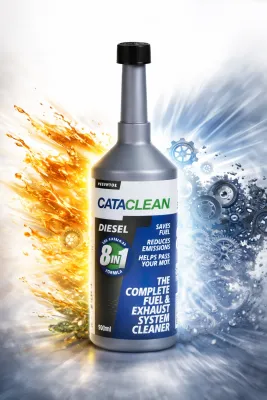
17 Lazada user ratings
⚙️Performance: This helps lower chances of engine light showing up. Have been using this since last year.
Enhances engine performance, Restores power and acceleration, ⚙️Performance:good 🔌Compatibility:suitable
💰Price:reasonable ⚙️Performance:quite okay after fill up to tank 🔌Compatibility:get the correct item
Delivery is quite fast. Item received in good condition. Bought n used before
Restores power and acceleration, Easy to use,
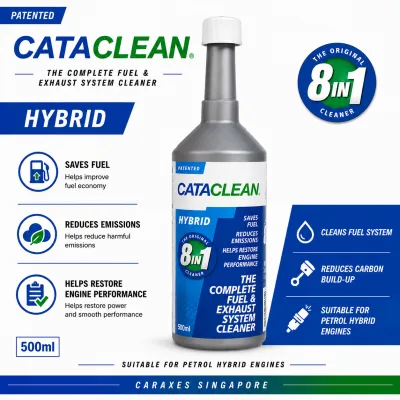
4 Lazada user ratings
👌Ease of Use: straightforward Repeated purchase. No complaints after usage.
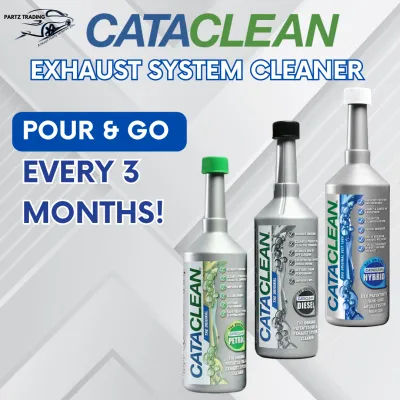
442 Lazada user ratings
Received in good condition and definitely value for money. Have been using this product for a year on a 8years old car and it's works well o…Read full reviewShow less
Received in good condition and definitely value for money. Have been using this product for a year on a 8years old car and it's works well on the car with the power restored and engine smooth
Fast delivery and received in good condition. A bit expensive but every good for cars over 7yrs. second time buying this product to use afte…Read full reviewShow less
Fast delivery and received in good condition. A bit expensive but every good for cars over 7yrs. second time buying this product to use after 3months.
item received within 3 days. yet to use to review the condition.
The product was packed and delivered in excellent condition.
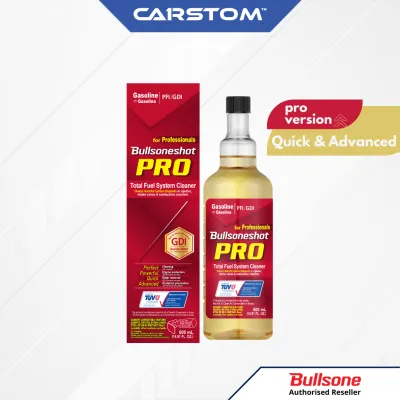
185 Lazada user ratings
Quality:- 500ml content. Value for money during promotion. Appearance:- Clear yellow liquid. Long bottle neck eases pouring content into the…Read full reviewShow less
Quality:- 500ml content. Value for money during promotion. Appearance:- Clear yellow liquid. Long bottle neck eases pouring content into the tank. Performance:- Can feel the engine improvement (quieter, smoother and more responsive). Satisfied with the results. This is my third purchase.
Package was shipped out very quickly. The instructions on the box recommends 7.14ml for every litre of petrol. The full bottle of 500ml will…Read full reviewShow less
Package was shipped out very quickly. The instructions on the box recommends 7.14ml for every litre of petrol. The full bottle of 500ml will be good for 70 litres of petrol.
💰Price:ok 🔌Compatibility:yes ⚙️Performance:ok Received in good condition today. Fast delivery. 2nd bottle try out for high mileage car.
Quality and packing looks good. Looking forward to test it out tomorrow.
Fast shipping, nice packaging. Will monitor product use.
Prices are valid at publication and may change. Please refer to the product page for the latest price.
It is equally important to identify any existing mechanical faults before proceeding with the treatment. Chemical cleaners are designed to remove soft carbon deposits and soot; they cannot repair physically damaged components, cracked fuel lines, or leaking injectors. If your vehicle is currently experiencing severe symptoms, such as a completely blocked DPF that has triggered a “limp home” mode, or if there are visible fuel leaks in the engine bay, do not attempt to resolve these issues with an additive.
If your dashboard displays active warning lights, such as the check engine light or a DPF restriction warning, you should stop and perform a diagnostic scan before adding any product to the tank. A professional diagnostic tool can read the specific fault codes to determine if the issue is a simple soot accumulation, a failed sensor, a broken actuator, or a physical blockage that requires manual cleaning. When in doubt, always consult a qualified automotive professional to diagnose the system before applying chemical treatments.
What is the correct fuel-to-additive ratio for pouring Cataclean Diesel?
The correct fuel-to-additive ratio requires adding one full 500ml bottle of Cataclean Diesel to a fuel tank that contains approximately 15 liters of diesel fuel (roughly a quarter of a tank). Maintaining this specific concentration ensures the active cleaning agents are neither too diluted to work effectively nor too concentrated to pose a risk to fuel system components.

To achieve the optimal mixing ratio, you must check your vehicle’s fuel gauge before pouring the additive. If your tank is nearly empty, drive to a service station and add just enough diesel to reach the quarter-tank mark, which is typically around 15 liters for standard passenger cars, crossovers, or light commercial vehicles. If your tank is more than half full, you should drive the vehicle to consume the excess fuel until it reaches the recommended quarter-tank level before adding the cleaner. Over-diluting the product by pouring it into a full tank of fuel will significantly reduce the concentration of the active ingredients, rendering the treatment far less effective at breaking down stubborn carbon deposits.
Once you have verified the fuel level, prepare the vehicle for the application process. Park on a flat, level surface, turn off the engine, engage the parking brake, and open the fuel filler flap. Because many modern diesel vehicles are equipped with capless fuel systems or misfueling prevention devices designed to block non-standard nozzles, you may need to use the vehicle’s emergency refueling funnel—usually located in the trunk or tool kit—to successfully bypass the internal metal flap and pour the additive directly into the tank.
Carefully unscrew the bottle cap, remove the protective seal, and pour the entire contents of the bottle into the fuel filler neck. It is crucial to avoid spilling the liquid on the vehicle’s exterior paintwork, plastic trim, or rubber seals, as the strong chemical solvents in the cleaner can cause staining or damage to these surfaces. If any accidental spills occur, wipe the area immediately with a clean, damp microfiber cloth and rinse thoroughly with clean water. Once the bottle is empty, replace your fuel filler cap securely or remove the funnel to allow the capless system to seal itself.
How should you drive the vehicle after adding the cleaner for optimal results?
After pouring the additive, you should immediately drive the vehicle for approximately 15 to 20 minutes under normal to high-load conditions, preferably at sustained highway speeds, to allow the cleaner to circulate and reach its optimal operating temperature. This driving cycle ensures the chemical agents pass through the fuel injectors, combustion chambers, and exhaust components, including the DPF and catalytic converter, to effectively break down carbon deposits.
The active ingredients in the cleaner require sufficient heat to react chemically with the carbon and soot accumulated in your exhaust system. If you only perform short, low-speed trips or engage in stop-and-go urban driving immediately after application, the engine and exhaust system may not reach the high operating temperatures necessary to activate the cleaning process. To maximize the treatment’s effectiveness, plan a route that allows you to drive on an expressway or highway where you can maintain a steady speed of 80 to 90 km/h without frequent stops.
While driving, aim to keep the engine speed (RPM) slightly elevated within safe and legal limits, as this increases exhaust gas flow and temperature, assisting the diesel particulate filter in clearing out loosened soot. However, you must always prioritize road safety and adhere to local speed limits; there is no need to drive aggressively or exceed safe engine speeds to achieve results. The combination of the chemical additive and sustained, normal highway driving is sufficient to facilitate the cleaning process.
Once you have completed the initial driving cycle, do not immediately top up your fuel tank with fresh diesel. To allow the treatment to work through the entire system thoroughly, continue to drive the vehicle under normal conditions until the fuel level runs low, approaching the reserve indicator. This ensures that the concentrated mixture is fully consumed and has maximum contact time with the fuel injectors and combustion chambers. Once the fuel level is low, you can return to your regular refueling habits at any service station.
What signs indicate the fuel system cleaning was effective or requires professional help?
An effective cleaning is typically indicated by a smoother engine idle, improved throttle response, reduced exhaust smoke, and a gradual restoration of fuel efficiency over the subsequent days of driving. If these positive changes do not occur or if dashboard warning lights remain illuminated, it indicates that the underlying issue is mechanical and requires professional diagnostic intervention.
In the days following the treatment, closely monitor your vehicle’s performance during daily commutes. You may notice that the engine starts more easily from a cold start, hesitates less during acceleration, and runs more quietly when idling at traffic lights. These subtle improvements suggest that the cleaner has successfully removed light carbon deposits from the fuel injectors and combustion chambers, allowing for a more precise and efficient fuel spray pattern. Keep in mind, however, that the extent of these improvements depends heavily on the initial condition of your engine; a well-maintained vehicle may show less noticeable changes than one with moderate soot accumulation.
Conversely, you must be able to recognize when a chemical additive has failed to resolve the problem. If your vehicle continues to suffer from a rough idle, persistent engine misfires, excessive black or blue exhaust smoke, or a significant lack of power, the carbon buildup is likely too severe for a pour-in cleaner to dissolve. Furthermore, if dashboard warning lights—such as the check engine light, glow plug light, or DPF warning light—remain illuminated or reappear shortly after the drive, the system requires immediate attention.
When chemical treatments do not yield results, you must stop using additives and seek professional assistance. Continuing to drive a diesel vehicle with a severely clogged DPF or malfunctioning fuel injectors can lead to catastrophic engine damage, including melted pistons, turbocharger failure, or complete exhaust restriction. A qualified automotive technician can connect a professional diagnostic scanner to read live engine data, perform a manual DPF regeneration, pressure-test the fuel delivery system, or physically remove and clean the affected parts to restore your vehicle to safe operating condition.

Community discussion
Share your experience or ask a question. Comments are reviewed before publication.