
Maintaining correct tire pressure is one of the simplest yet most critical aspects of vehicle maintenance. Properly inflated tires ensure optimal traction, shorter braking distances, even tread wear, and maximum fuel efficiency. While many drivers rely on petrol station air pumps, carrying a portable air compressor in your vehicle provides the convenience of checking and adjusting your tire pressure anywhere, at any time. Using this tool correctly requires a clear understanding of your vehicle’s specifications, proper connection techniques, and essential safety boundaries to prevent damage to your tires or the compressor itself.
Preparation: Finding Your Recommended Tire Pressure and Gathering Tools
Before you begin inflating your tires, you must determine the exact target pressure recommended by your vehicle’s manufacturer. This specification is unique to your vehicle’s make, model, and tire size. You can find this information printed on the tire information placard, which is typically located on the driver’s side door jamb, or inside the vehicle’s owner’s manual. It is crucial to understand that this recommended pressure is different from the maximum inflation pressure molded onto the tire’s sidewall. The sidewall figure represents the absolute maximum pressure the tire can safely hold under maximum load, not the pressure optimized for daily driving comfort, handling, and safety.
To ensure an accurate reading, you must confirm that your tires are “cold.” Tires are considered cold when the vehicle has been parked for at least three hours or driven less than one mile (approximately 1.6 kilometers) at moderate speeds. Driving generates friction, which heats the air inside the tires and causes it to expand, temporarily raising the pressure reading. If you measure or inflate hot tires to the cold specification, they will actually end up under-inflated once they cool down, which compromises safety and accelerates tire wear.
Products mentioned in this guide
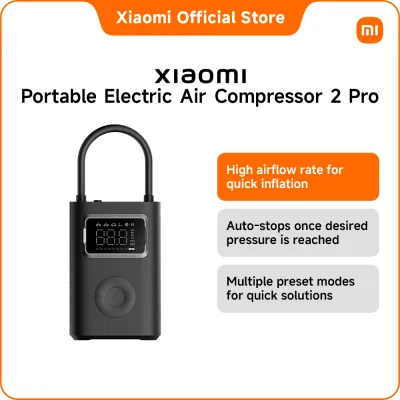
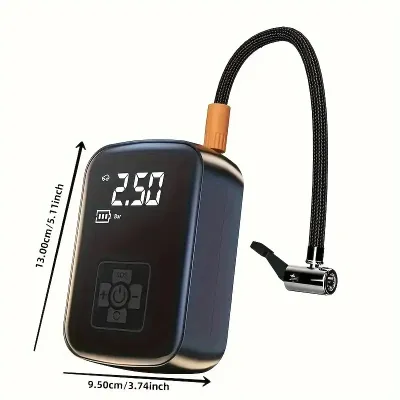
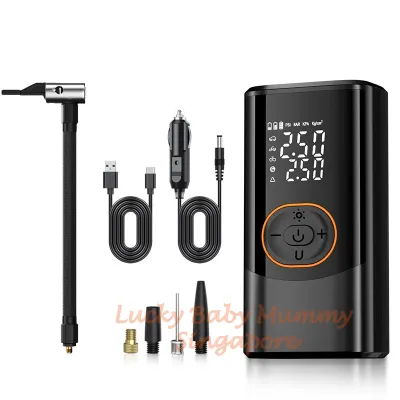
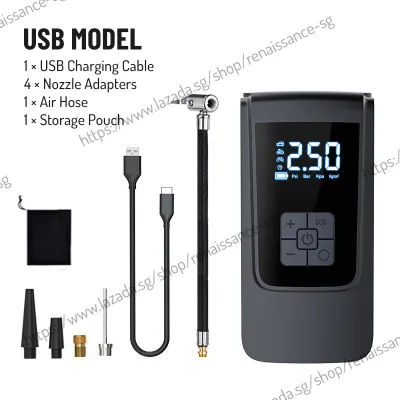


Prices are valid at publication and may change. Please refer to the product page for the latest price.
Next, inspect your portable air compressor and verify its power requirements. Most portable units designed for passenger vehicles run on 12-volt direct current (DC) power, which can be drawn from the vehicle’s accessory socket (commonly known as the cigarette lighter) or directly from the car battery using alligator clamps. Check your vehicle’s owner’s manual to confirm that the accessory socket’s amperage rating matches or exceeds the compressor’s draw, which is typically around 10 to 15 amps. Ensure you have the correct hose attachments, such as a quick-connect chuck or a screw-on valve connector, and that the power cord is long enough to reach all four tires comfortably.
Step-by-Step Guide to Checking and Inflating Your Tires
To begin the inflation process, park your vehicle on a flat, level surface, engage the parking brake, and turn off the ignition unless you plan to run the engine to support the battery. If your compressor draws power from the 12V accessory socket, it is generally recommended to start the engine before plugging in the unit to prevent draining the car battery. Once the engine is running, plug the compressor’s power connector into the socket or attach the clamps to the battery terminals, ensuring the red positive clamp connects to the positive terminal and the black negative clamp connects to the negative terminal or a designated grounding point.

Unscrew the plastic valve stem cap from the tire you wish to inflate. Place the cap in a secure location, such as your pocket or the vehicle’s cup holder, as these small parts are easily lost on the ground. Inspect the valve stem briefly to ensure it is clean and free of dirt or debris that could prevent a tight seal or get forced into the valve core during inflation.
Attach the compressor’s air hose chuck to the tire’s valve stem. If your compressor uses a thumb-lock chuck, press it firmly onto the valve stem until you hear a brief hiss of escaping air, then quickly flip the lever down to lock it in place. For screw-on connectors, thread the collar clockwise onto the stem until it is snug. A proper connection should be completely airtight; if you hear a continuous hissing sound, disconnect the chuck and reattach it to ensure a straight, secure fit.
Once connected, read the initial pressure on the compressor’s gauge. If your portable air compressor features a digital interface with an automatic shutoff function, program your target pressure (for example, 32 PSI or 220 kPa) using the control buttons. Turn the compressor on, and the unit will run until it reaches the preset limit and shut off automatically. If your compressor uses a manual analog dial gauge, you must monitor the pressure closely. Turn the unit on and add air in short, controlled bursts of 10 to 15 seconds. Turn the compressor off briefly to read the gauge, as the air pressure reading while the motor is actively running is often artificially high due to backpressure in the hose.
After reaching the recommended pressure, switch off the compressor. Carefully disconnect the hose chuck from the valve stem, minimizing the amount of air that escapes during removal. Immediately replace the valve stem cap, screwing it on firmly to protect the delicate inner valve core from moisture, road salt, and dirt. Repeat this entire sequence for the remaining three tires. Do not forget to check and inflate your spare tire periodically, as spare tires naturally lose pressure over time and must be ready for emergency use.
Safety Boundaries and Common Inflation Mistakes to Avoid
Operating a portable air compressor safely requires adhering to specific operational limits to protect both your equipment and your vehicle’s tires. Never exceed the maximum pressure limit printed on the tire sidewall. Over-inflating a tire reduces the contact patch between the rubber and the road surface, which severely compromises traction, increases braking distances, and causes rapid, uneven wear along the center of the tread. It also makes the tire much more susceptible to impact damage from potholes or road debris, increasing the risk of a sudden blowout.
Portable air compressors generate a significant amount of heat during operation due to the rapid compression of air. Every compressor has a rated duty cycle, which is the amount of time it can run continuously before it must be turned off to cool down. Many small, consumer-grade 12V compressors have a duty cycle of 10 to 15 minutes. If the unit feels excessively hot to the touch or if you have been running it continuously to inflate multiple tires, turn it off and allow it to cool completely for at least 15 minutes before resuming. Running a compressor past its duty cycle can melt internal seals, damage the motor, or cause total tool failure.
You must also recognize when a tire issue requires professional intervention rather than simple inflation. If a tire is completely flat, requires an unusually large volume of air to register a change on the gauge, or loses pressure immediately after you disconnect the compressor, there may be a severe puncture or a compromised bead seal. Furthermore, if you observe any visible bulges, bubbles, or deep cracks in the tire’s sidewall, do not attempt to inflate it. These signs indicate structural failure of the tire’s internal plies, and adding pressurized air could cause the tire to rupture violently. In these scenarios, install your spare tire or contact a professional mobile tire service.
If you must adjust your tire pressure when the tires are hot—such as after driving on a highway—keep in mind that the pressure reading will naturally be 3 to 4 PSI (approximately 20 to 30 kPa) higher than the recommended cold specification. Do not bleed air out of a hot tire to bring it down to the cold target, as this will result in an under-inflated tire once it cools down. Instead, add only enough air to match the elevated hot reading, and verify the pressure again once the tires have rested and cooled completely.
Storing and Maintaining Your Portable Air Compressor
Proper storage and routine maintenance are essential to ensure your portable air compressor remains reliable and ready for roadside emergencies. When you are finished using the unit, allow it to cool down completely before packing it away. Carefully coil the air hose and power cord in loose, natural loops according to the manufacturer’s design. Avoid wrapping cords tightly around the body of the compressor or bending the hose at sharp angles, as this can cause internal copper wire fractures, kinks in the rubber hose, or severe strain on the connectors.
Store the compressor in a dry, temperature-controlled environment. While it is convenient to keep the tool in your vehicle’s boot, extreme heat and high humidity can accelerate the degradation of rubber seals, hoses, and internal lubricants. If you store the unit in your car, keep it inside its protective carrying case or bag to shield it from dust, moisture, and impact from other cargo.
Periodically inspect your compressor to ensure it remains in safe working order. Check the brass or plastic threads on the hose chuck for wear or stripping, and examine the power plug for any signs of melting or loose connections. If your compressor features a small, replaceable air filter, check it for dirt accumulation and clean or replace it as directed by the manufacturer’s instructions. Taking a few minutes to inspect your equipment ensures that when you face a low-tire warning on the road, your compressor will perform flawlessly.
Frequently Asked Questions (FAQ)
Can I use a portable air compressor while the engine is running?
Yes, it is generally recommended to keep your vehicle’s engine running while operating a 12V portable air compressor. Running the engine allows the alternator to supply power, preventing the compressor from draining your car’s battery during the inflation process. However, before plugging the unit in, you must verify your vehicle’s accessory socket amperage limit against the compressor’s maximum current draw, which is detailed in your vehicle’s owner’s manual and the compressor’s specifications. If the compressor draws more current than the socket is rated to handle, you risk blowing a fuse in your vehicle’s electrical system.
What should I do if my tire loses air immediately after inflating?
If your tire loses air rapidly after inflation, immediately check the valve stem core to ensure it is not loose or clogged with debris, which can prevent the valve from sealing completely. You can apply a small amount of soapy water to the valve opening; if bubbles form, the valve core is leaking and may need to be tightened or replaced. If the valve is secure, inspect the tire tread and sidewalls for visible punctures, embedded nails, or structural damage. Do not attempt to drive on a tire that cannot hold pressure, and avoid repeatedly inflating a compromised tire; instead, install your spare tire or contact a professional tire repair service.
Community discussion
Share your experience or ask a question. Comments are reviewed before publication.