
Using a Bosch air pump to inflate your car tyres correctly requires identifying your vehicle’s recommended tyre pressure, preparing your vehicle on a flat surface, and following a systematic connection and inflation process. By utilizing the digital preset features or manual gauges on your portable inflator, you can maintain optimal tyre health, improve fuel efficiency, and ensure safe handling on the road. Regular pressure checks are a fundamental part of vehicle maintenance that can prevent uneven tyre wear and unexpected punctures.
Prepare Your Vehicle and Air Pump Safely
Before starting the inflation process, park your vehicle on a flat, level, and stable surface. Engaging the parking brake is essential to prevent any accidental rolling or movement while you are working around the wheels. If you are inflating your tyres on the roadside, ensure you are in a safe zone away from active traffic and turn on your hazard warning lights.
Conduct a thorough visual inspection of all four tyres before attaching the pump. Look closely for any signs of severe damage, such as deep sidewall cracks, bulging rubber, or embedded objects like nails and screws. If you discover a bulge or a deep cut that exposes the internal cords, do not attempt to inflate the tyre, as the structural integrity is compromised; instead, seek professional assistance from a tyre specialist.
Products mentioned in this guide
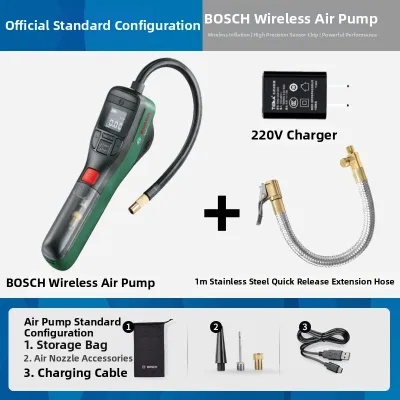
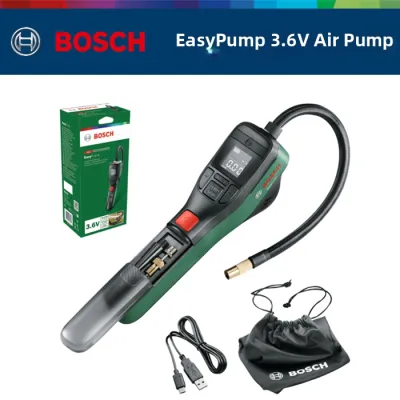
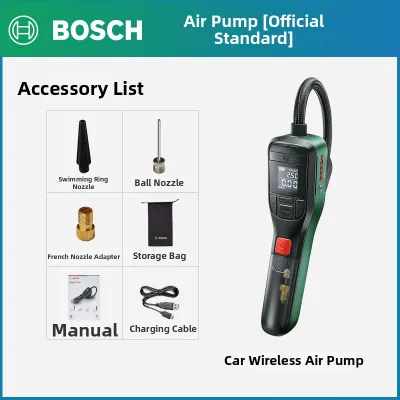
Prices are valid at publication and may change. Please refer to the product page for the latest price.
Verify the power source for your Bosch air pump to ensure uninterrupted operation. If your model relies on an internal rechargeable battery, check the digital display to confirm there is sufficient charge to complete the task. For corded models that plug into the vehicle’s 12V DC accessory socket, inspect the socket for any debris and ensure the plug fits snugly to maintain a stable electrical connection.
Uncoil the air hose and power cables completely before turning on the device. Allowing the cables and hose to lie flat prevents kinking, which can restrict airflow and place unnecessary strain on the pump’s motor. Fully uncoiling the electrical cord also helps dissipate heat during operation, reducing the risk of overheating or insulation damage.
Locate the Correct Tyre Pressure for Your Vehicle
To achieve optimal performance and safety, you must use the specific tyre pressure recommended by your vehicle’s manufacturer. This information is typically printed on a tyre information placard, which is commonly located on the driver-side door jamb or B-pillar. On some vehicles, you may find this sticker on the inside of the fuel filler flap or the glove box door.

If the placard is missing or has become unreadable over time, consult your vehicle owner’s manual. The manual provides comprehensive pressure specifications and may offer different recommendations based on your driving conditions. For instance, manufacturers often recommend higher pressures when carrying a full load of passengers and luggage or when planning extended high-speed highway journeys.
It is crucial to distinguish between the manufacturer’s recommended pressure and the maximum pressure limit moulded onto the tyre sidewall. The number on the sidewall represents the maximum pressure the tyre can safely withstand under maximum load, not the ideal pressure for your vehicle’s daily operation. Over-inflating your tyres to this maximum limit will result in a harsh ride, reduced traction, and accelerated center-tread wear.
Keep in mind that front and rear tyres often require different pressure settings. Because the front of the vehicle typically carries the weight of the engine, manufacturers frequently specify a higher pressure for the front tyres to balance the load. Always check the placard carefully and adjust your Bosch air pump settings accordingly for each axle.
Step-by-Step Tyre Inflation Process
Begin by unscrewing the dust cap from the tyre’s valve stem. Place the cap in a secure location, such as your pocket or a clean tray inside the car, to prevent it from rolling away or collecting dirt. Inspect the valve stem briefly to ensure the threads are clean and undamaged.
Attach the nozzle or chuck of your Bosch air pump securely to the valve stem. If your pump features a quick-release thumb-lock connector, push the chuck firmly onto the valve and flip the lever down to lock it in place. For screw-on connectors, thread the nozzle clockwise onto the valve stem until it is snug. A secure, airtight connection is necessary to prevent air leakage and ensure accurate pressure readings.
Turn on the air pump to activate the digital display or manual gauge. Before starting the motor, allow the pump a moment to register and display the current pressure of the tyre. This initial reading helps you determine how much inflation is required and serves as a helpful diagnostic check for potential slow leaks.
Set your target pressure using the pump’s interface controls. On digital Bosch models, use the pressure adjustment buttons to input the exact value specified on your vehicle’s placard. You can typically toggle between different units of measurement, such as PSI, bar, or kPa, to match the units listed on your vehicle’s door sticker.
Start the inflation process by pressing the power or start button. If your Bosch air pump is equipped with an automatic shutoff feature, the motor will run continuously and stop automatically once the pre-programmed target pressure is reached. For manual models, monitor the pressure gauge closely throughout the process and press the stop button immediately when the needle aligns with your target.
Once inflation is complete, detach the nozzle from the valve stem swiftly. A quick, decisive motion minimizes the amount of air that escapes during disconnection. Immediately screw the valve stem cap back onto the valve to seal out road grime, dust, and moisture, which can otherwise corrode the valve core and lead to slow leaks.
Verify Tyre Pressure and Store Your Equipment
After inflating all tyres, it is good practice to double-check the final pressure using a separate, high-quality handheld tyre pressure gauge. While built-in pump gauges are generally reliable, a secondary reading helps account for any backpressure variance that may occur during active inflation. This step ensures absolute accuracy and peace of mind before you set off.
Listen carefully around each valve stem for any faint hissing sounds that might indicate a faulty valve core or an improper seal. If you suspect a slow leak, apply a small amount of soapy water to the tip of the valve stem. If bubbles begin to form and expand, the valve core may be loose or damaged, requiring replacement or tightening with a valve core tool.
Allow the Bosch air pump to cool down completely before packing it away, especially if you have inflated multiple tyres in a single session. Compact air compressors generate substantial heat during operation, and storing a hot unit in a confined space can degrade the internal seals and plastic housing. Place the pump in a shaded area for a few minutes to let the heat dissipate.
Coil the power cord and air hose loosely when preparing the unit for storage. Avoid wrapping the cords tightly around the body of the pump, as sharp bends can fatigue the internal copper wiring and cause premature electrical failure. Store the pump and its accessories in its original carrying case or a dedicated compartment in your boot to protect it from impact and moisture.
Troubleshoot Common Air Pump Issues
If your Bosch air pump fails to turn on, begin by checking the power connections. For cordless models, connect the charging cable to verify if the battery has been completely depleted. For corded 12V models, ensure the plug is pushed fully into the vehicle’s accessory socket and check if your vehicle’s ignition is turned to the accessory or run position. If the outlet still lacks power, inspect the fuse inside the tip of the 12V plug or check your vehicle’s fuse box for a blown accessory fuse.
When the pump runs but fails to inflate the tyre, the issue is usually related to the connection at the valve stem. Turn off the pump and remove the nozzle to check for obstructions inside the chuck. Reattach the nozzle, ensuring it is pushed far enough onto the valve stem to depress the internal pin, which allows air to flow freely into the tyre.
Manage potential overheating by strictly adhering to the manufacturer’s recommended duty cycle. Portable air pumps are designed for intermittent use and typically require a rest period after 10 to 15 minutes of continuous operation. If the pump body feels excessively hot or if the thermal overload protection shuts the unit down, leave the pump turned off in a cool area for at least 15 minutes before resuming.
Stop using the air pump immediately if you observe any unusual warning signs during operation. These include loud grinding noises, severe vibrations, smoke, or a distinct burning smell. These symptoms indicate internal mechanical or electrical damage; disconnect the power source immediately and consult the manufacturer’s service center or a qualified technician for repair.
Frequently Asked Questions (FAQ)
Should You Check and Inflate Tyres When Hot or Cold?
Tyre pressure should always be checked and adjusted when the tyres are cold. Cold tyres are defined as those on a vehicle that has been parked for at least three hours, or driven less than two kilometres at moderate speeds. This state ensures that the air inside the tyre is at ambient temperature, providing the most accurate baseline reading.
As you drive, the friction between the tyre tread and the road surface generates heat, which causes the air inside the tyre to expand and increases the internal pressure. If you measure your tyres when they are hot, the reading can be 3 to 5 PSI higher than the actual cold pressure. Adjusting your tyres based on hot readings can lead to under-inflation once the tyres cool down.
If you must inflate your tyres when they are warm, do not release air to match the recommended cold pressure on the placard. Instead, inflate them to approximately 3 to 4 PSI above the recommended cold pressure, and then verify the pressure again the following morning when the tyres are completely cold to ensure they are at the correct level.
Can You Use the Air Pump for Bicycles and Sports Equipment?
Yes, Bosch air pumps are highly versatile tools that can be used to inflate bicycle tyres, sports balls, and small inflatable recreational equipment. Most models include a set of specialized nozzle adapters, such as a needle valve for footballs and a Presta adapter for high-pressure bicycle tyres, which are typically stored in a dedicated compartment on the pump body.
To use these accessories, secure the appropriate adapter into the pump’s main chuck before connecting it to the inflatable item. Always locate and read the maximum inflation pressure printed on the side of the sports ball or bicycle tyre before you begin. These items have a much smaller air volume than car tyres and will reach their target pressure very quickly.
Monitor the pressure gauge continuously during the inflation of smaller items to prevent over-inflation. Because these items cannot withstand the high volumes of air as easily as car tyres, exceeding their pressure limits can cause them to burst violently. This can damage the item and potentially cause personal injury, so manual monitoring and a cautious approach are highly recommended.
Community discussion
Share your experience or ask a question. Comments are reviewed before publication.