
Finding a reliable car cover waterproof solution is a priority for vehicle owners looking to protect their paintwork from the elements. However, navigating product descriptions can be highly confusing, as manufacturers frequently use the terms “waterproof” and “water-resistant” interchangeably. To know if a car cover is actually waterproof and not just water-resistant, you must look beyond marketing buzzwords and inspect the physical barrier properties of the material, the construction of the seams, and the fabric’s technical specifications.
In Singapore’s demanding tropical climate, choosing the wrong type of cover does more than just let rainwater through. It can trap high ambient humidity against your car’s hot panels, leading to severe paint damage, clear coat blistering, and mold growth. Understanding the engineering differences between these two categories is the first step toward safeguarding your vehicle’s exterior.
The Real Difference Between Waterproof and Water-Resistant
The primary difference between these two classifications lies in how they manage water penetration under pressure. A water-resistant car cover is designed to repel light moisture, such as morning dew or a brief drizzle. It typically achieves this through a chemical coating known as a Durable Water Repellent (DWR) applied to the outer fabric. This treatment increases the surface tension of the material, causing water to bead up and roll off. However, under sustained rainfall, heavy tropical downpours, or physical pressure (such as wind pressing wet fabric against the car body), the DWR coating eventually “wets out,” allowing water to seep directly through the fibers.
Products mentioned in this guide
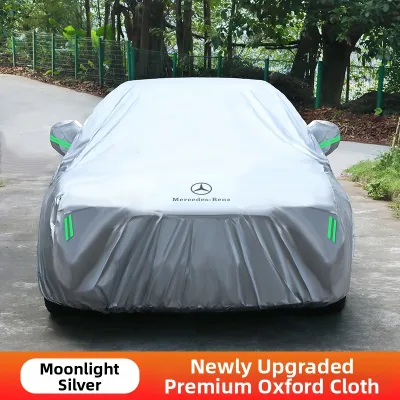
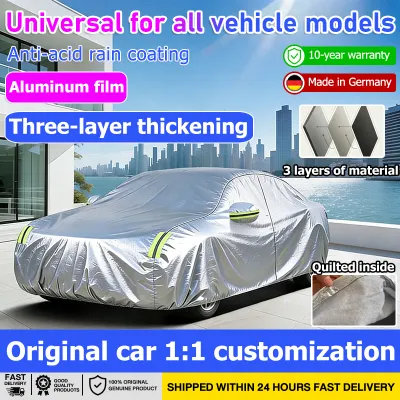
![[24 hours delivery] Upgraded and thickened universal car cover size:M/L/XL/XXL/3XL car cover outdoor protection sunscreen car cover waterproof car shade car cover sun protection car cover outdoor sunscreen](https://img.lazcdn.com/g/p/e19e16e6f7b78d2fe9d8cb786b0ccf47.jpg_400x400q80.jpg_.webp)
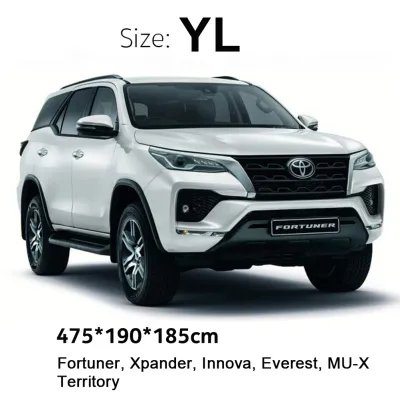
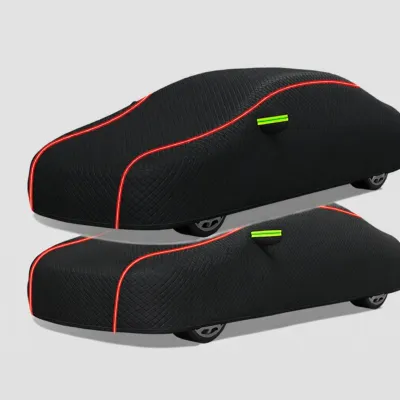
Prices are valid at publication and may change. Please refer to the product page for the latest price.
A truly waterproof car cover, by contrast, relies on an uninterrupted physical barrier to block liquid water entirely. This barrier is usually a non-porous synthetic membrane or a laminated layer of polyurethane (PU) or polyvinyl chloride (PVC) bonded to the fabric. Even under heavy, continuous pressure, this physical layer prevents water molecules from passing through.
Unfortunately, many product listings on online marketplaces use the term “waterproof” loosely to capture search traffic, even when the product only offers basic water resistance. Relying solely on a product’s title can result in buying a cover that saturates during the first heavy thunderstorm, leaving your vehicle soaked.
Key Specifications to Check on the Product Label
To verify whether a manufacturer’s claims are accurate, you must evaluate the technical specifications of the cover. Genuine waterproof covers will explicitly detail their testing metrics, structural design, and material composition on the product label or technical data sheet.

Hydrostatic Head Rating
The most objective way to measure a fabric’s waterproof capability is through its hydrostatic head (HH) rating, which is measured in millimeters (mm). During this standardized textile test, a column of water is pressed against the fabric to determine the exact height of the water column required before the material begins to leak.
For a car cover to withstand heavy, driving rain without letting water penetrate, it should ideally feature a hydrostatic head rating of at least 2,000 mm to 3,000 mm. Highly specialized heavy-duty covers may feature ratings of 5,000 mm or more. If a product listing claims to be “100% waterproof” but fails to provide a hydrostatic head rating or any mention of pressure testing, it is highly likely to be only water-resistant.
Seam Construction and Taping
Even if the fabric itself is completely impermeable to water, the seams where the fabric panels are joined represent a major vulnerability. Standard thread stitching creates thousands of microscopic needle holes along the roof, hood, and trunk lines of the cover. Under the weight of pooled water, rain will easily seep through these stitched paths and drip onto your vehicle’s paintwork.
To ensure true waterproof performance, verify that the cover features fully sealed seams. Look for terms such as “heat-sealed,” “ultrasonically welded,” or “taped seams.” This construction process applies a waterproof thermoplastic tape over the stitched seams under high heat and pressure, sealing the needle holes completely. If a cover only has double-stitched seams without any tape or welding, it will inevitably leak during prolonged rain.
Material Layers and Membranes
High-quality waterproof covers are rarely made of a single layer of fabric. Instead, they utilize a multi-layer composite construction where each layer serves a distinct protective purpose.
The outer layer is usually treated with a UV-resistant and water-repellent coating to shed dirt and cause the bulk of the rainwater to run off immediately. Beneath this lies the critical middle layer: a waterproof, micro-porous membrane that blocks liquid water from entering while allowing microscopic water vapor molecules to escape. Finally, the innermost layer features a soft, non-abrasive material, such as cotton fleece or spunbond polypropylene, to prevent scratches on the vehicle’s clear coat.
Before purchasing, check the manufacturer’s detailed material breakdown. Be sure to verify your vehicle manufacturer’s paint care guidelines to ensure that the inner lining material of the cover is fully compatible with your specific paint and clear coat type.
The Breathability Factor: Crucial for Singapore's Tropical Climate
When shopping for a car cover waterproof solution, there is a critical engineering trade-off to consider: absolute waterproofing versus breathability. A cheap, completely sealed plastic cover (such as raw PVC or polyethylene sheets) will succeed in keeping rainwater out, but it will also trap ground moisture, ambient humidity, and heat underneath.
In Singapore’s tropical climate, where daily temperatures are high and relative humidity frequently exceeds 80%, a non-breathable cover acts like a greenhouse. As the sun heats the covered vehicle, moisture rising from the ground or trapped inside the air pocket evaporates, condenses on the underside of the cover, and pools on the car’s surface. This trapped condensation can lead to severe paint issues, including clear coat blistering (osmosis), accelerated rust on exposed metal components, and interior mold if the cabin windows are left slightly open.
To prevent this damage, you must choose a cover that features a micro-porous membrane or strategically integrated ventilation panels. Micro-porous membranes contain millions of pores that are too small for liquid water droplets to pass through, but large enough to let water vapor escape. Alternatively, built-in vents shielded by fabric flaps allow continuous airflow across the vehicle body, venting humid air without letting rain inside.
How to Verify Manufacturer Claims Before Purchasing
Because marketing terms can be misleading, verifying a product’s performance requires a systematic approach before you spend your money. High-quality waterproof covers in Singapore typically range from S$80 to over S$250 on online marketplaces, making it essential to do your homework before investing.
Start by reviewing the product documentation or downloadable manuals for specific certifications. Look for testing standards like ISO or ASTM waterproof ratings. If the manufacturer does not publish these technical details, treat their waterproof claims with caution.
Next, analyze user reviews on online marketplaces, filtering specifically for terms like “heavy rain,” “leaking,” “wet inside,” or “condensation.” Pay close attention to how the cover performs over several months; DWR coatings on cheap water-resistant covers degrade rapidly under intense UV exposure, leading to sudden leaks.
Additionally, review the manufacturer’s warranty terms. Reputable brands will offer a warranty that explicitly covers seam separation or water penetration for a specified period. If the warranty excludes water damage or limits coverage to “dust and light moisture,” the cover is not truly waterproof.
Finally, always verify your vehicle’s specific model, year, and exact dimensions against the cover’s sizing chart. A poorly fitting cover will sag, creating pockets where water can pool, or flap in the wind, which can rub against the paintwork and cause abrasive damage. Ensure the cover includes secure mounting straps and windproof buckles to keep it firmly anchored.
Frequently Asked Questions (FAQ)
Can I apply a waterproofing spray to a water-resistant car cover?
Yes, you can apply an aftermarket waterproofing spray, but it will not turn a water-resistant cover into a fully waterproof one. These sprays are designed to restore the Durable Water Repellent (DWR) coating on the outer fabric, helping water bead up and roll off more effectively. They do not create a solid physical barrier or seal stitched seams. Always check the cover manufacturer’s instructions before applying any chemical spray, as unauthorized chemicals can degrade synthetic fabrics or leave residues that damage your car’s clear coat.
Will a waterproof car cover protect my vehicle during a flood?
No, a waterproof car cover is designed solely to shed top-down weather exposure, such as rain, tree sap, and bird droppings. It will not protect your vehicle from submersion during a flood. Floodwaters will easily enter from underneath the vehicle, rising through the bottom hems, wheel wells, and elasticized corners. Relying on a car cover for flood protection can trap water inside the engine bay and cabin, worsening the damage.
Community discussion
Share your experience or ask a question. Comments are reviewed before publication.