
To find the perfect car cup holder expander, you must measure three critical dimensions: the top rim diameter, the bottom base diameter, and the total usable depth of your car’s existing holder. Matching these precise numbers to the expander’s specifications prevents the accessory from wobbling, tipping over with heavy bottles, or blocking your gear shifter. Taking a few minutes to measure beforehand ensures a secure fit and protects your vehicle’s center console from damage.
Choosing the right size is not just about convenience; it is a matter of driving safety. A poorly fitted expander can easily dislodge during sudden braking or sharp turns, spilling hot liquids or heavy metal flasks onto your lap or near your pedals. By following a systematic measurement process, you can confidently select an accessory that integrates seamlessly with your dashboard layout.
Why Guessing Your Cup Holder Size Leads to a Poor Fit
Standard car cup holders are typically designed to fit standard 330ml beverage cans or small takeaway coffee cups. However, modern drivers frequently carry larger insulated flasks, reusable water bottles, or wide-bottomed travel tumblers that simply cannot fit into these narrow recesses. This mismatch leads to the common frustration of balancing large bottles on passenger seats or in door pockets where they easily roll around.
Products mentioned in this guide
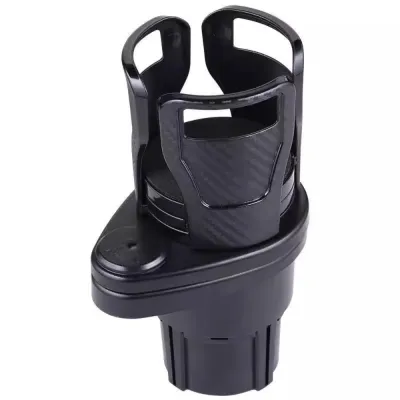
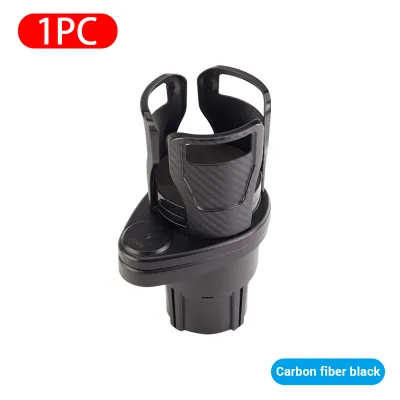
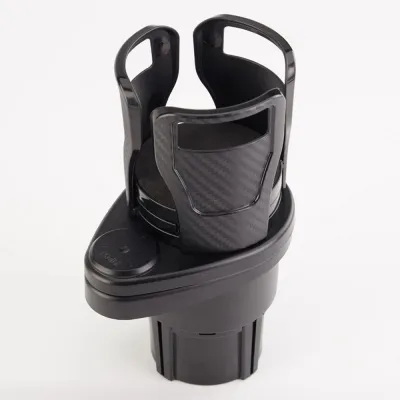
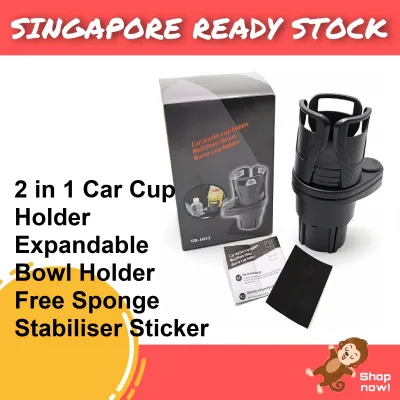
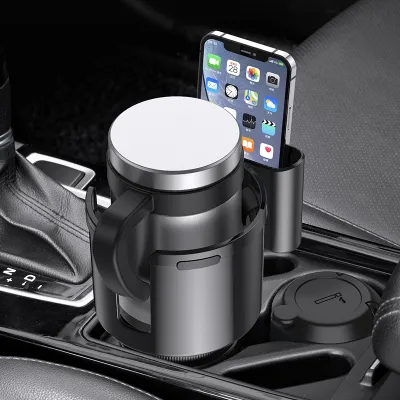
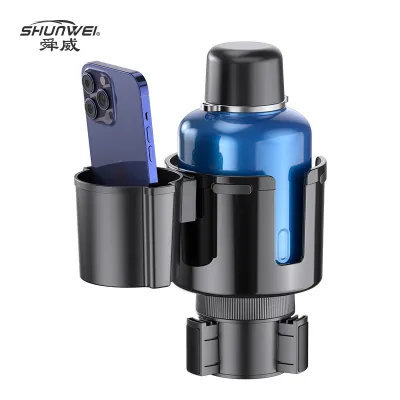
Prices are valid at publication and may change. Please refer to the product page for the latest price.
Buying a car cup holder expander without taking measurements is a recipe for disappointment. If the expander’s base is too small, it will rattle, slide around, or tip over when negotiating roundabouts or uneven road surfaces. Conversely, if the base is too large, it will not insert into the recess at all, rendering the purchase useless.
Furthermore, vehicle interior designs vary dramatically between manufacturers and models. For example, many popular compact SUVs and sedans driven in Singapore feature highly compact center consoles where space is at a premium. A bulky expander might physically fit inside the cup holder but end up blocking access to your electronic parking brake (EPB), gear lever, or center console storage lid. Checking your specific dashboard layout is essential before making a purchase.
Essential Tools for Precise Cup Holder Measurements
To get accurate figures, avoid rough eye-balling or guessing with your fingers. Gather a few simple, highly accessible tools to capture the exact dimensions of your vehicle’s cup holder:

- Flexible measuring tape: Excellent for wrapping around curved edges, measuring irregular shapes, or checking the internal circumference.
- Standard ruler or digital calipers: Calipers provide the most precise measurements for internal diameters, especially at the bottom of the recess.
- Flashlight or smartphone light: Essential for illuminating the dark bottom of the cup holder to spot hidden tabs, ridges, or sloped walls.
- Notepad or smartphone drafting app: Use this to write down your exact measurements in millimeters or inches, as product listings on online marketplaces often use both units.
Having these tools ready ensures you can capture the true physical boundaries of the space, saving you the hassle of returning incompatible accessories.
How to Measure Your Cup Holder Dimensions Accurately
Before taking any measurements, prepare the space to ensure accuracy. Remove any loose coins, keys, receipts, or debris that have accumulated at the bottom of the holder over time.
Many modern vehicles feature removable rubber or silicone liners at the base of the cup holder to catch spills. Take these liners out before measuring. Measuring with the liner in place can give you an artificially shallow depth or a narrower diameter, whereas you might want to remove the liner permanently to accommodate the expander’s base.
Wipe down the interior walls with a damp microfiber cloth to remove sticky residue from spilled drinks. Sticky surfaces can skew your measurements and interfere with how smoothly an adjustable expander base expands or retracts.
Observe the overall shape of the opening. While most are circular, some vehicles feature oval recesses, shared double-cup compartments without a middle barrier, or square-ish shapes with rounded corners. Identifying this shape determines whether you need a standard cylindrical expander or one with an offset, adjustable base.
Measuring the Diameter and Wall Taper
Start by measuring the top rim diameter. This is the widest part of the opening at the console surface. Place your ruler or calipers across the center of the opening at its widest point, ensuring the tool is perfectly horizontal.
Next, measure the bottom base diameter. Slide your ruler or calipers down to the very bottom floor of the cup holder. Many cup holders taper inward, meaning the bottom is significantly narrower than the top. The expander’s base must be able to clear this bottom diameter to sit securely.
Take note of the wall angle. Are the walls completely vertical, sloped inward, or do they feature a stepped design? If you have an oval or irregular cup holder, measure both the longest and shortest axes. This ensures that a circular expander base will actually fit inside the narrowest portion of the irregular opening.
Checking Depth and Internal Obstructions
Measure the total depth by placing your ruler vertically from the top rim down to the lowest flat surface of the holder. This depth determines how long the expander’s insert can be. If the insert is longer than your cup holder’s depth, the expander will stick out too high, making the setup unstable and top-heavy.
Shine a flashlight into the cavity to inspect the base and walls. Look for any drainage holes, raised center pegs, or spring-loaded plastic tabs designed to grip smaller cups.
These features can reduce your “usable depth.” If your vehicle has spring-loaded tabs that do not retract fully flush into the walls, you must measure the distance between the tabs when compressed. This represents the actual maximum width your expander’s base can occupy.
How to Match Your Measurements to the Right Expander
Once you have your numbers, compare them against the specifications of potential products. This step is crucial to ensure both the lower insert and the upper holder are fully compatible with your vehicle.
- Base Insert Size: The lower insert of the expander must fit within your measured bottom diameter. If you choose a fixed-size expander, its base should be slightly smaller (by 1 to 2 millimeters) than your cup holder's narrowest point. If it is a friction-fit model, it should match the diameter closely so the rubber or foam pads can grip the walls.
- Top Ring Size: The upper portion of the expander is designed to hold larger bottles. Check the product specifications for the maximum bottle diameter it can hold. Ensure your favorite bottle will fit comfortably without being wedged in too tightly.
- Adjustability vs. Fixed Sizes: Fixed-size expanders are straightforward but leave zero room for error. Adjustable expanders feature an expandable base that expands or retracts when you twist the top section. These are highly recommended for tapered or irregular cup holders, as they can expand from a small diameter (e.g., 65mm) up to a much wider diameter (e.g., 100mm) to lock firmly into place.
- Clearance Check: A larger top ring means the expander will overhang your center console. Measure the physical space around your cup holder. Ensure that a wider top tray or bottle will not block your gear shifter, prevent you from opening your center armrest console, or cover important dashboard buttons. If space is tight, look for expanders with an offset base, which allows you to position the wider top ring away from obstacles.
How to Install and Verify a Secure Expander Fit
When your expander arrives, align it carefully with the cup holder opening. Insert the base gently. Never force or hammer the expander into the recess if you feel resistance. Forcing it can crack the delicate plastic trim of your car’s center console, which can be highly expensive to repair or replace.
If you are using an adjustable expander, twist the top to expand the base wedges. Tighten the mechanism gradually. Stop as soon as you feel firm resistance. Over-tightening can stress and warp your vehicle’s console plastics or damage the internal gears of the expander itself.
To verify the fit, place your heaviest, tallest insulated bottle into the expander. Give it a gentle wiggle. If the expander tips, wobbles, or lifts out easily, the fit is insecure.
If the expander is slightly loose but otherwise fits well, you can improve the grip. Many manufacturers include adhesive foam tape or rubber pads. Apply these pads around the expander’s base to fill minor gaps, dampen vibrations, and protect your car’s plastic from scratches.
Frequently Asked Questions (FAQ)
Can I use an expander if my car's cup holder is heavily tapered?
Yes, you can use an expander in a tapered cup holder, but you must select the right design. Avoid fixed-diameter expanders. Instead, opt for an adjustable-base expander. These models feature expandable wedges or pads that project outward horizontally, allowing them to grip the sloped walls securely at multiple contact points regardless of the taper angle.
How do I fit an expander over mechanical adjustment tabs?
If your car has spring-loaded or mechanical tabs, measure the clearance when the tabs are fully compressed. Look for an expander with a shorter base insert that sits completely above the tabs, or choose an adjustable expander with a base designed to press directly against the tabs, locking them flat against the cup holder walls. Alternatively, some drivers choose to temporarily block or bypass the tabs using a dense foam sleeve around the expander base.
Community discussion
Share your experience or ask a question. Comments are reviewed before publication.