
Finding a retractable window shade that fits your car perfectly requires precise interior measurements of your glass panels. Unlike flexible wire-frame shades that can be squeezed into place, a retractable window shade relies on rigid roller cassettes, mounting brackets, and tracks that demand exact physical clearance. If your measurements are off by even a single centimeter, you risk buying a shade that either leaves annoying gaps for the harsh tropical sun or fails to mount securely to your window frames. To get the perfect fit, you must measure the visible glass area from the inside, account for the dimensions of the roller housing, and ensure your mounting brackets do not interfere with safety sensors, dashcams, or your vehicle’s operational controls.
Gather the Right Tools and Prepare Your Car
Before pulling out a tape measure, you must gather the correct equipment to ensure accuracy. Avoid using soft sewing tape measures made of cloth or plastic. These flexible tapes stretch easily over long distances, which can introduce a discrepancy of up to two centimeters across a wide front windshield. Instead, use a high-quality steel measuring tape with a locking mechanism. The rigid steel blade remains straight across wide spans, allowing you to capture true straight-line distances from one side of the glass to the other.
Keep a digital notepad open on your smartphone or use a physical notebook to record your findings immediately. Create a structured template before you start, labeling each window clearly: Front Windshield (Top Width, Bottom Width, Center Height), Driver Side Front, Passenger Side Front, Rear Passenger Sides, and Rear Windshield if applicable. This prevents confusing different dimensions when browsing online marketplaces or retail stores later.
Products mentioned in this guide
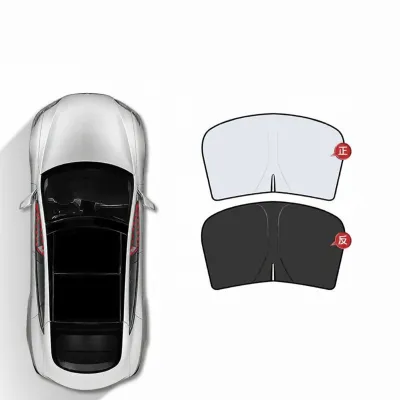
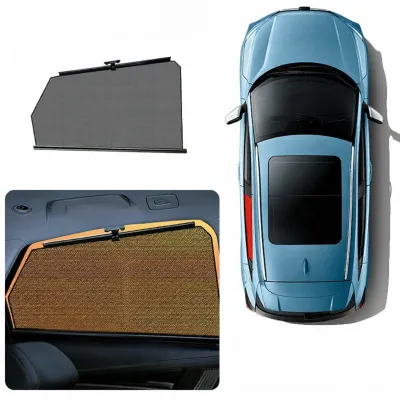
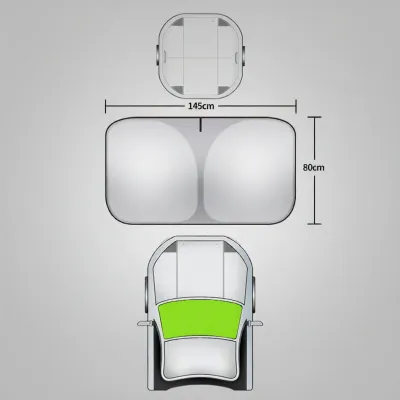
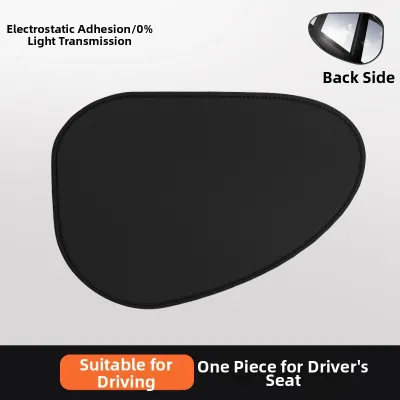
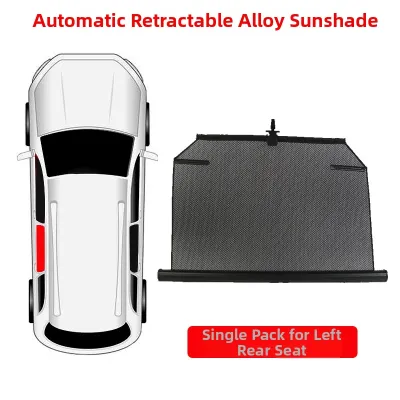
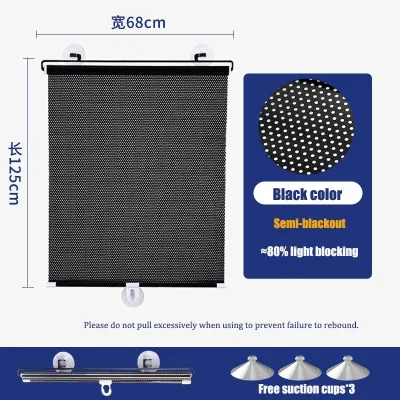
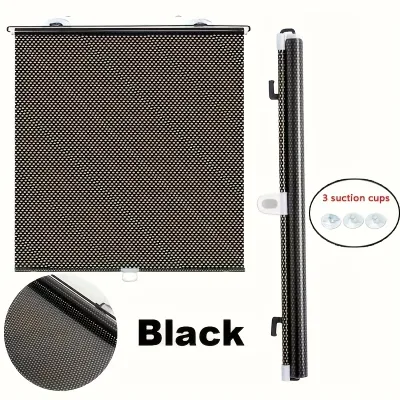
Prices are valid at publication and may change. Please refer to the product page for the latest price.
Prepare your vehicle by parking it on a flat, level surface in a well-lit area. Close all doors to simulate the true cabin environment. Before taking any measurements, clean the interior glass surfaces thoroughly using a glass cleaner authorized by your vehicle or window tint manufacturer. Dust, grease, and oily residues can obscure the exact boundaries where the glass meets the rubber weatherstripping. Clean glass is also essential because many retractable shades rely on suction cups, static cling, or adhesive tracks that will fail to adhere if the surface is dirty.
Step-by-Step: Measuring the Front Windshield
The front windshield is the most complex glass panel to measure due to its compound curves, varying widths, and numerous integrated electronic devices. To find a retractable window shade that covers this area effectively, you must measure the interior visible glass rather than the exterior frame. Always measure from the inside of the cabin, as retractable shades are designed for interior mounting.

Begin by measuring the width. Because windshields are tapered, they are significantly wider at the bottom than at the top. Measure the horizontal span at three distinct points: the absolute top edge where the glass meets the headliner, the middle section across the center of the glass, and the bottom edge where the glass meets the dashboard. Place the end of your steel tape measure directly against the inner edge of the rubber weatherstripping on the left side, and extend it straight across to the inner edge of the weatherstripping on the right side. Do not follow the curve of the glass; keep the tape measure straight to find the true chord width, which matches the rigid bar of a retractable shade.
Next, measure the vertical height. Take three vertical measurements: one on the far left side, one down the exact center, and one on the far right side. Measure from the top weatherstripping down to where the glass meets the dashboard trim. This is crucial because some windshields have a pronounced curve that makes the center measurement significantly shorter or longer than the sides.
Now, identify and measure around fixed obstructions. Modern vehicles are packed with windshield-mounted technology. You must measure the clearance around your rearview mirror mount, rain sensors, lane-assist cameras, and aftermarket dashboard cameras. Measure the distance from the top of the windshield to the bottom of these sensor housings. This tells you if a top-down retractable shade will clear them, or if you need a split-shade system that mounts on the sides and pulls inward toward the center.
For drivers in Singapore, pay special attention to the In-vehicle Unit (IU) used for Electronic Road Pricing (ERP). The dual-band active transponder is typically mounted on the lower right or upper left of the front windshield. You must measure the exact position of the IU. Ensure that the planned mounting position and retraction path of your shade do not physically cover the IU or obstruct its line of sight to the overhead ERP gantries. Blocking the IU can lead to failed transactions and subsequent administrative fines. Leave a clear boundary of at least 5 centimeters around the IU’s antenna array to prevent signal interference, especially if the retractable shade features a metallic or heat-reflective backing.
Finally, record both the maximum glass dimensions and the “clear usable space.” The clear usable space is the rectangular area that is completely free of obstructions. If you are buying a universal-fit rectangular retractable shade, its housing must fit within this clear usable space to avoid hitting sensors or dashboard trims.
Step-by-Step: Measuring the Side Windows
Side windows present a different set of challenges because they are rarely perfect rectangles and must remain fully functional. Start by measuring each window individually, as rear side windows often have steeper angles, integrated quarter glass, or completely different dimensions compared to the front doors.
To measure the width, run your steel tape measure horizontally across the widest part of the visible glass, from the front rubber seal to the rear rubber seal. For the height, measure vertically from the top window channel seal down to the bottom weatherstripping where the glass enters the door panel.
Pay close attention to the depth of the window channel and the thickness of the rubber seals. Some premium retractable shades are designed to tuck directly into the window channel or clip over the top edge of the glass. If you are considering this style, check your vehicle’s owner manual and use a precise ruler to measure the gap width of the window channel. Ensure the shade’s mounting clips or fabric thickness does not exceed this gap, which could pinch the rubber seals or trigger the window motor’s auto-reverse safety mechanism.
Before finalizing your side window measurements, verify the operational path of the glass. Roll the window completely down and up while observing how the glass moves within its tracks. Some windows tilt slightly as they descend. Your retractable shade’s mounting hardware—whether adhesive tracks or bracket clips—must be positioned so that it never contacts the moving glass. Physical contact can scratch your window tint film, damage the glass surface, or put undue strain on the window regulator mechanism.
If your vehicle features quarter glass (the small, triangular stationary windows found near the side mirrors or behind the rear passenger doors), decide how you want to shade them. Because of their sharp angles, standard rectangular retractable shades cannot cover quarter glass. You must measure these triangular windows separately—recording the base width, vertical height, and hypotenuse slope—and purchase dedicated static-cling inserts, rather than trying to stretch a side-door retractable shade across them.
Account for Mounting Hardware and Clearance
One of the most common mistakes when buying a retractable window shade is assuming the product’s listed size refers to the fabric coverage alone. In reality, you must account for the physical dimensions of the mounting hardware and housing.
Differentiate clearly between “fabric width” and “roller tube width.” The metal or plastic cassette that houses the spring-loaded roller mechanism is always wider than the fabric shade itself. Typically, the roller tube and its end caps add an extra 2 to 4 centimeters of total width compared to the actual fabric. If you buy a shade based solely on fabric width, the entire assembly may be too wide to fit within your window frame. Always check the manufacturer’s detailed specification sheet to find the total overall width of the casing.
Consider your chosen mounting method and how much border space it requires on the glass:
- Suction Cups: These require a flat, smooth glass surface. You must leave a margin of at least 1.5 to 2 centimeters between the suction cup edge and the curved borders or ceramic dot matrix (the black gridded border) of your windows. Suction cups will lose their vacuum seal if placed over these textured dots or curved glass edges.
- Adhesive Tracks: These tracks run along the sides of the window frame. Measure the flat plastic or metal trim of your door interior to ensure there is a continuous, flat surface at least 1 centimeter wide to apply the adhesive tape.
- Clips and Hooks: These mount over the top edge of the glass or slide into the window weatherstripping. Ensure you have at least 5 millimeters of clearance between the top of the door frame and the headliner when the door is closed, so the brackets do not dent your interior fabric.
Additionally, measure the clearance between the top of your windshield glass and the headliner. A bulky roller tube mounted at the top of the windshield can hang down and block your forward visibility, which compromises road safety. It can also prevent your built-in sun visors from swinging down fully. Ensure the retracted roller tube profile is slim enough to sit neatly behind or above your sun visors without obstructing their movement.
For vehicles equipped with side curtain airbags, you must observe a critical safety boundary. The retractable shade’s mounting hardware—especially those clipping to door frames or pillars—must never obstruct the deployment path of side curtain airbags. Check your vehicle’s owner manual to locate airbag deployment zones before installing any frame-mounted hardware. If the installation instructions conflict with your vehicle’s safety documentation, stop and consult the manufacturer or a qualified professional.
Verify Your Measurements Before Buying
With all your dimensions recorded, execute a final verification process before making your purchase. This step saves you the hassle of handling returns and paying return shipping fees.
Apply the “measure twice, buy once” rule. Go back to your vehicle with your recorded numbers and physically hold the tape measure up to the windows one more time. Double-check that your recorded width and height do not overlap with any sensors, the rearview mirror base, or your ERP In-vehicle Unit.
When reading product specification charts on online marketplaces, look closely at how the dimensions are labeled. If a listing states “50cm x 125cm,” verify whether 50cm is the fabric width or the total cassette width. If the manufacturer does not specify, assume it is the cassette width and expect the actual fabric coverage to be slightly narrower.
If your window dimensions fall between standard retail sizes, you must weigh your options:
- Universal Trim-to-Fit Shades: Some retractable shades feature a soft fabric or polymer mesh that can be carefully trimmed with scissors to match your window's exact shape. If you choose this route, buy the next size up, but ensure the rigid metal roller tube itself can still fit within your window's physical width.
- Custom-Fit Shades: If your budget allows, investing in custom-fit retractable shades designed specifically for your vehicle's make, model, and model year is highly recommended. These shades are pre-measured to snap directly into your window frames, eliminating the risk of light gaps or mounting failures.
- Slightly Smaller Universal Shades: If trimming is not possible and you must buy a standard size, select a size that is slightly smaller than your glass area. It is far better to have a 1-centimeter gap at the edges than a shade that is too wide to mount at all.
Frequently Asked Questions (FAQ)
What if my measurements fall between two standard sizes?
If your measurements fall between two standard sizes, prioritize buying a shade that fits the physical mounting space first. If the shade is too wide, the rigid roller casing will not fit between your window pillars, rendering it completely useless. Choose the slightly smaller size to ensure a successful installation. While this may leave a small gap of 1 to 2 centimeters on the sides, the shade will still block the vast majority of direct sunlight and heat. If you absolutely require complete coverage, look for a trim-to-fit retractable model where the fabric can be cut down to size, or opt for a custom-fit brand tailored to your specific vehicle model.
Can I use a universal retractable shade on heavily curved windows?
Universal retractable shades with rigid roller tubes do not perform well on heavily curved windows, such as rear windshields or the swept-back side windows of coupe-style vehicles. The straight, rigid cassette cannot conform to the glass curvature, which prevents suction cups or adhesive tracks from making full contact. This lack of contact causes the mounting hardware to pop off under tension. For heavily curved glass, avoid rigid roller shades. Instead, opt for flexible, custom-molded static-cling shades or magnetic mesh shades that bend naturally to match the contours of your vehicle’s window frames.
Will the mounting hardware interfere with rolling down the windows?
Whether mounting hardware interferes with window operation depends entirely on the design of the shade and where it is installed. If your retractable shade uses suction cups mounted directly onto the glass, the entire assembly will roll down along with the window. In this case, you must ensure the roller cassette is slim enough to slide past the inner rubber weatherstripping of the door panel without jamming. If the shade mounts to the top door frame or slides into the window tracks, it remains stationary while the glass moves. For these designs, verify that the mounting clips do not pinch the glass or scratch your window tint film during operation. Always test the window clearance slowly by hand after installation before using the automatic window switch.
Community discussion
Share your experience or ask a question. Comments are reviewed before publication.