
Finding the right electric pump for your vehicle tires can be confusing when confronted with technical jargon. To match an electric pump to your tire size efficiently, you must select a unit with a rated pressure (PSI) that exceeds your tire’s recommended inflation level by at least 20% to 30%, combined with an airflow rate (CFM) suited to your tire’s total air volume. Choosing the wrong combination can lead to painfully slow inflation times, overheated pump motors, or blown vehicle fuses.
Understanding how these specifications interact allows you to maintain optimal tire pressure safely. Proper tire inflation is critical for vehicle handling, fuel economy, and tire longevity, especially in Singapore’s hot, humid climate where ambient heat directly impacts tire pressure and mechanical stress. By choosing a pump with the correct specifications, you ensure quick, stress-free maintenance whether you are performing routine top-ups at home or handling an emergency roadside flat.
Understanding PSI and CFM: What These Specs Actually Mean
Pounds per Square Inch (PSI) measures the maximum force or pressure the electric pump can generate. This specification determines whether the pump has enough mechanical strength to push air into a tire against the resistance of the air already inside. If a pump’s maximum pressure rating is too close to your tire’s target pressure, the motor will struggle to overcome the resistance, slowing the process to a crawl or stopping entirely.
Products mentioned in this guide
![[SG Seller]Portable Car Electric Inflator portable air pump car electric pump wireless air pump car electric pump汽车充气泵](https://img.lazcdn.com/g/p/11d7062f8a657612c19945cd3cdafcdb.jpg_400x400q80.jpg_.webp)
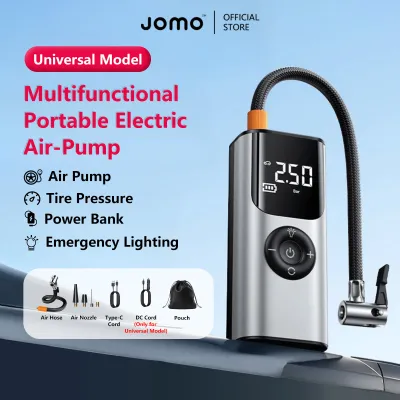
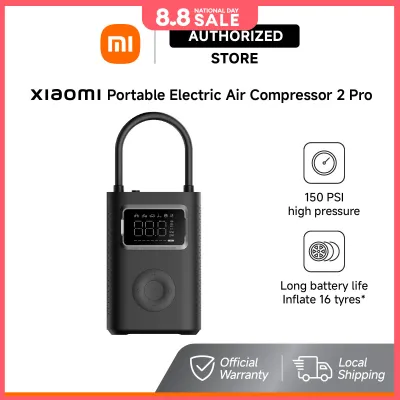
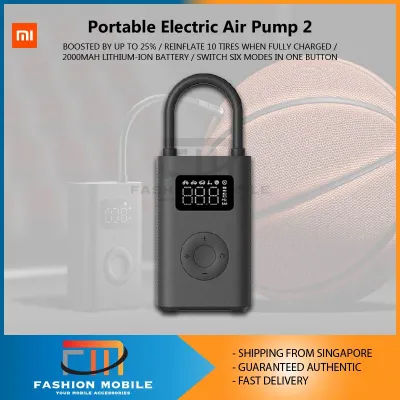
Prices are valid at publication and may change. Please refer to the product page for the latest price.
Cubic Feet per Minute (CFM) measures the volume of air the pump delivers over a specific timeframe. While PSI determines if the pump can fill the tire at all, CFM dictates how quickly that inflation occurs. A pump with high PSI but very low CFM will eventually inflate a tire, but the process will take significantly longer because the volume of air moved per stroke is minimal.
When shopping for an electric pump, it is crucial to distinguish between “peak” and “rated” specifications. Manufacturers often highlight peak PSI or peak CFM in their marketing, which represents the absolute maximum output under zero-load conditions or for a fraction of a second before the motor strains. Always base your purchasing decision on the rated or continuous working specifications, as these reflect the pump’s actual performance limits under real-world operating loads.
Understanding this distinction prevents you from purchasing an underpowered unit. A higher maximum PSI rating does not translate to faster inflation times; it simply means the pump can handle higher-pressure applications, such as bicycle tires or heavy-duty truck tires. For passenger vehicles, CFM is the primary metric that governs how quickly you can get back on the road.
Matching PSI to Your Vehicle: Sedan vs. SUV Requirements
Vehicle types differ significantly in their tire pressure requirements, which dictates the PSI rating your electric pump needs. Standard passenger sedans typically require a relatively modest cold tire pressure, generally ranging between 30 and 35 PSI. In contrast, larger SUVs, crossover vehicles, and light commercial vans often demand higher pressures, frequently ranging from 40 to 45 PSI, particularly when carrying heavy passenger or cargo loads.

To find the exact pressure your vehicle requires, always locate the manufacturer’s recommended cold tire pressure. This information is typically printed on the tire information placard on the driver-side door jamb or detailed within the vehicle owner’s manual. Never use the “Max Press” number molded onto the tire’s sidewall; this figure represents the absolute maximum pressure the tire carcass can safely hold under maximum load, not the correct operating pressure for daily driving.
When selecting an electric pump, your target should be a unit with a rated working PSI that exceeds your vehicle’s recommended pressure by a comfortable margin of 20% to 30%. For a standard sedan requiring 32 PSI, a pump rated for a continuous 50 to 60 PSI is ideal, ensuring the motor operates well within its safety envelope. While you can use a pump with a much higher ceiling, buying a 150 PSI industrial-grade pump for a standard passenger car offers no practical benefit and often costs significantly more, sometimes exceeding S$150 compared to a standard S$40 unit.
Specialized off-road SUVs or vehicles equipped with reinforced, heavy-load tires require careful consideration. Drivers who frequently lower their tire pressures for off-road terrain and then re-inflate them to highway pressures require pumps with robust PSI ceilings. These heavy-duty tires contain thick, stiff sidewalls that demand consistent, high-pressure output to seat and inflate correctly without straining the pump’s internal piston seals.
Choosing the Right CFM for Efficient Inflation
Tire physical dimensions directly dictate the internal air volume that your electric pump must fill. A standard sedan tire has a relatively small air cavity, whereas a large SUV or light truck tire holds a massive volume of air. The wider the tire tread, the taller the aspect ratio, and the larger the wheel diameter, the more air molecules are required to raise the internal pressure by even a single PSI.
Using a low-CFM pump on a high-volume SUV tire can lead to severe mechanical consequences. Because a low-CFM pump moves very little air per minute, it must run continuously for an extended period to inflate a large tire. This prolonged operation generates extreme friction and heat within the pump’s cylinder, which can melt internal plastic components, degrade lubricating greases, or trigger the unit’s thermal overload protection, leaving you stranded with a half-inflated tire.
To choose the right CFM, assess your primary use case and vehicle type. For routine monthly top-ups on a compact sedan, a compact electric pump with a rating of 0.5 to 1.0 CFM is perfectly adequate. However, if you drive a mid-sized to large SUV, or if you anticipate needing to inflate a tire from completely flat on the roadside, look for a pump rated at 1.5 CFM or higher to ensure efficient, safe inflation.
Before purchasing, check the product documentation for manufacturer-stated inflation times. Reliable brands often provide real-world performance estimates, such as the time required to inflate a standard reference tire size (for example, a 195/65R15 or a 265/70R16) from 0 to 35 PSI. Comparing these real-world performance metrics gives you a clear indication of how the pump’s CFM rating translates to actual waiting times.
Key Features to Verify Beyond Basic Specs
Beyond the primary PSI and CFM ratings, several secondary specifications and operational limits dictate the safety and usability of an electric pump.
Duty Cycle The duty cycle is the percentage of time a pump can run continuously within a 30-minute window before needing to cool down. A pump with a 30% duty cycle can run for 9 minutes but must rest for 21 minutes. For inflating four large SUV tires consecutively, look for a pump with at least a 50% duty cycle to avoid long wait times.
Power Source Limits High-CFM pumps draw substantial electrical current. Standard 12V vehicle sockets are usually fused at 10 to 15 amps. Plugging a high-draw pump into these sockets can instantly blow the fuse. Check your vehicle’s manual for socket limits; if the pump draws more than 15 amps, choose a model with alligator clamps that connect directly to the battery.
Auto-Shutoff and Presets This feature allows you to pre-program your target pressure, halting the pump automatically once reached. This prevents overinflation, which compromises grip and accelerates tread wear.
When comparing models on online marketplaces or at automotive retail stores, prioritize core motor quality, metal cylinder construction, and gauge accuracy over flashlights or plastic nozzle accessories.
Frequently Asked Questions (FAQ)
Can I use a high-PSI pump on a standard sedan tire?
Yes, it is safe to use a high-PSI pump on a sedan tire, provided you monitor the process or use an automatic shutoff preset. The pump only delivers air until the tire’s internal resistance matches your target setting. If the pump lacks an auto-shutoff feature, monitor the pressure gauge closely and stop the unit manually to prevent overinflation.
Why does my electric pump shut off before reaching the target pressure?
Premature shutdown is typically caused by thermal overload protection. When a pump runs continuously on a large tire with low CFM, the internal temperature rises rapidly, triggering a safety switch to prevent motor damage. Another cause is a voltage drop in the vehicle’s 12V electrical system under heavy load. Allow the pump to cool completely, ensure the vehicle’s engine is running to maintain stable voltage, and check all electrical connections.
Community discussion
Share your experience or ask a question. Comments are reviewed before publication.