
Upgrading your car audio system is an excellent way to improve your daily drive, but simply choosing the loudest speakers and the most powerful amplifier you can find often leads to poor sound quality or damaged equipment. To get the most out of your investment, you must understand how to match the power output of your amplifier to the power handling and electrical resistance of your speakers. This matching process relies on two fundamental electrical specifications: continuous power handling (measured in RMS wattage) and electrical resistance (measured in Ohms of impedance). When these two factors are properly aligned, your system operates within its safe thermal and mechanical limits, delivering clean, dynamic sound.
Before purchasing any new components, you must verify your vehicle’s specific physical dimensions, mounting positions, and electrical capacity using your vehicle’s original documentation. Car audio integration often requires working with your vehicle’s factory wiring and electrical systems, so understanding these boundaries is essential for a safe installation. Always disconnect the vehicle’s negative battery terminal before performing any electrical installation or wiring changes. If you are unfamiliar with automotive electrical systems, seek qualified professional installation to prevent damage to your vehicle’s factory wiring.
Understanding RMS vs. Peak Power Ratings
When browsing car audio components, you will encounter two different power ratings on product packaging and specification sheets: RMS power and peak power. Understanding the distinction between these two metrics is the first and most crucial step in building a reliable sound system.
Products mentioned in this guide
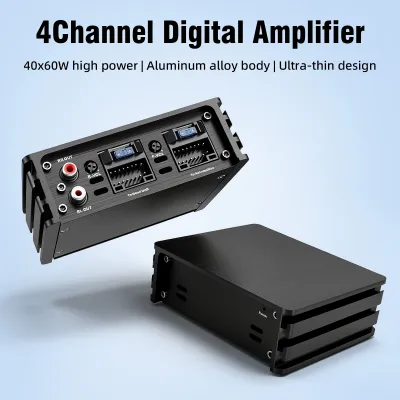
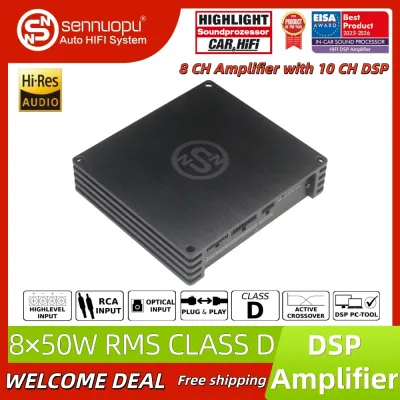


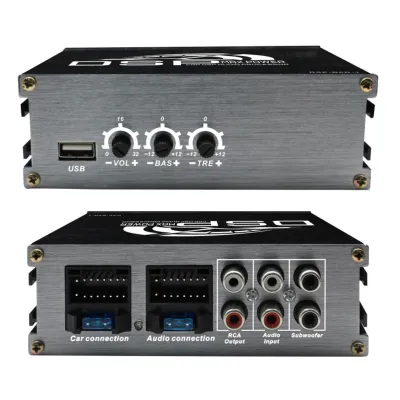


Prices are valid at publication and may change. Please refer to the product page for the latest price.
RMS, which stands for Root Mean Square, measures the continuous power that an amplifier can consistently output, or that a speaker can safely handle, over an extended period. This rating represents the real-world operating capacity of the equipment during normal use. Because music is dynamic, with constant fluctuations in volume and frequency, RMS provides a reliable baseline for how the components will perform during hours of continuous playback.
Peak power, on the other hand, refers to the absolute maximum wattage a component can produce or tolerate in extremely short bursts, often lasting only a fraction of a second. These bursts typically occur during sudden, intense audio events, such as a heavy bass drum hit or a dramatic orchestral swell. While peak power ratings look impressive on retail packaging, they do not represent sustainable performance.
Relying on peak power ratings to match your amplifier and speakers is a common mistake that frequently leads to system failure. If you pair an amplifier capable of delivering high peak power with a speaker that cannot handle that level of continuous energy, the speaker’s internal components will quickly overheat. Always ignore the peak power marketing numbers and locate the official RMS ratings on the product labels or specification sheets.
Checking Impedance (Ohms) Compatibility
In addition to wattage, you must analyze electrical impedance to ensure your amplifier and speakers can work together safely. Impedance, measured in Ohms (Ω), represents the resistance that a speaker presents to the alternating current flowing from the amplifier.

The relationship between speaker impedance and amplifier power is governed by basic electrical principles. A lower impedance rating allows more electrical current to flow from the amplifier, while a higher impedance rating restricts the flow of current. Most factory and aftermarket car speakers are rated at 4 Ohms, though some high-performance speakers and subwoofers operate at 2 Ohms or even 1 Ohm.
Amplifiers are designed to operate safely within specific impedance ranges, which are detailed in their user manuals. For example, an amplifier might be rated as “4-Ohm stable” or “2-Ohm stable” per channel. Connecting a speaker with an impedance lower than the amplifier’s minimum stable rating forces the amplifier to deliver more current than its internal circuitry can handle.
When an amplifier is forced to run a load below its rated limit, it generates excessive heat. This thermal stress can trigger the amplifier’s built-in protection circuitry, causing it to shut down repeatedly to prevent permanent damage. In severe cases, or with lower-quality equipment lacking robust protection systems, running an improper impedance load can permanently destroy the amplifier’s output transistors or damage your vehicle’s electrical wiring.
Step-by-Step Guide to Matching Power and Impedance
To ensure a safe and high-performing installation, follow this systematic process to evaluate and pair your car audio components before making any purchases.
Step 1: Gather Official Specifications
Begin by locating the official user manuals or physical product labels for both your speakers and your amplifier. Do not rely on third-party retail descriptions, which may contain typographical errors. Write down the continuous RMS power handling and the nominal impedance (in Ohms) for each speaker. For the amplifier, write down the RMS power output per channel at different impedance levels, as amplifiers output different wattages depending on the load they face.
Step 2: Compare Amplifier Output to Speaker Impedance
Look at the nominal impedance of your chosen speakers. Next, check the amplifier’s specification sheet to find its RMS power output specifically at that impedance level. For example, if you have a set of 4-Ohm speakers, you must look only at the amplifier’s rated RMS output at 4 Ohms. Do not look at the 2-Ohm rating, as this does not reflect how the amplifier will perform when connected to your specific speakers.
Step 3: Evaluate the Power Ratio
Compare the amplifier’s RMS output per channel at the correct impedance to the speaker’s RMS power handling. Ideally, the amplifier’s output should closely match the speaker’s continuous power rating. If your speakers are rated for 60W RMS at 4 Ohms, look for an amplifier that delivers between 50W and 75W RMS per channel at 4 Ohms. This ensures the speakers receive enough clean power to perform optimally without being subjected to extreme thermal stress.
Step 4: Plan Your Wiring Configuration
If you plan to connect more than one speaker to a single amplifier channel, you must calculate the combined impedance of the circuit to ensure it remains within the amplifier’s safe operating limits.
- Series Wiring: Connecting speakers in series increases the total impedance. The formula is R_total = R_1 + R_2. For example, connecting two 4-Ohm speakers in series creates an 8-Ohm load. This is safe for almost all amplifiers, but it will significantly reduce the power output.
- Parallel Wiring: Connecting speakers in parallel decreases the total impedance. The formula is 1/R_total = 1/R_1 + 1/R_2. Connecting two 4-Ohm speakers in parallel creates a 2-Ohm load. You must verify that your amplifier is explicitly rated as stable at 2 Ohms before using this configuration.
Because incorrect wiring can damage your vehicle’s electrical system, always consult the manufacturer’s wiring diagrams or seek assistance from a qualified car audio professional if you are planning complex multi-speaker configurations.
Verifying Your Setup and Avoiding Common Mistakes
Before finalizing your system design or beginning the physical installation, you must take steps to validate your component choices and identify potential risks.
One of the most dangerous mistakes in car audio installation is relying on unverified online forum advice or generic matching calculators. Every amplifier and speaker design has unique thermal and mechanical limits established by its manufacturer. Always prioritize the official documentation over generic rules of thumb.
Once your system is installed, you must remain vigilant for observable signs of improper matching. Underpowering a speaker is not inherently damaging, but it often leads to a phenomenon called clipping. When an amplifier is too weak to drive a speaker to the desired volume, the user often turns up the input gain or volume past safe limits. This forces the amplifier to clip the audio signal, transforming smooth sine waves into distorted square waves. Clipping delivers a massive amount of high-frequency thermal energy to the speaker’s voice coil, which can quickly burn it out.
Conversely, overpowering occurs when the amplifier delivers more continuous energy than the speaker’s mechanical suspension or voice coil can handle. This can cause the speaker cone to over-extend, resulting in physical tearing or a distinct clacking sound. If you hear any distortion, popping, or unusual mechanical noises, immediately lower the volume and consult a professional.
Finally, always verify your vehicle’s electrical system capacity. High-power aftermarket amplifiers draw substantial current from your vehicle’s battery and alternator. Standard factory electrical systems are typically designed to handle only the vehicle’s original electronics. If your planned amplifier setup draws more current than your alternator can supply, you may experience dimming headlights, a draining battery, or electrical system instability. For high-power installations, you may need to upgrade your vehicle’s main ground wires or consult a professional about installing a high-output alternator.
Frequently Asked Questions (FAQ)
Can I use an amplifier with higher RMS wattage than my speakers?
Yes, you can safely use an amplifier with a higher RMS wattage than your speakers, provided you set up the system correctly. Having extra amplifier power, often referred to as headroom, ensures that the amplifier does not have to work at its absolute limit, which prevents signal clipping and distortion. However, you must carefully adjust the amplifier’s input sensitivity, or gain control, to match the output voltage of your head unit. If the gain is set too high, the amplifier will deliver its full power and damage the speakers. Always refer to the speaker manufacturer’s documentation to understand their physical limits, and never operate the system at volumes that produce audible distortion.
What happens if the speaker impedance is lower than the amplifier's minimum rating?
Connecting a speaker with an impedance lower than the amplifier’s minimum rating forces the amplifier to draw excessive electrical current. This causes rapid heat buildup within the amplifier’s internal circuitry. Most modern, high-quality amplifiers will detect this unsafe condition and enter protection mode, shutting down temporarily to prevent permanent damage. However, if the amplifier lacks robust protection circuits, or if it is repeatedly forced to run under these conditions, the extreme heat will destroy the output transistors, potentially causing a short circuit or an electrical fire. If you discover an impedance mismatch, you must either rewire your speakers to increase the load resistance or select compatible components.

Community discussion
Share your experience or ask a question. Comments are reviewed before publication.