
Selecting the right portable tyre pump depends on matching the pump’s technical capabilities to your vehicle’s specific tyre dimensions and pressure requirements. A pump designed for a lightweight bicycle will struggle or overheat when tasked with inflating a large SUV tyre, while a heavy-duty compressor might over-inflate a small scooter tyre too rapidly. By understanding your tyres’ specifications and comparing pump power sources, airflow rates, and duty cycles, you can select an emergency tool that performs reliably when you are stranded on the roadside or performing routine maintenance.
How to Read Tire Specifications for Pump Matching
To choose a compatible portable tyre pump, you must first identify your vehicle’s tyre specifications. This information is typically located on the tyre placard on the driver’s door jamb, inside the fuel filler flap, or in the owner’s manual. This placard lists the manufacturer’s recommended cold inflation pressure, usually measured in PSI or kPa. Do not confuse this with the maximum pressure rating molded into the tyre’s sidewall, which indicates the absolute limit the tyre can safely hold under maximum load, not the daily operating pressure.
Next, look at the tyre size code on the sidewall, such as 215/55 R17. The first number represents the width in millimetres, the second is the aspect ratio, and the final number is the wheel rim diameter in inches. These dimensions determine the total air volume inside the tyre. A wider, taller tyre holds significantly more air than a compact car tyre, meaning a pump must displace more volume to achieve the same pressure.
Products mentioned in this guide
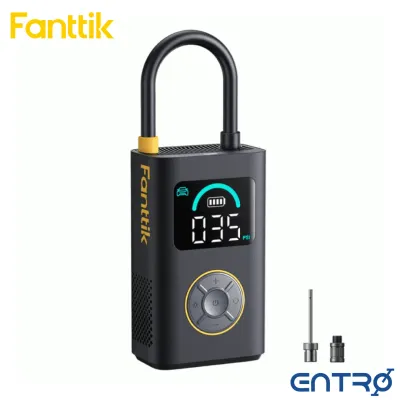
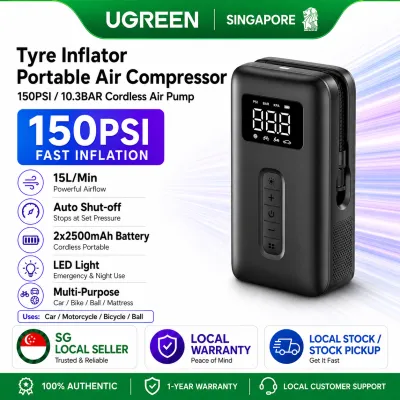
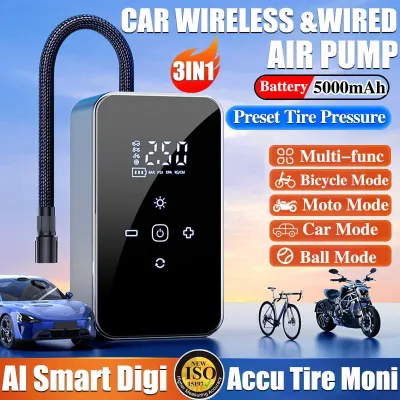
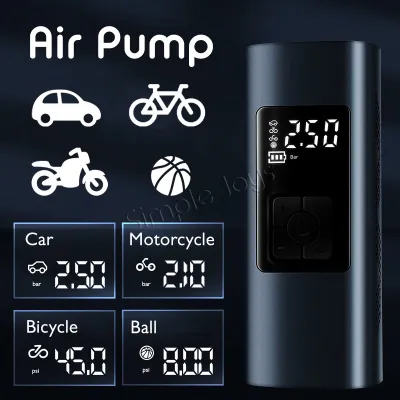
![[SG Seller]Portable Car Electric Inflator portable air pump car electric pump wireless air pump car electric pump汽车充气泵](https://img.lazcdn.com/g/p/11d7062f8a657612c19945cd3cdafcdb.jpg_400x400q80.jpg_.webp)
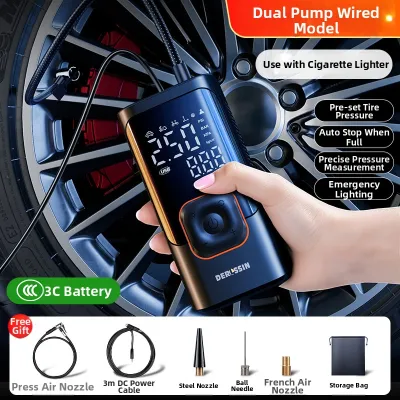
Prices are valid at publication and may change. Please refer to the product page for the latest price.
Finally, check the valve stem type. Most passenger cars, motorcycles, and utility vehicles use standard Schrader valves. However, many road and hybrid bicycles use narrower Presta valves. Ensure any pump you consider includes the correct brass or thread-on adapters to match your valve type without leaking air during operation.
Matching Pump Capacity to Your Vehicle Type
A common mistake is assuming any portable tyre pump can service any vehicle. In reality, pumps are engineered with specific trade-offs between pressure output, airflow volume, and power delivery. Matching these parameters to your vehicle class ensures efficient inflation and prevents premature equipment failure.

Sedans, Hatchbacks, and Compact SUVs
For standard passenger cars, tyres typically require pressures between 30 and 35 PSI. For these vehicles, you can choose between 12V DC plug-in pumps that draw power from the car’s accessory socket and cordless, battery-operated models. Cordless pumps offer excellent convenience as they eliminate tangled cords, but you must ensure the internal lithium-ion battery is kept charged.
When evaluating these pumps, check the airflow rate, often measured in litres per minute (L/min). A rate of 25 to 30 L/min is generally sufficient for standard passenger tyres, allowing you to top up a tyre in a few minutes. Additionally, verify that the physical hose length and power cord combined can comfortably reach all four wheels from the power source. In mid-sized sedans or compact SUVs, a short cord can strain the connection, potentially damaging the vehicle’s accessory port or the pump’s wiring.
Large SUVs, Pickup Trucks, and Off-Road Vehicles
Larger vehicles with oversized or off-road tyres present a different challenge. These tyres hold a massive volume of air, and some heavy-duty light truck tyres require operating pressures exceeding 50 PSI. Standard 12V accessory plug-in pumps are often inadequate here; they may draw too much current and blow the vehicle’s internal fuses, or they may run continuously for so long that they overheat.
Instead, look for high-capacity 12V compressors that connect directly to the vehicle’s battery terminals using heavy-duty alligator clamps. These units can safely draw higher current to deliver airflow rates of 50 L/min or more. It is also critical to check the pump’s duty cycle—the amount of time it can run continuously before needing to cool down. A duty cycle of at least 33% (e.g., 10 minutes running, 20 minutes cooling) or a built-in thermal overload protection switch is essential to prevent the motor from burning out while inflating large-volume tyres.
Motorcycles, Scooters, and Bicycles
For two-wheeled vehicles, portability and precision are the primary considerations. Motorcycle and scooter riders have limited storage space, making compact, lightweight cordless pumps the ideal choice. These units can easily fit into under-seat compartments, saddlebags, or even a riding backpack.
While bicycle tyres require much less volume than car tyres, road bikes often require very high pressures, sometimes up to 100 PSI or more. Ensure the portable pump is rated to reach these high pressures without stalling. Because the air volume in a motorcycle or bicycle tyre is relatively small, even a brief burst of air can cause a large jump in pressure. Therefore, prioritize pumps with highly accurate digital pressure gauges and fine-tuning controls to avoid accidental over-inflation, which can compromise handling or cause a tyre blowout.
Key Features to Evaluate Before Purchasing
Beyond basic power and volume compatibility, several usability features dictate how practical a portable tyre pump is in real-world scenarios. One of the most valuable features is a digital auto-shutoff function. This allows you to preset your desired pressure; the pump runs until it reaches that target and then automatically stops, preventing over-inflation and allowing you to attend to other tasks. Manual analog dial gauges, while durable, can be difficult to read accurately in low light and require constant monitoring.
Physical design and ergonomics also play a major role. Look for pumps with integrated hose storage to keep the air line protected from kinks and dirt. A compact footprint is easier to pack alongside your spare tyre or emergency kit. If you ever need to inflate a tyre at night on a dark roadside or in an unlit multi-storey car park, a built-in LED work light is invaluable for locating the valve stem and reading tyre markings safely.
For cordless models, pay close attention to the battery specifications. Look for units with clear battery life indicators and modern charging interfaces like USB-C, which allow you to recharge the pump using your car’s USB ports or a home charger. Some cordless pumps also double as external power banks, allowing you to charge your mobile phone during an emergency. While basic models can be found for under S$50, investing in a unit with a robust warranty and readily available replacement parts is highly recommended, as these components are subject to wear and tear over time.
Safe Operation and Equipment Care
Operating a portable tyre pump safely requires adhering to its design limits. Always consult the manufacturer’s manual for the specified duty cycle and cooling times. Running a small pump continuously beyond its rated limit can cause extreme heat buildup, melting internal seals or damaging the motor. If the pump housing feels hot to the touch, turn it off and let it cool completely before resuming.
Avoid using high-volume automotive pumps on low-volume tyres, such as those on bicycles or small scooters, unless the pump has an adjustable flow rate or explicit settings for small tyres. The rapid airflow can inflate a small tyre faster than the pressure sensor can react, leading to sudden over-inflation or tyre failure.
Proper storage is critical for maintaining the pump’s longevity, especially in tropical climates where temperatures inside a parked car’s boot can rise significantly. Extreme heat can degrade the lithium-ion batteries in cordless pumps and cause rubber hoses to become brittle. Store the pump in a protective case in a dry, temperature-stable part of the vehicle, and periodically inspect the power cords and hoses for cracks or fraying. If the pump ever emits unusual grinding noises, excessive vibration, or a burning smell during use, stop operation immediately. Do not attempt to disassemble the compressor yourself; consult the manufacturer’s instructions or a qualified professional for repair or replacement.
Frequently Asked Questions (FAQ)
Can I use a standard car tyre pump on a high-pressure road bicycle tire?
Yes, but only if the pump is rated for high pressures (often 100 PSI or more) and you exercise extreme caution. Car tyre pumps are designed to move a high volume of air at moderate pressures. Because a road bicycle tyre has a very small volume, a high-volume pump can inflate it almost instantly, risking a sudden blowout. Always check the pump’s minimum pressure adjustment increments, use a compatible Presta valve adapter, and monitor the pressure gauge constantly during the process.
How do I know if my cordless pump has enough battery to inflate a completely flat tire?
You should refer to the manufacturer’s specifications, which typically state the battery capacity and estimate how many standard tyres the unit can inflate from flat on a single charge. However, these estimates are based on ideal conditions. To ensure emergency readiness, never store a cordless pump with a low battery. Recharge the unit after every use, and perform a quick battery level check every few months to account for natural self-discharge over time.
Community discussion
Share your experience or ask a question. Comments are reviewed before publication.