
Getting thin, runny suds that slide off your car before they can loosen any dirt is incredibly frustrating when you expect a thick, shaving-cream-like blanket of car wash foam. Achieving thick, clinging car wash foam requires balancing your soap-to-water dilution ratio, ensuring your pressure washer meets the minimum flow and pressure specifications of your foam cannon, keeping the internal mesh filter free of mineral deposits, and applying the mixture using proper distance and overlapping techniques. By systematically adjusting these variables, you can transform a watery rinse into a dense, dirt-encapsulating lather that safely lubricates your vehicle’s paint.
Understanding the limits of your specific equipment is the first step toward optimization. While both foam cannons and foam guns are designed to distribute car wash foam, they operate on entirely different mechanical principles. A foam cannon relies on the high-velocity water stream of a pressure washer to draw soap and mix it with air, whereas a foam gun connects directly to a standard garden hose, relying on municipal water pressure. Recognizing which system you own determines the maximum thickness you can realistically achieve and guides your troubleshooting process.
Why Is My Foam Cannon or Gun Producing Thin, Watery Foam?
Thin, watery foam usually occurs because of an imbalance in the water-to-soap ratio, insufficient water pressure or flow rate, or a partially clogged internal aeration mesh. When these elements are out of alignment, the device cannot draw enough soap concentrate or mix it with enough air to create a stable, dense lather.
Products mentioned in this guide
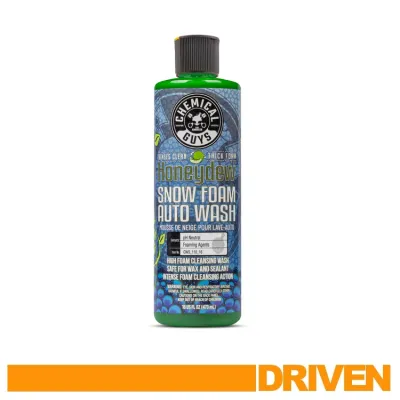
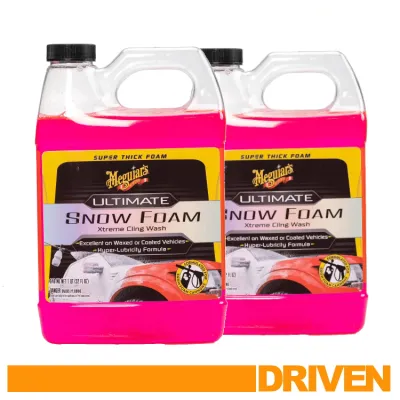
32 Lazada user ratings
Leaves a refreshing scent, pH neutral formula for coated finishes, Engineered for waxed or sealed finishes, Cleans without stripping protect…Read full reviewShow less
Leaves a refreshing scent, pH neutral formula for coated finishes, Engineered for waxed or sealed finishes, Cleans without stripping protection, 💪Effectiveness:Outstanding 👌Ease of Use:Acceptable Product received. Previously ordered a different type of shampoo for car.. Decided to try this. Must be aware of the ltrs. Paid so much for a 946ml of shampoo. Previous product was robust. Hopefully it works
Received the items but the free gift is missing. Only receive an empty box. Disappointed. Might as well dont give out free gift. Should have…Read full reviewShow less
Received the items but the free gift is missing. Only receive an empty box. Disappointed. Might as well dont give out free gift. Should have checked before ship out.
Very good and comes nicely packed. The foam is thick and smells good as well. Easy to rinse off and wash.
helping hubby to get this product. fast delivery. removes dirt easily.
the items are well packed and delivered within the next day.
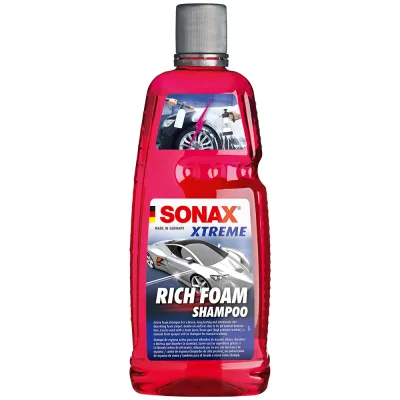
186 Lazada user ratings
Fast delivery and well packed! No leakage or cracks. Receive free gift also! Highly recommended!
Looks and smells good. There is a damaged bottom, thankfully without leaks.
Fast delivery… Easy to use and rinse off, Leaves a shiny and glossy finish,
delivery was fast and bought cheap during sales. value for money
Ideal for regular car maintenance, Easy to use and rinse off,
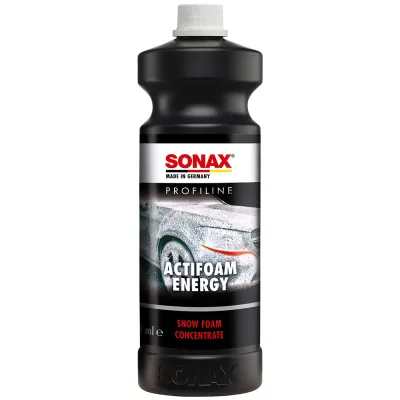
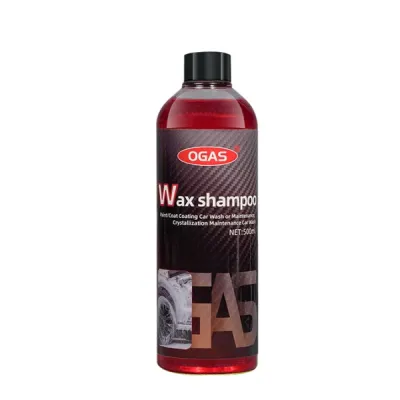
114 Lazada user ratings
High-quality product for professional results, Convenient sizes for different needs, Excellent foam for effective cleaning, Gentle on all ca…Read full reviewShow less
High-quality product for professional results, Convenient sizes for different needs, Excellent foam for effective cleaning, Gentle on all car surfaces, Safe for matte and gloss finishes, Leaves a streak-free and shiny finish, Versatile shampoo for multiple uses,
tried today with IK foamer. Foam pretty well. Also used it for wash, the foam stays aft. finish soaping the entire car. Good product. will r…Read full reviewShow less
tried today with IK foamer. Foam pretty well. Also used it for wash, the foam stays aft. finish soaping the entire car. Good product. will recommend to my family members n friends.
Delivery was exceptionally fast. Order placed and received the next 2 days. Item packed in box with bubble wrap & bottle in good condition d…Read full reviewShow less
Delivery was exceptionally fast. Order placed and received the next 2 days. Item packed in box with bubble wrap & bottle in good condition during shipment/delivery.
good foam if you use a good foam cannon. smells like red bull. needs to be diluted. you will still need to scrub dirt off its not some mirac…Read full reviewShow less
good foam if you use a good foam cannon. smells like red bull. needs to be diluted. you will still need to scrub dirt off its not some miracle no contact wash.
delivery took 5 days. product foams well and smells good. will buy again.
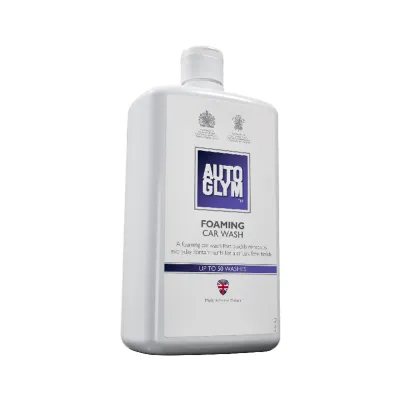
39 Lazada user ratings
received in good order. all bubble wrapped and in a box. look forward to washing my car soon. used to use their ceramic wash which was great…Read full reviewShow less
received in good order. all bubble wrapped and in a box. look forward to washing my car soon. used to use their ceramic wash which was great until I realize my car is not ceramic coated😅. so try this one after consulting the seller. am sure it will do a good job too.
Quick delivery, well packed in bubble and reasonably priced. Free hand sanitizer.
Yet to try. If if it a genuine Autoglym product I m sure it will perform well.
Repeated purchase. Not tried the cloth yet. The shampoo is good.
Very good shampoo. Excellent deal on Lazada. Will buy again.
Prices are valid at publication and may change. Please refer to the product page for the latest price.
To troubleshoot your setup, you must first distinguish between the inherent capabilities of pressure washer foam cannons and garden hose foam guns. A foam cannon utilizes high-pressure water to force the soap mixture through a fine metal mesh, creating a highly aerated, thick foam that clings to vertical surfaces for several minutes. In contrast, a garden hose foam gun operates under much lower pressure, resulting in larger bubbles that pop quickly and run off the vehicle rapidly. If you are using a garden hose foam gun, expecting the ultra-thick, shaving-cream consistency of a pressure washer setup is unrealistic due to these physical limitations.
Observable signs of poor foam quality include rapid dripping, large and visible bubbles, and a complete lack of clinging to vertical panels. When the foam is too thin, it fails to dwell on the paint, meaning it cannot safely loosen and encapsulate abrasive dirt particles before you begin your physical wash. This increases the risk of swirl marks and fine scratches during the hand-wash phase.
Most foam issues fall into four primary troubleshooting categories: soap concentration, water pressure and flow, equipment condition, and application technique. By isolating each variable one at a time, you can identify the exact bottleneck in your car wash routine and make the necessary adjustments to restore a thick, protective lather.
How Do You Adjust the Dilution Ratio for Thicker Car Wash Foam?
You adjust the dilution ratio by following the soap manufacturer’s recommended ratio for foam devices, measuring the soap and water precisely in the reservoir bottle, and adjusting for local water hardness. Guessing the measurements often leads to an overly diluted mixture that cannot hold its structure or an overly concentrated mix that wastes product and leaves a sticky residue.

Always begin by reading the soap manufacturer’s instructions on the product label, as different formulations require specific dilution ratios. Some highly concentrated soaps require only 30 to 60 milliliters of product per liter of water, while others may require more. Locate the maximum fill lines on your foam cannon or gun’s reservoir bottle to ensure you do not overfill the container, which can restrict the air space needed for proper mixing when you shake the bottle.
Before connecting the reservoir bottle to the water source, perform a quick visual check of the mixture thickness. Gently swirl the bottle to ensure the soap is fully dissolved and integrated with the water; a poorly mixed solution will settle at the bottom, resulting in watery foam at the start of your wash followed by a thick, wasteful slug of soap at the end. The mixed liquid should appear uniform and slightly viscous, indicating that the soap is ready to be drawn up through the suction tube.
Local water conditions play a significant role in how well your car wash foam lathers. Hard water contains high levels of dissolved minerals like calcium and magnesium, which chemically interfere with the surfactants in the soap, reducing their ability to produce a thick lather. If you live in an area with hard water, you may need to slightly increase the soap concentration beyond the standard recommendation, or use a dedicated water softener system, to achieve the same foam thickness as someone with soft water.
Does Your Pressure Washer Provide Enough PSI and GPM for Thick Foam?
Your pressure washer must meet or exceed the minimum pressure (PSI) and flow rate (GPM) ratings printed on your foam cannon’s label to generate thick foam. If your machine does not deliver enough water volume or pressure, the venturi effect inside the foam cannon will fail to draw the soap mixture upward from the bottle.
To verify compatibility, check your pressure washer’s specifications against the requirements of your foam cannon. Most standard foam cannons require a minimum pressure of 1,100 PSI (pounds per square inch) and a flow rate of 1.4 GPM (gallons per minute) to function correctly, with performance often scaling up between 1,500 and 2,200 PSI. If either of these metrics falls below the minimum threshold, the aeration process will be severely compromised, resulting in a weak, watery spray.
Standard home pressure washer setups, particularly compact electric models commonly used in residential areas in Singapore, often operate near the lower limit of these flow rate requirements. Additionally, standard garden hose connections must supply enough water volume to feed the pressure washer without causing cavitation or drop-offs in pressure. Ensure your source faucet is fully open and that your garden hose is free of kinks or restrictions that could limit the water flow to your machine.
If your equipment allows, you can adjust the pressure washer’s unloader valve or nozzle settings to optimize flow, but this must be done strictly according to the user manual to prevent damaging the pump. For lower-GPM pressure washers, a highly effective equipment-specific adjustment is to replace the foam cannon’s internal orifice nozzle. Swapping a standard 1.25-millimeter orifice for a smaller 1.1-millimeter orifice restricts the water flow slightly inside the cannon, increasing the velocity and suction power to produce much thicker foam even with a lower-output pressure washer.
How Can You Clear Clogged Filters and Nozzles in Your Foam Setup?
You can clear clogged filters and nozzles by safely depressurizing the system, disassembling the foam cannon head, and soaking the internal mesh tablet and orifice in a mild descaling solution or warm water. Over time, dried soap residue and mineral deposits from hard water accumulate inside these tiny passages, restricting water flow and preventing proper aeration.
Before performing any maintenance or inspection, always turn off the pressure washer, shut off the water source, and pull the trigger on your spray gun to release all trapped pressure. Disconnect the foam cannon from the quick-connect fitting to ensure you can work on the device safely without any risk of accidental high-pressure water discharge.
To locate the internal mesh filter, refer to your manufacturer’s diagram to unscrew the front barrel or housing of the foam cannon. Once disassembled, you will find a small, cylindrical metal mesh screen (often called a foam tablet) that is responsible for aerating the soap mixture. Hold this filter up to a light source to visually inspect it; if the mesh appears clogged with white mineral scale, dirt, or congealed soap, it must be cleaned or replaced.
Clean the mesh filter and the brass orifice nozzle by soaking them in warm water or a safe, label-authorized descaling solution for several hours to dissolve the deposits. You can also use a fine needle or safety pin to gently clear any debris from the tiny center hole of the orifice nozzle, taking care not to scratch or enlarge the opening. If the mesh filter is heavily corroded or completely packed with debris that cannot be washed away, replace it with a fresh manufacturer-approved filter to restore original performance.
What Technique Mistakes Prevent Thick, Clinging Foam?
Common technique mistakes include spraying from too far away, applying foam to hot body panels in direct sunlight, and using an incorrect spraying pattern that causes the foam to slide off prematurely. Correcting these simple application errors ensures that the foam maintains its structure and clings to the vehicle long enough to do its job.
When applying the foam, maintain an optimal distance of approximately 1 to 1.5 meters from the vehicle’s surface, holding the nozzle at a slight downward angle. If you stand too far back, the foam will disperse in the air and lose its density before hitting the paint; if you stand too close, the high-pressure stream will blast the foam off the surface rather than allowing it to lay flat and cling. Adjust the foam cannon’s spray pattern nozzle to create a wide, fan-like spray for even, overlapping coverage.
Applying car wash foam to a hot vehicle surface or in direct sunlight is a major cause of premature drying and thinning. The heat from the metal panels causes the water in the foam to evaporate rapidly, breaking down the soapy bubbles and leaving behind dried soap spots that can be difficult to remove. Always wash your vehicle in a shaded area, and ensure the panels are cool to the touch by pre-rinsing the car with cool water if necessary.
To maximize dwell time, apply the foam in a systematic pattern, starting from the bottom of the vehicle and working your way up to the top. This bottom-up approach allows the thickest foam to cling to the dirtiest lower panels of the car first, preventing the soap from sliding off too quickly. Observe the foam’s dwell time carefully, allowing it to sit on the paint for the duration recommended by the soap manufacturer, but always rinse it off thoroughly before it has a chance to dry.
Community discussion
Share your experience or ask a question. Comments are reviewed before publication.