
Finding the correct transmission oil specification for your vehicle is a critical maintenance step that directly impacts the longevity and performance of your gearbox. Unlike engine oil, which has relatively broad viscosity standards, transmission fluid is highly specialized and formulated for specific mechanical tolerances, clutch materials, and operating pressures. To identify the exact specification your vehicle requires, you must consult official manufacturer documentation, inspect physical markers on the vehicle, or cross-reference your Vehicle Identification Number (VIN) with authorized databases. Relying on generic terms or guessing the viscosity can lead to severe mechanical damage.
Why Using the Exact Transmission Oil Specification Matters
Modern transmissions are highly complex systems engineered with precise hydraulic, thermal, and frictional requirements. Automatic transmissions, manual gearboxes, dual-clutch transmissions (DCTs), and continuously variable transmissions (CVTs) operate on fundamentally different mechanical principles. Consequently, the transmission oil designed for each type contains unique chemical additives, friction modifiers, and viscosity profiles tailored to those specific internal components. Using a fluid with the wrong friction coefficient can cause clutches to slip or grab aggressively, leading to rough shifts and accelerated wear.
Thermal management is another critical role of transmission fluid. The correct specification ensures the oil maintains its protective film at high operating temperatures while remaining fluid enough to flow during cold starts. If the viscosity is too low, the fluid cannot maintain adequate pressure in hydraulic control circuits, leading to delayed gear engagement and overheating. Conversely, excessively high viscosity increases internal drag, reducing fuel efficiency and causing sluggish performance.
Products mentioned in this guide
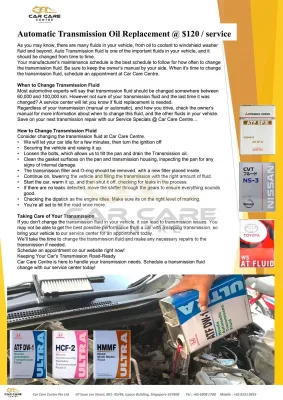
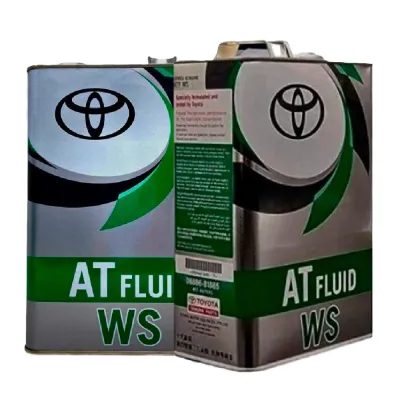
![🇸🇬 MOTUL High-Torque DCTF Dual Clutch Transmission Fluid Synthetic Gearbox Oil [1L]](https://img.lazcdn.com/g/p/2805b3bff2f4d685d9f7f3fdd3947349.png_400x400q80.png_.webp)
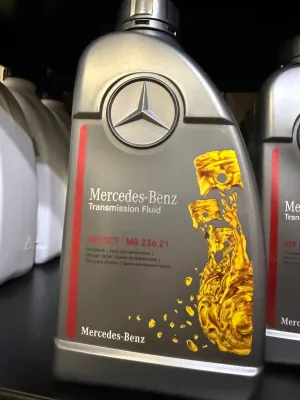
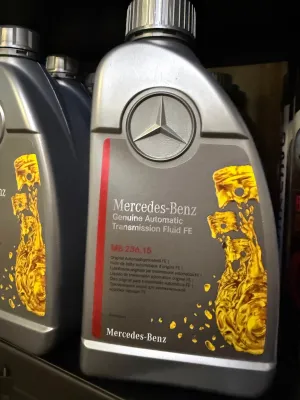
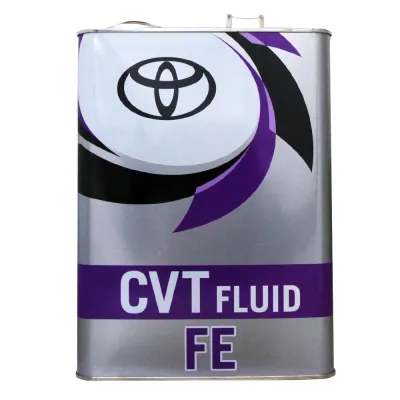
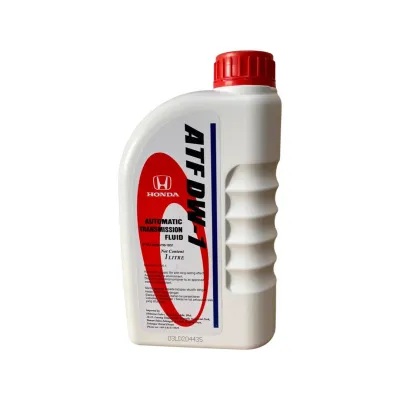
Prices are valid at publication and may change. Please refer to the product page for the latest price.
Beyond immediate mechanical risks, using an unapproved transmission fluid can have severe financial consequences. Most vehicle manufacturers explicitly state in their warranty documentation that damage resulting from the use of non-compliant fluids is not covered. If a transmission failure occurs and laboratory analysis reveals the fluid does not meet the factory specification, you may face a complete voiding of your powertrain warranty, leaving you responsible for the entire cost of a replacement unit.
Step 1: Check the Owner’s Manual and Manufacturer Resources
The most reliable starting point for identifying the correct transmission oil specification is your vehicle’s official documentation. Locate the physical owner’s manual in your glove compartment or download a digital copy from the manufacturer’s official website. Navigate to the index and look for sections labeled “Fluids and Lubricants,” “Capacities and Specifications,” or “Scheduled Maintenance.” Within these pages, you will find a detailed table listing the approved fluid specification code, such as a proprietary manufacturer standard or an international industry classification, alongside the required refill volume.

If you do not have access to the physical manual, or if your vehicle has multiple transmission options that make the manual ambiguous, you can use your Vehicle Identification Number (VIN) to retrieve the exact build specifications. The VIN is a unique 17-character code located on the driver’s side dashboard near the windshield or on the door jamb sticker. Many manufacturer owner portals allow you to enter this number to access digital manuals and specific fluid recommendations tailored precisely to your vehicle’s production date and factory-installed gearbox.
When digital resources are unavailable or unclear, contacting an authorized dealership’s service department is the safest course of action. Provide the service advisor with your VIN, and they can look up the exact factory fill specification in their internal database. This step is particularly important for imported vehicles or models produced during transitional years when manufacturers may have updated the transmission design mid-cycle without updating the general printed literature.
Step 2: Inspect the Dipstick, Fill Cap, or Existing Fluid Label
When official documentation is missing or if you want to double-check your findings, physical inspection of the vehicle can provide valuable clues. Open the hood and locate the transmission dipstick, if your vehicle is equipped with one. Many manufacturers stamp or print the required fluid specification directly onto the plastic handle or the metal blade of the dipstick itself. Similarly, on vehicles without a dipstick, the transmission fill plug or the surrounding casing may feature an engraved code, a colored tag, or a warning label indicating the exact fluid type required.
Reviewing your vehicle’s service history is another practical way to verify the correct specification. Examine previous maintenance receipts, dealership service records, or invoices from independent workshops. These documents typically list the exact part numbers or fluid specifications used during past services. If you have leftover fluid bottles from a previous oil change, check the back label for the specification codes to confirm what is currently circulating in your transmission.
However, you must exercise caution if you purchased the vehicle used or if it was previously serviced by an unverified third party. Do not automatically assume that the fluid currently in the transmission is correct. If a previous owner or an inexperienced technician added an incorrect or universal fluid, relying on a sample of the existing fluid or matching its color can perpetuate a damaging mistake. Always cross-reference any physical findings with official manufacturer specifications before adding or replacing fluid.
Step 3: Verify the Specification Against Aftermarket Options
Once you have identified the factory-recommended specification, you can begin shopping for replacement fluids. When evaluating aftermarket options, look for the exact manufacturer approval code or industry standard name on the product label. This code must match the specification in your manual letter-for-letter. Do not rely solely on the brand name of the fluid or generic marketing terms like “suitable for most vehicles.” A fluid is only safe to use if the manufacturer of that fluid explicitly lists your vehicle’s required specification as an approved standard on the packaging.
Be highly skeptical of “universal,” “multi-vehicle,” or “fits all” marketing claims. While some high-quality multi-vehicle fluids are genuinely formulated to meet several distinct specifications, others may compromise on viscosity or friction characteristics to cover a wider range of gearboxes. Always turn the bottle over and read the fine print on the back label. If your specific factory standard is not explicitly listed under the approved specifications list, do not use the product, as even minor deviations can impair transmission performance.
To ensure complete compatibility, visit the fluid manufacturer’s official website and consult their online product finder or technical data sheets. These digital tools allow you to input your vehicle’s make, model, year, and engine type to confirm whether their aftermarket fluid is a certified match. Technical data sheets provide detailed viscosity and performance metrics, allowing you to verify that the aftermarket fluid aligns perfectly with the operational parameters established by your vehicle’s original manufacturer.
When to Stop and Consult a Professional
While identifying transmission oil specifications is often straightforward, certain scenarios require you to halt the process and seek professional assistance. If your vehicle has undergone non-factory transmission modifications, aftermarket rebuilds, or gearbox swaps, the original owner’s manual specifications may no longer apply. In these cases, you must contact the builder or the manufacturer of the aftermarket components to determine the correct fluid requirements.
You should also stop if you encounter conflicting information, such as a discrepancy between the owner’s manual specification and the markings on the physical dipstick or fill cap. Attempting to resolve such conflicts without professional diagnostic tools can lead to catastrophic transmission failure. If you cannot find any reliable specification information through official manuals, online portals, or dealership inquiries, consult a qualified mechanic who can perform a physical inspection and safely identify the correct fluid for your specific drivetrain.
Frequently Asked Questions (FAQ)
Can I mix two different transmission oil specifications if they look the same?
No, you should never mix different transmission oil specifications simply because they share a similar color or appearance. Transmission fluids are dyed various colors, such as red, blue, green, or amber, primarily for leak detection and identification, but color does not indicate chemical compatibility. Different specifications utilize distinct additive packages, friction modifiers, and base oil viscosities. Mixing them can destabilize the fluid’s chemical structure, leading to foaming, accelerated oxidation, clutch slippage, and eventual transmission failure.
Is it safe to switch from mineral to synthetic transmission oil?
Switching from a mineral-based transmission oil to a synthetic alternative is only safe if the synthetic fluid explicitly meets or exceeds the exact manufacturer specification required for your vehicle. Synthetic fluids often offer superior thermal stability and resistance to breakdown, but they must still match the precise viscosity and frictional characteristics of the original factory fill. Before making the switch, consult your owner’s manual or contact the manufacturer, especially if you drive an older or classic vehicle, as certain older seal materials may not be compatible with modern synthetic formulations.
Community discussion
Share your experience or ask a question. Comments are reviewed before publication.