
Finding a safe, compliant e-bike helmet under S$50 in Singapore is entirely possible, provided you know exactly what safety standards to look for and which features you must compromise on. At this budget tier, your primary focus must be on verified impact protection rather than high-tech add-ons like integrated Bluetooth speakers, smart turn signals, or advanced rotational force mitigation systems. A budget-friendly helmet can protect your head just as effectively as a premium model during a linear impact, but only if it carries legitimate safety certifications and fits your head correctly.
Navigating the budget market in Singapore requires a cautious approach. With numerous uncertified helmets available on online marketplaces, riders must learn to distinguish between genuine protective gear and cheap novelty hats. By focusing on certified construction, proper fitment, and reputable retail channels, you can secure a reliable helmet that keeps you safe and legally compliant on Singapore’s roads and cycling paths without exceeding your S$50 budget.
Understanding the S$50 Budget for E-Bike Helmets
When shopping with a strict S$50 limit, understanding what goes into helmet manufacturing helps set realistic expectations. Most budget-friendly helmets utilize an in-mold construction consisting of an expanded polystyrene (EPS) foam liner bonded to a thin polycarbonate outer shell. The EPS foam is the critical component responsible for absorbing and dispersing impact energy during a fall, while the outer shell protects the foam from daily abrasions and helps the helmet slide across the pavement to reduce neck strain.
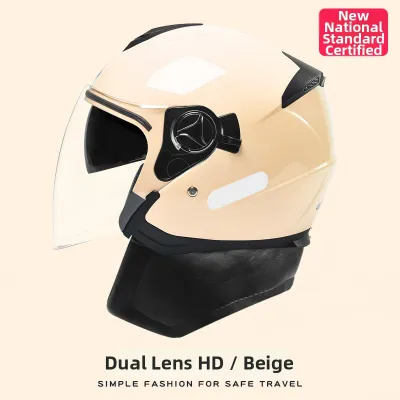
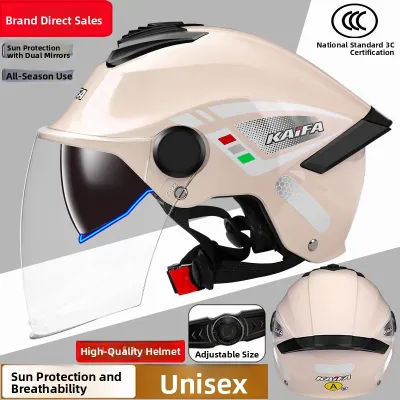
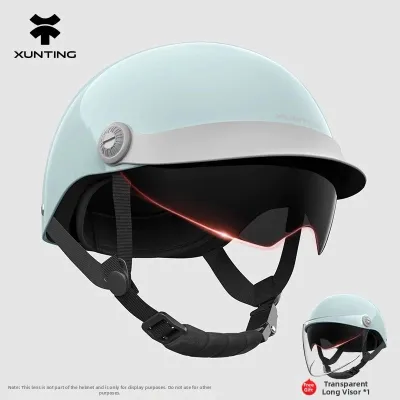
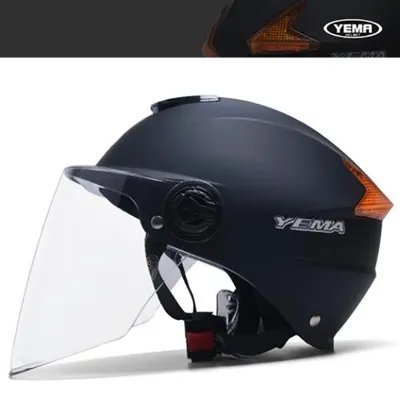
Products mentioned in this guide
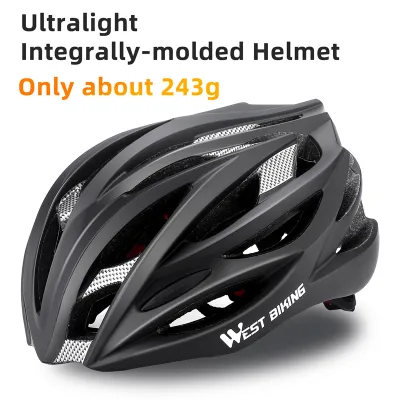
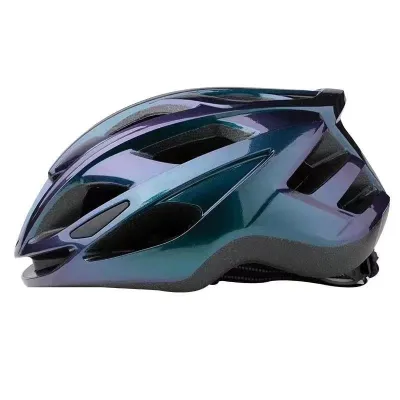
![[SG Seller] EKOI Bicycle Helmet LEGENDE White Helmet Cycling Helmet L/XL](https://img.lazcdn.com/g/p/4a18df3cc3f2d62cc16f304039665f8c.jpg_400x400q80.jpg_.webp)
Prices are valid at publication and may change. Please refer to the product page for the latest price.
At this price point, you will primarily find standard in-mold helmets. In-mold construction fuses the outer shell and inner foam together in a single process, resulting in a lighter and more durable helmet. Out-mold helmets, where the shell is taped or glued to the foam, are sometimes found in ultra-budget categories but are generally less durable over time. While premium helmets costing upwards of S$150 often feature advanced rotational impact protection systems like MIPS (Multi-directional Impact Protection System), these technologies are rarely present in the sub-S$50 category.
This lack of advanced rotational protection does not mean a S$50 helmet is unsafe. Legitimate budget helmets are fully capable of managing direct, linear impacts, which make up a significant portion of bicycle-related head injuries. The key is avoiding “novelty” helmets—often styled like retro motorcycle caps or skate helmets—that use soft, non-impact-rated foam or lack a rigid EPS liner entirely. These novelty items offer virtually zero protection in a crash and fail to meet local safety requirements.
Non-Negotiable Safety and Compliance Checks
In Singapore, riding a Power-Assisted Bicycle (PAB), commonly known as an e-bike, comes with strict regulatory oversight. Under the Road Traffic Act, e-bike riders and their pillion passengers must wear a protective helmet that meets recognized safety standards. When evaluating a budget helmet, your very first step must be inspecting the interior liner for official certification labels.

The most common and widely accepted safety standard for bicycle and e-bike helmets in Singapore is the European standard EN 1078. Other highly reputable international standards include the US Consumer Product Safety Commission (CPSC 1203) standard and the Australian/New Zealand standard AS/NZS 2063. A compliant helmet will feature a permanent sticker or printed mark inside the shell indicating it conforms to one of these standards. If a helmet lacks these markings, or if the seller only claims the helmet is “tested” without referencing a specific standard, you should immediately disqualify it.
Be highly vigilant against counterfeit or misleading certification labels. Some manufacturers print fake CE or EN 1078 marks on their products. To verify authenticity, check that the label includes the manufacturer’s name, the model designation, the production date, and the specific standard number. The sticker should be securely adhered to the EPS foam, not easily peelable or loosely taped.
Additionally, ensure the helmet is specifically designed and certified for cycling or e-biking. Do not attempt to repurpose a construction hard hat, a climbing helmet, or a standard skateboarding helmet unless it explicitly carries a dual certification for cycling. Construction helmets are designed to protect against falling objects from above, not the lateral and rotational impacts associated with falling from a moving e-bike.
What to Compromise on (and What to Avoid) at This Price
Staying under a S$50 budget requires making sensible compromises. You must accept that a budget helmet will not feature premium creature comforts, but these trade-offs do not compromise your physical safety. For instance, budget helmets typically feature simpler dial-retention systems at the back of the head. While these plastic dials might feel slightly stiffer or less refined than those on a S$200 helmet, they are perfectly adequate for securing the helmet in place.
Ventilation is another area where budget helmets differ from premium models. High-end helmets undergo extensive wind-tunnel testing to optimize airflow through complex internal channels, keeping your head cool in Singapore’s humid climate. A S$50 helmet will still have ventilation ports, but they may be fewer in number and less aerodynamically optimized. While you might feel warmer during long afternoon rides, the structural integrity of the helmet remains uncompromised. You will also find standard, slightly thicker fabric padding inside the helmet rather than high-tech moisture-wicking or antibacterial fabrics. These pads are easily removable and washable, which is essential for maintaining hygiene in tropical weather.
However, there are several critical red flags you must absolutely avoid, regardless of how attractive the price tag is. Never purchase ultra-lightweight “folding” or collapsible helmets that lack a continuous, rigid EPS foam liner. Many cheap folding helmets sold online use segmented designs that can easily buckle under the force of an impact. Furthermore, avoid unbranded gear that lacks clear manufacturer contact details, as there is no accountability if the product fails.
Finally, never purchase a second-hand helmet. Even if a used helmet looks pristine on the outside, it may have sustained internal micro-fractures in the EPS foam from a previous drop or crash. EPS foam is designed to deform permanently upon impact to absorb energy; once deformed, it cannot protect you a second time. Exposure to high heat, sweat, and UV rays also degrades helmet materials over time, making a used budget helmet a highly risky investment.
How to Verify Fit and Comfort Before Buying
Even the most highly certified helmet will fail to protect you if it does not fit your head correctly. A loose helmet can slide backward or off your head entirely during a fall, leaving your forehead or temples exposed to impact. Before spending your money, take the time to measure your head and verify the fitment.
To find your correct helmet size, use a flexible measuring tape to measure the circumference of your head. Wrap the tape around your head, positioning it about two centimeters (roughly two finger-widths) above your eyebrows and just above your ears. Take this measurement in centimeters and compare it directly to the manufacturer’s specific size chart. Do not rely on generic “Small,” “Medium,” or “Large” designations, as sizing standards vary significantly between different brands.
Once you have the helmet, perform a physical fitment check. Position the helmet level on your head; it should sit low enough to protect your forehead, resting about two finger-widths above your eyebrows. It should not tilt backward to expose your forehead or forward to block your vision. Adjust the side straps so they form a clean “Y” shape just below your earlobes. The chin strap should be fastened snugly, allowing only one or two fingers to fit between the strap and your throat.
Next, test the rear retention dial. Tighten the dial until the helmet feels snug but comfortable. Shake your head gently from side to side and front to back with the chin strap unbuckled; the helmet should remain securely in place without shifting dramatically or falling off. If you experience painful pressure points on the sides or front of your head, the helmet shape may not be compatible with your head shape, and you should try a different model.
Where to Shop and How to Avoid Counterfeits
To ensure you are buying a genuine, certified helmet that fits within your S$50 budget, you must choose your shopping channels carefully. The safest option is to visit established local bike shops in Singapore. Many neighborhood bicycle shops stock entry-level, certified helmets from reputable global brands that fit right at or just under the S$50 mark. Shopping in person allows you to try on different models, verify the fit, and inspect the internal safety stickers firsthand.
If you prefer shopping online, stick to official brand storefronts or authorized distributors on major ecommerce platforms. Avoid buying from unverified third-party sellers who offer popular brand-name helmets at suspiciously low prices, as these are highly likely to be counterfeit factory seconds or cheap imitations that do not use real EPS foam. Look for sellers with high ratings, positive customer reviews that include photos of the internal safety labels, and clear return policies.
When ordering online, always factor in potential shipping costs, as a S$40 helmet with S$12 shipping will push you over your S$50 budget. Additionally, verify that the seller offers a straightforward return or exchange policy. Because head shapes vary widely, you may need to return the helmet if it creates uncomfortable pressure points during your initial home fitting.
Frequently Asked Questions (FAQ)
Can I use a standard bicycle helmet for an e-bike?
Yes, in Singapore, a standard bicycle helmet is legally and practically sufficient for riding a standard Power-Assisted Bicycle (PAB). Because PABs are legally capped at a maximum motor-assistance speed of 25 km/h, the impact forces in a typical accident are comparable to those of conventional cycling. Therefore, a helmet certified to the EN 1078 or CPSC standard provides adequate protection. However, if you are riding a high-speed electric vehicle or operating in environments with higher speed limits, you may want to look for helmets carrying the Dutch NTA 8776 standard, which is specifically designed for speed-pedelecs and offers increased temporal and occipital coverage for higher-speed impacts.
How often should I replace a budget e-bike helmet?
As a general rule, helmet manufacturers recommend replacing your helmet every three to five years, even if it has never been involved in an accident. Over time, exposure to Singapore’s intense UV rays, high humidity, sweat, and hair oils gradually degrades the protective EPS foam and the structural integrity of the plastic shell and straps. However, you must replace your helmet immediately if it is involved in any crash or drop onto a hard surface, if you notice any visible cracks or deep indentations in the foam, or if the straps and retention dial no longer function securely.
Are folding helmets safe for e-bike commuting?
While folding helmets offer excellent portability for daily commuters, budget folding helmets under S$50 should generally be avoided. Designing a folding mechanism that maintains structural integrity during an impact requires complex engineering and high-quality materials, which are difficult to manufacture safely at a low price point. If you do choose a folding helmet, you must verify that it carries a legitimate EN 1078 certification and features a robust, mechanical hinge-locking system that prevents the helmet from collapsing during a crash. For a S$50 budget, a traditional, non-folding helmet is always the safer and more reliable choice.
Community discussion
Share your experience or ask a question. Comments are reviewed before publication.