
To determine the right wattage power inverter for your car, you must calculate the total continuous wattage of all the devices you plan to run simultaneously and add a safety margin. For small electronics like laptops, tablets, and phone chargers, a compact inverter rated between 150 and 300 watts is usually sufficient and can run directly from your vehicle’s 12V accessory socket. However, if you plan to power high-draw equipment such as power tools, small kitchen appliances, or camping gear, you will need a larger inverter rated at 1,000 watts or more, which must be connected directly to your car battery to avoid damaging your vehicle’s electrical system.
Choosing the correct power inverter requires balancing your power needs with the physical limits of your vehicle’s alternator and battery. Operating an oversized inverter or overloading a small one can lead to blown fuses, damaged electronics, or a drained car battery. By understanding how wattage ratings work and checking your vehicle’s specifications, you can safely run your essential devices on the road.
Decoding Inverter Wattage: Continuous vs. Peak Power
When shopping for a power inverter, you will notice two primary wattage ratings printed on the packaging: continuous power and peak (or surge) power. Understanding the distinction between these two numbers is critical to selecting a unit that can handle your electrical load without shutting down or overheating.
Products mentioned in this guide
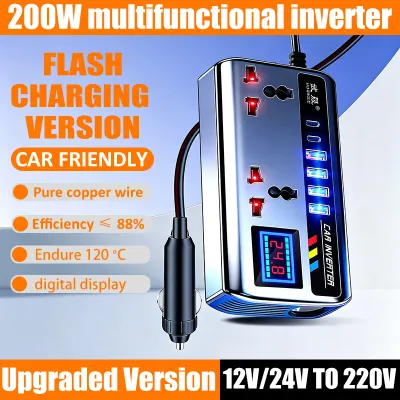
5 Lazada user ratings
I have received the 24V inverter used for the truck. I have tested it and found that it is quite stable with small appliances. The socket ho…Read full reviewShow less
I have received the 24V inverter used for the truck. I have tested it and found that it is quite stable with small appliances. The socket holes are also sufficient.
When traveling by truck, there are also many mobile phones and charging ports needed, so you no longer have to worry about not having enough…Read full reviewShow less
When traveling by truck, there are also many mobile phones and charging ports needed, so you no longer have to worry about not having enough plugs
Solid workmanship, fine workmanship, thick wires, reliable quality, strong adaptability, compact size, very good
The item is intact and undamaged. The logistics is very fast, and it will be used for all shipments
The quality is very good, I bought a few, the charging is fast, safe and reliable
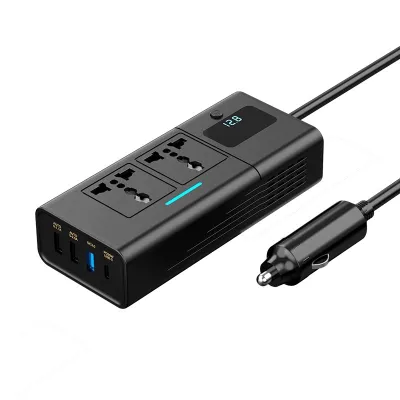
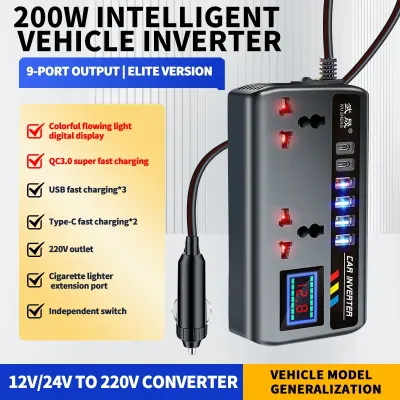
35 Lazada user ratings
Item came as described. Quick test seems to work OK for the USB charging. the Orange USBA shows Fast Charging, but the Type C ports show cha…Read full reviewShow less
Item came as described. Quick test seems to work OK for the USB charging. the Orange USBA shows Fast Charging, but the Type C ports show charging only (little disappointed). Yet to test charing multi devices at same time and the 230V 3 pin power point.
👌Ease of Use:Yes 🔧Durability:Haven't tested yet Compact and portable, Easy to carry in car, hopefully it's works smoothly.
label sticker is abit off, hopefully it is safe to use
Usb output ok, but no 220V AC output.
functional but made cheaply
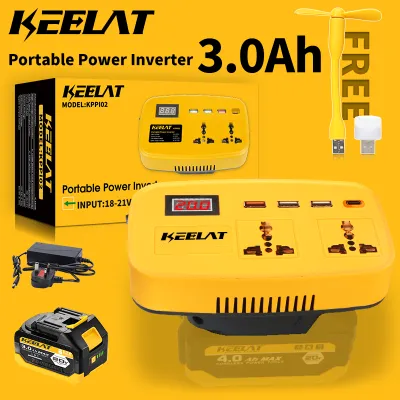
5 Lazada user ratings
👜Portability:Portable 🔧Durability:Built quality is good
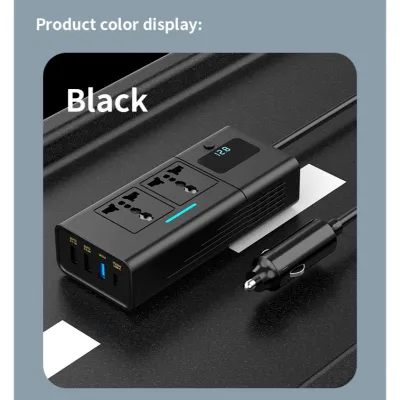
7 Lazada user ratings
Quick delivery. Product as described
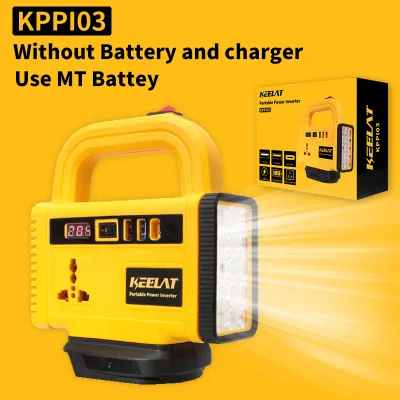
17 Lazada user ratings
Portable and lightweight, Perfect for camping, High power output, Great for emergency, Fast delivery in SG,
portable inverter can be used for emergency and outgoing. LED is very bright. Tested and working.
Try it on a table fan, Not even half an hour journey, battery flat. Battery Life:very poor
Great! Good product!
Nice product 👍
7 Lazada user ratings
Heat dissipation structure good, surface not scalding
Clear digital screen, voltage data visible directly
Ideal for road trip, solves outdoor power trouble
Multiple ports, charge several devices together
Digital display clearly shows real-time voltage
9 Lazada user ratings
Fast shipping from Singapore, Perfect for camping, Durable lithium battery, Pure sine wave inverter, High power output.
good and fast delivery can buy thanks Yet to try but the sound was gokd and smooth, seems good quality with 2 bettery.
Safety: confident easy for weak battery to charger
Prices are valid at publication and may change. Please refer to the product page for the latest price.
Continuous wattage represents the amount of power the inverter can deliver consistently over an extended period. This is the baseline rating you should use for your primary calculations. If you plan to run a laptop that draws 60 watts and a portable fan that draws 40 watts simultaneously, your inverter must be capable of delivering at least 100 watts of continuous power indefinitely.
Peak wattage, on the other hand, is the maximum power the inverter can supply for a very brief period, usually just a few seconds, to handle the initial surge when a device starts up. Devices with electric motors, compressors, or heating elements—such as mini-fridges, power drills, or vacuum cleaners—require a massive burst of energy to start up before settling down to their lower, continuous running wattage.
Many manufacturers highlight the peak wattage in large, bold letters on their packaging as a marketing tactic. Relying on this inflated number to size your system is a common mistake that can lead to frequent inverter shutdowns. Always locate the continuous wattage rating in the product specifications to ensure the inverter can handle your everyday running loads.
How to Calculate Your Total Device Power Needs
To find the exact inverter size you need, you must perform a simple power audit of the devices you intend to use simultaneously. Start by gathering all the electronics you plan to power in your car and locating their electrical specification labels. These labels are typically found on the back of the device, on the power brick, or within the user manual, listing the power consumption in watts.

If a label only lists amperes and volts, you can calculate the wattage by multiplying the two numbers together (Watts = Amps x Volts). For example, if a laptop charger lists an output of 19V and 3.42A, it draws approximately 65 watts. Once you have the wattage for each item, list the continuous wattage of every device you plan to run at the exact same time and add them together.
Next, identify which of those devices require a startup surge. If you are running a motorized device, find its starting wattage, which is often two to three times its running wattage. You do not need to sum the peak wattages of all devices, as they rarely start up at the exact same millisecond. Instead, take your total continuous wattage sum and add the single highest startup surge differential among your connected devices.
Finally, always apply a safety buffer to your final calculation. It is highly recommended to add a 20% to 25% margin to your total calculated wattage. Running an inverter at its absolute maximum capacity for long periods generates excessive heat and reduces its lifespan. A safety buffer ensures the inverter runs cool, handles unexpected power fluctuations, and leaves room for minor device upgrades in the future.
Checking Your Car's Electrical Limits and Connection Types
Before purchasing a high-wattage inverter, you must verify whether your vehicle’s electrical system can support it. The way you connect the inverter to your car determines the maximum amount of power you can safely draw. Ignoring these physical limits can result in melted wiring, blown vehicle fuses, or damage to your alternator.
Most passenger cars feature a standard 12V accessory socket, commonly known as the cigarette lighter socket. These sockets are typically wired with thin cables and protected by a fuse rated at 10 amps or 15 amps. Because of this fuse limit, the maximum continuous power you can draw from a 12V socket is generally capped between 120 watts and 180 watts. Attempting to plug a 500-watt inverter into this socket and drawing full power will instantly blow the vehicle’s fuse.
For power demands exceeding 150 watts, you must bypass the interior cabin wiring entirely and connect the inverter directly to the car battery using heavy-duty battery clamps or permanently routed ring terminal cables. This direct connection allows the inverter to draw the high current necessary to produce substantial AC power.
Always consult your vehicle’s owner manual to verify the exact fuse ratings of your accessory outlets, the capacity of your alternator, and any specific vehicle model or year restrictions. A standard car alternator is designed primarily to run the vehicle’s onboard electronics and keep the battery charged; it may not have the spare capacity to support a massive 2,000-watt inverter continuously. For complex electrical work, routing heavy-gauge cables through the firewall, or permanent modifications, state the safety boundary by consulting your vehicle documentation and seeking qualified professional installation to ensure road legality and prevent electrical fires.
Other Critical Specs: Waveform and Input Voltage
Beyond wattage, you must evaluate the inverter’s output waveform and input voltage to ensure compatibility with your devices and your vehicle. Inverters convert direct current from your car battery into alternating current using one of two technologies: modified sine wave or pure sine wave.
Modified sine wave inverters are generally more affordable and work for basic resistive loads, such as simple heating elements, incandescent lights, and older phone chargers. However, they produce a blocky, stepped electrical wave that can cause issues with sensitive electronics. Laptops, medical equipment, smart devices, and tools with variable-speed motors may run hot, buzz loudly, or fail to operate entirely on a modified sine wave.
Pure sine wave inverters produce a smooth, continuous wave identical to the utility power delivered to your home. While they are more expensive, they are highly recommended for modern electronics, supporting clean, efficient, and stable operation. If you plan to charge high-end laptops, cameras, or medical devices, investing in a pure sine wave inverter is essential to protect your equipment from premature wear.
Additionally, verify that the inverter’s input voltage matches your vehicle’s system. Standard passenger cars, SUVs, and light trucks operate on a 12V DC system, requiring a 12V inverter. Larger commercial trucks or buses may use a 24V DC system, which requires a matching 24V inverter. Finally, look for an inverter that offers a convenient mix of built-in AC outlets and USB ports, allowing you to plug in your devices directly without needing bulky adapters.
Frequently Asked Questions (FAQ)
Will a power inverter drain my car battery?
Yes, a power inverter can drain your car battery quickly if it is used while the engine is turned off. When the engine is running, the alternator constantly recharges the battery, allowing you to use the inverter safely. When the engine is off, the inverter draws power directly from the battery’s limited reserves. To prevent a dead battery, look for an inverter equipped with an automatic low-voltage shutoff feature, which cuts power to your devices before the car battery drops below the threshold required to start the engine.
Can I use a power inverter while driving?
Yes, you can use a power inverter while driving, provided it is positioned safely and has adequate ventilation. Inverters generate heat during operation and must never be covered by clothing, stored in a closed glove box, or placed under a seat where airflow is restricted. Ensure the inverter is securely mounted or placed in a spot where it cannot slide under the brake or accelerator pedals during sudden stops, and never attempt to adjust the connections or plug in devices while operating the vehicle.
Community discussion
Share your experience or ask a question. Comments are reviewed before publication.