
Properly maintaining a motorcycle drivetrain requires a systematic approach to cleaning and lubricating the chain. To apply motorcycle chain lube correctly, you must first remove old, abrasive grime with a seal-safe cleaner, allow the assembly to dry completely, and then target the lubricant directly onto the inner rollers and side plates where metal-on-metal contact occurs. Skipping any of these steps or applying lubricant over accumulated road grit can accelerate wear, turning the mixture into an abrasive grinding paste that destroys your sprockets and chain links.
In Singapore’s tropical climate, where riders frequently transition from intense heat to sudden, heavy monsoon downpours, chain maintenance is even more critical. Rainwater strips away protective lubricants, while road grit from wet asphalt clings to the damp metal surfaces. Establishing a consistent, correct maintenance routine ensures your motorcycle performs efficiently, runs quietly, and avoids premature, costly drivetrain replacements.
Why Regular Chain Lubrication Extends Drivetrain Life
A motorcycle’s chain and sprockets operate under extreme mechanical stress, transferring high torque from the engine to the rear wheel. Without a consistent barrier of lubrication, the friction between the steel links and the sprocket teeth generates intense heat.
Products mentioned in this guide
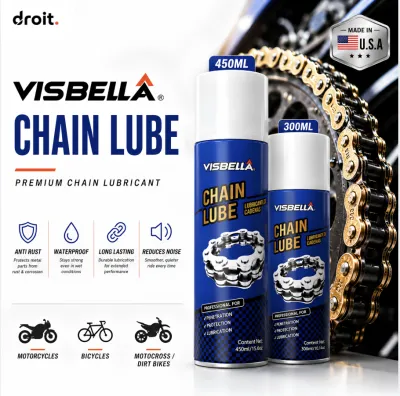
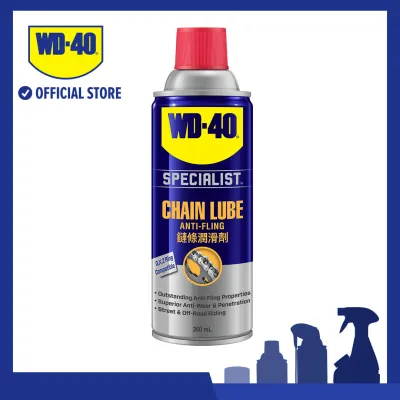
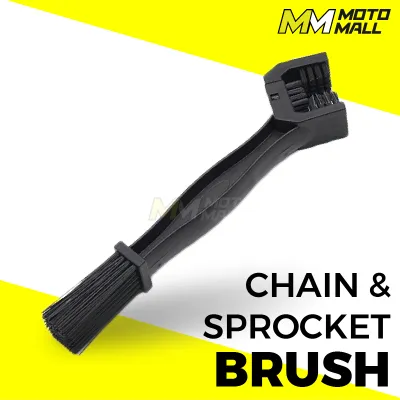
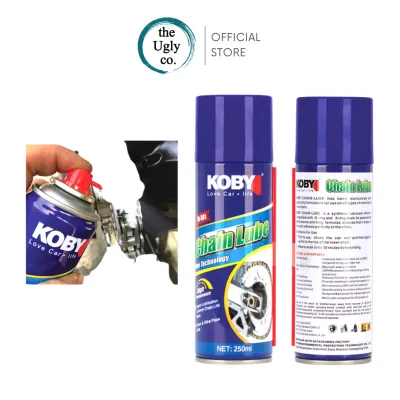
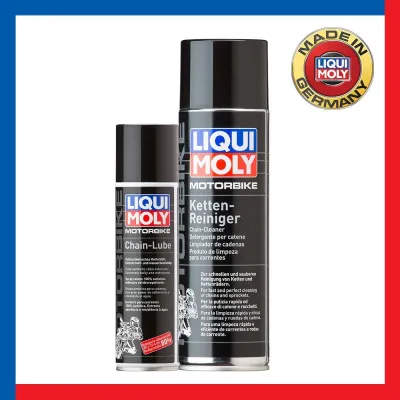
Prices are valid at publication and may change. Please refer to the product page for the latest price.
This heat causes the metal to expand, accelerating physical wear and causing the chain to stretch unevenly. As the chain stretches, it no longer seats perfectly in the sprocket teeth, which rapidly deforms the teeth into a hooked shape and ruins the entire drivetrain.
Environmental factors significantly compound this mechanical wear. Road dirt, sand, and fine debris act as natural abrasives when trapped between moving components.
In humid environments, moisture acts as a catalyst for rust, which can quickly bind chain links and cause stiff joints. A bound link cannot pivot smoothly around the sprockets, leading to power loss, increased fuel consumption, a harsh riding experience, and a heightened risk of chain failure.
Regularly cleaning and lubricating the chain prevents these issues by creating a protective barrier that repels moisture and prevents dirt from adhering directly to the metal. A well-maintained chain ensures optimal power transfer efficiency, meaning more of your engine’s horsepower reaches the road.
It also dampens drivetrain noise, offering a smoother, quieter ride. By spending a small amount of time on routine maintenance, you can easily double or triple the lifespan of your chain and sprockets, saving hundreds of dollars in replacement parts and professional labor fees.
Essential Tools and Seal-Safe Materials
Before starting your maintenance, gather the correct tools to ensure the job is done safely and efficiently. Having a dedicated kit ready makes the process seamless and prevents shortcuts that could damage your motorcycle.

- Rear paddock stand or center stand: Elevating the rear wheel is essential for rotating the chain manually. If your motorcycle lacks a center stand, a stable paddock stand is a crucial investment for safe maintenance.
- Dedicated chain cleaning brush: A three-sided grunge brush is highly effective because it cleans multiple faces of the chain simultaneously without damaging the delicate rubber seals.
- Clean microfiber cloths: These are used to wipe away dissolved grime and excess lubricant. Avoid rags that shed loose threads, as these can become trapped in the chain links.
- Seal-safe chain cleaner: A solvent specifically formulated to dissolve grease and road grime without degrading rubber.
- High-quality motorcycle chain lube: Choose a lubricant suited to your riding conditions, such as a wet lube for rainy seasons or a dry/wax-based lube for dusty environments.
Before purchasing or applying any cleaning or lubricating chemicals, check your motorcycle owner’s manual to identify the specific type of chain installed. Modern motorcycles typically use sealed chains, which feature small rubber O-rings or X-rings sandwiched between the inner and outer link plates. These rings seal factory-applied grease inside the chain’s internal pins and bushings.
Using unverified solvents, generic degreasers, or harsh industrial chemicals can cause these rubber seals to swell, crack, or dissolve completely. Once the seals fail, the internal factory grease escapes, and road moisture enters, leading to rapid, irreversible internal wear. Always verify that both your chain cleaner and motorcycle chain lube are explicitly labeled as safe for O-ring, X-ring, and Z-ring chains. If the product label and your motorcycle’s care instructions conflict, or if you cannot identify your chain type, stop and consult a qualified motorcycle mechanic.
Step-by-Step Guide to Safely Cleaning the Chain
Cleaning is a mandatory prerequisite to lubrication; applying fresh lube over old dirt simply traps abrasive particles against the moving parts. Follow this step-by-step process to clean the chain safely and thoroughly.
1. Preparation and Setup
Position your motorcycle on a level, stable surface and secure it on its center stand or paddock stand. Ensure the engine is completely switched off, the ignition key is removed, and the transmission is shifted into neutral. Place a large piece of cardboard, a drip tray, or a plastic sheet directly underneath the lower run of the chain. This protects your garage floor or HDB carpark deck from oil stains and chemical runoff.
2. Apply the Chain Cleaner
Shake your seal-safe chain cleaner thoroughly. Spray the cleaner generously onto the lower run of the chain, focusing on the rollers and the spaces between the inner and outer plates. As you spray, manually rotate the rear wheel backward to expose new sections of the chain until the entire loop is coated.
Be extremely careful to direct the spray away from the rear brake disc, brake pads, and the tire tread. If cleaner oversprays onto these components, it can severely compromise your braking performance and traction, creating an immediate safety hazard.
3. Scrub the Chain Gently
Allow the cleaner to penetrate the grime for the duration specified on the product label—typically one to two minutes. Do not let it dry completely. Take your soft-bristled chain brush and gently scrub all four sides of the chain. Focus on removing stubborn, caked-on grease from the rollers and side plates.
Avoid using wire brushes, steel wool, or overly stiff bristles, as these can easily puncture or tear the delicate rubber O-rings or X-rings.
4. Wipe Away Grime and Dry Completely
Use a clean, dry microfiber cloth to wipe away the dissolved grime, dirt, and dirty cleaning fluid. Wrap the cloth around the chain and slide it along the lower run while manually rotating the wheel. Repeat this process with a fresh, clean section of the cloth until the rag comes away clean.
Once the dirt is removed, allow the chain to dry completely. This step is critical; applying motorcycle chain lube to a damp or wet chain traps moisture underneath the lubricant, promoting rust. It also prevents the lubricant from adhering properly to the metal, causing it to fling off immediately when you ride. Let the bike sit for at least 15 to 20 minutes, or use compressed air if available, to ensure all solvent and moisture have fully evaporated.
The Correct Technique for Applying Motorcycle Chain Lube
With the chain clean and dry, you are ready to apply the lubricant. Proper application ensures the lube reaches the critical friction points without creating an unnecessary mess.
1. Establish a Starting Point
Locate the master link on your chain—this link usually has a different clip or pin design and serves as an excellent visual reference. If your chain does not have a visible master link, place a small piece of colored tape on one of the outer plates. This allows you to track your progress and avoid double-coating or missing sections as you rotate the chain.
2. Target the Critical Friction Points
Many riders make the mistake of spraying lubricant directly onto the outside of the chain. This is ineffective because centrifugal force will immediately fling the lube outward when the wheel spins. Instead, direct the spray nozzle at the inside run of the chain—the side that directly contacts the sprocket teeth.
Aim the spray at two specific areas:
- The side plates: Spray along the edges where the inner and outer plates overlap. This is where the O-rings or X-rings reside, and the lube keeps the rubber supple and sealed.
- The center rollers: Spray the center of the chain to lubricate the rollers that engage directly with the sprocket teeth.
3. Rotate the Wheel Manually
As you spray, use your free hand to slowly rotate the rear wheel backward. This direction pulls the chain away from the drive sprocket, reducing the risk of your hand getting caught.
Never, under any circumstances, start the engine and put the motorcycle in gear to let the idling engine spin the wheel while you clean or lubricate the chain. This dangerous practice has caused severe, life-altering hand and finger injuries to many riders. Always keep the engine off and rotate the wheel manually.
4. Wipe Off Excess Lubricant
After completing one full rotation and ensuring every link has been coated, let the lubricant sit for a minute. Then, take a clean, dry cloth and lightly wipe down the outer side plates of the chain. You only need the lubricant on the inside rollers and the rubber seals; excess lube on the outer plates serves no mechanical purpose and will only attract road dirt, creating a sticky paste.
5. Allow the Lube to Cure
Do not ride the motorcycle immediately after application. Most high-quality chain lubes contain solvents that keep the lubricant thin enough to penetrate deep into the rollers and behind the seals. These solvents must evaporate for the lubricant to thicken and bond to the metal.
Check the product label for the recommended curing time, which typically ranges from 15 minutes to several hours. For the best results, apply the lube after a ride when the chain is warm, and let it cure overnight.
Visual Verification and Condition-Based Reapplication
Once you have finished, perform a quick visual inspection. A properly lubricated chain should have a light, even, and slightly glossy coating across the rollers and seals. It should not look wet, have visible drips pooling on the links, or be caked in a thick, pasty layer. If you see excess lube dripping, wipe it away immediately to prevent it from flinging onto your rear tire or brake rotor during your next ride.
Rather than relying solely on rigid mileage intervals, adapt your maintenance routine to your actual riding conditions. While owner’s manuals provide a baseline recommendation—typically every 500 to 800 kilometers—environmental factors should dictate your actual schedule.
In Singapore, you should inspect, clean, and re-lubricate your chain immediately after:
- Riding through heavy tropical downpours or flooded streets, which wash away the lubricant.
- Washing your motorcycle, as high-pressure water and bike soaps strip the chain's protective coating.
- Riding on dusty, sandy, or muddy roads, which introduce abrasive particles into the drivetrain.
Regularly checking the physical condition of your chain ensures it remains protected, keeping your rides smooth, quiet, and safe.
Frequently Asked Questions (FAQ)
How often should I lube my motorcycle chain?
As a general baseline, you should lubricate your motorcycle chain every 500 to 800 kilometers, or as specified in your owner’s manual. However, you must adjust this frequency based on environmental factors. If you regularly ride in wet weather, heavy rain, or dusty conditions, you will need to clean and lubricate the chain much more frequently—often after every wet ride—to prevent rust and premature wear.
Can I use standard WD-40 as a motorcycle chain lube?
No, you should not use standard WD-40 as a primary motorcycle chain lubricant. Standard WD-40 is designed as a penetrating solvent and water displacer, meaning it is too thin to provide the long-term, high-pressure lubrication that a motorcycle drivetrain requires. Furthermore, the harsh solvents in standard WD-40 can penetrate and damage the delicate rubber O-rings or X-rings, stripping away the essential factory grease sealed inside. Always use a product explicitly formulated and labeled as a motorcycle chain lube.
Community discussion
Share your experience or ask a question. Comments are reviewed before publication.