
Selecting the correct motorcycle battery is one of the most critical maintenance decisions you can make for your machine. The battery is the heart of your motorcycle’s electrical system, responsible for firing up the engine and stabilizing the voltage that powers onboard electronics. In high-temperature tropical climates like Singapore’s, where stop-and-go traffic and short urban commutes are standard, motorcycle batteries are subjected to intense thermal stress and frequent charge-discharge cycles. Choosing a premium brand like Yuasa is an excellent step toward reliability, but simply buying any Yuasa battery that looks similar to your old one can lead to physical fitment issues, electrical system strain, or premature battery failure.
To find the perfect Yuasa battery, you must match its physical dimensions, terminal configuration, nominal voltage, capacity, and cold cranking amps (CCA) to your motorcycle’s original equipment manufacturer (OEM) specifications. You must also select the right battery technology—whether Conventional, Yumicron, Absorbent Glass Mat (AGM), or Lithium—based on your bike’s charging system and your riding habits. Taking a systematic approach to this selection process ensures reliable starting power, protects your bike’s delicate electronics, and extends the lifespan of your new battery.
Understand Your Motorcycle's Battery Requirements
Before browsing any product catalogs or visiting an automotive spare parts dealer, you must establish the exact baseline specifications required by your motorcycle. The most reliable source for this information is your motorcycle’s owner’s manual or the technical specification label on the side of your existing battery. If you are relying on the existing battery, ensure it was the correct model installed by a professional, as a previous owner might have fitted an incorrect size or capacity to save money.
Products mentioned in this guide
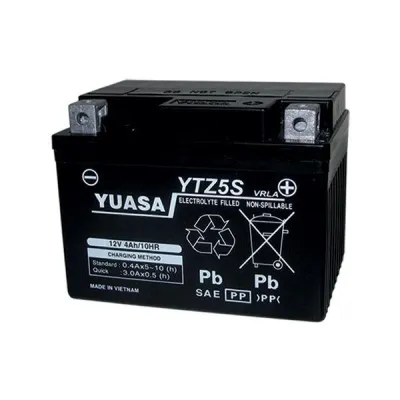
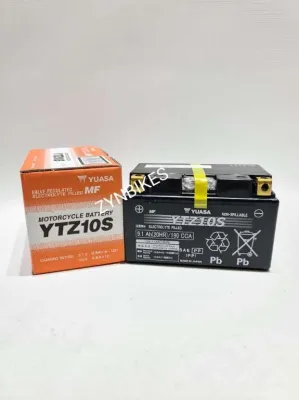
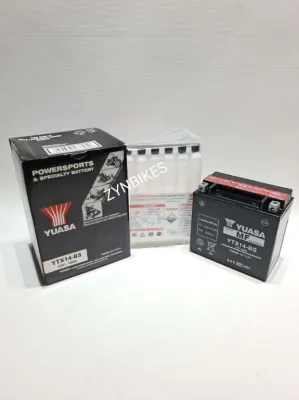
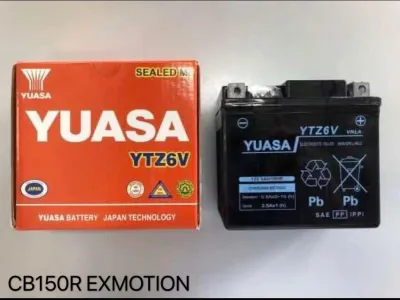
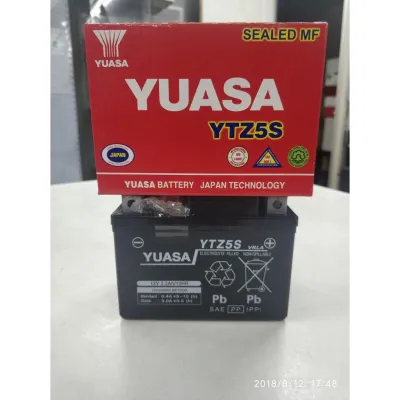
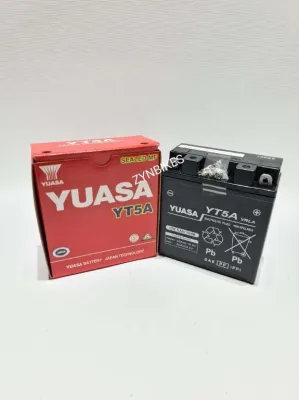
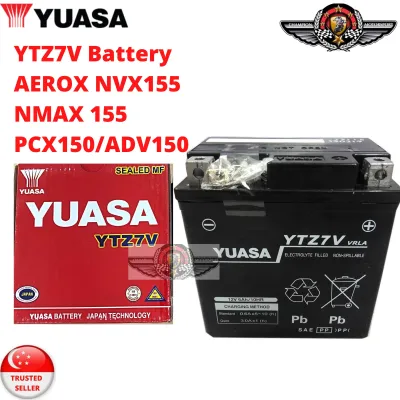
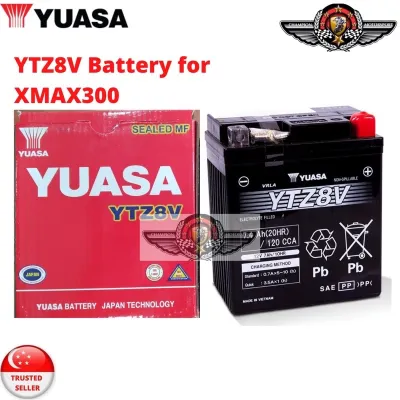
Prices are valid at publication and may change. Please refer to the product page for the latest price.
There are three critical physical and electrical metrics you must record before looking at Yuasa’s lineup:
- Nominal Voltage: Modern motorcycles almost universally operate on a 12-volt electrical system, though some vintage models or small-displacement scooters may use a 6-volt system. Installing a battery with the incorrect voltage will cause immediate, severe damage to your ignition system, lights, and electronic control unit (ECU).
- Physical Dimensions: You must measure the length, width, and height of your current battery or the interior dimensions of your motorcycle's battery tray in millimeters. Motorcycle battery compartments are designed with extremely tight tolerances; even a minor discrepancy of five millimeters can prevent the battery from seating properly, block the seat from latching, or cause the battery terminals to contact the metal frame, resulting in a dangerous short circuit.
- Terminal Layout and Orientation: Note which side of the battery features the positive (red, +) terminal and which side features the negative (black, -) terminal when looking at the front of the battery. If you select a model with reversed polarity, the motorcycle's battery cables will likely not reach the terminals, or worse, you may accidentally connect the battery backward, which can instantly destroy the regulator/rectifier, blow main fuses, or damage the ECU.
Guessing these specifications or assuming that “any 12V motorcycle battery” will work is a common mistake that leads to physical fitment failures, stretched and strained wiring harnesses, or severe electrical shorts. Always write down the exact dimensions and specifications of your original battery before purchasing a replacement.
Match Yuasa Battery Technologies to Your Motorcycle
Yuasa offers several distinct battery technologies, each designed to meet specific performance demands, maintenance preferences, and budget constraints. Understanding these chemistries allows you to choose the right tier of battery for your specific riding style and motorcycle design.

Conventional Flooded Lead-Acid Batteries Conventional batteries are the traditional choice for older, classic, or low-displacement motorcycles. These batteries feature removable caps and liquid electrolyte (sulfuric acid) that covers lead plates. They are highly budget-friendly and reliable when maintained properly, but they require periodic inspections to check the electrolyte levels and top them up with distilled water. Because Singapore’s tropical climate accelerates chemical reactions and water evaporation, conventional batteries in this region require more frequent maintenance checks to prevent the plates from drying out and failing.
Yumicron High-Performance Conventional Batteries The Yumicron series is an upgrade over the standard conventional design. Yuasa engineered these batteries with thin, high-tech separators that allow for more plates to be packed into the same physical space. This design provides up to 30% more cranking power than standard conventional batteries. They are ideal for older cruisers, touring bikes, and heavily accessorized motorcycles that require high starting currents but still utilize a traditional flooded battery design. Like standard conventional batteries, Yumicron models require periodic water level checks.
Absorbent Glass Mat (AGM) Batteries AGM batteries represent the modern standard for the vast majority of fuel-injected motorcycles, sportbikes, and adventure touring models. In an AGM battery, the liquid acid is fully absorbed into fine fiberglass mats sandwiched between the lead plates. This design makes the battery completely sealed, spill-proof, and virtually maintenance-free—you never need to add water. AGM batteries feature exceptionally high vibration resistance, making them perfect for handling bumpy urban roads, expressways, and off-road trails. They also have a lower self-discharge rate, meaning they hold their charge longer when the motorcycle is parked.
Lithium Iron Phosphate (LiFePO4) Batteries Yuasa’s lithium batteries represent the pinnacle of modern starting technology, offering extreme weight savings—often up to 70% lighter than an equivalent lead-acid battery—and incredibly high cranking power. They are highly favored by track riders, performance enthusiasts, and owners of modern adventure bikes. However, lithium batteries require very specific charging profiles. If your motorcycle’s charging system is older or unregulated, it can easily overcharge or undercharge a lithium battery, leading to premature failure or safety hazards like thermal runaway.
When selecting a technology, the safest and most reliable approach is to stick to the battery chemistry recommended by your motorcycle’s manufacturer. If your bike came equipped with an AGM battery from the factory, do not downgrade to a conventional flooded battery, as your charging system is calibrated specifically for the charge absorption rate of an AGM battery.
Step-by-Step Guide to Selecting the Exact Yuasa Model
Decode the Yuasa Model Number
Yuasa uses a structured alphanumeric coding system for its battery model numbers. Learning how to decode these model numbers allows you to quickly identify a battery’s underlying technology, physical size, and terminal configuration.
The prefix of the model number indicates the technology and design series. For example, prefixes starting with “YT”, “YTX”, or “YTZ” signify Yuasa’s premium, maintenance-free AGM battery lines. The “YTZ” series is particularly notable for its compact, high-performance design, often factory-activated and sealed. Prefixes starting with “YB” indicate a Yumicron high-performance conventional battery, while standard conventional models typically start with “Y” or “12N”.
The numbers in the middle of the model code generally correspond to the physical size, casing dimensions, and nominal capacity of the battery. For instance, in the popular “YTX9-BS” model, the “9” represents a specific size and performance class. It is important to note that this number is an index and does not always translate directly to the exact Amp-hour rating, so you should always cross-reference the manufacturer’s spec sheet for precise electrical ratings.
Suffixes at the end of the model code provide critical information about packaging and terminal layout. The suffix “-BS” stands for “Bottle Supplied,” indicating that the battery is shipped with a dry acid pack that must be added to activate the battery before it is sealed for the first time. The letter “L” (such as in “YB14L-A2”) indicates that the positive terminal is located on the left side when viewing the battery from the front. Always use these codes as a preliminary guide, and verify the exact specifications on Yuasa’s official datasheets before making a final purchase.
Verify Physical Dimensions and Terminal Layout
Once you have identified a potential Yuasa model using the alphanumeric codes, you must perform a physical compatibility check. Never assume a battery will fit based solely on the motorcycle model name, as manufacturers often change battery tray designs between different production years or sub-models.
Measure your motorcycle’s battery tray and compare those measurements against the exact dimensions listed on the Yuasa product packaging or official specification sheet. Pay close attention to the height of the battery. If a battery is too tall, it can compress against the seat pan when a rider sits on the bike, leading to structural damage to the battery casing or a catastrophic electrical short if the terminals contact metal seat brackets.
Next, verify the terminal positions and connection types. Place your old battery and the prospective Yuasa battery side-by-side, oriented in the same direction. Ensure the positive (+) and negative (-) terminals are on the exact same sides. Additionally, check the terminal design; some motorcycles require flush-mount terminals where the cables bolt directly down from the top, while others use side-mount terminals or require specific brass spacers. Forcing mismatched terminals or stretching your bike’s electrical cables to make them reach can cause terminal breakage, loose connections, or severe wiring harness damage from engine vibrations.
Check Cold Cranking Amps (CCA) and Capacity (Ah)
Electrical compatibility goes beyond physical fitment; your new battery must have the electrical capacity and starting power required to operate your motorcycle safely and reliably.
Cold Cranking Amps (CCA) measures the battery’s ability to deliver a high burst of current to start the engine, particularly in cold temperatures or high-compression engines. While Singapore’s tropical climate means you rarely face freezing starts, CCA remains a critical indicator of battery health and starting power. High-displacement engines, large-capacity V-twins, and modern multi-cylinder sportbikes require substantial cranking amps to turn over. Always ensure your chosen Yuasa battery meets or exceeds the minimum CCA rating specified by your motorcycle’s manufacturer.
Amp-hours (Ah) represent the battery’s capacity to deliver a continuous current over a sustained period. This metric is especially important if your motorcycle is equipped with aftermarket electrical accessories. In Singapore, many riders install electronic road pricing (ERP) in-vehicle units (IUs), dash cameras, GPS trackers, and auxiliary lighting. These accessories draw parasitic current even when the motorcycle is parked, which can quickly drain a battery with insufficient Ah capacity. While choosing a battery with a higher Ah rating provides a larger safety margin, you must ensure that the higher-capacity battery still fits within the physical size constraints of your bike’s battery tray.
Pre-Installation Verification and Safety Boundaries
Before purchasing your chosen Yuasa battery and attempting the installation, you must perform a final round of verification. Cross-reference your selected battery model with the official Yuasa fitment guide or consult an authorized Yuasa distributor. These databases are regularly updated and provide the most accurate compatibility mapping based on your motorcycle’s exact make, model, and production year.
If you decide to proceed with a self-installation, gather the correct tools and safety gear before starting. You will need a pair of safety glasses, protective gloves, a set of insulated wrenches or sockets, a wire terminal brush, and a tube of high-quality dielectric grease. Working with lead-acid batteries involves handling sulfuric acid and working around potential electrical sparks, making personal protective equipment essential.
When replacing the battery, always follow a strict disconnection and connection sequence to prevent short circuits. To remove the old battery, disconnect the negative (black, -) cable first, followed by the positive (red, +) cable. This sequence ensures that if your wrench accidentally touches the motorcycle’s metal frame while loosening the positive terminal, it will not create a dangerous short circuit. When installing the new Yuasa battery, reverse the process: connect the positive (+) cable first, apply a thin layer of dielectric grease to prevent corrosion, and then connect the negative (-) cable securely.
Establish clear safety boundaries and know when to step back and seek professional help. You should stop immediately and consult a qualified motorcycle mechanic or an authorized service center if:
- Your motorcycle features a highly complex CAN bus electrical system, which may require specialized diagnostic tools to reset system faults after a battery replacement.
- You are upgrading your battery technology (such as transitioning from a conventional lead-acid battery to a lithium model) and need to verify if your motorcycle's charging system voltage output is compatible.
- The existing battery terminals, cables, or wiring harness show clear signs of melting, fraying, heavy corrosion, or damage.
- The old battery is severely swollen, cracked, or leaking acid, which requires specialized cleanup and hazardous waste disposal.
Frequently Asked Questions (FAQ)
Can I upgrade from a conventional Yuasa battery to an AGM or Lithium model?
Upgrading from a conventional flooded lead-acid battery to a Yuasa AGM model is generally a straightforward process, provided the physical dimensions, terminal layout, and CCA ratings match your motorcycle’s requirements. Most modern motorcycle charging systems can easily handle the charge absorption characteristics of an AGM battery, and you will benefit from a maintenance-free, highly vibration-resistant design.
However, upgrading to a Lithium battery requires extreme caution. You must verify that your motorcycle’s charging system voltage remains strictly within the safe operating limits of a lithium battery—typically between 14.0V and 14.8V at running speeds. If your charging system outputs voltage outside this range, it can cause the lithium battery to fail prematurely or experience thermal runaway. Additionally, you must use a specialized, lithium-compatible smart charger; standard lead-acid chargers with desulfation modes can permanently damage a lithium battery. Always consult your motorcycle’s manufacturer guidelines before upgrading to lithium.
How do I know if my Yuasa battery needs replacing rather than just recharging?
There are several clear, observable physical and electrical signs that indicate your Yuasa battery has reached the end of its service life and must be replaced rather than simply recharged. Physically, if the battery casing is swollen, deformed, cracked, or showing signs of acid leakage, it is structurally compromised and must be replaced immediately to prevent safety hazards.
Electrically, if your battery fails to hold a charge even after a full charging cycle on a dedicated smart charger, or if the motorcycle’s engine cranks slowly despite a fully charged reading, the internal plates are likely degraded. You can perform a definitive test using a digital multimeter. A healthy 12V battery should read approximately 12.6V to 12.8V when fully charged and resting. If you perform a load test (such as monitoring the voltage while pressing the starter button) and the reading drops below 9.6V, the battery lacks the capacity to support the starter motor and must be replaced. Attempting to repeatedly jump-start or recharge a physically or chemically failed battery poses a risk of electrical damage to your motorcycle.
Community discussion
Share your experience or ask a question. Comments are reviewed before publication.