
Selecting the right VSystO camera system for your vehicle requires matching the camera’s physical design, lens specifications, and mounting options to your specific vehicle type and daily driving conditions. Whether you drive a compact sedan, a family multi-purpose vehicle (MPV), or a rugged sport utility vehicle (SUV), the ideal setup must address your vehicle’s unique blind spots while integrating seamlessly with its existing electrical architecture. By evaluating your typical parking environments, understanding key technical specifications, and planning for professional installation, you can ensure a reliable upgrade that enhances safety and visibility without compromising your vehicle’s warranty or electrical integrity.
Assess Your Vehicle Type and Visibility Blind Spots
Every vehicle body style presents distinct visibility challenges that dictate the type of camera system you need. Sedans, with their lower ground clearance and relatively long rear decks, often suffer from limited visibility directly behind the trunk lid. This makes it difficult to judge the distance to low-lying obstacles or high kerbs when reversing. For these vehicles, a single, high-definition rear-view camera mounted near the license plate is often sufficient to cover the immediate rear blind zone, providing a clear path of sight for standard parking maneuvers.
In contrast, SUVs feature high beltlines, thick rear pillars, and extended rear overhangs that create much larger blind spots. The elevated ride height of an SUV can completely obscure small objects, children, or pets located directly behind the tailgate. To mitigate these risks, SUV owners should consider dual-camera systems or multi-lens configurations that offer a wider vertical field of view. This ensures that both the area immediately behind the bumper and the traffic further back are visible on the display screen.
Products mentioned in this guide
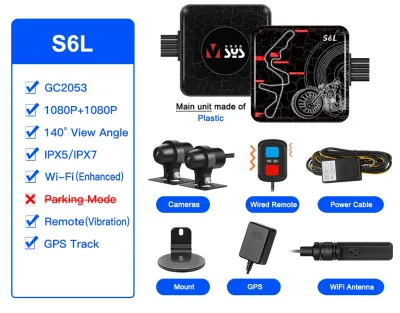
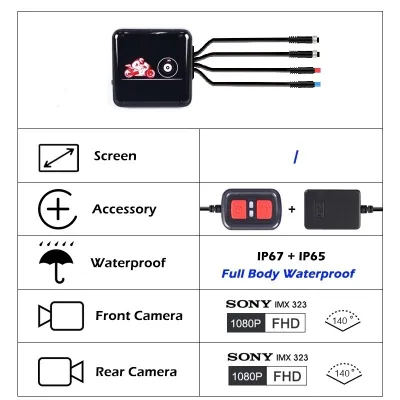
Prices are valid at publication and may change. Please refer to the product page for the latest price.
MPVs and large family vans present the most complex visibility challenges due to their long wheelbases, wide bodies, and extensive lateral blind zones. When driving or parking a large MPV, the side mirrors alone may not provide enough coverage to safely navigate tight lanes or execute lane changes. A multi-lens 360-degree surround-view camera system is highly beneficial for these larger vehicles. By stitching together feeds from front, rear, and side-mirror-mounted cameras, a 360-degree system provides a comprehensive bird’s-eye view of the vehicle’s entire perimeter.
Before purchasing any aftermarket camera system, it is essential to inspect your vehicle’s existing factory setup. Some vehicles come equipped with basic factory backup cameras that may have degraded over time or lack the resolution and wide-angle coverage of modern systems. You must decide whether to completely replace the factory camera, install a supplementary camera module that works alongside your existing setup, or integrate an entirely independent multi-camera system with its own dedicated display monitor.
Evaluate Your Typical Parking Environments
The physical constraints of your daily driving and parking locations play a critical role in determining which camera features are necessary. In urban environments like Singapore, drivers frequently navigate tight multi-storey car parks, narrow basement parking structures, and closely spaced parallel parking lots. These spaces demand high spatial awareness, making wide-angle lenses with a field of view of 140 degrees or wider highly desirable to capture adjacent pillars, walls, and oncoming vehicles.

Basement car parks and covered garages often suffer from poor or uneven lighting, which can severely compromise the performance of standard camera sensors. When selecting a camera, pay close attention to its low-light performance and sensor specifications. Look for models equipped with high-sensitivity sensors or infrared night-vision capabilities that can deliver clear, high-contrast video even in dimly lit underground parking bays. This ensures you can clearly distinguish obstacles without relying solely on your vehicle’s reverse lights.
Low obstacles such as high concrete kerbs, short metal bollards, and wheel stops are common hazards in modern parking facilities. A camera with an inadequate downward tilt or poor close-range clarity may fail to show these obstacles, leading to costly bumper or undercarriage damage. To prevent this, choose a camera mounting position and bracket design that allows for adjustable vertical angles, ensuring that the ground immediately behind your bumper is fully visible on your monitor.
Key Specifications to Check in VSystO Camera Models
When comparing different VSystO camera models, reading and verifying the technical specification sheets is crucial to ensuring the system meets your performance expectations. Start by checking the manufacturer-stated sensor resolution, which is typically expressed in horizontal and vertical pixels, such as 1080p (Full HD) or 720p (HD). Higher resolution sensors provide sharper details, allowing you to read license plates and identify small hazards more easily, while a consistent frame rate of 30 frames per second or higher ensures smooth, real-time video playback without distracting lag.
The field of view (FOV) is another critical specification, usually divided into horizontal, vertical, and diagonal angles. While a wider horizontal FOV reduces blind spots, extremely wide angles (such as those exceeding 170 degrees) can introduce a “fisheye” distortion that makes objects appear further away than they actually are. It is important to balance a wide viewing angle with image correction technologies or choose a model that offers a natural perspective while still covering the necessary blind zones.
Given the tropical climate of Singapore, which is characterized by heavy rainfall, high humidity, and intense heat, the durability of external camera modules is paramount. Verify the Ingress Protection (IP) rating of any camera intended for external mounting. An IP67 rating indicates protection against dust and temporary immersion in water, while an IP68 or IP69K rating offers superior resistance to high-pressure water jets and continuous submersion, ensuring the camera remains functional during severe downpours and car washes.
The display unit is the primary interface between you and the camera system, so its specifications must be carefully evaluated. Consider the screen size, resolution, and brightness levels, ensuring the display is easily readable even in direct sunlight. If you are installing a multi-camera system, verify that the display unit supports split-screen viewing options, allowing you to monitor multiple angles simultaneously. Additionally, ensure the physical dimensions of the monitor allow for a secure dashboard or windshield mount that does not obstruct your forward view of the road.
For those considering a 360-degree bird’s-eye view system, the capabilities of the system’s central processing unit (CPU) are vital. Seamless image stitching requires significant processing power to merge the feeds from four separate cameras into a single, cohesive top-down image in real time. Check the manufacturer’s documentation to confirm that the control box or processing unit is designed to handle real-time stitching without latency, as any delay in the video feed can compromise safety during low-speed maneuvers.
Installation Requirements and Professional Fitment
Installing an aftermarket camera system involves both physical mounting and electrical integration, both of which require careful planning and execution. Routing the video and power cables from the rear bumper or side mirrors to the front dashboard is a labor-intensive process. Cables must be carefully threaded through existing rubber grommets, door panels, the trunk lining, and under the interior carpeting to protect them from wear, moisture, and physical damage.
A critical safety consideration during cable routing is avoiding the vehicle’s safety systems. Modern vehicles are equipped with side curtain airbags and knee airbags located behind interior trim panels. Cables must never be routed across or in front of these airbag deployment zones, as they could interfere with the proper inflation of the airbags during an accident or become dangerous projectiles. Additionally, ensure that cables do not interfere with moving parts such as steering columns, pedal assemblies, or seat adjustment tracks.
The electrical connections required for a camera system typically involve tapping into the vehicle’s 12V power supply and the reverse light circuit, which acts as a trigger signal to activate the camera when the reverse gear is engaged. Making improper electrical connections can lead to blown fuses, electrical interference, or damage to sensitive electronic control units (ECUs). In modern vehicles with complex Controller Area Network (CANbus) systems, tapping directly into factory wiring can trigger dashboard error lights or void your vehicle’s manufacturer warranty.
Multi-lens 360-degree systems require a precise calibration process after physical installation is complete. This process typically involves laying specialized calibration mats around the vehicle in a specific pattern and using the system’s software interface to align and stitch the camera feeds accurately. Without proper calibration, the stitched bird’s-eye view may feature blind spots, distorted perspectives, or misaligned lines, rendering the system unreliable.
Due to the complexity of modern automotive electrical systems and the safety risks associated with improper wiring, it is highly recommended to seek professional installation. A qualified automotive electrician or professional installer has the specialized tools, diagnostic equipment, and experience necessary to route cables safely, make secure electrical connections using fuse taps or dedicated wiring harnesses, and calibrate multi-camera systems accurately. Professional installation helps preserve your vehicle’s warranty and ensures the system operates reliably.
Pre-Purchase Compatibility and Verification Checklist
Before finalizing your purchase of a VSystO camera system, you must perform a thorough compatibility check to ensure the hardware is fully compatible with your vehicle. Begin by cross-referencing the camera system’s operating voltage and power requirements with your vehicle’s electrical system. While most passenger cars, SUVs, and MPVs operate on a standard 12V DC system, some commercial vehicles or larger trucks use a 24V system, requiring a voltage converter if the camera system does not support dual-voltage input.
Next, verify the video output interfaces of the camera system and match them with your existing display unit. If you plan to use your vehicle’s factory head unit or an aftermarket infotainment screen, confirm that it accepts the camera’s video signal format, such as Analog High Definition (AHD) or Composite Video Baseband Signal (CVBS). Some factory screens require proprietary adapters, video interface modules, or software coding to accept aftermarket video inputs.
Measure the physical dimensions of the camera modules and inspect your vehicle’s exterior to identify suitable mounting locations. Ensure that the front camera can be securely attached to the grille without blocking airflow to the radiator, the side cameras can be integrated into the underside of the side mirrors without interfering with their folding mechanisms, and the rear camera can be mounted cleanly near the license plate light or tailgate handle.
Finally, review the manufacturer’s warranty terms, return policies, and the availability of local technical support or replacement parts. Purchasing from reputable sellers or authorized local distributors in Singapore ensures that you have access to customer service, warranty coverage, and replacement components if a camera module or cable is damaged during installation or daily use.
Frequently Asked Questions (FAQ)
Can I integrate a VSystO camera system with my car's factory infotainment screen?
Integrating an aftermarket VSystO camera system with your vehicle’s factory infotainment screen depends entirely on the video input interfaces supported by your original head unit. Many factory screens do not feature standard RCA or HDMI video inputs and instead use proprietary connectors designed solely for OEM accessories. To bypass these restrictions, you may need to purchase a vehicle-specific video interface module or a CANbus decoder that translates the aftermarket camera’s video signal into a format your factory screen can recognize. Because these interfaces vary widely by vehicle make, model, and year, you should consult a professional installer to verify compatibility before purchasing.
Do 360-degree camera systems drain the car battery when parked?
A 360-degree camera system can drain your car’s battery if it is configured for continuous parking surveillance or motion-detection recording while the engine is turned off. When the vehicle is parked, the camera sensors and the central processing unit must remain powered to monitor the surroundings, drawing a constant parasitic current from the 12V starter battery. To prevent battery depletion, ensure the system is installed using a dedicated hardwire kit equipped with an adjustable low-voltage cutoff feature. This safety device automatically disconnects power to the camera system if the vehicle’s battery voltage drops below a safe threshold, ensuring you always have enough power to start your engine.
Community discussion
Share your experience or ask a question. Comments are reviewed before publication.