
Choosing the right truck wheel chock requires matching the accessory to your vehicle’s Gross Vehicle Weight Rating (GVWR) and the physical dimensions of your tires. A chock that is too small or rated for a lighter vehicle can slip, crush, or fail to prevent a dangerous rollaway. To secure your vehicle safely, you must verify the manufacturer’s specifications on both the chock and your truck, ensuring the physical curvature of the chock matches your tire diameter while the load rating safely exceeds your fully loaded vehicle weight.
Match the Weight Rating to Your Truck's Gross Vehicle Weight
To establish a safe baseline, first locate your truck’s Gross Vehicle Weight Rating (GVWR). This specification is typically found on the vehicle’s compliance placard—often located inside the driver’s side door jamb—or detailed within the owner’s manual. The GVWR represents the maximum operating weight of the vehicle, including the chassis, body, engine, fluids, fuel, accessories, passengers, and cargo. Never use the truck’s unloaded curb weight as your reference point, as doing so ignores the substantial forces exerted when the vehicle is fully loaded.
Once you have identified your truck’s GVWR, compare this figure against the wheel chock manufacturer’s stated weight rating. This rating is usually printed on the product label, molded directly into the chock material, or detailed in the official product specification sheet. It is critical to determine whether the manufacturer’s stated weight rating applies to a single chock or to a pair of chocks. Some manufacturers rate their products based on the assumption that two chocks will be deployed together on a single tire or axle, while others provide a per-chock rating.
Products mentioned in this guide
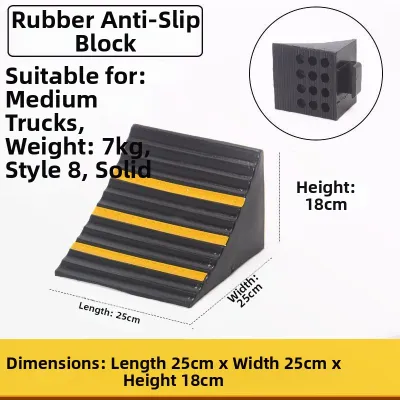
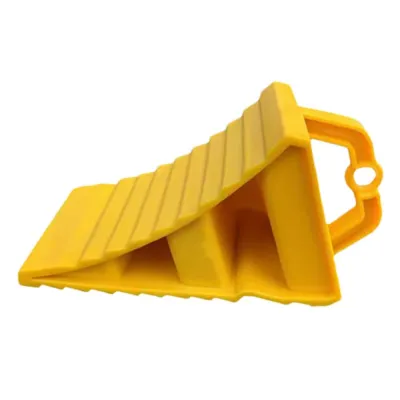
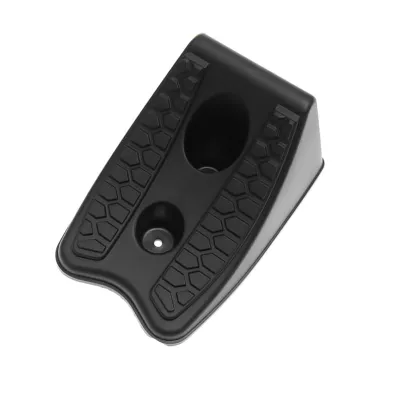
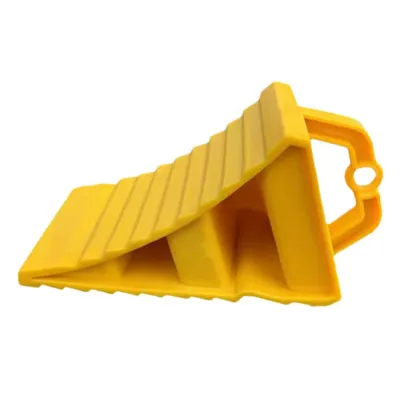
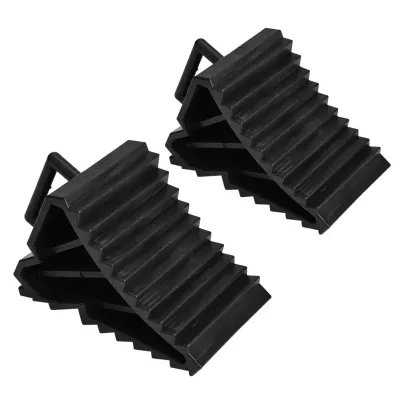
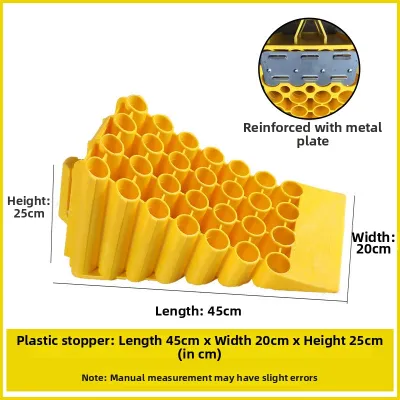
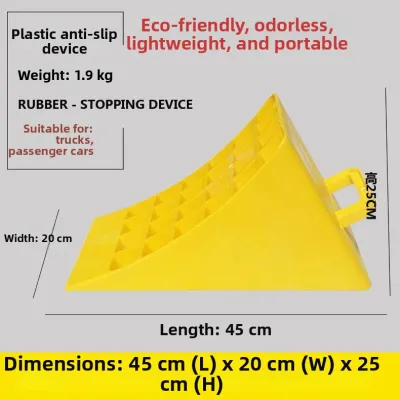
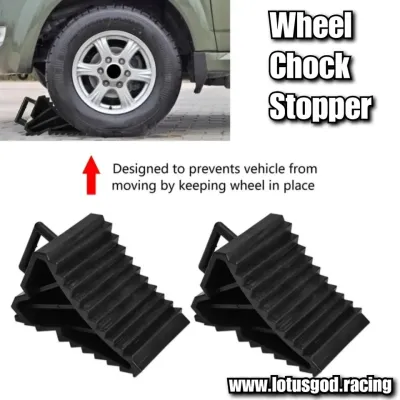
Prices are valid at publication and may change. Please refer to the product page for the latest price.
Always follow the manufacturer’s exact definition to avoid overloading the equipment. Establish a strict safety rule to never exceed the maximum load limit indicated on the chock. If your truck’s fully loaded weight approaches or exceeds this threshold, stop using the equipment immediately and select a higher-rated model to ensure reliable holding power.
Select the Physical Size Based on Tire Diameter and Width
Physical dimensions are just as critical as weight ratings when selecting a truck wheel chock. To find the correct size, you must identify your truck’s overall tire diameter and section width. These measurements can be calculated using the metric tire code printed directly on the tire sidewall, or by consulting the vehicle’s tire specification documents. The chock you select must have a specified tire size range that explicitly encompasses these exact dimensions.

The height and curvature of the chock must match the shape of your tire to maximize surface contact. Ideally, a wheel chock should measure approximately one-quarter of your tire’s overall diameter, though you must verify the exact sizing recommendations provided by the chock manufacturer. When positioned, the curved face of the chock must cradle the tire tread securely. If the chock is too low or has an incorrect curvature, it will only touch the very edge of the tire, creating a pivot point that the tire could easily roll over under pressure.
Avoid the temptation to use undersized chocks designed for passenger cars or light utility trailers on a larger truck. Smaller chocks cannot safely distribute the immense downward and outward forces exerted by large truck tires. Using an improperly sized chock increases the risk of the tire climbing over the barrier or crushing the accessory entirely, rendering it useless in a parking or maintenance scenario.
Evaluate Material and Base Grip for Your Parking Surfaces
The effectiveness of a truck wheel chock depends heavily on the friction generated between the chock, the tire, and the ground. When choosing a chock, compare common materials such as heavy-duty rubber, polyurethane, or aluminum based on the manufacturer’s official specifications. Rubber chocks often provide excellent natural grip on wet surfaces, while polyurethane models are highly resistant to oils, fuels, and chemical spills.
Inspect the base tread pattern and design of the chock to ensure it matches the ground conditions of your typical parking environments. For example, chocks with deep, aggressive cleats or metal grates are designed to bite into gravel, dirt, or icy surfaces, whereas flat, textured rubber bases are better suited for smooth concrete garage floors or asphalt.
Always check the manufacturer’s guidelines for temperature limits or environmental restrictions. Extreme heat or cold can affect the structural integrity of certain plastics and rubbers, causing them to become brittle or soft. Rather than assuming a heavier or denser material automatically provides superior grip, rely strictly on the product’s official performance claims and surface recommendations to guide your purchase.
Verify Safety Labels and Correct Placement Procedures
Before purchasing or deploying any wheel chock, verify that the product features recognized compliance marks or safety certifications printed on the label or packaging. These markings indicate that the chock has been designed and tested to meet specific industrial or automotive safety standards.
Carefully read and follow the manufacturer’s placement instructions. For proper deployment, the chock must be positioned tightly against the tire tread on the correct side of the gradient. If the truck is parked on a downhill slope, place the chocks in front of the front tires; if parked on an uphill slope, place them behind the rear tires. On flat ground, chocks should ideally be placed on both sides of a single tire or on opposite sides of tires on the same axle.
Always cross-reference the chock’s usage guidelines with your truck’s parking brake instructions and owner’s manual procedures. If the vehicle’s manual conflicts with the chock’s instructions, or if the parking surface is too uneven or unstable to safely deploy the chocks, stop and consult the vehicle manufacturer or a qualified automotive professional before proceeding.
Frequently Asked Questions (FAQ)
How many wheel chocks are required to secure a truck?
The minimum number of wheel chocks required to secure a truck depends on the vehicle’s axle configuration, the steepness of the parking grade, and the chock manufacturer’s specific instructions. While a single pair of chocks is often the baseline recommendation for standard parking on flat ground, heavier trucks, multi-axle vehicles, or steep inclines may require four or more chocks to prevent movement. Always consult both your truck’s owner’s manual and the chock’s product labeling to determine the exact number and placement pattern required for your specific setup.
Is it safe to use standard passenger car chocks on a light-duty truck?
Using standard passenger car chocks on a light-duty truck is only safe if the passenger car chock’s official weight rating and tire size range explicitly meet or exceed your truck’s GVWR and tire dimensions. Many passenger car chocks are designed for much lighter loads and smaller tire diameters. Using any chocking equipment outside its stated manufacturer specifications voids all safety assurances, increases the risk of material failure, and significantly raises the hazard of a vehicle rollaway.
Community discussion
Share your experience or ask a question. Comments are reviewed before publication.