
Maintaining correct tire pressure is one of the simplest yet most critical aspects of vehicle safety and fuel efficiency in Singapore. Driving with underinflated tires increases rolling resistance, which accelerates tire wear and raises fuel consumption—a costly consequence given local petrol prices. To maintain your tires properly, having a reliable tire pump on hand is far more convenient than hunting for working air compressors at busy petrol stations.
Choosing the right tire pump requires balancing your vehicle’s specific tire volume, your physical parking environment, and how often you plan to use the device. For instance, a compact cordless pump offers exceptional convenience for quick monthly top-ups in a Housing & Development Board (HDB) multi-storey car park. Conversely, a heavy-duty 12V corded inflator is better suited for larger vehicles like sport utility vehicles (SUVs) or emergency roadside situations where unlimited runtime is necessary.
Assess Your Vehicle and Tire Requirements
Before looking at pump models, you must understand the physical demands of your vehicle’s tires. Tire size and volume directly dictate the amount of air a pump needs to push and the pressure it must overcome. A compact hatchback tire holds a relatively small volume of air, whereas a large SUV, multi-purpose vehicle (MPV), or light commercial van tire requires a significantly larger volume of air to reach the correct operating pressure.
Products mentioned in this guide
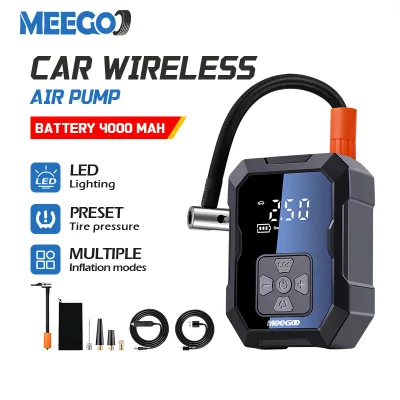
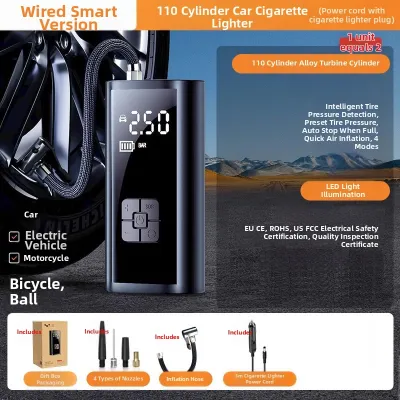
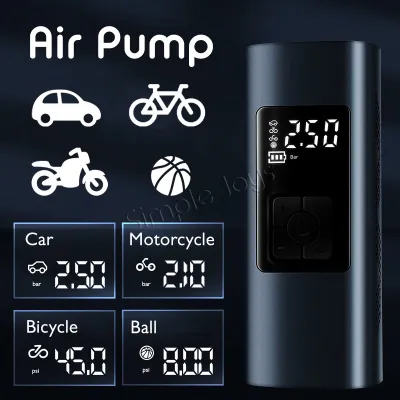
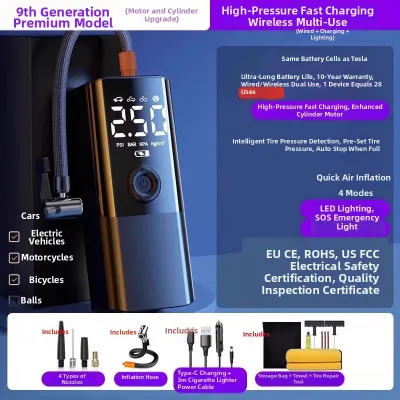
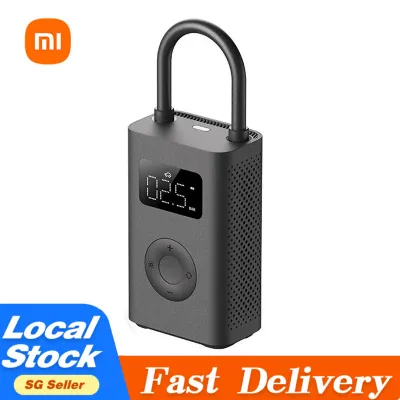
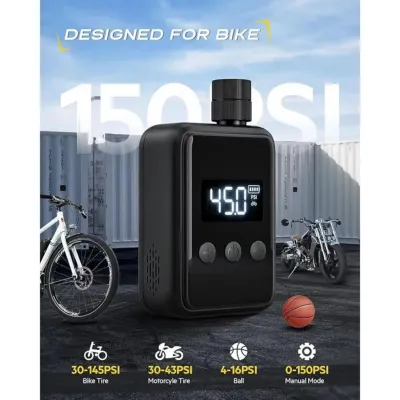
Prices are valid at publication and may change. Please refer to the product page for the latest price.
To find your vehicle’s specific requirements, locate the recommended cold tire pressure sticker. This is typically found on the driver’s side door jamb, inside the fuel filler flap, or in the owner’s manual. This sticker displays the manufacturer-recommended inflation pressure, usually measured in pounds per square inch (PSI) or kilopascals (kPa). Always use these recommended figures rather than the maximum pressure limit molded into the tire’s sidewall, which represents the absolute limit the tire can safely hold under maximum load, not its daily operating pressure.
If you attempt to inflate a high-volume tire with an underpowered pump, the motor must run continuously for a prolonged period. This extended run time increases friction and heat within the pump’s internal cylinders. If the pump lacks the necessary airflow rate—typically measured in litres per minute (LPM)—or a robust duty cycle, it may overheat and shut down, or even suffer permanent internal damage before completing the inflation.
For smaller passenger cars with standard tire sizes (such as 15 to 17 inches), a pump with a lower airflow rating (around 15 to 25 LPM) is generally sufficient. However, for larger vehicles with 18-inch wheels or larger, look for a pump that delivers at least 30 to 35 LPM. This ensures the pump can fill the tire efficiently without running continuously past its safe operating limits.
Evaluate Your Parking and Power Access in Singapore
Your living situation and parking arrangements in Singapore play a major role in determining which tire pump power source is most practical. Because local residential properties vary widely, a power solution that works perfectly for one driver might be completely unusable for another.

For many drivers living in HDB estates, parking in multi-storey or basement car parks is the norm. In these communal parking structures, wall outlets are generally unavailable for public use, and running an extension cord from your flat is physically impossible. While a 12V corded pump plugged into your car’s accessory socket (cigarette lighter) is a reliable option, it requires you to run the cable through the doors or windows to reach all four tires. Furthermore, you must keep your car engine running during operation to prevent draining your vehicle’s starter battery.
It is important to note that Singapore’s National Environment Agency (NEA) enforces strict regulations against leaving a vehicle engine idling while stationary for non-operational reasons. While inflating your tires is generally considered an active maintenance task, prolonged idling in enclosed basement car parks can create toxic exhaust build-up and draw complaints from neighbors. This regulatory and environmental constraint makes long idling sessions highly undesirable.
If you live in a condominium with dedicated parking bays or a landed property with an accessible outdoor power point, you have more flexibility. In these settings, heavy-duty plug-in garage compressors that run on standard 230V AC household power become a viable option. These mains-powered pumps deliver high airflow rates and can inflate large tires almost instantly, though they lack portability and cannot be used during roadside emergencies.
For the vast majority of Singaporean drivers, cordless, battery-operated pumps have emerged as the most versatile solution. These rechargeable lithium-ion units operate completely independently of external power sources. They allow you to inflate your tires quietly in any HDB parking lot or roadside shoulder without running cables or idling your engine, making them highly practical for urban driving environments.
Compare Tire Pump Types and Key Features
Once you have determined your vehicle’s physical requirements and your parking constraints, you can evaluate the actual hardware available on the market. Understanding the differences between the two primary portable pump designs and identifying key usability features will help you narrow down your choices.
12V Corded Inflators vs. Cordless Battery Pumps
Portable 12V corded inflators connect directly to your vehicle’s 12V accessory socket or clamp onto the car battery terminals. Their primary advantage is unlimited runtime; as long as your car’s electrical system is active, the pump will continue to operate. They generally offer more consistent power and faster inflation speeds for larger tires because they are not limited by battery discharge rates. However, they require you to manage long power cords, which can get dirty as they drag across the ground, and their reach is physically limited by the length of the cable.
Cordless lithium-ion pumps, on the other hand, offer unmatched convenience and portability. They are completely cable-free, allowing you to walk around the vehicle and inflate each tire within seconds. The trade-off lies in battery capacity and longevity. Cordless pumps are limited by their internal battery charge, meaning they may struggle to inflate multiple flat tires on a single charge, especially on larger vehicles. Additionally, the internal lithium-ion batteries will gradually degrade over several years, eventually requiring the entire unit to be replaced or serviced.
Essential Features for Everyday Use
When comparing specific models, several key features significantly impact safety and convenience. The most critical feature to look for is an automatic shutoff function. This allows you to preset your target pressure on the pump; once the sensor detects that the tire has reached this level, the pump automatically stops. This prevents accidental over-inflation, which can compromise handling and safety.
Additionally, choose a pump with a clear digital pressure gauge rather than an analog dial. Digital displays are far easier to read in dim multi-storey car parks or at night, and they generally provide more precise readings. Look for a display that offers multiple units of measurement, such as PSI, bar, and kPa, to match your vehicle’s recommended specifications.
Other highly beneficial features include a built-in LED light and thermal overload protection. An integrated LED light is invaluable if you need to inflate a tire in a dark basement car park or on a poorly lit roadside shoulder at night. Thermal overload protection is a critical safety feature that automatically shuts down the pump motor if it begins to overheat, protecting the internal components from permanent thermal damage.
Match the Pump to Your Usage Frequency
To avoid overspending on features you do not need—or buying an underpowered device that fails when you need it most—it is helpful to align your purchase with your actual usage patterns. Most drivers fall into one of three distinct user profiles.
- Profile 1: Emergency-only users. If you only intend to keep a pump in your boot for rare punctures or slow leaks until you can reach a workshop, prioritize compact size, simple operation, and long battery shelf-life. A reliable 12V corded pump is often excellent for this role, as it can sit in your boot for years without requiring periodic recharging, ready to work instantly when plugged into your car's power socket.
- Profile 2: Routine maintenance users. If you plan to check and top up your tire pressure monthly to maintain optimal fuel economy and tire health, convenience is your top priority. A cordless, battery-operated pump with an accurate digital gauge and auto-shutoff is the ideal choice. It allows you to complete your monthly checks in minutes without the hassle of untangling cables.
- Profile 3: Enthusiasts, off-roaders, or frequent long-distance drivers. If you regularly drive up to Malaysia for road trips or participate in off-road activities that require airing down your tires for traction and reinflating them afterward, you need a heavy-duty, high-duty-cycle pump. Look for dual-cylinder 12V pumps that connect directly to your car's battery terminals. These robust units can handle continuous operation and inflate large tires rapidly.
Avoid overspending on heavy-duty off-road compressors if you only engage in simple city driving. Conversely, do not rely on ultra-compact, pocket-sized novelty pumps for large family MPVs or SUVs, as these small devices are prone to overheating and may fail to inflate large tires to the correct pressure.
Safe Operation and Maintenance Guidelines
To ensure your tire pump operates safely and lasts for years, you must follow proper operational and maintenance practices. Always check and adjust your tire pressure when the tires are cold. Tires are considered cold when the vehicle has been parked for at least three hours or driven less than three kilometers. Driving generates friction, which heats the air inside the tires and temporarily inflates the pressure reading; checking hot tires can lead to under-inflation.
When operating your pump, always respect the manufacturer’s stated continuous run time or duty cycle. Most portable pumps have a maximum run time of 10 to 15 minutes, after which they must be switched off to cool down for an equal amount of time. Ignoring this limit can melt internal plastic seals, degrade lubricants, and permanently burn out the electric motor.
Storage conditions are particularly critical in Singapore’s hot, tropical climate. The interior of a car parked in direct sunlight can easily exceed 60 degrees Celsius. This extreme heat can rapidly degrade the lithium-ion batteries inside cordless pumps, reducing their capacity and, in extreme cases, presenting a thermal runaway hazard. If you use a cordless pump, store it in a cool, shaded area of your car, or bring it indoors when not in use.
For cordless models, remember to check and recharge the battery periodically, even if you have not used the device. Lithium-ion batteries naturally discharge over time; letting a battery sit completely empty for months can permanently damage its capacity. Aim to recharge your cordless pump every three to six months to ensure it is ready for an emergency.
Finally, always prioritize safety. Before using any tire pump, consult your vehicle’s owner’s manual and the tire manufacturer’s care instructions. If the instructions conflict, or if you are unsure of your tire’s condition, stop and consult a qualified tire professional.
Frequently Asked Questions (FAQ)
Can I use a compact cordless tire pump for my SUV or light truck?
Technically, yes, but it is not the most efficient choice. While a high-quality compact cordless pump can eventually reach the required operating pressure, its small motor and limited airflow rate mean the process will take significantly longer. The high volume of air required for large tires can deplete the pump’s battery before you can complete all four wheels, and the extended runtime risks triggering the thermal overload protection. If you drive a larger vehicle, check the pump manufacturer’s maximum tire size compatibility, or opt for a high-capacity 12V corded pump instead.
How often should I check my tire pressure in Singapore's hot climate?
You should check your tire pressure at least once a month and always before embarking on long-distance road trips, such as driving up the North-South Highway. Singapore’s high ambient temperatures, combined with the heat generated by highway driving, cause tire pressure to fluctuate. Regular cold-tire pressure checks are essential for maintaining optimal vehicle handling, ensuring even tire tread wear, and maximizing your fuel efficiency under local driving conditions.
Community discussion
Share your experience or ask a question. Comments are reviewed before publication.