
Choosing the right sunglass clip for your car’s interior depends on balancing driving safety, material compatibility, and accessibility. A clip should secure your eyewear without obstructing your vision, blocking safety equipment, or permanently damaging your vehicle’s surfaces. By assessing your car’s specific layout—whether it has a thick sun visor, a delicate leather dashboard, or an overhead console—you can select a visor clip, dashboard mount, or sunroof clip that perfectly matches your driving habits and cabin design.
Evaluate Your Car's Interior Layout and Safety Boundaries
Before purchasing any aftermarket accessory, you must evaluate your vehicle’s specific cabin layout to ensure a safe and secure fit. Driving safety should always be your primary concern when choosing where to mount a sunglass clip. The foremost safety rule is to avoid placing any accessory in a location where it could obstruct your line of sight or interfere with the deployment of safety systems. Side curtain airbags and A-pillar airbags deploy with immense force during a collision; any object mounted on or near these deployment zones can easily become a dangerous projectile inside the cabin. Additionally, ensure the clip does not block your view of the rearview mirror or any side mirrors.
Next, carefully inspect and measure your sun visor’s thickness and physical condition. Many modern vehicles feature thick sun visors that house built-in vanity mirrors, integrated garage door openers, or electrical wiring for vanity lights. Forcing a rigid, tight-fitting clip onto a thick visor can crack the internal plastic frame, damage the wiring, or leave permanent indentations on the fabric or leather wrapping. Use a ruler or calipers to measure the exact thickness of your visor at the intended mounting point. If your visor is already showing signs of wear, such as a loose or sagging hinge, adding the weight of a heavy clip and sunglasses will likely cause it to droop further while driving.
Products mentioned in this guide
![Baseus Car Sunglasses Holder Sun Visor Glasses Clip Auto Interior Organizer Car Accessories Glasses Storage Clip Eyeglass Holder [Clip Design]](https://img.lazcdn.com/g/p/93d02dd57031efcc46d885427d56d6e9.jpg_400x400q80.jpg_.webp)
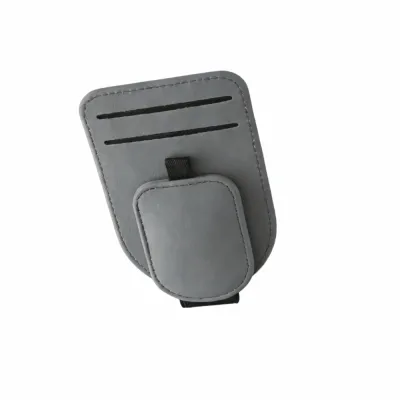
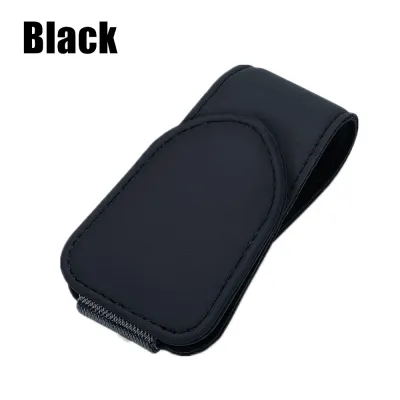
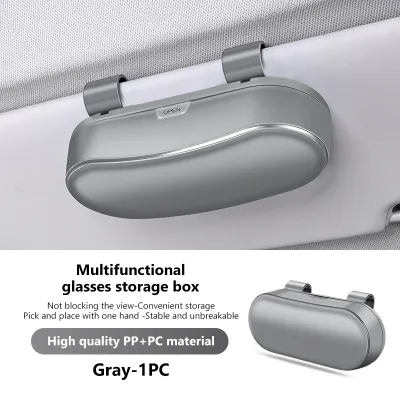
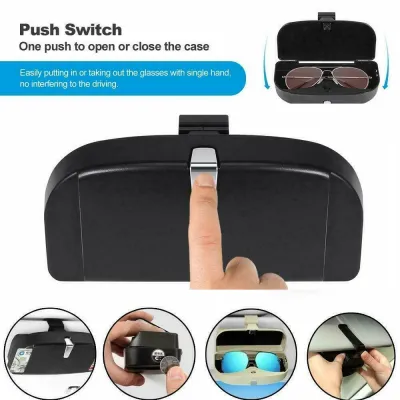

Prices are valid at publication and may change. Please refer to the product page for the latest price.
If you are considering a dashboard or center console mount, you must identify the exact materials used in your car’s interior. Dashboards are commonly made from a variety of materials, including soft-touch plastics, thermoplastic olefins (TPO), synthetic leather, or genuine leather. Adhesives and suction cups interact differently with each material. While a suction cup might hold securely on smooth, hard plastic, it can leave permanent ring marks on soft-touch materials. Strong adhesives can chemically react with leather or synthetic coatings, especially when exposed to intense heat, leading to bubbling, peeling, or tearing upon removal.
Finally, perform an original equipment check before buying an aftermarket solution. Many vehicles come equipped with a built-in overhead sunglasses holder, typically located near the dome lights or sunroof controls. If your car has one of these compartments, inspect it to see if it simply needs a minor repair or a specific insert. Sometimes, a sticky latch can be easily cleaned, or a worn-out foam lining can be replaced with a custom felt insert. Utilizing the original equipment is often the cleanest, safest, and most aesthetic option, saving you from adding unnecessary clutter to your sun visor or dashboard.
Compare the Main Types of Car Sunglass Holders
When looking for an aftermarket sunglass holder, you will generally choose between three primary categories: visor-mounted clips, dashboard or console mounts, and sunroof or overhead console clips. Each type utilizes a different mounting mechanism, offers unique ergonomic benefits, and comes with specific limitations. Finding the right balance between convenience and interior preservation is key to making the best choice for your vehicle.

| Mounting Location | Best Vehicle Type | Primary Limitation | Key Safety Check |
|---|---|---|---|
| Sun Visor | Compact cars, hatchbacks, and sedans | Can cause visor sag; may leave marks on leather | Ensure it does not block the vanity mirror or airbag paths |
| Dashboard / Console | SUVs and vehicles with flat, hard dashboards | Windshield glare; potential adhesive damage | Verify it does not block forward visibility or air vents |
| Sunroof / Overhead | Vehicles with traditional roof consoles and frames | Highly vehicle-specific; won't fit panoramic glass | Check that it does not interfere with sunroof operation |
Visor Clips
Visor clips are the most common and widely available sunglass holders on the market. They attach directly to the driver’s or passenger’s sun visor using a spring-loaded metal clip, a magnetic flap, or an elastic band. This location is highly favored because it keeps your sunglasses within arm’s reach and elevated away from the intense heat of the dashboard.
However, visor clips carry a distinct risk of causing the visor to sag over time if the mounting bracket is too heavy or if your vehicle’s visor hinge is already worn. When selecting a visor clip, it is crucial to check for adequate interior padding, such as high-density foam or soft silicone, to prevent scratching the visor’s fabric or leather wrapping. You should also verify the clip’s grip strength to ensure it will not slip or slide off when you flip the visor down to block the sun.
Dashboard and Console Mounts
Dashboard and center console mounts offer an excellent ergonomic alternative for drivers who prefer not to reach upward while driving. These holders typically secure to the dashboard using double-sided adhesive tape, suction cups, or specialized clips that attach to the air vents. They position your sunglasses at eye level or within the center console area, making them incredibly easy to access.
The primary drawback of dashboard mounting is the risk of windshield glare. If the clip or the sunglasses themselves catch direct sunlight, they can create distracting reflections on the windshield, compromising your forward visibility. Furthermore, using strong adhesives on soft-touch or genuine leather dashboards is highly risky. In hot climates, the adhesive can melt and bond permanently with the dashboard material, causing severe surface damage or tearing when you attempt to remove or reposition the mount.
Sunroof and Overhead Console Clips
Sunroof and overhead console clips are niche mounting solutions designed to tuck into the small gaps surrounding your vehicle’s overhead console, dome light housing, or sunroof tracks. These clips offer a highly integrated, clean look that keeps your sun visors completely free of accessories and reduces visual clutter in your direct line of sight.
While highly aesthetic, these clips are very vehicle-specific. They rely on precise gaps and structural edges near the roofline to hold securely. If your car features a modern, minimalist headliner or a seamless panoramic glass roof without a traditional overhead console frame, these clips will simply have no place to attach. Always verify the exact physical dimensions of your overhead console area before choosing this mounting style.
Key Features to Look for in a Sunglass Clip
To ensure you select a durable, protective, and functional accessory, you should evaluate several key features when comparing different sunglass clips. A high-quality clip must not only hold your glasses securely but also protect them from physical damage and withstand the harsh environment of a car interior.
- Interior Padding and Protection: The inside of the clamping jaws must be lined with soft, protective materials such as EVA foam, microfiber, or medical-grade silicone. Avoid any clip with bare plastic or metal interior surfaces, as these will quickly scratch your sunglasses' frames and delicate lens coatings during daily insertion and removal.
- Clamping Mechanism and Tension: Compare mechanical spring-loaded clips against magnetic closures. Mechanical clips offer a very firm, positive grip, but the spring tension must not be so tight that it bends or deforms thin metal temple arms. Magnetic closures are incredibly smooth and easy to operate, but they require strong neodymium magnets to prevent your glasses from falling when driving over speed bumps or rough roads.
- One-Handed Operation: For driving safety, you must be able to insert and retrieve your sunglasses using only one hand, keeping your other hand securely on the steering wheel. Avoid complex designs that require you to twist dials, pull multiple levers, or use two hands to release the clamping mechanism.
- Lens Protection for Polarized and Coated Lenses: If you wear premium polarized, mirrored, or anti-reflective sunglasses, avoid cheap magnetic clips that feature exposed metal magnetic nodes. While the magnetic field itself will not harm the polarization filter, the hard, exposed metal can easily scratch specialized lens coatings. Opt for clips with fully enclosed magnetic designs where the magnets are sewn or molded deep inside a soft outer sleeve.
- Build Quality and Heat Resistance: The interior of a parked car can reach extreme temperatures, especially in tropical climates. Look for clips constructed from high-grade materials such as automotive-grade ABS plastic, polycarbonate, anodized aluminum, or high-grade silicone. These materials resist warping, melting, and becoming brittle, and they will not off-gas unpleasant chemical odors when exposed to intense solar heat.
Match the Right Sunglass Clip Style to Your Vehicle
To find the perfect match, you should align the style of the sunglass clip with your specific vehicle category and interior layout. Different car designs present unique spatial constraints and material considerations.
Compact Cars and Hatchbacks
In compact cars and hatchbacks, cabin space and headroom are often limited. For these vehicles, low-profile, lightweight visor clips are highly recommended. Compact cars typically feature thinner sun visors and smaller windshield areas. A bulky, heavy visor organizer or a large overhead clip can obstruct your forward view, interfere with the rearview mirror, or bump against your forehead when you get in and out of the car. Choosing a minimalist, slimline clip ensures your sunglasses are stored safely without encroaching on your limited cabin space.
SUVs and Off-Road Vehicles
SUVs, crossovers, and off-road vehicles tend to experience more body roll, vibrations, and bumps. If you drive a larger vehicle, look for heavy-duty, multi-slot visor organizers or rugged overhead console clips. SUV owners often carry multiple pairs of eyewear, such as polarized glasses for driving and specialized sports sunglasses for outdoor activities. A multi-slot organizer with a strong mechanical clamping mechanism or high-tension elastic straps will hold multiple pairs securely, preventing them from rattling or falling out when navigating rough terrain or uneven roads.
Luxury Vehicles and Cars with Leather Interiors
Preserving the aesthetic elegance and material integrity of a luxury cabin requires a careful touch. If your car features high-end materials like genuine leather, synthetic leather (such as Alcantara), or delicate wood-grain trims, you should choose non-destructive overhead clips or premium, softly padded visor clips wrapped in matching leather. Avoid any dashboard adhesive mounts at all costs. The strong adhesives used in automotive mounts can easily tear, discolor, or permanently ruin expensive leather dashboards and wood trims, severely damaging your vehicle’s resale value and interior aesthetics.
Vehicles with Panoramic Sunroofs
Modern vehicles equipped with full panoramic glass sunroofs present a unique challenge. These designs eliminate the traditional central roof beam and overhead console, leaving no structural gaps or frames near the roofline. If your vehicle has a panoramic roof, you should avoid overhead or sunroof-specific clips entirely. Instead, opt for a low-profile visor clip or a dedicated storage tray designed to fit inside your center console or glove box, as these are the only practical areas that do not rely on roof-mounted structures.
Buying Limitations
While many manufacturers market their products as “universal fit,” true universal compatibility is rare. Always cross-reference the product’s stated maximum visor thickness or specific vehicle compatibility list before making a purchase. Measure your visor’s thickness and check the clearance around your rearview mirror to ensure the clip will not interfere with any factory-installed sensors, cameras, or vanity light switches.
Installation Tips and Heat Protection for Car Interiors
Proper installation and ongoing maintenance are essential to protect your car’s interior from damage and ensure your sunglass clip remains secure over time. This is especially true in hot and humid climates, where environmental factors can quickly degrade adhesives and materials.
If you choose a dashboard or console mount that relies on double-sided adhesive or a suction cup, meticulous surface preparation is critical. Start by thoroughly cleaning the mounting area with a mild automotive interior cleaner to remove dust, oils, and dashboard protectants. If the material is safe for alcohol, wipe the surface lightly with a low-concentration isopropyl alcohol prep pad and allow it to dry completely. Safety Check: Always check your vehicle’s owner’s manual and the adhesive manufacturer’s instructions before applying any chemical cleaners to your dashboard to prevent discoloration or surface damage. Once dry, apply the mount and press firmly for the recommended duration, allowing the adhesive to cure fully before hanging any weight on it.
In hot and humid climates, such as Singapore, cabin temperatures can easily exceed 60°C when parked in direct sunlight. This extreme heat causes double-sided foam tapes to soften and slide, and it causes the air inside suction cups to expand, breaking the vacuum seal. For long-term reliability in tropical weather, mechanical clips or magnetic visor mounts are highly recommended over adhesive or suction-based options, as they do not rely on chemical bonding or vacuum seals to stay in place.
To ensure continued safety, perform routine maintenance checks on your sunglass holder. Periodically inspect the tension of mechanical springs to ensure they have not weakened over time, and check that magnetic flaps still snap shut securely. If you are using an adhesive mount, check for any sliding, lifting, or sticky residue around the edges, which are early signs of adhesive failure under heat stress. Replacing the adhesive tape early can prevent the mount from falling while you are driving.
If you eventually need to remove an adhesive mount, do so carefully to avoid tearing your dashboard. Never pry the mount off with raw force or sharp tools. Instead, take a piece of dental floss or high-strength fishing line, slide it behind the mount, and use a gentle sawing motion to slice through the foam adhesive layer. Once the mount is detached, use a gentle, automotive-safe adhesive remover to clean up any remaining residue. Always test the adhesive remover on a small, hidden area of the dashboard first to ensure it does not discolor or damage the surface material.
Frequently Asked Questions (FAQ)
Will a visor clip damage my car's sun visor?
A well-padded sunglass clip used within the manufacturer’s specified thickness limits will not damage your sun visor. However, if you force a clip that is too tight or lacks adequate padding onto an oversized visor, it can cause permanent indentations in the fabric, tear vinyl or leather wrapping, or bend the internal cardboard or plastic structural frame of the visor over time. Always measure your visor and choose a clip with soft EVA foam or silicone lining to protect the surface.
Can I use an adhesive dashboard mount on a leather dash?
We strongly advise against using strong automotive adhesives, such as double-sided acrylic foam tape, on genuine or synthetic leather dashboards. The high cabin temperatures inside a parked car can cause the adhesive to soften and chemically bond with the leather’s delicate topcoat or dye. When you attempt to remove the mount, the adhesive will likely tear the leather surface or leave a permanent, unsightly discolored stain that is expensive to repair.
Do magnetic clips affect polarized sunglasses?
The small magnets used in automotive sunglass clips are generally too weak to alter the physical polarization filter or damage the lenses of your sunglasses. However, if the magnetic nodes are exposed and lack a soft protective covering, they can easily scratch anti-reflective, hydrophobic, or mirrored coatings on your lenses when the glasses are inserted or removed. To prevent this, always select a clip featuring fully enclosed magnets wrapped inside a soft leather or silicone sleeve.
Community discussion
Share your experience or ask a question. Comments are reviewed before publication.