
Choosing a car phone holder suction mount requires more than just matching your device’s screen size. It demands a careful evaluation of your vehicle’s interior surfaces, cabin environment, and safety requirements. A poorly chosen mount can detach unexpectedly while driving, creating a dangerous distraction or damaging your phone. By understanding how different suction technologies interact with glass and plastic, you can select a mount that remains securely in place throughout your daily commute.
Assess Your Car's Installation Surfaces
Your vehicle’s interior design dictates where a suction mount can successfully adhere. Windshields offer a highly reliable glass surface, but their curvature can limit where a flat suction cup can establish a complete vacuum. Steeply angled windshields or those with aftermarket solar films require careful placement, as mounting directly over film seams or defroster lines can damage the material or allow air to seep under the seal.
Dashboards present a more complex challenge due to the variety of materials used in modern vehicles. Textured plastics, soft-touch leatherette, and anti-glare coatings are inherently porous or uneven, which prevents standard suction cups from forming an airtight seal. If your dashboard has a textured surface, a standard suction cup will likely fail within minutes of installation.
Products mentioned in this guide
![🇸🇬[Ready Stock] Long Arm 17mm ball Car Phone Holder Adjustable Windshield Mount Dashboard Phone Stand Accessories with Strong Sticky Washable Suction Cup](https://img.lazcdn.com/g/p/cc18a61a496a7290765dff95e49ab029.jpg_400x400q80.jpg_.webp)
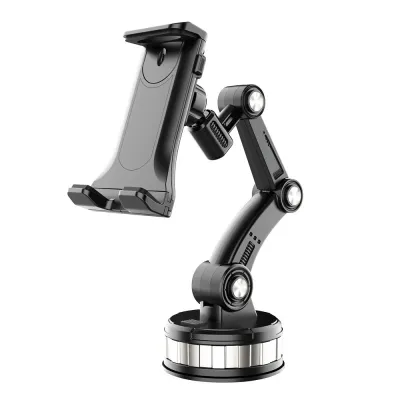
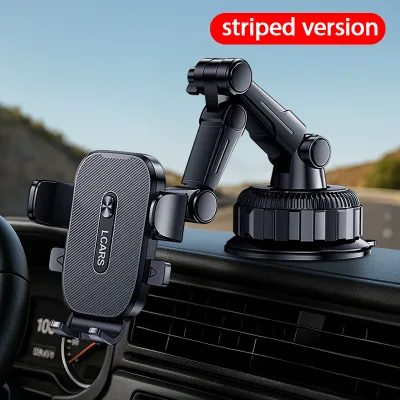
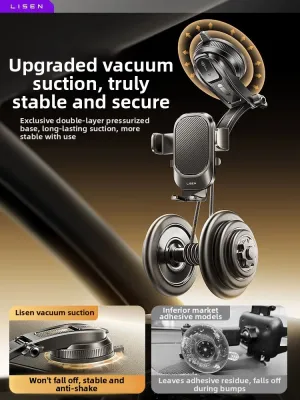
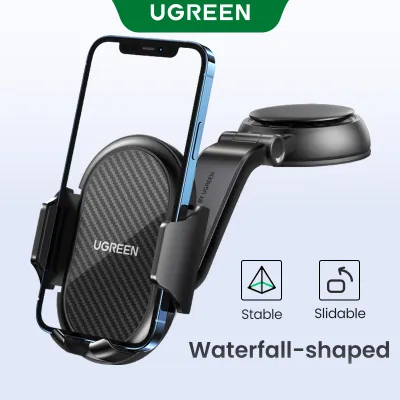
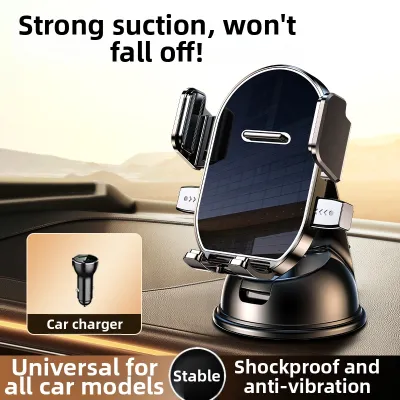
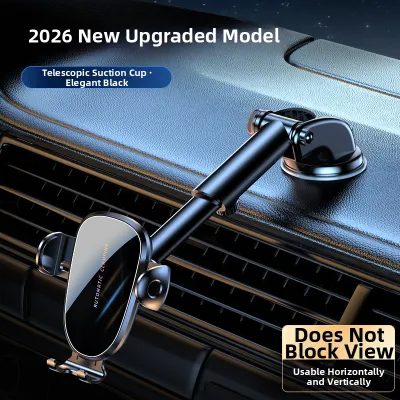

Prices are valid at publication and may change. Please refer to the product page for the latest price.
To overcome textured or curved dashboard surfaces, many mounting kits include a sticky dashboard pad. This adhesive disk features a flat, smooth plastic top and a semi-permanent adhesive backing that bonds to the dashboard. Before using one, verify the manufacturer’s instructions regarding removal, as some strong adhesives can discolor or tear delicate leather and soft-touch plastics over time.
Ensure Safe Placement and Driving Visibility
Positioning your phone holder is a balance between convenient access and unobstructed visibility. When choosing a mounting location, perform a thorough sightline check from your normal driving position. The mount and phone must not block your view of the road, side mirrors, or critical pedestrian zones near intersections and crosswalks.

Airbag deployment zones represent a critical safety boundary that you must never compromise. Avoid placing any mount on or near the passenger-side dashboard, the steering wheel hub, or the side pillars where curtain airbags deploy. In a collision, an airbag inflating at high speed can turn a phone holder into a dangerous projectile inside the cabin.
Local traffic regulations in Singapore strictly govern windshield obstructions. Drivers must ensure that any device mounted on the windscreen does not impair their clear view of the road ahead or traffic conditions. Always verify the latest local road safety guidelines and position the mount as low or as far to the side as possible to maintain compliance.
Match the Mount to Your Phone's Size and Weight
A suction mount is only as stable as its connection to your phone. Modern smartphones vary widely in width, thickness, and weight, especially when housed in protective cases. Measure your device with its case on before selecting a holder, paying close attention to the maximum clamp arm width and depth specifications.
Thick rugged cases, wallet attachments, and ring stands alter the physical profile of your phone. Standard spring-loaded clamps may not have deep enough side arms to securely grip a thick case, causing the phone to slip out during sudden stops or sharp turns. Look for adjustable feet and deeper side clamps if you use heavy-duty protective gear.
The weight of your phone exerts continuous leverage on the suction cup base. Heavy devices or large-screen models create significant downward force, which is amplified if the mount features a long, flexible gooseneck or extension arm. To minimize vibration and prevent the mount from drooping over time, opt for a shorter, rigid arm or a model that includes a support stabilizer that rests against the dashboard.
Evaluate Suction Mechanisms and Base Types
Suction cup technology generally falls into two categories: standard silicone cups and sticky gel pads. Standard silicone cups rely purely on a mechanical vacuum and work best on perfectly smooth, non-porous glass. Sticky gel pads combine a polyurethane gel layer with a vacuum mechanism, allowing the cup to fill minor surface imperfections and grain patterns on semi-textured dashboards.
The mechanical locking mechanism determines how much downward pressure the cup can maintain. Push-and-twist bases or traditional flip-lever locks pull the center of the suction cup upward, creating a powerful vacuum seal. Lever-activated locks are generally easier to engage tightly with one hand and provide a visual cue that the mechanism is fully locked.
Cabin temperatures play a major role in suction longevity. Intense sunlight heating up the windshield can cause the air trapped inside the suction cup to expand, while also softening the silicone or gel material. When selecting a mount, look for temperature-resistant specifications, or consider a hybrid mounting style if your car is regularly parked in unsheltered areas.
Test, Install, and Maintain Your Suction Mount
A secure installation begins with meticulous surface preparation. Dust, grease, fingerprint oils, and dashboard conditioning sprays will quickly ruin any suction seal. Clean the target area thoroughly using a mild cleaner authorized by your vehicle’s manufacturer for that specific surface material, and ensure the area is completely dry before proceeding.
To install the mount, press the suction cup firmly against the prepared surface to push out as much air as possible from beneath the center. While maintaining firm downward pressure, engage the locking lever or twist mechanism to establish the vacuum. If you are using a sticky gel pad, let the adhesive settle for a few minutes before attaching the weight of the phone.
Regular maintenance is essential to prevent unexpected falls. Periodically release the suction lock, clean the mounting surface, and inspect the suction cup for dust buildup. If a sticky gel pad loses its tackiness, you can usually restore its grip by rinsing it under warm tap water, letting it air dry completely, and reinstalling it on a clean surface.
Frequently Asked Questions (FAQ)
Can I use a suction cup holder on a textured dashboard?
Standard suction cups cannot maintain a vacuum seal on textured, porous, or stitched dashboard materials because air constantly leaks through the microscopic gaps. To mount a holder on these surfaces, you must first apply a smooth, adhesive-backed dashboard disk. This disk provides a non-porous, flat plastic surface that allows the suction cup to seal properly.
Why does my suction cup keep falling off in hot weather?
High cabin temperatures cause the small amount of air trapped inside the suction cup to expand, which increases internal pressure and breaks the vacuum seal. Additionally, extreme heat can soften the silicone or gel material, reducing its structural integrity. To mitigate this, park in shaded areas, use a reflective front sunshade, or consider switching to an air vent or CD-slot mount if heat-induced failure persists.
Community discussion
Share your experience or ask a question. Comments are reviewed before publication.