
Choosing the right spoiler for your Tesla Model Y requires balancing your personal style preferences with practical considerations like installation complexity, material durability, and local road regulations. Because the Model Y features a distinct fastback roofline, any modification to the rear hatch will immediately alter both the vehicle’s silhouette and its rearward visibility. To make the best choice, you must first determine whether you are seeking a subtle visual enhancement, a bold sporty statement, or functional aerodynamic changes, and then verify that your chosen style complies with local safety guidelines.
Understand Your Goals: Aesthetics vs. Aerodynamics
Before browsing aftermarket catalogs, clarify what you want to achieve by adding a spoiler to your Tesla Model Y. For the vast majority of drivers, a spoiler is primarily a cosmetic upgrade. The Model Y’s high, sloping rear deck lid provides an excellent canvas for customization, allowing you to break up the rounded rear profile and give the car a more planted, aggressive stance. If your goal is purely visual, you can focus entirely on how the spoiler’s shape, height, and finish complement your paint color and wheel style.
If you are hoping for functional aerodynamic benefits, such as increased downforce or improved high-speed stability, it is crucial to set realistic expectations. The Tesla Model Y is engineered from the factory with an exceptionally low drag coefficient to maximize battery range. Adding an aftermarket spoiler can alter this delicate balance. While some designs claim to reduce lift at highway speeds, actual aerodynamic improvements require verified wind-tunnel data or computational fluid dynamics (CFD) testing from the specific manufacturer. Without such evidence, assume that an aftermarket addition will primarily serve an aesthetic purpose and may even slightly decrease your overall efficiency by introducing extra drag.
Products mentioned in this guide
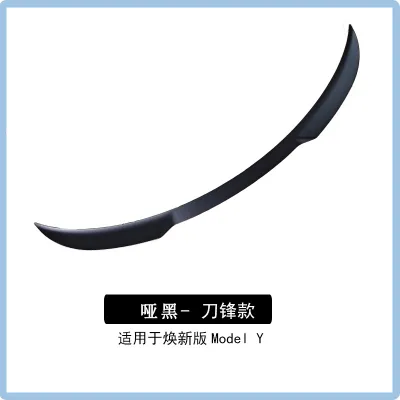
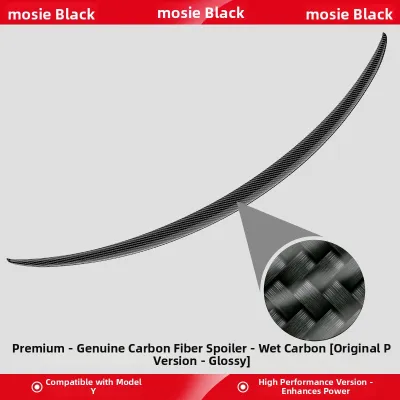
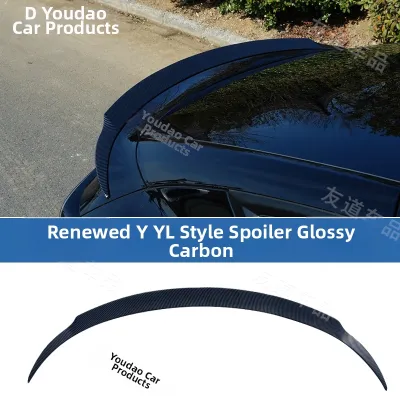
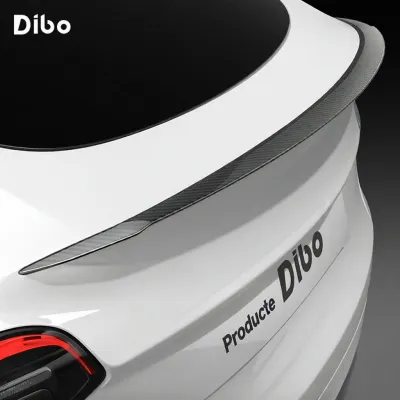
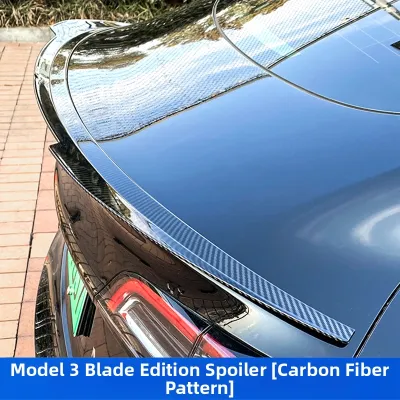
Prices are valid at publication and may change. Please refer to the product page for the latest price.
Compare Spoiler Styles for the Model Y Roofline
The Model Y’s fastback silhouette means that different spoiler styles will interact uniquely with the rear window line, the hatch terminus, and your view through the rearview mirror. There are three primary styles available on the market: lip spoilers, ducktail spoilers, and wing spoilers.

Lip Spoilers
Lip spoilers are the most subtle option available. These flush-mounted designs sit flat against the trailing edge of the rear hatch, following the natural curve of the metal or glass. They offer a clean, understated visual extension that closely mimics the factory spoiler found on the Performance trim of the Model Y. Because they do not extend upward significantly, lip spoilers have virtually zero impact on your rearward visibility and maintain the clean, minimalist design language of the vehicle. They are an excellent choice if you want a subtle upgrade that looks like it came directly from the factory.
Ducktail Spoilers
Ducktail spoilers feature a more pronounced upward sweep at the very edge of the hatch. This style creates a distinct kick-up profile that catches the light and gives the rear of the Model Y a much sportier, more muscular appearance. While more aggressive than a standard lip spoiler, a well-designed ducktail spoiler still integrates smoothly with the fastback roofline. It strikes a popular balance for daily drivers, offering a noticeable custom look without extending so high that it blocks your view of traffic through the rear window.
Wing Spoilers
Wing spoilers are elevated or pedestal-mounted designs that stand proud of the rear hatch. These are the most aggressive and visually striking options, often drawing inspiration from GT racing. However, installing a wing spoiler on a Model Y requires careful consideration. The elevated profile can significantly obstruct your view through the narrow rear window, forcing you to rely more heavily on your side mirrors and rear camera feed. Additionally, because they sit higher in the airflow, wing spoilers are more likely to impact your vehicle’s aerodynamic efficiency and range, and they require robust mounting solutions to withstand high-speed wind resistance.
Verify Fitment, Materials, and Road Legality
Selecting a spoiler style is only the first step; you must also ensure the product is physically compatible with your specific vehicle, made of durable materials, and legally compliant for use on public roads.
Fitment and Hatch Construction
Do not assume that all Tesla Model Y accessories fit every model year or variant. While the exterior sheet metal has remained largely consistent, minor manufacturing variations, refresh updates, or differences between factory production locations can affect the precise curvature of the rear hatch. Furthermore, you must verify the material of your mounting surface. Some Model Y variants or aftermarket hatches may feature different composite or glass configurations near the upper edge. Always check the manufacturer’s fitment guide to confirm compatibility with your exact model year and production origin before purchasing.
Material Selection
Aftermarket spoilers are typically manufactured from one of three materials: ABS plastic, polyurethane (PU), or carbon fiber.
- ABS Plastic: This is a lightweight, rigid, and highly cost-effective material. It is easy to paint-match to your Tesla's factory color or finish in a matte or gloss black. However, cheap ABS can become brittle over time when exposed to intense sunlight.
- Polyurethane (PU): Highly flexible and durable, polyurethane is exceptionally resistant to impacts and temperature fluctuations. Its flexibility makes it easier to align during installation, though it requires proper priming to ensure paint adheres permanently.
- Carbon Fiber: Offering an authentic motorsport aesthetic, carbon fiber is incredibly strong and lightweight. It is available in molded wet carbon or premium dry carbon finishes. When choosing carbon fiber, look for products with high-quality, UV-resistant clear coats to prevent yellowing or hazing under constant sun exposure.
Rather than relying solely on the material name, check the manufacturer’s specifications regarding UV protection and warranty coverage against material degradation.
Legal and Safety Boundaries
In Singapore, vehicle modifications are strictly regulated by the Land Transport Authority (LTA). When choosing and installing an aftermarket spoiler, you must ensure that the modification does not compromise road safety or violate local guidelines. Under LTA standards, any exterior attachment must be securely fastened and must not have sharp edges or protrusions that could pose a hazard to other road users.
Crucially, the spoiler must not obscure your vehicle’s lighting systems or driver visibility. It must not block the high-mount stop lamp (third brake light) located at the top of the rear window, nor can it interfere with the field of view of the rear-facing Autopilot and backup cameras. If a spoiler extends beyond the physical width of the car’s body or severely limits your rearward sightlines, it may fail vehicle inspections and lead to fines.
Evaluate Installation Methods and Professional Help
How a spoiler attaches to your Model Y affects not only the ease of installation but also the long-term integrity of your vehicle’s bodywork. Most spoilers are installed using either high-strength automotive adhesive or mechanical fasteners.
Adhesive Mounting
The vast majority of lip and ducktail spoilers rely entirely on double-sided automotive adhesive tape, such as 3M VHB. This method requires no drilling, making it completely reversible and safe for your vehicle’s paint. However, a secure bond depends entirely on meticulous surface preparation.
- Clean the hatch surface thoroughly to remove all dirt, road grime, and wax.
- Use an isopropyl alcohol wipe to ensure a completely grease-free surface.
- Apply an adhesive promoter (primer) if recommended by the manufacturer to enhance the tape's grip.
- Align the spoiler precisely using painter's tape as a guide before exposing the adhesive.
- Apply firm, even pressure across the entire length of the spoiler and allow the adhesive to cure undisturbed—typically for at least 24 to 48 hours—before driving or exposing the car to water.
Drilling and Bolt-on Mounting
Some heavy wing spoilers require drilling holes into the rear hatch to secure them with bolts. While this provides a highly secure mechanical connection that can withstand significant aerodynamic loads, it carries substantial risks. Drilling into the metal hatch exposes the raw edges to potential rust and water ingress if not sealed with high-grade silicone and rust-inhibiting primer. Furthermore, any drilling or structural modification to the hatch can void your vehicle’s body warranty and complicate future resale.
When to Stop and Seek Professional Help
You should halt any DIY installation and consult a professional automotive technician if you encounter any of the following scenarios:
- The installation instructions conflict with your Tesla owner's manual or safety warnings.
- The spoiler requires wiring modifications, such as tapping into the vehicle's electrical system to power an integrated third brake light.
- The mounting position requires drilling into or applying high pressure near a glass section of the rear hatch, which carries an immediate risk of shattering the glass.
- You are uncomfortable performing the precise alignment required, as a misaligned adhesive spoiler can be incredibly difficult to reposition once the tape makes contact.
Maintenance and Care for Aftermarket Spoilers
Once your spoiler is installed, regular maintenance is required to ensure it remains visually appealing and structurally secure, especially under Singapore’s hot, humid, and rainy tropical climate.
Regular Inspections
Incorporate a quick spoiler check into your weekly car washing routine. Gently wiggle the spoiler to check for any play, rattling, or lifting at the edges. If you notice the adhesive tape beginning to peel or separate from the hatch, avoid driving at highway speeds, as wind pressure can catch the loose edge and tear the spoiler off completely, creating a severe road hazard.
Washing and Cleaning
When washing your Model Y, use pH-neutral car shampoos and soft microfiber mitts. If you have a carbon fiber or painted spoiler, avoid using abrasive cleaners or harsh chemicals that can strip the clear coat. When using a pressure washer, never point the high-pressure nozzle directly at the mounting seams or adhesive tape edges, as the intense water pressure can force its way under the tape and degrade the bond.
Addressing Wear and Tear
Over time, intense UV exposure can cause clear coats to fade or ABS plastics to chalk. If you observe severe UV degradation, cracking, or structural damage to the spoiler, it should be professionally repaired or removed and replaced to prevent it from failing structurally while driving.
Frequently Asked Questions (FAQ)
Will adding a spoiler void my Tesla warranty?
Installing an aftermarket spoiler will not automatically void your entire Tesla vehicle warranty. However, any damage directly caused by the spoiler or its installation will not be covered. For example, if a bolt-on installation causes water leaks into the trunk, or if removing an adhesive spoiler damages the factory paint, Tesla will deny warranty claims related to those specific components. The rest of your vehicle’s powertrain, battery, and electronics warranties will remain unaffected.
Do I need to recalibrate the rear cameras after installing a wing?
Physical recalibration of the Autopilot or backup cameras is generally not required after installing a spoiler. However, before driving, you must sit in the vehicle and physically verify the camera feeds on your center touchscreen. Ensure that no part of the spoiler or wing protrudes into the camera’s field of view or casts shadows that could confuse the Autopilot sensors. If the spoiler obstructs the camera, it must be adjusted or removed.
Can I install a spoiler on the glass rear hatch of the Model Y?
You must never attempt to drill into a glass hatch or any glass panel of the Model Y, as this will instantly shatter the glass. If your specific Model Y configuration or aftermarket hatch design features glass near the mounting area, you must use only high-strength, manufacturer-approved adhesive mounting methods designed specifically for glass-to-composite bonding. For maximum safety, consult a professional installer to evaluate the mounting surface before proceeding.
Community discussion
Share your experience or ask a question. Comments are reviewed before publication.