
When navigating dense city traffic, choosing a blind spot mirror small enough to preserve your primary view while expanding your peripheral awareness is one of the simplest yet most effective safety upgrades you can make. The primary challenge drivers face is not finding a mirror that shows the blind spot, but finding one that does so without rendering the main side mirror useless. A poorly sized or incorrectly placed add-on can block critical rearward vision, creating new hazards while attempting to solve an old one.
To make an informed decision, you must understand the geometric relationship between your vehicle’s side mirrors and the adjacent lanes. This guide outlines how to measure your existing mirror glass, select the ideal shape and size for your specific vehicle type, and position the add-on for maximum safety on the road.
The Golden Rule: Maximizing View Without Blocking the Main Mirror
The fundamental trade-off of installing an auxiliary mirror lies in balancing two distinct visual fields. Your vehicle’s original side mirror is engineered with a flat or slightly convex curvature designed to provide an accurate representation of distance. This primary mirror allows you to judge the speed and distance of trailing vehicles. When you add a highly convex auxiliary mirror, you are introducing a compressed, wide-angle view into a very limited space. If the add-on is too large, it encroaches on the primary mirror’s surface, making it difficult to safely judge distance when changing lanes or merging.
Products mentioned in this guide
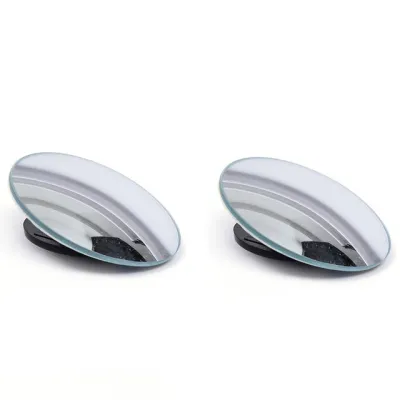
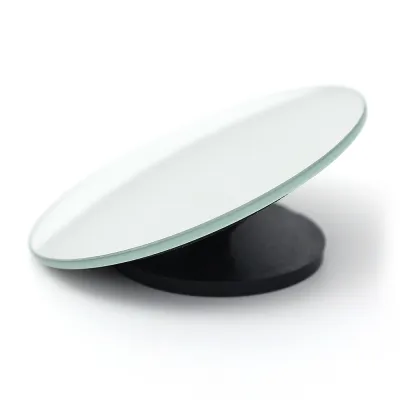
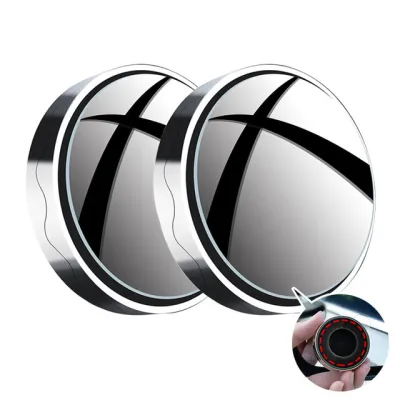
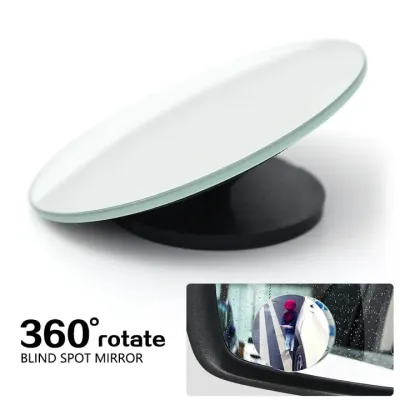
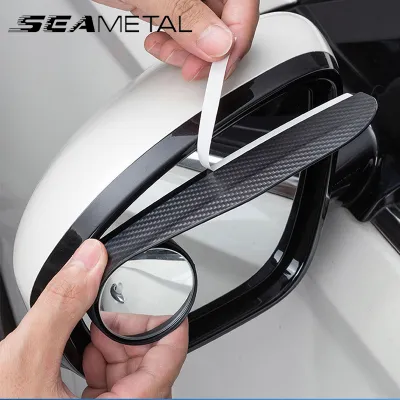
Prices are valid at publication and may change. Please refer to the product page for the latest price.
In the automotive aftermarket, a “small” auxiliary mirror typically ranges from 2 inches to 3 inches (approximately 5 cm to 7.5 cm) in diameter. Maintaining this size range ensures that the primary mirror remains fully functional for standard rearward vision, while the small add-on mirror is dedicated strictly to capturing the adjacent lane and the rear quarter-panel blind spot. The goal is to create a dual-view system where your eyes can quickly transition between the true-distance reflection of the main glass and the wide-angle sweep of the auxiliary mirror.
When a blind spot mirror small format is selected correctly, it acts as a visual verification tool rather than a primary viewing source. You should still rely on your main mirror for general traffic awareness and use the small mirror to confirm whether a vehicle, cyclist, or motorcycle is hiding in your immediate blind spot. Over-sizing this accessory defeats its purpose by forcing your eyes to interpret a distorted, wide-angle image across a larger portion of your visual field, which can increase cognitive load and reaction times during critical driving maneuvers.
How to Measure Your Side Mirror to Find the Perfect Fit
Before purchasing any aftermarket accessory, taking precise measurements of your vehicle’s side mirror glass is essential. Using a flexible sewing tape measure is highly recommended, as it conforms to the slight curvature of the mirror glass far better than a rigid metal tape measure, which can slip or scratch the surface. Measure the maximum vertical height and the maximum horizontal width of the exposed glass surface, keeping within the inner rubber or plastic bezel of the mirror housing.

Once you have these measurements, apply the “15% to 20% Rule” to determine the maximum safe size for your auxiliary mirror. This rule dictates that the add-on mirror should cover no more than 15% to 20% of the total surface area of the primary mirror. To calculate this, you can approximate your mirror’s surface area. For example, if your side mirror glass measures 15 cm wide by 10 cm high, its approximate rectangular surface area is 150 square centimeters. A standard 2-inch (5 cm) round auxiliary mirror has a surface area of approximately 19.6 square centimeters. This occupies roughly 13% of the main mirror’s surface area, making it an excellent, safe fit that leaves the remaining 87% of the glass unobstructed.
Beyond surface area, you must evaluate the physical curvature of your mirror housing. Modern aerodynamic side mirrors often feature heavily curved outer edges or tapered housings. These designs reduce the flat, usable surface area available for adhesive backing. If your mirror housing is aggressively tapered, a round mirror might not sit flush, leaving gaps in the adhesive bond that could cause the mirror to fall off at high speeds. Inspect the glass surface to identify the flattest zone—usually near the outer or lower edges—where the double-sided tape can achieve 100% contact.
Finally, check the mechanical integrity of your mirror’s pivot mechanism. Many modern vehicles feature motorized adjustment systems, auto-folding mechanisms, or heated glass elements. Adding weight to the glass assembly can place additional strain on the internal plastic gears and motors. While a small glass mirror is relatively light, larger models or those with heavy plastic swivel mounts can cause the mirror glass to vibrate or droop when driving over rough road surfaces or at highway speeds. Ensuring your auxiliary mirror is lightweight and properly sized prevents premature wear on these delicate electronic components.
Shape vs. Size: Which Blind Spot Mirror Small Format Works Best?
The shape of your auxiliary mirror directly influences both the width of the field of view and the degree of obstruction to your primary mirror. Different shapes utilize the available glass real estate in distinct ways, making certain designs highly compatible with specific mirror profiles while others may create dangerous blind spots within the main reflection.
Round Mirrors (2 to 3 Inches)
Round auxiliary mirrors are the most common design available and offer a highly symmetrical, concentrated wide-angle view. Their lack of sharp corners minimizes visual distraction, allowing the driver’s eye to process the reflection quickly. A 2-inch round mirror is considered the universal standard for compact and mid-sized vehicles, offering an excellent balance of view and space preservation. However, a 3-inch round mirror, while providing a wider field of view, is often too large for standard passenger cars and should generally be reserved for larger utility vehicles.
Square and Rectangular Mirrors
Square and rectangular designs are engineered to maximize the horizontal or vertical viewing plane. By aligning flush with the straight edges of your side mirror housing, these shapes fit neatly into the corners without leaving wasted space. They are particularly effective at showing a wider horizontal view of multi-lane roads. The trade-off is that their sharp corners can occasionally create visual clutter, and their larger physical profile can block a significant portion of the primary mirror’s vertical view, which is necessary for tracking approaching traffic from a distance.
Fan-Shaped and Contoured Mirrors
Fan-shaped or wedge-shaped mirrors are specifically designed to follow the natural, curved contours of modern aerodynamic side mirrors. These mirrors typically feature a curved outer edge and a flat inner edge, allowing them to nestle perfectly into the outermost corner of the mirror housing. This design maximizes the usable wide-angle view while keeping the obstruction of the primary mirror to an absolute minimum. They are highly recommended for smaller, sportier side mirrors where every millimeter of glass is critical.
| Shape | Typical Size Range | Best Vehicle Type | Field of View Characteristics | Obstruction Risk |
|---|---|---|---|---|
| Round | 2 to 2.5 inches (5.0 to 6.4 cm) | Compacts, Hatchbacks, Sedans | Symmetrical, highly concentrated wide-angle view | Moderate (if larger than 2.5 inches) |
| Rectangular | 2.5 to 3.5 inches (6.4 to 8.9 cm) | SUVs, Vans, Station Wagons | Wide horizontal view, excellent for multi-lane roads | High (blocks significant vertical space) |
| Fan-Shaped | 2 to 2.5 inches (5.0 to 6.4 cm) | Sports Cars, Modern Crossovers | Contoured to match mirror edges, maximizes space | Very Low (hugs the outer corner) |
Where to Place Your Small Blind Spot Mirror for Zero Obstruction
Once you have selected the appropriate size and shape, determining the correct placement on your side mirror glass is the next critical step. Incorrect placement can render the auxiliary mirror useless or, worse, block the exact area of the primary mirror needed to see vehicles approaching rapidly from behind.
Top Outer Corner (The Standard Approach)
Placing the auxiliary mirror in the top outer corner of your side mirror glass is the most common and widely recommended configuration. This position keeps the entire bottom and inner portions of the main mirror completely clear. The lower half of your side mirror is vital for maintaining a clear view of lane markings, low-lying obstacles, and the front bumper of trailing vehicles. By keeping the auxiliary mirror high and to the outside, you preserve this critical lower field of view while utilizing the upper outer corner to capture the elevated blind spot where overtaking vehicles first appear.
Bottom Outer Corner (The Lane-Change and Parking Focus)
Positioning the mirror in the bottom outer corner is highly favored by drivers who prioritize parking accuracy and low-speed maneuvering. This placement allows you to see the rear wheels of your vehicle, making it much easier to avoid curbing your wheels in tight parking structures or navigating narrow lanes. It also provides a clear view of the adjacent lane at a lower angle. However, the primary drawback of this position is that it blocks the lower portion of your main mirror, which can make it harder to spot low-profile vehicles, motorcycles, or road hazards that are close to the rear of your car.
Why to Avoid Inner-Edge Placement
Under no circumstances should an auxiliary mirror be placed on the inner edge of the side mirror (the side closest to the car body). The inner portion of your side mirror is already partially obstructed by the vehicle’s own door pillars and bodywork. Placing a convex mirror here severely limits its adjustable angle, as the reflection will consist largely of your own car’s paintwork. Furthermore, placing the mirror on the inner edge forces your eyes to travel further across the glass surface to process the image, increasing the time your eyes are off the road ahead.
Recommended Small Blind Spot Mirror Sizes by Vehicle Type
Selecting the right auxiliary mirror is not a one-size-fits-all process. The physical dimensions of your vehicle’s side mirrors vary significantly depending on the class of vehicle you drive. Tailoring your selection to your vehicle category ensures optimal performance and safety.
Compact Cars and Hatchbacks
For compact cars and hatchbacks (such as the Honda Jazz, Toyota Yaris, or Mazda 2), preserving mirror real estate is the absolute highest priority. These vehicles feature highly compact side mirror housings designed for aerodynamics and tight city spaces. For these mirrors, a 2-inch (5 cm) round mirror or a small, contoured fan-shaped mirror is the only safe option. Anything larger will easily violate the 20% surface area rule, blocking a dangerous amount of the primary reflection and making standard lane changes highly problematic.
Sedans and Crossovers
Mid-sized sedans and crossovers (such as the Mazda 3, Honda HR-V, or Toyota Corolla) offer slightly more generous mirror dimensions. These vehicles can comfortably accommodate a 2.5-inch round mirror or a slim rectangular mirror. This slightly larger size provides a wider horizontal field of view, which is highly beneficial when driving on multi-lane expressways where traffic moves at varying speeds. The increased surface area of the auxiliary mirror allows for quicker visual scanning without compromising the primary mirror’s utility.
Large SUVs and Pickups
Large utility vehicles, vans, and pickup trucks (such as the Ford Ranger, Toyota Land Cruiser, or Toyota HiAce) feature massive side mirrors designed to handle substantial rearward blind spots. Because these vehicles have large physical dimensions and longer blind spots, they require larger auxiliary mirrors to provide adequate coverage. A 3-inch to 4-inch wide-angle mirror, or even a dual-mirror setup with integrated convex lenses, is highly appropriate here. The expansive glass surface of these vehicles easily accommodates larger add-ons without encroaching on the primary viewing zone.
Material Considerations: Glass vs. Acrylic
When choosing your auxiliary mirror, you will also need to decide between glass and acrylic construction. Glass mirrors offer superior optical clarity, do not distort the reflection, and are highly resistant to scratching from road grit, wiper blades, or car wash brushes. They also withstand long-term exposure to intense sunlight and high humidity without yellowing or hazing. Acrylic mirrors, on the other hand, are highly shatterproof and exceptionally lightweight, making them easier on motorized mirror pivots. However, they are prone to fine scratches over time, which can scatter light and cause distracting glare during night driving.
How to Install and Adjust Your Small Blind Spot Mirror Correctly
A secure installation and precise adjustment are critical to ensuring your auxiliary mirror functions safely and remains attached to your vehicle over years of exposure to weather and road vibrations.
Step 1: Surface Preparation
Before applying any adhesive, the surface of your primary mirror glass must be chemically clean. Road grime, car wax, rain-repellent coatings, and ceramic sealants create a microscopic barrier that will prevent adhesive tape from bonding securely. Wash the mirror thoroughly with automotive soap and water, dry it completely, and then wipe the installation area with a clean microfiber cloth saturated with isopropyl alcohol (rubbing alcohol). Allow the alcohol to evaporate completely; this leaves a perfectly clean, bare glass surface optimized for maximum adhesive contact.
Step 2: Adhesive Application and Curing
Most high-quality auxiliary mirrors utilize double-sided acrylic foam tape (such as 3M automotive tape) for mounting. Carefully peel the protective backing from the adhesive tape, taking care not to touch the sticky surface with your fingers, as skin oils can weaken the bond. Align the mirror precisely over your pre-determined placement spot. Once the adhesive touches the glass, it cannot be easily repositioned without damaging the tape. Press the auxiliary mirror firmly against the glass for 30 to 60 seconds, ensuring even pressure across the entire mounting base.
For the bond to reach its maximum strength, the adhesive must cure. It is highly recommended to let the adhesive cure for at least 24 hours before driving the vehicle at high speeds, exposing it to heavy rain, or taking it through an automatic car wash. In warm, humid tropical climates, the curing process occurs reliably, but rushing this step can lead to the adhesive failing prematurely, causing the mirror to fall off on the road.
Step 3: Precise Angle Adjustment
Once the mirror is securely mounted, sit in your normal driving position and adjust your primary side mirrors first. Your main side mirror should be adjusted so that you can just barely see the edge of your own vehicle’s rear fender in the innermost part of the glass. Next, adjust the auxiliary mirror. If you selected a swivel-mount model, tilt the small mirror outward until it captures the lane immediately adjacent to your vehicle—the zone that is no longer visible in your main mirror.
Avoid angling the auxiliary mirror too far outward, as this will show only the sky or roadside barriers, rendering it useless. Conversely, do not angle it too far inward, as this will merely duplicate the view already provided by your main mirror. The ideal adjustment creates a seamless visual handoff: as an overtaking vehicle begins to disappear from your rearview mirror, it should appear in your side mirror, and as it leaves your side mirror, it should immediately become visible in your small auxiliary mirror.
Frequently Asked Questions (FAQ)
Are small blind spot mirrors legal for road use in Singapore?
Yes, installing auxiliary blind spot mirrors is entirely legal and accepted by the Land Transport Authority (LTA). Because these accessories are classified as minor exterior attachments, they do not require official approval, provided they meet basic safety criteria. The mirrors must be securely bonded to the existing side mirror glass, must not protrude beyond the maximum width of the vehicle’s original side mirror housings, and must not obstruct the driver’s forward field of view. Additionally, they must not completely block the mandatory rearward field of view required from the primary side mirrors.
Do I still need a physical blind spot mirror if my car has electronic sensors?
Yes, physical auxiliary mirrors remain a highly valuable safety backup even if your vehicle is equipped with an electronic Blind Spot Information System (BSI). Electronic sensors rely on radar or cameras, which can occasionally experience system latency, software glitches, or sensor blindness during torrential tropical downpours or when covered in road grime. Furthermore, electronic sensors are calibrated to detect standard passenger vehicles and may occasionally fail to register narrow, fast-moving profiles such as lane-splitting motorcycles or bicycles. A physical mirror operates with zero latency, requires no electrical power, and provides a direct, fail-safe visual confirmation that electronic systems cannot match.
How do I safely remove a blind spot mirror without scratching the glass?
To remove an old or incorrectly positioned auxiliary mirror without damaging your primary mirror glass, never use metal scrapers, screwdrivers, or razor blades, as these will permanently scratch or gouge the glass surface. Instead, use a length of high-strength dental floss or monofilament fishing line. Wrap the ends around your fingers and slide the line behind the auxiliary mirror, using a gentle sawing motion to slice through the foam core of the double-sided adhesive tape. Once the mirror is detached, apply a dedicated automotive adhesive remover, eucalyptus oil, or WD-40 to the remaining foam residue. Let it sit for a few minutes to soften the adhesive, then wipe it clean with a microfiber cloth.
Community discussion
Share your experience or ask a question. Comments are reviewed before publication.