
Adding a car blind spot mirror is a practical way to improve spatial awareness on busy roads. However, choosing the wrong size or shape can obstruct your primary rearward view, creating new safety hazards. To find the perfect fit, you must evaluate your vehicle’s mirror dimensions, choose a shape matching its contour, and select a mounting method compatible with your car’s built-in technology.
How to Balance Mirror Size and Field of View
When shopping for a car blind spot mirror, dimensions are typically listed as a diameter for round models or a diagonal measurement for rectangular and fan-shaped designs. While a larger accessory provides a wider field of view, it also occupies more physical space on your original side mirror. This creates a critical safety trade-off that you must balance before making a purchase.
Your primary side mirror uses flat glass to provide an accurate representation of depth and distance, which is essential for judging the speed of approaching vehicles. If your blind spot accessory is too large, it blocks this vital perspective, leaving you with a wide-angle view that distorts how close other vehicles actually are.
Products mentioned in this guide
![[SG STOCK]2PCS Blind Spot Mirror Set | Wide Angle Round Convex Rearview Auxiliary Mirrors for Car Reversing & Safety](https://img.lazcdn.com/g/p/b645ffc682f7c80ff3a364723c3a30df.jpg_400x400q80.jpg_.webp)
Prices are valid at publication and may change. Please refer to the product page for the latest price.
To maintain a safe balance, ensure the accessory does not dominate your side mirror housing. A reliable guideline is to ensure that at least 70% to 80% of your original, flat side mirror glass remains completely unobstructed. For compact passenger cars, a small 1.5-inch to 2-inch mirror is typically the maximum usable size, while larger SUVs and commercial vans with taller mirror housings can comfortably accommodate larger options.
Decoding Shapes and Curvature Specifications
The physical design of your blind spot accessory plays a major role in how well it integrates with your vehicle’s existing exterior styling and housing geometry. Understanding how different shapes and glass curvatures function will help you select a model that aligns with your driving habits.

Round, Square, and Fan-Shaped Mirrors
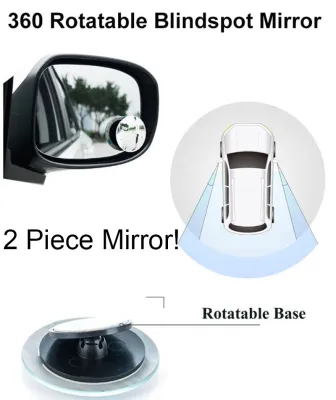
Round mirrors are the most traditional and versatile option. Because they lack sharp angles, they can be placed in almost any corner of a side mirror without overhanging the plastic bezel. However, their symmetrical shape distributes their reflection equally in all directions, which can waste valuable viewing area on the sky or the road surface.
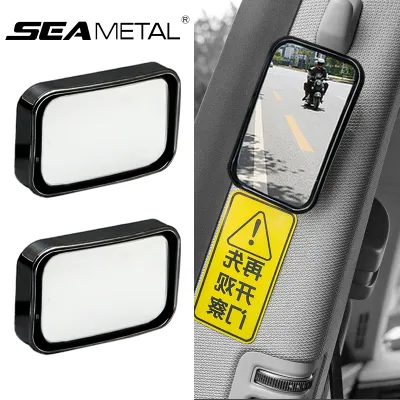
Square and rectangular mirrors are ideal for blockier vehicle designs, such as off-road SUVs or delivery vans, providing a structured horizontal view that aligns well with taller mirror housings.
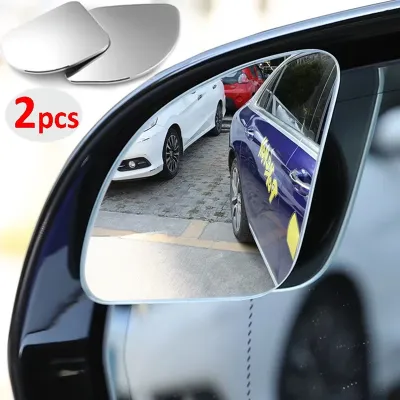
Fan-shaped, wedge, or teardrop mirrors are specifically engineered to match the swept-back, aerodynamic curves of modern passenger cars. These designs hug the outer corners of your side mirrors, maximizing horizontal coverage across multiple lanes while minimizing vertical space consumption.
Frameless vs. Framed and Convexity Levels
Framed mirrors have a plastic border that protects the glass edges but slightly reduces the active viewing area. Frameless designs offer a clean, modern aesthetic that blends seamlessly into your original mirror glass.
From a practical standpoint, frameless mirrors are highly beneficial in tropical climates characterized by heavy rainfall. Because they lack a raised outer border, rainwater sheds off the glass surface much more effectively, preventing water droplets from pooling and obscuring your view during sudden downpours.
Curvature specifications dictate how wide your field of view will be. Standard convex mirrors offer a mild, natural curve that gently expands your peripheral vision. Ultra-wide-angle mirrors utilize a much tighter, more aggressive curvature to eliminate blind spots entirely.
However, higher levels of convexity introduce significant visual distortion. Objects in these highly curved mirrors will appear much smaller and significantly further away than they are in reality. You must treat the blind spot mirror strictly as a presence detector—to confirm if a vehicle is next to you—while relying entirely on your flat main mirror to judge the actual gap distance before changing lanes.
Choosing the Right Mounting Type for Your Side Mirrors
Securing the accessory to your vehicle requires choosing a mounting method that offers long-term stability without damaging your original equipment. The three primary options are adhesive stick-on mirrors, clip-on housings, and complete glass replacements.
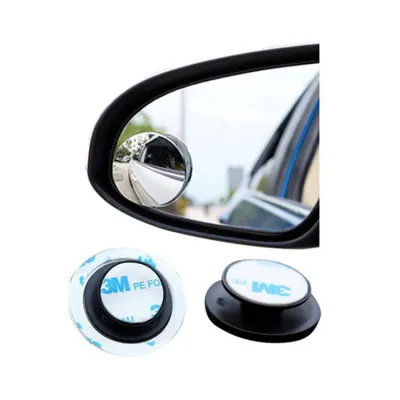
Adhesive stick-on mirrors are the most popular and easiest to install, using double-sided tape to bond directly to your existing mirror glass. While they are highly stable, removing them can be difficult and may require specialized adhesive solvents to avoid scratching the glass.
Clip-on mirrors attach to the outer plastic rim of your side mirror housing. They are easy to adjust or remove entirely, making them excellent for rental cars or shared family vehicles. However, they can add wind resistance, create minor wind noise at high speeds, and may not fit securely on thick or highly stylized plastic bezels.
Complete glass replacements offer a premium, factory-installed look by replacing your entire side mirror glass with a dual-focus or wide-angle lens. While highly effective, they require vehicle-specific compatibility and often necessitate professional installation to avoid damaging internal adjustment motors.
If you choose an adhesive model, you must consider environmental factors. In tropical regions with intense solar heat and high humidity, standard household double-sided tape will rapidly degrade, causing the accessory to fall off while driving. Before purchasing, verify the product documentation to ensure it uses high-quality, weather-resistant, automotive-grade adhesive rated for high-temperature outdoor environments.
Before applying any adhesive, clean the mirror glass thoroughly. Use only a label-authorized automotive glass cleaner and follow your vehicle manufacturer’s specific glass care instructions to avoid damaging any specialized anti-glare coatings.
Safety & Compatibility Boundary: Modern side mirrors are highly complex safety components. Many vehicles feature integrated LED turn signal indicators, auto-dimming glass layers, heating elements for defogging, or built-in Blind Spot Monitoring (BSM) warning lights. Before mounting any stick-on or clip-on accessory, consult your vehicle’s owner manual. Placing an adhesive pad directly over a heating element or warning light can block critical safety alerts, damage delicate heating lines, or void your manufacturer’s warranty. If your mirror contains these active electronic features, ensure the accessory is positioned completely clear of them, or consult a qualified professional for alternative blind spot solutions.
How to Measure and Position Your Blind Spot Mirror
To ensure a successful installation, take precise measurements of your side mirror before purchasing an accessory. Use a flexible measuring tape to find the height and width of the flat, usable glass surface. Compare these dimensions against the product specifications to confirm that the accessory will fit within the physical boundaries of the glass while leaving 70% to 80% of the flat mirror unobstructed.
Finding the optimal placement depends on your seating position and driving preferences. The most common strategy is to place the accessory in the outer lower corner of the side mirror glass. This position keeps the inner and upper portions of your flat mirror completely clear for standard distance judgment while capturing low-lying vehicles or motorcycles in your blind spot.
Alternatively, some drivers prefer the outer upper corner. This can be useful if you have a lower seating position and want to keep your downward sightline clear for parking next to curbs. Whichever corner you choose, ensure the accessory does not overhang the plastic bezel, which could prevent the electric mirror motor from adjusting properly.
To adjust your new mirror, sit in your normal driving position and adjust your main side mirror first. If your blind spot mirror has an adjustable swiveling base, tilt it slightly outward. It should not duplicate the view of your main mirror; instead, its inner edge should just capture the side of your car, while the rest of the curved glass points directly into the adjacent lane.
In a Right-Hand Drive (RHD) market like Singapore, the passenger-side (left) mirror is physically furthest from the driver’s eyes. This increased distance naturally creates a larger, more dangerous blind spot than the driver’s side. Because of this, the left mirror benefits the most from a blind spot accessory, though equipping both sides is highly recommended for comprehensive spatial awareness.
Frequently Asked Questions (FAQ)
Do I need a blind spot mirror on both side mirrors?
While both sides of your vehicle have blind spots, the passenger side (the left side in Right-Hand Drive vehicles) presents the most significant visibility challenge due to your physical distance from the glass. If you choose to install only one accessory, prioritize the passenger-side mirror. However, installing them on both sides provides a symmetrical, balanced view of traffic on both flanks of your vehicle.
Will an aftermarket blind spot mirror interfere with my car's Blind Spot Monitoring system?
Radar-based Blind Spot Monitoring (BSM) systems typically use sensors hidden behind your rear bumper panels, meaning a stick-on mirror will not block their radar waves. However, if your vehicle uses a camera-based system or has a visual warning icon embedded directly in the side mirror glass, you must ensure the aftermarket accessory does not cover the camera lens or block the warning light. Always consult your vehicle’s manual to locate these components before installing any accessory.
Community discussion
Share your experience or ask a question. Comments are reviewed before publication.