
To fit a Nissan Kicks without causing clearance issues or severe fuel efficiency drops, you should generally look for a compact to medium-sized roof box, typically ranging from 300 to 400 litres in volume, with a low-profile, aerodynamic design. The exact fit depends on your crossbar placement, your garage clearance, and the physical length of the box, which should not exceed the vehicle’s roofline to avoid blocking the rear hatch or overhanging the windshield.
Choosing the right cargo carrier for a compact SUV requires balancing your storage needs with the physical limits of the vehicle. A box that is too large can create dangerous wind sail effects, damage your rear hatch, or prevent you from entering standard multi-storey car parks. By focusing on precise measurements and aerodynamic profiles, you can expand your vehicle’s carrying capacity while maintaining a safe, quiet, and efficient drive.
Verify Roof Load Capacity and Physical Dimensions
Before purchasing any cargo carrier, you must establish the structural limits of your vehicle. The Nissan Kicks is a compact SUV, meaning its roof load capacity is lower than that of larger off-road vehicles. Consult your owner’s manual to find the exact dynamic roof load limit for your specific model year. This dynamic limit refers to the maximum weight the roof can safely support while the vehicle is in motion, which is significantly lower than the static limit when parked.
Products mentioned in this guide
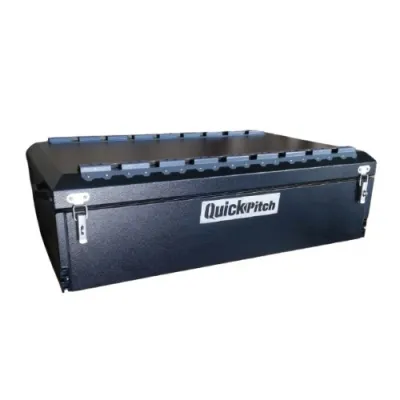
Prices are valid at publication and may change. Please refer to the product page for the latest price.
Next, measure the physical length of your roofline from the top edge of the front windshield to the hinge of the rear hatch. A roof box should sit entirely within this boundary. If the box extends too far forward, it will catch upward wind currents from the windshield, creating severe aerodynamic drag and lifting forces. If it extends too far back, it will prevent the rear hatch from opening fully.
Finally, verify the weight rating of your specific crossbar system. Even if your vehicle’s roof is rated for a certain weight, your aftermarket or factory crossbars might have a lower limit. To find your actual usable payload, subtract the weight of your installed crossbars and the weight of the empty roof box itself from the vehicle’s maximum dynamic roof load limit. The remaining figure is the maximum weight of the luggage and gear you can safely pack inside the box.
Calculate Total Added Height for Clearance Safety
One of the most common and costly mistakes when installing a roof box is ignoring the total height of the vehicle. To prevent collisions with low-hanging structures, you must calculate your new clearance profile before driving. Start by measuring the height of your Nissan Kicks from the ground to the highest point of your installed crossbars. Ensure the vehicle is parked on a flat, level surface when taking this measurement.

Once you have this baseline, add the external height of the roof box to your measurement. Be sure to use the external height specification provided by the manufacturer, not the internal cargo depth, as mounting hardware and lid contours add to the overall profile. This combined figure represents your minimum clearance requirement.
Compare this total height against the height restrictions on your regular driving routes. In urban areas, multi-storey car parks, shopping mall garages, and drive-through lanes often have clearance limits as low as 1.8 to 2.1 metres. If your combined vehicle and box height exceeds these limits, you risk severe structural damage to both your vehicle and the building.
Always maintain a conservative safety margin of at least 5 to 10 centimetres. While a fully loaded vehicle will compress the suspension slightly, unexpected bumps or steep ramps can cause the vehicle to bounce upward. A comfortable safety buffer ensures you will not scrape the ceiling of a low-clearance structure.
Balance Cargo Volume with Aerodynamics and Fuel Efficiency
Adding any external accessory to your roof will inevitably increase wind resistance and lower your fuel efficiency. However, you can minimize this penalty by selecting a roof box designed with aerodynamics in mind. Look for low-profile models that feature a tapered, teardrop shape. These designs allow air to flow smoothly over and around the box, reducing frontal drag and minimizing annoying wind noise at highway speeds.
Avoid excessively long or boxy models that disrupt the natural airflow of the vehicle. A box that is too wide or tall acts like a sail, making the vehicle highly sensitive to crosswinds and reducing highway stability. Choosing a sleek, medium-capacity box helps maintain the nimble handling characteristics of your compact SUV.
Because roof storage always carries a fuel economy penalty, you should plan your packing strategy carefully. Keep the heaviest, densest items—such as heavy suitcases, toolboxes, or canned goods—inside the cabin of the vehicle. Use the roof box strictly for lighter, bulky items like sleeping bags, tents, coats, or folding chairs. This distribution keeps the vehicle’s centre of gravity as low as possible.
Finally, make it a habit to remove both the roof box and the crossbars when they are not in use. Leaving an empty cargo box on your roof serves no purpose other than wasting fuel. Modern mounting systems allow for quick installation and removal, making it easy to restore your vehicle’s baseline fuel efficiency for daily commuting.
Ensure Crossbar Compatibility and Mounting Safety
A secure connection between your roof box and your vehicle is critical for road safety. Before finalizing your purchase, verify that the box’s mounting clamps, brackets, or U-bolts are fully compatible with the shape of your crossbars. Crossbars come in various profiles, including square, round, and aerodynamic wing shapes. Ensure the mounting hardware can wrap securely around your specific bar profile without slipping.
You must also confirm that your crossbar spread—the distance between the front and rear bars—falls within the adjustable range of the roof box. Most roof boxes feature adjustable mounting tracks on the bottom, but compact SUVs often have fixed or limited crossbar positions. Measure the distance between your crossbars from centre to centre and compare it to the box’s specifications.
If your vehicle is equipped with a panoramic sunroof, pay extra attention to the mounting hardware. Some mounting clamps protrude downward beneath the crossbars. When the sunroof is tilted or opened, the glass can strike these clamps. Always test the sunroof’s clearance carefully at a slow pace before operating it normally with a box installed.
Additionally, perform a physical check of the rear hatch. Mount the empty roof box onto the crossbars and slide it as far forward as the mounting tracks allow. Slowly open the rear hatch to ensure the rear spoiler or glass does not make contact with the back of the box.
Common Sizing and Selection Mistakes to Avoid
Many drivers make the mistake of choosing a roof box based solely on its internal volume in litres. While a 500-litre box sounds highly practical, its physical footprint may be completely incompatible with a compact SUV. Always prioritize external dimensions—length, width, and height—over raw volume to ensure a safe and stable fit.
Another frequent oversight is failing to account for the weight of the mounting system. The crossbars and the empty roof box itself can easily consume 15 to 20 kilograms of your total roof load capacity. Neglecting to subtract this weight can lead to accidental overloading, putting undue stress on your vehicle’s roof pillars.
Lastly, do not ignore your tire pressures when carrying heavy roof loads. Carrying extra weight on the roof alters the vehicle’s weight distribution. Refer to the tire information placard on the driver’s side B-pillar or your owner’s manual to see if you need to adjust your tire pressures for a fully loaded vehicle.
Frequently Asked Questions (FAQ)
Will installing a roof box void my Nissan Kicks warranty?
Installing an aftermarket roof box or crossbar system will not void your vehicle’s manufacturer warranty. However, any structural damage, paint scratches, or mechanical failures caused directly by overloading, improper installation, or using unapproved mounting points will not be covered under warranty. To protect your coverage, always use high-quality, compatible racks, adhere strictly to the weight limits specified in your owner’s manual, and follow all manufacturer installation instructions.
Can I still open the rear hatch with a roof box installed?
Yes, you can still open your rear hatch fully if you select a roof box with the correct length and mounting adjustability. Before purchasing, measure the distance from your front crossbar to the rear hatch hinge. Look for a roof box that offers adjustable mounting tracks, allowing you to slide the box forward on the crossbars. Choosing a box with a tapered or undercut rear profile also helps prevent the hatch spoiler from striking the cargo carrier when opened.
Community discussion
Share your experience or ask a question. Comments are reviewed before publication.