
Selecting the ideal rim brush for cleaning alloy wheels at home requires balancing cleaning efficiency with surface safety. The right tool depends on your alloy wheel’s specific finish, its spoke geometry, and the severity of the brake dust you encounter. In Singapore’s hot, humid climate, brake dust and road grime bake onto wheel surfaces rapidly, turning what should be a simple wash into a stubborn cleaning challenge. Using an incorrect brush can lead to permanent swirl marks, scratches, or stripped clear coats, turning a routine home car wash into an expensive mistake.
Investing in a high-quality rim brush tailored to your vehicle’s specific wheel design ensures you can safely agitate and lift abrasive particles without damaging the underlying metal. Whether you wash your car in a private driveway or at an HDB multi-storey car park wash bay, having the correct tools in your car care kit makes all the difference. This guide outlines how to evaluate your wheels and select the perfect brush to keep your alloys looking pristine.
Assess Your Alloy Wheel Finish and Brake Dust Buildup
Before purchasing any rim brush, you must identify the exact finish of your alloy wheels. Modern automotive wheels are not uniform; they feature various surface treatments that dictate how easily they scratch and how gently they must be treated. Clear-coated and painted wheels are the most common, featuring a protective layer similar to your car’s body paint. While these are relatively forgiving, they are still highly susceptible to fine swirl marks and dulling if agitated with overly stiff bristles.
Products mentioned in this guide
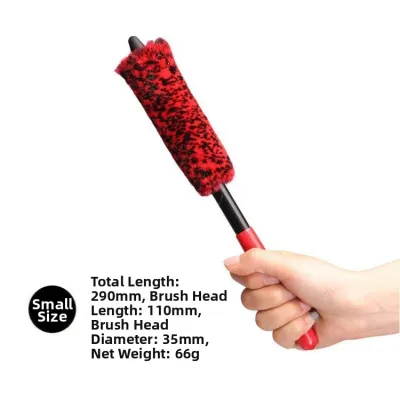
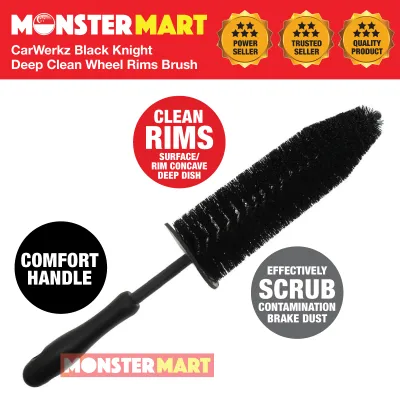
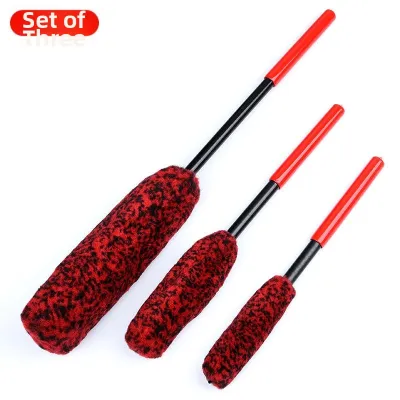
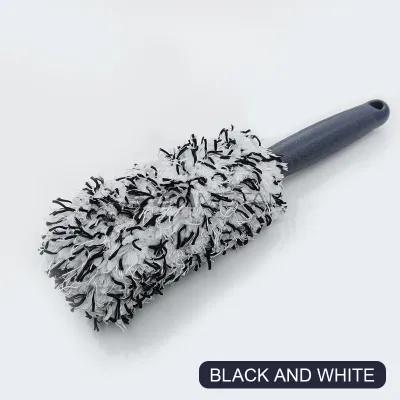
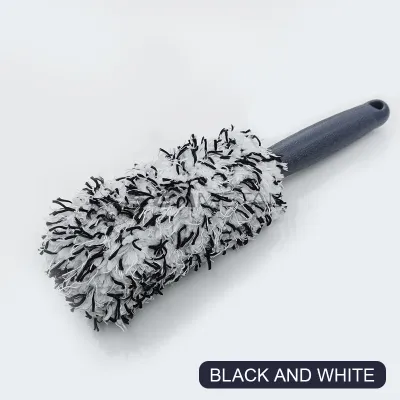
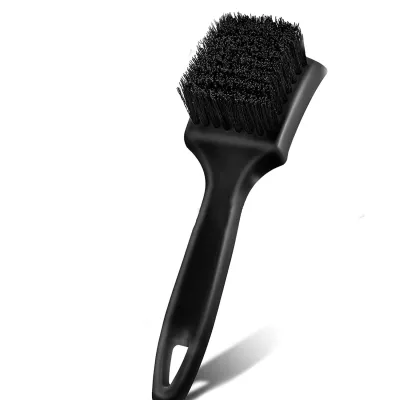
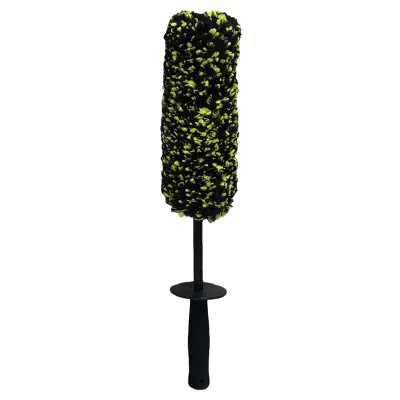
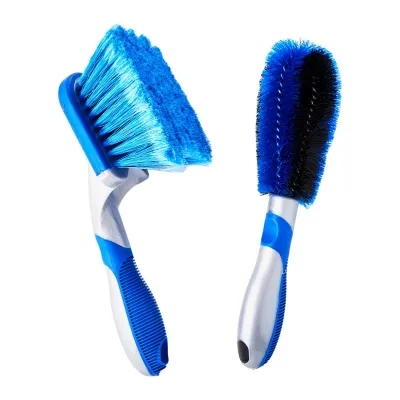
Prices are valid at publication and may change. Please refer to the product page for the latest price.
Machined wheels present a different challenge. These wheels feature a polished face with tiny, machine-cut grooves, often paired with painted pockets, all sealed under a clear coat. The sharp edges where the machined face meets the painted pocket are delicate points where the clear coat can easily chip or peel if subjected to aggressive scrubbing.
Bare polished aluminum and chrome wheels represent the most sensitive category. Lacking a protective clear-coated barrier, these surfaces are incredibly soft, highly prone to fine scratching, and easily oxidized by harsh chemicals or abrasive brush fibers. For these wheels, physical contact must be kept to an absolute minimum, utilizing only the softest possible brush media.
Your choice of rim brush must also account for the type of brake dust your vehicle generates. European vehicles, for example, often use semi-metallic brake pads that produce heavy, sticky, and highly abrasive black dust. This dust bonds aggressively to the alloy surface under high operating temperatures, requiring thorough agitation to remove. Conversely, vehicles equipped with ceramic brake pads produce a lighter, less abrasive dust that is easier to clean but still requires regular maintenance.
Always consult your vehicle owner’s manual or the aftermarket wheel manufacturer’s care guidelines before selecting any physical tool or chemical cleaner. Many manufacturers explicitly state which materials are safe to use and warn that using unauthorized tools can void your finish warranty.
Additionally, inspect your wheels for pre-existing damage. If you identify peeling clear coat, deep curb rash, or severe pitting, stop and consult a professional wheel refurbishment specialist. Brushing over compromised clear coat can catch the loose edges, peeling away large sections of the protective layer and exposing the bare alloy to rapid corrosion.
Key Features to Evaluate When Buying a Rim Brush
Selecting a rim brush involves analyzing several physical design elements to ensure the tool can safely navigate the complex shapes of your wheels. The ideal brush must offer enough agitation power to dislodge stubborn brake dust while remaining soft enough to prevent micro-marring on the delicate alloy surface.

Comparing Bristle Materials: Microfiber, Boar's Hair, and Synthetic
The material of the brush head is the primary factor determining its safety and cleaning characteristics. Microfiber and foam-tipped wands represent the safest option for highly sensitive finishes, such as bare polished aluminum or gloss black wheels. Microfiber split-fiber technology excels at trapping and suspending abrasive brake dust particles within the pile, lifting them away from the wheel surface rather than dragging them across it. This capillary action significantly reduces the risk of installing fine scratches during agitation.
Natural boar’s hair is highly regarded for its balanced cleaning performance on clear-coated and painted alloy wheels. Boar’s hair bristles are naturally flagged, meaning they taper to incredibly soft tips while retaining a sturdy shaft that provides excellent agitation power. They hold a substantial volume of soapy water, ensuring constant lubrication during use. However, natural fibers require more maintenance, as they must be thoroughly rinsed and dried to prevent mold, rot, and fiber degradation over time.
Synthetic nylon or polyester bristles are common in budget-friendly brushes, but they must be selected with caution. Stiff, unflagged synthetic bristles can easily scratch clear coats and polished metals. If you choose a synthetic brush, look for flagged-tip designs where the ends of the plastic bristles are split to create a softer contact surface. These are highly effective for heavy-duty cleaning of the inner wheel barrel on robust, painted wheels, but they should generally be avoided on delicate outer wheel faces.
Choosing the Right Shape and Handle for Spoke Clearance
The physical shape of the brush dictates how effectively you can clean the various zones of your wheel without injuring your hands or damaging the vehicle. Cylindrical or barrel-shaped brushes are designed specifically to slide between spokes to clean the deep inner barrel of the wheel. Tapered designs are narrower at the tip, allowing them to wedge into tight spoke gaps, while flat-profile brushes are ideal for sliding into the narrow clearance space between the brake caliper and the inner rim.
Handle ergonomics play a vital role in both safety and comfort during a home car wash. Look for handles with angled necks or flexible, bendable shafts that allow you to reach around the back of the wheel spokes without awkward wrist angles. A comfortable, rubberized non-slip grip is essential, as your hands will be wet and soapy, and losing control of the brush can cause the hard handle core to strike and chip the wheel finish.
Most importantly, ensure any wand-style brush features a protective rubber or foam bumper at the tip. When cleaning deep barrels, it is easy to accidentally bottom out the brush against the back of the wheel or the brake dust shield. A soft, protective tip prevents direct metal-on-metal or plastic-on-alloy contact, safeguarding your wheels against sudden impact damage and deep scratches.
Which Brush Type Matches Your Wheel Design?
Not all wheels are shaped the same, and trying to clean a complex multi-spoke wheel with a brush designed for a simple five-spoke layout will lead to frustration and poor results. Matching your rim brush to your specific wheel architecture allows you to clean more efficiently and safely.
Long-Reach and Flexible Wands for Deep-Dish Wheels
Deep-dish, concave, or multi-spoke wheels feature deep inner barrels that collect the vast majority of road grime and brake dust. To clean these areas effectively, you need a long-reach, flexible wand brush. These brushes typically feature a long, thin core wrapped in soft microfiber or high-density foam blocks covered in a microfiber sleeve.
The flexibility of the shaft is crucial. It allows you to bend the brush into an L-shape or a gentle curve to clean behind the wheel spokes and reach the back of the wheel face—areas that are invisible from the front but accumulate thick layers of corrosive dust. Tapered microfiber wands are particularly useful for multi-spoke designs, as they can gently compress to fit through tight spoke openings and then expand to clean the barrel surface behind them.
However, these long-reach wands have distinct limitations. Because they are designed for deep, narrow spaces, they lack the flat surface area required to clean large, flat outer wheel faces efficiently. Trying to clean a wide spoke with a thin cylindrical wand is time-consuming and often results in uneven pressure, which can cause localized marring.
Wide Wash Mitts and Soft Brushes for Flat-Face Wheels
For wheels with large, flat surfaces, such as classic five-spoke designs, directional flow wheels, or aerodynamic flat-face alloys, a different set of tools is required. Here, efficiency and even pressure distribution are paramount. A dedicated wheel wash mitt made of high-quality microfiber is the ideal tool for these broad surfaces.
Using a wheel mitt allows you to use the flat of your hand to apply gentle, uniform pressure across the entire face of the spoke, clearing away road film quickly and safely. Alternatively, a short-handled, wide-faced brush with soft boar’s hair bristles can cover large areas rapidly while safely contouring around the lug nut pockets and outer lip.
While these wide tools are highly efficient for the main face of the wheel, they cannot reach into the deep barrels or tight crevices. For a complete clean, you should always pair a wide wash mitt or face brush with a secondary, long-reach wand to handle the inner barrel and the areas behind the spokes.
Precision Detail Brushes for Lug Nuts and Tight Crevices
The most challenging areas of any alloy wheel are the intricate recesses, including the lug nut pockets, the area surrounding the valve stem, and the crevices around the center cap. Standard wheel brushes and wands are simply too large to fit into these tight spaces, leaving behind unsightly rings of black brake dust.
This is where precision detail brushes are indispensable. These small, paint-brush-style tools feature soft, densely packed natural boar’s hair or synthetic detail bristles. They allow you to gently agitate the dirt inside deep lug nut holes without scratching the surrounding paint or clear coat.
You may also consider using a specialized caliper brush to clean the brake calipers and rotors. However, you must establish a strict safety boundary: never use the same brush on your alloy wheel faces that you use on your brake calipers. Caliper brushes frequently pick up sharp, metallic brake shavings and heavy road grit. If these metallic particles become embedded in your soft wheel brush, they will act like sandpaper when transferred to your delicate alloy wheel faces, causing severe scratching. Keep these tools completely separate and clearly labeled.
Safe Washing Techniques to Prevent Scratching Alloy Wheels
Selecting the perfect rim brush is only half the battle; using correct, low-risk washing techniques is essential to prevent installing swirl marks and scratches during your home car wash. Alloy wheels are subjected to the harshest contaminants on the road, and rushing the cleaning process can permanently damage their finish.
The first and most critical step in any wheel-cleaning routine is a thorough pre-wash. Before you make any physical contact with a brush, rinse the wheels thoroughly using a high-pressure water hose or pressure washer. This step removes loose, heavy road grit, sand, and mud. For the safest results, apply a dedicated wheel pre-wash foam or a pH-neutral snow foam and let it dwell according to the product label instructions to emulsify the remaining dirt before rinsing it off. Touching a dry or unrinsed wheel with any brush, no matter how soft, will drag abrasive sand particles across the clear coat, creating deep scratches.
Next, establish a dedicated wheel-washing setup that is completely separate from the system you use to wash your car’s paintwork. Use a dedicated wheel bucket equipped with a grit guard at the bottom. The grit guard traps heavy particles at the bottom of the bucket, preventing your brush from re-picking up abrasive debris when you dip it back in. Never use the same wash mitt, bucket, or water for both your wheels and your car’s body panels. Brake dust is highly abrasive; transferring it to your car’s paint will cause severe swirling and paint damage.
Proper lubrication is vital during the physical agitation stage. Always use a dedicated, pH-neutral wheel cleaner or a high-quality automotive shampoo formulated to provide maximum lubrication. Spray the cleaner onto the wheel and let it dwell as directed by the manufacturer’s instructions. Dip your rim brush into the soapy water of your wheel bucket to ensure the bristles are thoroughly saturated and lubricated before touching the wheel. Strictly avoid dry brushing, and never use household degreasers, dishwashing liquids, or harsh domestic cleaners. These household chemicals are not formulated for automotive alloys and can strip clear coats, dry out rubber seals, and cause permanent staining on bare aluminum.
When brushing, use a gentle, systematic motion. Start from the top of the wheel and work your way down, agitating the cleaner in small sections. Rinse your brush frequently in your dedicated wheel bucket to flush out trapped brake dust. If you encounter unknown aftermarket coatings, such as vinyl wraps, plasti-dip, or ceramic coatings, stop immediately and check the coating manufacturer’s care instructions, as these materials often require specialized, ultra-gentle cleaning methods. Be extremely cautious around areas with peeling clear coat or severe pitting; avoid agitating these spots directly with a brush, as physical contact can worsen the damage. Once clean, rinse the wheel thoroughly with clean water to remove all chemical residues.
Frequently Asked Questions (FAQ)
Is it safe to use a standard household scrub brush on alloy wheels?
No, it is not safe to use a standard household scrub brush on alloy wheels. Household scrub brushes are typically designed for robust, hard surfaces like bathroom tiles, concrete, or kitchen grout. They feature stiff, unflagged synthetic bristles that lack the softness and flexibility required for automotive finishes. Using these aggressive brushes on alloy wheels will quickly scratch, mar, and dull clear coats, painted finishes, and polished metals. Always use brushes specifically engineered for automotive detailing, which feature soft, flagged synthetic bristles, natural boar’s hair, or gentle microfiber wraps designed to protect delicate wheel surfaces.
How frequently should you physically brush alloy wheels?
As a general baseline, you should physically clean your alloy wheels with a rim brush during every regular car wash, which is typically once every one to two weeks. In Singapore’s driving environment, frequent stop-and-go traffic on expressways like the PIE or CTE, combined with high humidity and sudden tropical downpours, causes brake dust to accumulate and bake onto the wheels rapidly. If your vehicle is equipped with high-performance metallic brake pads, you may need to clean them more frequently to prevent the highly corrosive metallic dust from permanently pitting the alloy surface. Regular, gentle cleaning prevents dust from baking on, making each subsequent wash much easier.
How do you clean and store a rim brush after use?
To maintain your rim brush and prevent it from scratching your wheels in future washes, you must clean and store it properly after every use. Thoroughly rinse the brush under clean, running water to flush out all trapped brake dust, dirt, and chemical residues. Wash the bristles or microfiber head with a mild, pH-neutral soap or dedicated microfiber cleaner to remove stubborn road oils and grease, then rinse it completely. Gently shake out the excess water and hang the brush to air-dry in a shaded, well-ventilated area. Avoid drying or storing the brush in direct tropical sunlight or extreme heat, as this can degrade synthetic bristles, dry out natural boar’s hair, and break down the adhesives holding the brush head together.
Community discussion
Share your experience or ask a question. Comments are reviewed before publication.