
Upgrading your motorcycle’s controls with an aftermarket lever requires precise compatibility verification to ensure your safety on the road. Selecting the correct RCB brake lever for your specific motorcycle model is not just about aesthetics; it is a critical safety decision that directly impacts your braking response, mechanical leverage, and legal compliance. Before purchasing any aftermarket component, you must verify that the lever matches your motorcycle’s exact hydraulic or mechanical configuration to prevent brake binding, unexpected lockups, or complete control failure. As a prominent brand across Southeast Asia and Singapore, RCB offers a wide array of aftermarket controls, making it highly likely you will find a model designed for your bike. However, navigating their extensive catalog requires a methodical approach to ensure you do not compromise your safety.
Understand Your Motorcycle's Original Brake Specifications
To find a compatible lever, you must first establish a clear baseline of your motorcycle’s stock setup. Start by identifying the exact make, model, manufacturing year, and engine displacement of your machine. This information is typically found on your vehicle registration log, owner’s manual, or the manufacturer’s chassis plate. Even minor model-year updates can introduce changes to the master cylinder design, meaning a lever built for a 2024 model might not fit a 2026 variant of the same motorcycle.
Next, inspect the physical interface of your stock brake lever. Pay close attention to the pivot type, the shape of the mounting bracket, and how the lever interacts with the brake light switch. Some motorcycles use a mechanical plunger switch that is depressed when the lever is released, while others rely on hydraulic pressure switches or microswitches. The replacement lever must have the exact physical tab or cam profile required to actuate this switch reliably, ensuring your brake light illuminates the moment you apply pressure.
Products mentioned in this guide
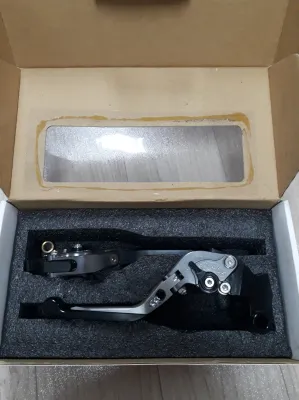
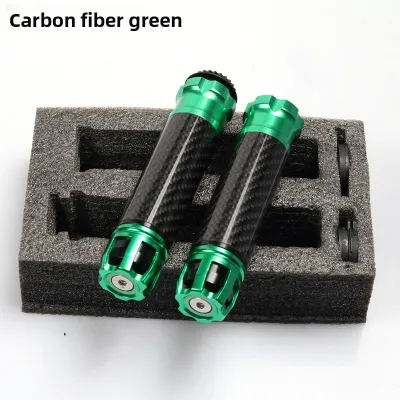
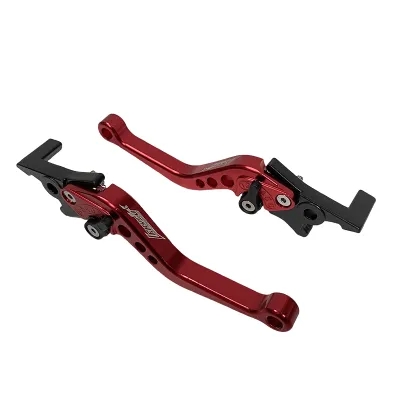
Prices are valid at publication and may change. Please refer to the product page for the latest price.
You also need to measure the physical dimensions of your original lever. Note the overall lever length from the pivot bolt center to the outer tip, as well as the default reach distance from the handlebar grip. These measurements serve as your ergonomic baseline. If you ride in dense urban traffic in Singapore, a shorter lever might offer quicker two-finger operation, whereas a longer lever provides maximum leverage for heavier touring or commuter bikes.
Navigate RCB Compatibility Charts and Part Numbers
Once you have documented your motorcycle’s specifications, you must cross-reference this data with official RCB fitment guides, authorized dealer catalogs, or official product packaging. Do not rely on generic online marketplace listings that claim a lever is “universal” or fits “most models.” Instead, look for the manufacturer’s official compatibility matrix, which lists supported motorcycle models alongside their specific production years.

Every compatible RCB lever is assigned a unique manufacturer part number. This part number is your primary defense against purchasing a component that looks visually identical but has subtle, dangerous dimensional differences. For example, a lever designed for a 150cc underbone motorcycle may look remarkably similar to one designed for a 250cc sportbike, yet the pivot bushing diameter or the actuator tab offset may differ by fractions of a millimeter. Always match the exact part number to your bike’s specific variant.
It is also vital to distinguish between model-specific direct replacements and universal or adjustable-fit master cylinder assemblies. A direct-replacement lever is engineered to bolt directly into your stock perch and work with your original master cylinder. Conversely, if you are upgrading to a complete RCB radial master cylinder kit, the lever is designed to fit that specific aftermarket master cylinder, not your original stock perch. If you choose a universal assembly, be prepared for potential modifications to your brake lines, fluid reservoirs, and handlebar controls.
RCB categorizes their levers into distinct product series, such as the S1, S2, or GP series, each offering different levels of adjustability, material grades, and styling. When reviewing the compatibility charts, ensure the specific series you select is approved for your motorcycle’s master cylinder type. A mismatch here can result in a lever that bolts onto the handlebar but fails to align with the master cylinder piston, rendering your front brake completely inoperable.
Evaluate Adjustability and Ergonomic Features
Choosing between a fixed-length lever and a multi-position adjustable reach lever depends heavily on your physical hand size, glove thickness, and typical riding posture. Adjustable RCB levers feature a dial or clicker mechanism that allows you to move the lever closer to or farther from the handlebar grip. This adjustability is highly beneficial for riders with smaller hands or those who wear thick seasonal riding gloves, as it ensures you can always maintain a secure, comfortable grip on the lever.
However, when evaluating an adjustable lever, you must verify that the adjustment mechanism does not compromise the structural integrity of the control or interfere with the brake master cylinder’s piston travel. When the lever is set to its closest position to the grip, it must still allow the master cylinder piston to fully return to its resting state. If the piston cannot fully return, the brake fluid return port remains blocked, which can cause heat buildup, fluid expansion, and eventual brake lockup while riding.
Additionally, assess the profile of the lever blade itself. A well-designed lever blade should have smooth, rounded edges and a contour that matches the natural curve of your fingers. This ergonomic shape ensures even pressure distribution across your fingers during emergency braking, reducing hand fatigue and maximizing your mechanical leverage. Avoid levers with overly aggressive styling or sharp edges that could cause discomfort or slip under heavy braking pressure.
Consider also the fold-away or folding lever design offered in some RCB models. These levers feature a hinged pivot that allows the lever blade to fold upward in the event of a tip-over or crash. This design minimizes the risk of the lever snapping off entirely, potentially allowing you to ride your motorcycle home or to a repair shop after a minor fall. If you frequently ride in tight parking spaces or track environments, a folding lever provides an extra layer of practical durability.
Verify Mounting Hardware and Electrical Connections
A successful installation requires that all mounting hardware and electrical connections align perfectly with your motorcycle’s existing systems. When purchasing an RCB lever, confirm whether the kit includes all necessary pivot bolts, nuts, and sleeves, or if you are expected to reuse your stock hardware. If you must reuse the original hardware, inspect the pivot bolt for wear, corrosion, or bending, and replace any damaged components with original equipment manufacturer (OEM) parts before installing the new lever.
Electrical compatibility is another critical safety factor. The lever must align perfectly with your front brake light switch mechanism. If your motorcycle uses a mechanical plunger switch, the lever’s actuator tab must press the plunger reliably without binding. For motorcycles equipped with hydraulic pressure switches, ensure the lever does not obstruct the wiring harness or the switch body. A malfunctioning brake light switch is a severe safety hazard that can lead to rear-end collisions, especially in heavy traffic.
Finally, check for physical clearance issues across the entire range of handlebar movement. Once the lever is installed, pull it fully toward the grip and turn the handlebars from lock to lock. The lever, your fingers, and the mounting hardware must not make contact with the handlebar grips, mirrors, instrument cluster, or fairings. Any physical interference can restrict your steering or prevent you from applying full braking force in an emergency.
Pre-Purchase Verification and Safety Boundaries
Before finalizing your purchase, perform a final verification of your selected RCB part number against your motorcycle’s exact year and model variant. Double-checking this information prevents the inconvenience of returning incorrect parts and ensures you do not attempt to install an incompatible component. If you have any doubts about compatibility, contact an authorized dealer or the manufacturer directly to confirm the fitment.
It is crucial to recognize the limits of do-it-yourself installation when dealing with critical braking components. While replacing a simple lever blade is often straightforward, any work that involves opening the hydraulic system, replacing the master cylinder, or modifying the mounting brackets requires specialized tools and technical expertise. If your brake system requires bleeding, or if you feel unsure about the installation process, always consult a qualified professional mechanic to perform the work.
Additionally, keep in mind the safety implications and local traffic regulations regarding motorcycle modifications. In Singapore, the Land Transport Authority (LTA) regulates vehicle modifications to ensure public safety. While cosmetic or ergonomic lever replacements are generally permitted, they must be structurally sound, securely mounted, and must not compromise the vehicle’s braking efficiency. Installing uncertified or poorly fitted braking components can lead to vehicle inspection failures, fines, and, most importantly, an increased risk of accidents on the road.
Once the installation is complete, always perform a stationary safety check before riding. Squeeze the lever repeatedly to ensure it operates smoothly, returns fully to its resting position without assistance, and activates the brake light. Conduct a low-speed test in a safe, controlled environment, such as an empty parking lot, to verify the braking bite and feel before venturing onto public roads.
Frequently Asked Questions (FAQ)
Can I use an RCB brake lever from a different motorcycle model if it looks similar?
You should never install a brake lever designed for a different motorcycle model, even if it appears identical to your stock lever. Minor, invisible differences in the pivot pin diameter, bracket width, or master cylinder pushrod alignment can cause severe mechanical issues. If the lever is slightly too thick, it may bind in the perch and prevent the brake from releasing fully, leading to friction, overheating, and sudden brake lockup. Conversely, if the pivot hole is too large, it will introduce excessive play, reducing your braking control and responsiveness.
Do adjustable RCB levers require special maintenance?
Yes, adjustable RCB levers require regular inspection and basic maintenance to ensure their moving parts function safely over time. The adjustment dial, clicker mechanism, and folding pivot are exposed to road grime, rain, and dust, which can cause them to seize or wear prematurely. Periodically clean the lever assembly with a mild motorcycle-safe cleaner and inspect the adjustment mechanism for any signs of loosening or debris accumulation. Apply a small drop of light lubricant or water-resistant grease to the pivot points and the adjuster detent to maintain smooth operation.
Community discussion
Share your experience or ask a question. Comments are reviewed before publication.