
Selecting the right portable tire pump requires matching the device’s inflation speed, pressure limits, and power delivery to the specific volume and valve requirements of your tires. A pump designed for high-pressure, low-volume bicycle tires will struggle or fail entirely when tasked with filling a high-volume SUV tire, while an automotive pump can easily over-inflate a delicate bicycle tube if not carefully monitored. By evaluating your vehicle’s specifications and understanding how different pump designs operate, you can select a reliable tool that ensures you are never stranded with a flat tire.
Identify Your Tire's Pressure, Volume, and Valve Requirements
Before comparing portable pumps, you must determine the exact inflation specifications of your tires. The most critical metric is the recommended cold tire pressure, which is the air pressure required when the vehicle has been parked for at least three hours or driven less than two kilometers. For passenger cars, SUVs, and light trucks, this specification is located on the tire information placard on the driver’s side door jamb, or within the vehicle’s owner’s manual. Avoid using the maximum pressure rating molded into the tire sidewall itself, as this figure represents the absolute limit the tire can safely hold under maximum load, not the optimal pressure for daily driving, handling, and tread wear.
Always verify your vehicle’s specific model year, wheel dimensions, and mounting positions in your official vehicle documentation before purchasing any inflation equipment. Never infer compatibility solely from a generic category term like ‘car pump’ or ‘bike pump.’ For safety-critical components like tires, you must adhere strictly to the original-vehicle instructions. If you observe uneven tire wear, persistent pressure loss, or visible sidewall damage, do not attempt to resolve the issue solely with a portable pump; instead, seek qualified professional inspection and repair before operating the vehicle on public roads.
Products mentioned in this guide
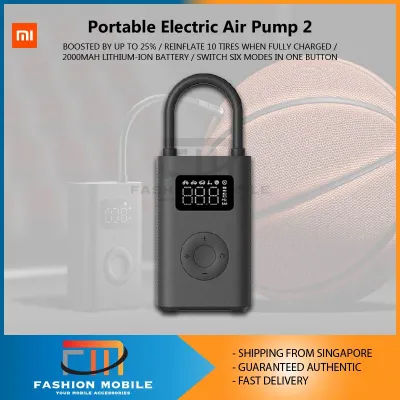
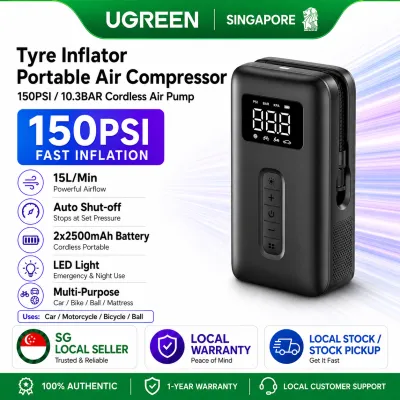
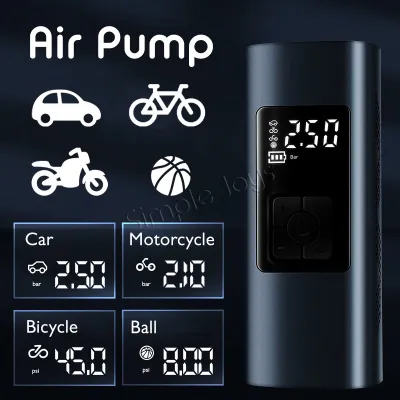
![🇸🇬[Ready Stock] Portable 6000mAh Wireless Electric Air Pump For Car/Motorcycle/Bicycle/Ball Cordless Electric Car Tyre Pump Tire Inflator](https://img.lazcdn.com/g/p/1eb9ab770037c04e5ff6d949b4e6f534.jpg_400x400q80.jpg_.webp)
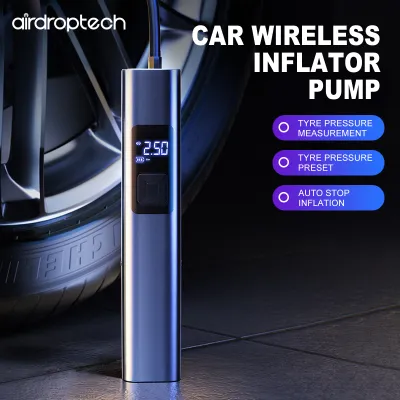
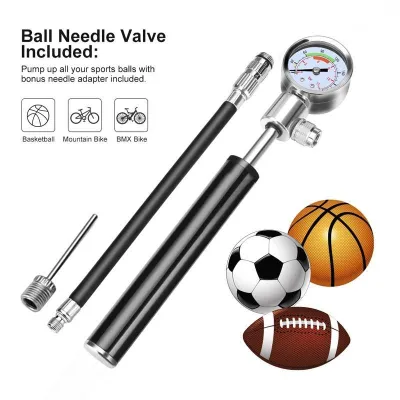
![[SG Stock] Air Pump Car Inflator Compressor Portable Ball Bike Bicycle Rechargeable Basketball Soccer Volleyball Tyre Wheel Tire 12V LED Fast Auto Shut-off Emergency](https://img.lazcdn.com/g/p/cc7d92c566c3860fbbfa1d535cc6f3bb.jpg_400x400q80.jpg_.webp)
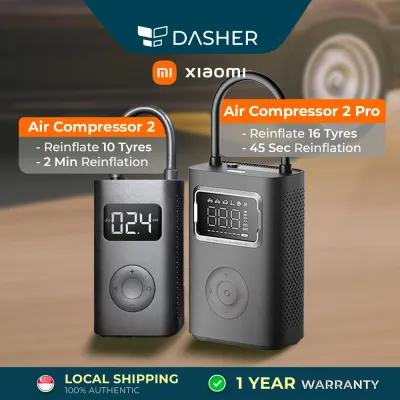
Prices are valid at publication and may change. Please refer to the product page for the latest price.
Next, identify the valve stem interface on your wheels to ensure the pump’s nozzle can form an airtight seal. Most passenger vehicles, motorcycles, scooters, and utility trailers use a Schrader valve, which features a threaded exterior and a spring-loaded center pin. Bicycles, particularly road and gravel models, frequently utilize Presta valves, which are narrower, lack an internal spring, and require a top nut to be unscrewed before inflation. Some older or utility bicycles may use Dunlop valves, which combine a wider base with a removable core. Ensuring your chosen pump has native compatibility or includes secure, threaded brass adapters for these specific valve types prevents air leakage and damage to the valve stems during connection.
Tire volume is the third critical factor and dictates how much air the pump must move to raise the pressure. While a bicycle tire might require a high pressure of 80 to 100 PSI, the actual volume of air inside the tube is very small, meaning a low-flow pump can fill it quickly. Conversely, a large SUV or off-road tire may only require 32 to 35 PSI, but the sheer volume of air needed to fill that space is immense. Attempting to inflate a high-volume tire with a pump designed solely for low-volume applications will result in extremely long inflation times, excessive heat buildup, and potential motor failure.
Evaluate Core Pump Specifications for Power and Compatibility
When evaluating portable tire pumps, look closely at the maximum pressure rating (measured in PSI or bar) and how it aligns with your target pressure. A pump rated for a maximum of 120 PSI is not necessarily ideal for inflating a tire to 110 PSI on a regular basis, as operating any mechanical compressor at its absolute limit generates extreme heat and accelerates wear on internal seals. For optimal longevity and safety, select a pump with a maximum rated pressure that exceeds your highest required tire pressure by at least 20 to 30 percent, allowing the motor to operate within its comfortable performance envelope.

The power source of the portable pump determines its utility, runtime, and where you can use it. Pumps powered by a 12V DC auxiliary power outlet (commonly known as the cigarette lighter socket) draw power directly from your vehicle’s electrical system, providing consistent, uninterrupted performance as long as the vehicle’s engine is running to prevent battery drain. Cordless, battery-operated units powered by internal lithium-ion batteries offer unmatched portability and are ideal for motorcycles and bicycles, but their runtime is strictly limited by battery capacity, and they require regular recharging via USB-C or wall outlets. Some hybrid models offer dual-power functionality, allowing you to run them off an internal battery or plug them into a 12V DC port when the battery is depleted.
Every portable compressor has a specific duty cycle, which is the percentage of time the unit can operate continuously before it must be turned off to cool down. For example, a pump with a 15% duty cycle can run for approximately 3 minutes before requiring a 17-minute rest period. High-quality portable pumps often feature integrated thermal protection circuits that automatically shut down the motor if internal temperatures exceed safe operating limits. Always verify these thermal limits in the product specifications, especially if you anticipate needing to inflate multiple large tires consecutively, as exceeding the duty cycle can permanently damage the piston rings and cylinder walls.
Match the Pump to Your Specific Vehicle Type
Different vehicle classes impose distinct demands on portable tire pumps, requiring you to balance physical size, power delivery, and connection types. Selecting a pump tailored to your primary vehicle type ensures efficient operation and prevents premature equipment failure.
For Cars and SUVs: Power and Airflow
Passenger cars, crossovers, and SUVs require portable pumps that prioritize high airflow rates, often measured in liters per minute (LPM) or cubic feet per minute (CFM). Because automotive tires contain a large volume of air, a pump with a low flow rate can take upwards of fifteen to twenty minutes to inflate a single tire from flat, which can cause the compressor to overheat. Look for units that deliver at least 25 to 30 LPM of airflow at 0 PSI, which typically allows for a standard car tire to be topped up in under three minutes.
To support this high airflow, a robust power source is essential. A 12V DC plug that connects directly to your car’s auxiliary power outlet is the most reliable choice for automotive use, ensuring the pump does not lose power halfway through the inflation process. If you choose a battery-powered portable pump, verify that the battery capacity (measured in milliampere-hours or watt-hours) is sufficient to inflate at least two full tires on a single charge. Additionally, ensure the pump’s maximum PSI rating comfortably exceeds your vehicle’s recommended cold tire pressure, particularly if you drive a heavy SUV or light truck that requires higher pressures under load.
Physical reach is another critical factor when selecting an automotive tire pump. You must be able to comfortably access all four wheels of the vehicle without straining the power cord or the air hose. Measure the distance from your vehicle’s 12V DC outlet to the rear tires, and ensure the combined length of the pump’s power cable and high-pressure air hose exceeds this distance by at least one meter. A hose that is too short will force the pump to hang in the air, putting excessive stress on the valve stem and the hose connections, which can lead to air leaks or physical damage to the tire valve.
For Motorcycles and Scooters: Portability and Storage
For motorcycle and scooter riders, physical space and weight are the primary constraints when choosing a portable tire pump. Because two-wheelers have limited onboard storage, the ideal pump must be compact enough to fit easily within an under-seat compartment, a tank bag, or side panniers. Battery-operated, handheld digital pumps are highly favored in this category, as they eliminate the need for long power cords and can be operated anywhere without relying on the motorcycle’s electrical system, which often has a lower alternator output that may not support high-draw 12V DC compressors.
Despite their small size, motorcycle tire pumps must still deliver precise pressure control. Motorcycle tires are highly sensitive to pressure variations, with front and rear tires often requiring different PSI settings to maintain optimal handling, grip, and tire wear. Look for a pump with an accurate digital pressure gauge and an automatic shut-off feature, which stops inflation immediately once the target pressure is reached. This prevents over-inflation, which can severely compromise traction and ride safety on two wheels.
For riders planning long-distance tours or off-road adventures in remote areas, relying solely on a battery-powered pump carries some risk. If the internal lithium battery drains or fails due to extreme cold or heat, you could be left without a way to inflate a repaired tire. In these scenarios, carrying a compact manual hand pump or a mechanical foot pump as a secondary backup is a wise precaution. These manual tools require physical effort but operate independently of electrical power, providing a reliable safety net when traveling far from charging infrastructure.
For Bicycles and E-Bikes: Valves and Pressure Profiles
Bicycle and e-bike tires present a unique set of requirements due to the wide variance in tire volumes and pressures across different riding disciplines. Road bikes require very high pressures—often between 80 and 110 PSI—but contain a very small volume of air. Conversely, mountain bikes and fat-tire e-bikes require much lower pressures, typically between 15 and 35 PSI, but demand a much larger volume of air to seat the tire bead and achieve proper inflation. Therefore, you must select a pump whose pressure profile matches your specific style of riding.
Valve compatibility is paramount for cyclists. Ensure the portable pump features a dual-head chuck or includes high-quality, screw-on adapters that accommodate both Schrader and Presta valves. A secure, locking connection is vital, especially for high-pressure road bike tires, as a loose slip-on chuck can easily pop off the valve stem under high pressure, potentially damaging the delicate Presta valve core. Threaded brass adapters provide the most reliable seal and minimize the risk of stripping the valve threads during attachment and removal.
For on-the-go repairs during commutes or trail rides, the weight and mounting options of the pump are key considerations. Many portable electric pumps designed for cyclists are shaped like small cylinders or blocks that can be mounted directly to the bicycle frame using water bottle cage bosses, or slipped into a jersey pocket. If you choose a battery-powered electric pump, verify that its battery life is rated to handle multiple inflation cycles, which is especially important for tubeless tire setups where a sudden burst of high-volume air may be required to seat the tire bead after a puncture repair.
Follow Safety and Operational Boundaries During Use
Operating a portable tire pump safely requires strict adherence to the manufacturer’s instructions and an understanding of the tool’s physical limitations. Before starting any inflation task, consult the pump’s user manual to identify its maximum continuous run time. Most small, portable compressors are not designed for continuous duty and require a cooling-off period after ten to fifteen minutes of operation. Ignoring these limits can cause the internal motor to overheat, melting plastic components, degrading lubricating greases, and permanently damaging the piston seals, which leads to a loss of compression.
Monitoring tire pressure throughout the inflation process is essential to prevent dangerous over-inflation. While many modern portable pumps feature digital screens with automatic shut-off capabilities, you should never leave an operating pump unattended. Verify the accuracy of the pump’s built-in gauge by cross-checking it with a dedicated, high-quality standalone tire pressure gauge. Over-inflating a tire can lead to a sudden, catastrophic rupture of the tire casing or tube, which can cause severe physical injury and damage to the vehicle’s wheel assembly.
Environmental conditions also play a significant role in the safe operation of portable compressors. Keep the pump dry and away from standing water, rain, or snow, as moisture can penetrate the housing and cause electrical short circuits or corrosion of internal components. Additionally, because the compressor pump head and air hose connector can become extremely hot during use, avoid placing the unit near flammable materials, dry grass, or sensitive plastic surfaces immediately after operation. Allow the pump to cool completely before storing it in a confined space, such as a glove box, under-seat compartment, or carrying bag.
Frequently Asked Questions (FAQ)
Can I use a car tire pump on a bicycle tire?
Yes, you can use a car tire pump on a bicycle tire, provided you use the correct valve adapter and exercise extreme caution. Most automotive pumps are designed to deliver a high volume of air quickly, which can rapidly over-inflate and burst a low-volume bicycle tire before the pump’s automatic shut-off can react. To minimize this risk, monitor the pressure gauge constantly, inflate in short bursts, and manually check the tire firmness frequently. Ensure you have a secure Presta or Dunlop adapter if your bicycle does not use standard Schrader valves.
How long should a portable tire pump run continuously?
The continuous runtime of a portable tire pump depends entirely on its duty cycle, which varies significantly by model and manufacturer. Most compact, battery-powered or 12V DC pumps have a maximum continuous run time of 10 to 15 minutes, after which they require a cooling period of 15 to 20 minutes to prevent thermal damage. Always consult your specific pump’s instruction manual to verify its thermal limits, and never operate the unit continuously if the housing or air hose connector feels excessively hot to the touch.
Community discussion
Share your experience or ask a question. Comments are reviewed before publication.