
Selecting the appropriate car shampoo requires balancing cleaning power with surface safety. The pH level of your car wash product determines how effectively it tackles specific types of dirt and whether it preserves or strips your vehicle’s protective coatings. To choose the right Gyeon shampoo, you must evaluate your car’s current paint protection, identify the type of contamination on the surface, and match these factors to the chemical properties of the shampoo.
Assess Your Car's Surface Protection and Paint Condition
Before selecting any car wash chemical, you must determine what stands between the environment and your vehicle’s clear coat. Paint protection generally falls into three categories: ceramic coatings, synthetic sealants, or natural carnauba waxes. Each of these protective layers responds differently to chemical exposure, meaning a shampoo that is safe for one might degrade another.
To evaluate your current protection level, observe how water behaves on the clean paint surface during a rinse. High-quality ceramic coatings and fresh sealants cause water to bead into tight, round droplets that roll off easily. If the water sheets off slowly or pools in large flat areas, your protection has likely degraded or is entirely absent, leaving the bare clear coat exposed.
Products mentioned in this guide
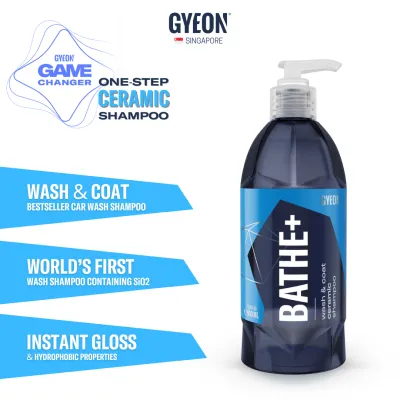
Prices are valid at publication and may change. Please refer to the product page for the latest price.
Delicate surfaces, such as bare clear coats, heavily swirled paint, or older oxidized finishes, require extra care. These surfaces are highly susceptible to chemical etching and physical scratching. Using an aggressive wash on compromised paint can accelerate clear coat failure, making gentle, pH-neutral maintenance washes the safest starting point.
In tropical environments characterized by intense sunlight and sudden rain showers, paint protection degrades more rapidly. Vehicles parked in open-air lots face constant exposure to ultraviolet radiation, which weakens waxes and sealants within weeks. Identifying the state of your paint protection ensures you do not inadvertently strip away what little defense your vehicle has left.
When assessing your vehicle, pay close attention to sensitive exterior components such as matte paint finishes, vinyl wraps, anodized aluminum trim, and integrated camera sensors. Standard car wash products may not be universally safe for these materials. Always verify compatibility by consulting your vehicle’s owner manual and the specific product documentation before application.
Understand How pH Levels Affect Car Wash Results
The pH scale runs from 0 to 14, with 7 representing a completely neutral solution. In automotive detailing, car shampoos are formulated across this entire spectrum to target different types of road grime and surface conditions. Understanding where a product sits on this scale helps you predict its cleaning behavior and safety profile.

Neutral pH washes, which sit at or very near 7, are designed for routine maintenance. These formulations rely on high lubricity and mild surfactants to lift loose dust and dirt without altering the underlying surface. Because they lack aggressive acidic or alkaline agents, they will not degrade waxes, sealants, or ceramic coatings, making them safe for weekly use.
Alkaline washes have a pH level above 7 and are formulated to tackle organic contamination. These products excel at breaking down grease, road film, oils, bug splatter, and bird droppings by emulsifying the organic binders holding the dirt to the paint. While highly effective, strong alkaline solutions can strip natural waxes and degrade synthetic sealants if used frequently or at high concentrations.
Acidic washes, which have a pH level below 7, are specialized solutions designed to target inorganic mineral deposits. They are particularly useful for dissolving hard water spots, road salt, and industrial fallout that bond to the paint surface. Acidic shampoos are often used to restore the hydrophobic properties of ceramic coatings by dissolving the microscopic mineral crust that clogs the coating’s pores.
Diagnose Your Typical Dirt and Contamination Level
Matching your shampoo to the specific type of dirt on your vehicle prevents unnecessary chemical wear on your paint. Routine dust, light pollen, and minimal road film are typical for vehicles that are daily driven but parked in sheltered structures. This light, non-bonded contamination requires minimal chemical aggression to safely lift and rinse away.
Heavy traffic film, bug splatter, and bird droppings represent a more challenging class of organic grime. Traffic film is a sticky mixture of soot, oil, and rubber kicked up from wet roads, which clings tightly to lower body panels. Bird droppings and bug splatters are highly acidic and can etch into your clear coat within hours under hot sun, requiring pre-treatment with targeted cleaners to neutralize and dissolve them before physical washing.
Inorganic contaminants like baked-on brake dust, industrial fallout, and hard water spots require a different chemical approach. Hard water spots occur when mineral-rich water dries on the paint, leaving behind calcium and magnesium deposits. If left untreated, these minerals can etch permanently into the clear coat, making specialized pH-adjusted washes necessary to dissolve the crystalline structures safely.
Step-by-Step Guide to Selecting the Correct Gyeon Shampoo
To select the correct Gyeon shampoo for your detailing routine, begin by reading the physical product labels and official technical data sheets. Manufacturers provide detailed specifications regarding the pH level of the product in its concentrated form as well as its working dilution. Never rely solely on product color, scent, or marketing names to guess the chemical strength of a car wash.
For routine upkeep of vehicles protected by ceramic coatings, synthetic sealants, or fresh waxes, select a pH-neutral maintenance shampoo. These formulas preserve the hydrophobic performance and longevity of your existing protection while safely lubricating the wash mitt to prevent wash-induced swirl marks. They are designed to lift daily dust and light road grime without leaving behind unwanted gloss enhancers or waxes that might interfere with a ceramic coating’s natural behavior.
When dealing with heavily soiled, uncoated vehicles, or when preparing a car for a fresh application of wax or sealant, opt for a stronger alkaline pre-wash or shampoo. These formulations break down stubborn traffic film and strip away old, degraded wax layers to ensure proper bonding of the new protection. Always follow the manufacturer’s specified dilution ratios precisely, as concentrated alkaline solutions can stain sensitive trim, rubber seals, or anodized aluminum accents.
Apply car wash chemicals only to label-authorized surfaces. A shampoo formulated for clear-coated paint may not be safe for delicate plastics, rubber window seals, or driver-assistance sensors. Always test any new chemical on an inconspicuous area first to observe its effects.
If you encounter stubborn mineral spots or a clogged ceramic coating that has lost its water-beading ability, integrate a specialized acidic wash into your maintenance cycle. This helps dissolve the mineral film blocking the coating without damaging the quartz layer beneath. Always stop and consult the specific guidelines provided by your coating manufacturer if there is any conflict between the shampoo’s instructions and your coating’s warranty requirements.
Frequently Asked Questions (FAQ)
Can I use a high-pH shampoo on a ceramic-coated car?
High-pH (alkaline) shampoos can be used on ceramic-coated vehicles, but only under specific conditions and with caution. While high-quality ceramic coatings possess excellent chemical resistance, frequent exposure to strong alkaline solutions can accelerate the degradation of the coating’s top layer and temporarily diminish its water-beading properties. It is advisable to check the maintenance guidelines provided by your ceramic coating manufacturer before applying any non-neutral wash to ensure compatibility.
How do I find the exact pH value of a specific Gyeon product?
To find the precise pH value of a specific Gyeon product, start by examining the physical product label for chemical indicators, safety warnings, and usage instructions. For detailed chemical specifications, download the official Technical Data Sheet (TDS) or Safety Data Sheet (SDS) from the manufacturer’s official website. These documents provide the exact pH range of the concentrate and explain how dilution with water affects the working pH of the solution.
Community discussion
Share your experience or ask a question. Comments are reviewed before publication.