
Selecting the correct engine lubricant is a critical maintenance decision for your vehicle. To choose the right motul oil viscosity grade, you must match your vehicle manufacturer’s technical specifications with your specific driving conditions. While many drivers focus solely on numbers like 5W-30 or 10W-40, the ideal choice requires looking at both the SAE viscosity rating and the specific OEM approvals listed in your owner’s manual. Selecting an incompatible oil can lead to accelerated engine wear, reduced fuel efficiency, or even catastrophic component failure over time.
Understanding Motul Oil Viscosity Grades (What the Numbers Mean)
The Society of Automotive Engineers (SAE) J300 standard defines viscosity grades using a dual-number format, such as 5W-30 or 10W-40. The “W” stands for Winter, indicating cold-start flow and pumpability rather than freezing temperature. A lower number before the “W” (such as 0W or 5W) means the oil flows more easily during startup. The second number represents the kinematic viscosity at 100°C, which is the typical operating temperature of a fully warmed-up engine. A higher second number indicates a thicker, more robust oil film at operating temperatures, providing greater protection under heavy loads but introducing more internal fluid resistance.
In Singapore’s tropical climate, where ambient temperatures consistently hover between 24°C and 34°C year-round, the cold-start “W” rating is less critical than it would be in temperate regions experiencing freezing winters. Local drivers do not need to worry about sub-zero pumpability. Instead, the primary focus must be on the high-temperature viscosity rating and the overall thermal stability of the lubricant. Because the engine operates at high internal temperatures regardless of the external weather, choosing an oil that maintains its structural integrity and film strength under continuous heat is paramount for protecting vital engine components during daily commutes or stop-and-go highway traffic.
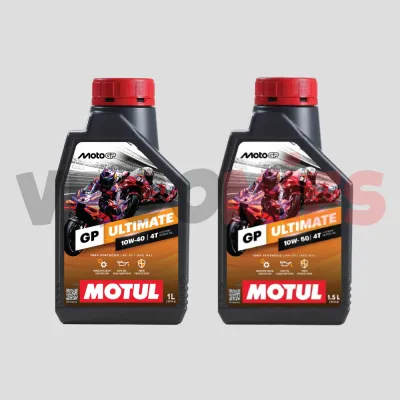
Products mentioned in this guide
![🇸🇬 MOTUL 8100 X-CLEAN EFE 5W30 100% Synthetic Engine Oil [1L]](https://img.lazcdn.com/g/p/68c24628dbbe73b289e455a992af13b0.png_400x400q80.png_.webp)
![🇸🇬 MOTUL 8100 ECO CLEAN 0W30 100% Synthetic Engine Oil [1L]](https://img.lazcdn.com/g/p/41722574d201fdf2339fe9a5856f4cfb.png_400x400q80.png_.webp)
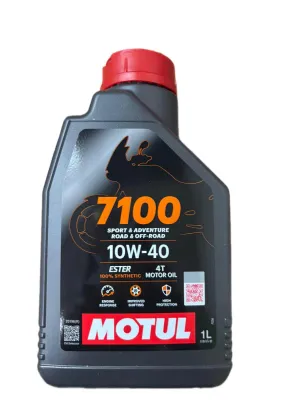
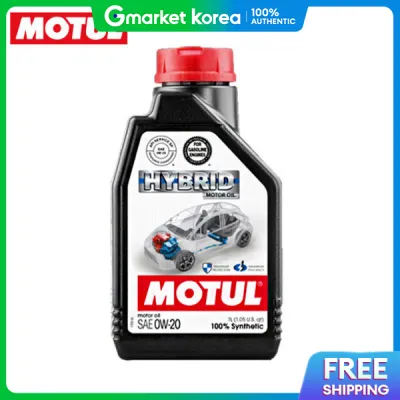
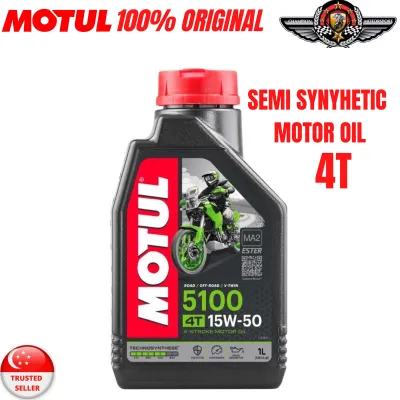
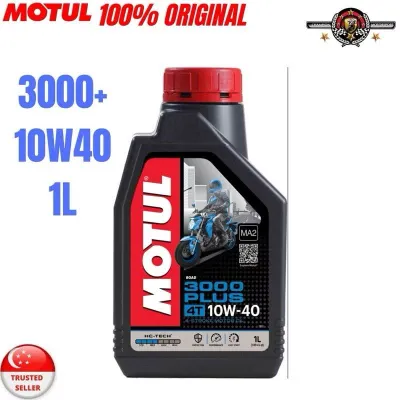
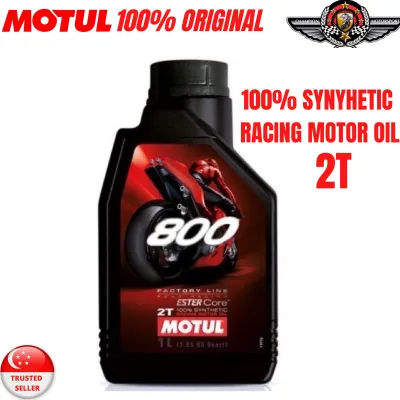
Prices are valid at publication and may change. Please refer to the product page for the latest price.
Why Manufacturer Specifications Matter More Than Just Viscosity
While viscosity is a fundamental property, it is only one part of the lubrication equation. Modern engines are highly complex systems designed with incredibly tight tolerances, variable valve timing, and advanced emissions control devices. Consequently, the additive packages, detergents, dispersants, and anti-wear agents blended into a motul oil are just as critical to engine longevity as the base oil’s thickness.

To ensure an oil can withstand these demands, international bodies establish performance classifications. The American Petroleum Institute (API) uses ratings like SP or SN to classify petrol engine oil performance, focusing on wear protection and fuel economy. The European Automobile Manufacturers’ Association (ACEA) uses classifications like A3/B4, C3, or C5, which categorize oils based on their compatibility with specific engine types and exhaust aftertreatment systems.
Beyond these general standards, vehicle manufacturers issue their own Original Equipment Manufacturer (OEM) approvals, such as VW 508.00/509.00, BMW Longlife-04, or Mercedes-Benz 229.51. Using an oil without the correct OEM approval can void factory warranties or permanently damage modern emissions systems like Diesel Particulate Filters (DPFs). Always consult your vehicle’s owner’s manual to identify the exact required viscosity grade and OEM specifications before purchasing any lubricant.
Matching Motul Product Lines to Your Driving Needs
Once you have established the baseline viscosity and required certifications, you can select from Motul’s distinct product families to match your driving habits and performance expectations. While competitors like Shell and Castrol offer broad, versatile ranges, Motul categorizes its premium synthetic lubricants into highly targeted series designed for specific use cases.
- Motul 8100 Series: This is Motul's flagship line of 100% synthetic oils designed for modern passenger cars. Formulated to meet a wide array of OEM approvals simultaneously, the 8100 series (such as 8100 X-cess or 8100 X-clean) is engineered for daily driving, optimal fuel economy, and extended oil drain intervals. It provides excellent thermal stability and wear protection for standard commuter vehicles operating in Singapore's typical urban environment.
- Motul Specific Series: If your vehicle requires a highly specialized, non-standard formulation, the Specific series is designed for this exact purpose. Each product in this line is custom-tailored to meet one specific OEM standard (for example, Motul Specific 508 00 509 00 for Volkswagen group vehicles). These oils are ideal when standard API or ACEA ratings are insufficient to satisfy the stringent demands of your vehicle's manufacturer.
- Motul 300V Series: Utilizing Motul's proprietary Ester Core technology, the 300V series is a legendary line of high-performance lubricants. Engineered specifically for racing, track days, or heavily modified street engines, 300V provides an exceptionally strong oil film that resists shear under extreme thermal stress. However, these motorsport-oriented oils typically do not carry standard street-use OEM certifications. They are designed for maximum protection under extreme operating conditions and generally require more frequent oil change intervals than standard passenger car oils.
Regardless of which Motul product line aligns with your driving style, you must ensure the specific product you choose carries the exact viscosity grade and baseline certifications required by your vehicle’s manufacturer. A high-performance racing oil is not a substitute for the correct OEM-approved daily lubricant.
Step-by-Step Guide to Selecting and Verifying Your Motul Oil
To ensure a safe and successful oil change, follow this systematic verification and preparation process before purchasing and installing your new engine oil.
- Step 1: Verify the Manufacturer Requirements: Open your vehicle's owner's manual and note the recommended viscosity grade (e.g., 5W-30) and the specific performance standards (e.g., ACEA C3, API SP, or OEM approvals like Porsche C30). If you do not have the physical manual, consult an authorized local dealership or check the manufacturer's official digital resources.
- Step 2: Inspect the Product Packaging: When purchasing your motul oil, carefully examine the front and back labels. Confirm that the viscosity grade matches your requirements exactly. Turn the bottle over to inspect the technical specifications list; the precise OEM approvals and industry standards must be explicitly printed on the label. Ensure the container is fully sealed, shows no signs of tampering, and is within its recommended shelf life. If the product label's instructions conflict with your vehicle manufacturer's guidelines, or if the application is not explicitly covered, stop and consult the manufacturer or a qualified professional before proceeding.
- Step 3: Evaluate Engine Mileage and Condition: Consider your engine's current mechanical state. For high-mileage vehicles showing signs of oil consumption or compression loss, consult a qualified professional mechanic before altering your viscosity grade, as modern engines with tight internal tolerances can suffer from poor lubrication if the oil is too thick.
- Step 4: Execute a Safe and Compliant Oil Change: Before performing any maintenance, review the vehicle's service manual for specific safety precautions, torque values, and component locations. Always replace the oil filter with a high-quality OEM or equivalent part during every oil change to prevent old contaminants from degrading the fresh oil. Use a calibrated torque wrench to tighten the oil pan drain plug to the manufacturer's specified torque setting to avoid stripping the threads or causing slow leaks. Finally, never dispose of used motor oil in domestic waste or public drains; always collect the waste oil in a sealed container and transport it to a licensed toxic industrial waste collector or an authorized automotive recycling facility in Singapore.
Frequently Asked Questions (FAQ)
Is 10W-40 better than 5W-30 for Singapore's hot weather?
There is a common misconception that thicker oil, such as 10W-40, is inherently better for tropical climates like Singapore’s. However, modern engines are engineered with extremely tight internal clearances and variable displacement oil pumps designed to operate with specific, lower-viscosity fluids like 5W-30 or even 0W-20. Using a thicker oil than recommended can restrict oil flow during critical startup periods, increase internal drag, raise engine operating temperatures, and decrease fuel efficiency. Always adhere strictly to the viscosity grades recommended in your owner’s manual, as the manufacturer has already accounted for high ambient operating temperatures when designing the engine’s lubrication system.
Can I mix different Motul viscosity grades in an emergency?
In an emergency situation where your engine’s oil level is critically low, topping up with a different viscosity grade of Motul oil is acceptable to prevent the engine from running dry and sustaining immediate mechanical damage. It is preferable to mix synthetic oils of the same brand rather than driving with insufficient oil. However, mixing different grades alters the carefully balanced viscosity profile and additive chemistry of the primary lubricant. This temporary mixture will not perform optimally over the long term. If you must perform an emergency top-up with a different viscosity, schedule a complete oil and filter change with the correct single-grade lubricant as soon as possible.
How do I know if my Motul oil is genuine?
Counterfeit engine oils can cause severe internal engine damage due to substandard base oils and a complete lack of protective additives. To guarantee you are purchasing genuine Motul products in Singapore, buy exclusively from authorized distributors, official brand flagship stores on reputable e-commerce marketplaces, or well-established, licensed workshops. Inspect the physical bottle for high-quality, clear label printing, an intact tamper-evident cap seal, and a clearly legible batch code and production date laser-etched onto the plastic. If the price of the oil seems unusually low compared to standard market rates, treat it as a significant red flag and verify its authenticity before pouring it into your engine.
Community discussion
Share your experience or ask a question. Comments are reviewed before publication.