
Quick Answer
The correct Motul 800 viscosity grade depends entirely on your motorcycle’s engine type, lubrication system, and the manufacturer’s original equipment manufacturer (OEM) specifications. It is vital to understand that Motul 800 is a highly specialized, 100% synthetic 2-stroke (2T) racing engine oil designed strictly for premix systems, meaning it must be mixed manually with petrol and cannot be used in automatic oil injection systems. Because it is a dedicated 2-stroke racing oil, it does not come in standard 4-stroke multigrade viscosity ratings like 10W-40 or 15W-50.
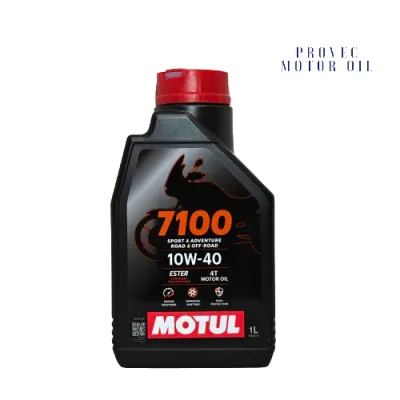
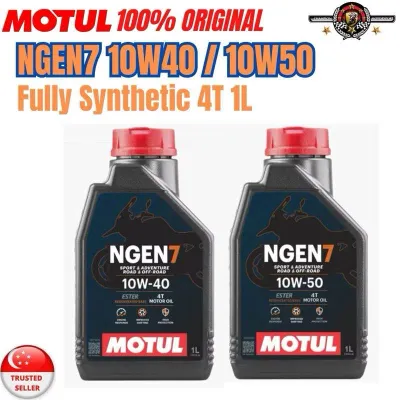
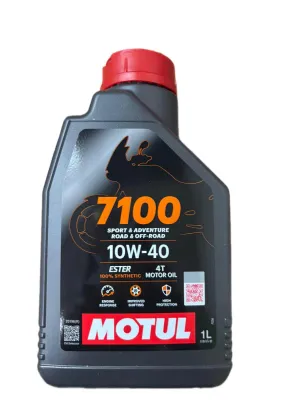
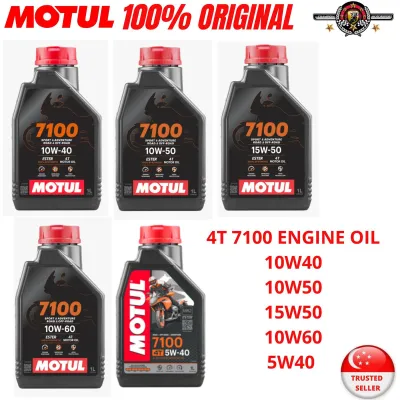
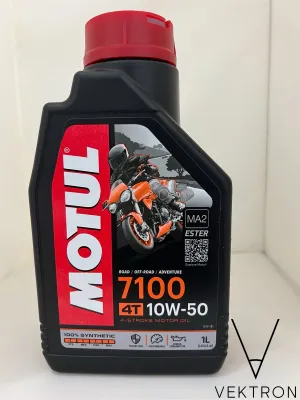
If you ride a 4-stroke motorcycle and require those standard multigrade viscosities, you should look instead at Motul’s 4-stroke ester-based performance lines, such as Motul 300V or Motul 7100. However, if you are running a high-performance 2-stroke engine, your viscosity choice comes down to Motul 800’s two distinct formulations: the Road Racing variant (which has a lighter viscosity of approximately 8.3 mm²/s at 100°C, comparable to an SAE 30) and the Off Road variant (which has a much heavier viscosity of approximately 19.0 mm²/s at 100°C, comparable to an SAE 50). Always consult your owner’s manual to verify your engine’s requirements before purchasing, as brand reputation does not override engineered mechanical tolerances.
Products mentioned in this guide
![🇸🇬 MOTUL 8100 X-CLEAN EFE 5W30 100% Synthetic Engine Oil [1L]](https://img.lazcdn.com/g/p/68c24628dbbe73b289e455a992af13b0.png_400x400q80.png_.webp)
Prices are valid at publication and may change. Please refer to the product page for the latest price.
Understanding Viscosity Ratings and High-Performance Ester Oils
To make an informed decision, you must first understand how oil viscosity operates and why high-performance formulations use specific base stocks. In the automotive and motorcycle world, viscosity is a measure of an oil’s resistance to flow. For standard 4-stroke oils, this is defined by the Society of Automotive Engineers (SAE) J300 standard, which uses a dual-number system like 10W-40. The first number, followed by a “W” (which stands for Winter), indicates the oil’s flow characteristics at cold temperatures, while the second number indicates its viscosity at a standardized engine operating temperature of 100°C. A higher second number means the oil remains thicker and provides a more robust physical barrier under extreme heat.
While 2-stroke oils like Motul 800 do not print these multigrade numbers on the front label, their underlying kinematic viscosity at operating temperature is just as critical. Motul 800 utilizes advanced Ester Core technology, which is a hallmark of Motul’s high-performance racing lubricants. Esters are synthesized organic compounds that possess natural polarity. This electrical charge causes the oil molecules to actively cling to metal engine internals, creating a continuous, incredibly resilient protective film. This magnetic-like attraction ensures that even during high-RPM operations where traditional oils might be sheared away, a microscopic layer of ester oil remains bonded to the cylinder walls and piston rings.
However, relying on marketing terms, brand prestige, or the presence of ester technology is never a substitute for checking your motorcycle’s actual requirements. Every engine is designed with precise mechanical clearances—the minute gaps between moving parts such as bearings, pistons, and cylinder sleeves. If you use an oil with a viscosity that is too low, the fluid barrier will be too thin to prevent metal-on-metal contact, leading to rapid wear or engine seizure. Conversely, using an oil that is too thick can create excessive fluid drag, reduce fuel efficiency, and prevent the lubricant from circulating quickly enough during critical startup phases.
For 4-stroke riders, you must also ensure your chosen oil carries the correct JASO (Japanese Automotive Standards Organization) certification, specifically JASO MA or MA2, which guarantees the oil has the appropriate friction characteristics for motorcycles with wet clutches. For 2-stroke riders using Motul 800, you must verify that your manufacturer permits a 100% synthetic premix oil. Because Motul 800 is formulated for racing, it does not contain the same level of low-smoke additives found in daily street-use 2T oils, meaning it is optimized for complete combustion under high-load racing conditions rather than prolonged idling.
Key Factors That Change Your Viscosity Requirements
Ambient Temperature and Local Climate
In tropical regions like Singapore, the year-round ambient temperature consistently hovers between 30°C and 34°C, accompanied by high humidity. This persistent external heat means engines run significantly hotter than they would in temperate climates, especially during stop-and-go city riding or prolonged idling on major expressways. Under these conditions, motorcycle engines rely heavily on the oil’s ability to resist thermal thinning. When oil becomes too thin due to extreme heat, its film strength decreases, which can lead to accelerated wear on critical components like the piston crown, cylinder walls, and crankshaft bearings.

For 4-stroke engines, the high-temperature rating (the second number in a grade like 10W-40 or 15W-50) is critical for maintaining oil pressure and film strength in consistently hot climates. A thicker oil film helps absorb and dissipate heat while ensuring that the oil pump can maintain adequate pressure throughout the lubrication system. For 2-stroke engines using Motul 800, the choice between the lighter Road Racing and the heavier Off Road variant must take into account how ambient heat compounds internal combustion temperatures. While cold-start ratings (the “W” number) are less critical in tropical climates because temperatures never drop to freezing, the initial flow during morning startups still matters for immediate wear protection.
Riding Style, Engine Stress, and Mileage
Your riding style and the specific demands you place on your motorcycle play a massive role in determining the ideal oil viscosity. High-RPM track riding, sustained high-speed highway cruising, or carrying heavy pillion loads generates immense thermal and mechanical stress within the engine. Under these high-load scenarios, the engine’s internal temperatures can skyrocket far beyond normal operating levels. If your OEM manual permits a range of viscosities, opting for a higher viscosity grade within that approved range can provide an extra safety margin, preventing the oil from shearing down and losing its protective qualities.
Engine age and mileage are also crucial variables to consider. As a motorcycle engine accumulates mileage, the constant friction gradually wears down internal components, slightly widening the clearances between bearings, pistons, and cylinder walls. In older, high-mileage engines, using a slightly thicker oil can help seal these wider gaps, thereby restoring lost compression, reducing oil consumption (burning oil), and dampening mechanical noise. However, you must never deviate from the OEM’s maximum or minimum allowed viscosity limits without consulting a qualified mechanic, as using an unapproved viscosity can cause oil starvation, void warranties, and lead to catastrophic engine failure.
Comparing Common Viscosity Ranges: Which Profile Fits Your Ride?
Standard to Lower Viscosity Grades (e.g., 10W-40)
Standard to lower viscosity grades, such as 10W-40 for 4-stroke engines or the Motul 800 2T Road Racing variant (which behaves like a lighter-weight oil at operating temperatures), are designed for rapid circulation and minimal fluid drag. These oils flow quickly during startup, ensuring immediate lubrication to the cylinder head and overhead cams. The lower internal resistance of these oils allows the engine to rev more freely, improving throttle response and maximizing power output, which is highly desirable in modern, tight-tolerance engines equipped with advanced liquid cooling systems.
When to Choose This Profile:
- Your motorcycle manufacturer explicitly mandates a standard viscosity grade (such as 10W-40) in the owner's manual.
- Your engine is relatively new, has tight internal tolerances, and does not consume oil between service intervals.
- You primarily engage in daily street commuting or high-RPM track riding on a modern, liquid-cooled motorcycle where minimizing fluid drag is a priority.
Limitations to Consider:
- Thinner oils can experience excessive thinning under extreme, sustained operating temperatures or in air-cooled engines idling in heavy traffic, potentially compromising the protective oil film.
- If used in an older engine with wider clearances, a thinner oil may fail to maintain adequate oil pressure and can lead to increased mechanical noise and oil consumption.
Higher Viscosity Grades (e.g., 15W-50 or 20W-50)
Heavier viscosity grades, such as 15W-50 or 20W-50 for 4-stroke engines or the Motul 800 2T Off Road variant (which has a high kinematic viscosity of 19.0 mm²/s at 100°C, behaving like a heavier SAE 50), are formulated to provide maximum film thickness and shear stability. These oils are highly resistant to thermal breakdown, ensuring that a robust physical barrier remains between moving parts even under extreme heat and heavy loads. They also provide excellent sealing properties, making them ideal for engines operating under severe stress or those with significant wear.
When to Choose This Profile:
- Your OEM explicitly approves a heavier grade (such as 15W-50 or 20W-50) for high-temperature environments or heavy-duty use.
- You frequently subject your motorcycle to extreme riding conditions, such as off-road riding, long-distance touring with heavy cargo, or competitive racing.
- Your engine is a high-mileage unit that exhibits minor oil consumption or increased mechanical noise when running on thinner oils.
Limitations to Consider:
- Thicker oils can cause increased internal fluid drag, which can slightly reduce fuel efficiency and make the engine feel somewhat sluggish, especially during cold starts.
- If used in an engine designed strictly for thin oils, a heavier oil may struggle to flow through narrow oil passages quickly enough during startup, leading to temporary oil starvation and wear.
A Step-by-Step Checklist for Selecting and Verifying Your Oil
To ensure you select the correct oil and maintain your motorcycle’s engine safety, follow this structured verification checklist before making a purchase:
- Step 1: Consult the Owner's Manual
Always begin by checking your motorcycle’s official service documentation. Locate the recommended SAE viscosity chart, the required API performance classification (e.g., API SN, SM), and the JASO specification (e.g., JASO MA2 for 4T wet clutches or JASO FD for 2-stroke low-smoke requirements).
- Step 2: Verify Engine and Oil Compatibility
Confirm whether your engine is a 2-stroke or a 4-stroke. If you are buying Motul 800, verify that your 2-stroke engine runs on a premix system. If your 2-stroke motorcycle uses an automatic oil injection pump, Motul 800 is not suitable due to its high viscosity and lack of solvent diluents; you must use an injection-compatible oil like Motul 710. For 4-stroke engines, ensure you purchase a 4T oil like Motul 300V or 7100.
- Step 3: Evaluate Riding Conditions and Climate
Assess your typical riding environment and habits. If you ride in a hot, tropical climate like Singapore, or frequently participate in track days, select the heavier approved viscosity grade within the range provided by your OEM. For daily commuting on a modern, liquid-cooled bike, stick to the standard recommended grade.
- Step 4: Confirm Product Authenticity and Specifications
Only purchase oil from authorized dealers or reputable retailers to avoid counterfeit products, which can cause severe engine damage. Inspect the bottle’s seal, labeling, and batch numbers. Check that the oil meets the exact standards required by your engine, and note that Motul 800 is a premium racing oil, typically sitting in the higher price tier (around S$35 to S$50 per bottle in Singapore’s specialized motorcycle shops).
- Step 5: Perform the Oil Change and Monitor Performance
When changing the oil, always replace the oil filter (for 4-stroke engines) to prevent old contaminants from degrading the fresh oil. For 2-stroke engines, mix Motul 800 with fuel at the exact ratio specified by the manufacturer (e.g., 50:1 or 2% mix). After the change, monitor engine sound, clutch engagement, and look out for any warning lights. If you notice unusual noise, clutch slippage, or a pressure warning, stop riding immediately and consult a professional mechanic.
Frequently Asked Questions (FAQ)
Can I mix different viscosity grades of Motul 800?
It is strongly advised not to mix different viscosity grades of Motul 800, such as mixing the Road Racing and Off Road variants. Doing so unpredictably alters the final viscosity of the oil and can compromise the performance of the carefully balanced ester additive package, potentially reducing wear protection. If you must top up your oil in an emergency to prevent engine seizure, use the closest available grade, but schedule a complete oil flush and change as soon as possible to restore the correct protection levels.
Does Motul 800 require a specific oil filter?
Motul 800 2T is a premix oil mixed directly into the fuel tank of 2-stroke engines, which typically do not have a traditional pressurized oil filter like 4-stroke engines (though they do have fuel filters that should be inspected regularly). However, if you are using a high-performance 4-stroke oil like Motul 300V, you must use a high-quality, OEM-spec or premium aftermarket oil filter. Always replace the oil filter with every oil change to prevent old, degraded oil and trapped contaminants from polluting the clean oil.
Community discussion
Share your experience or ask a question. Comments are reviewed before publication.